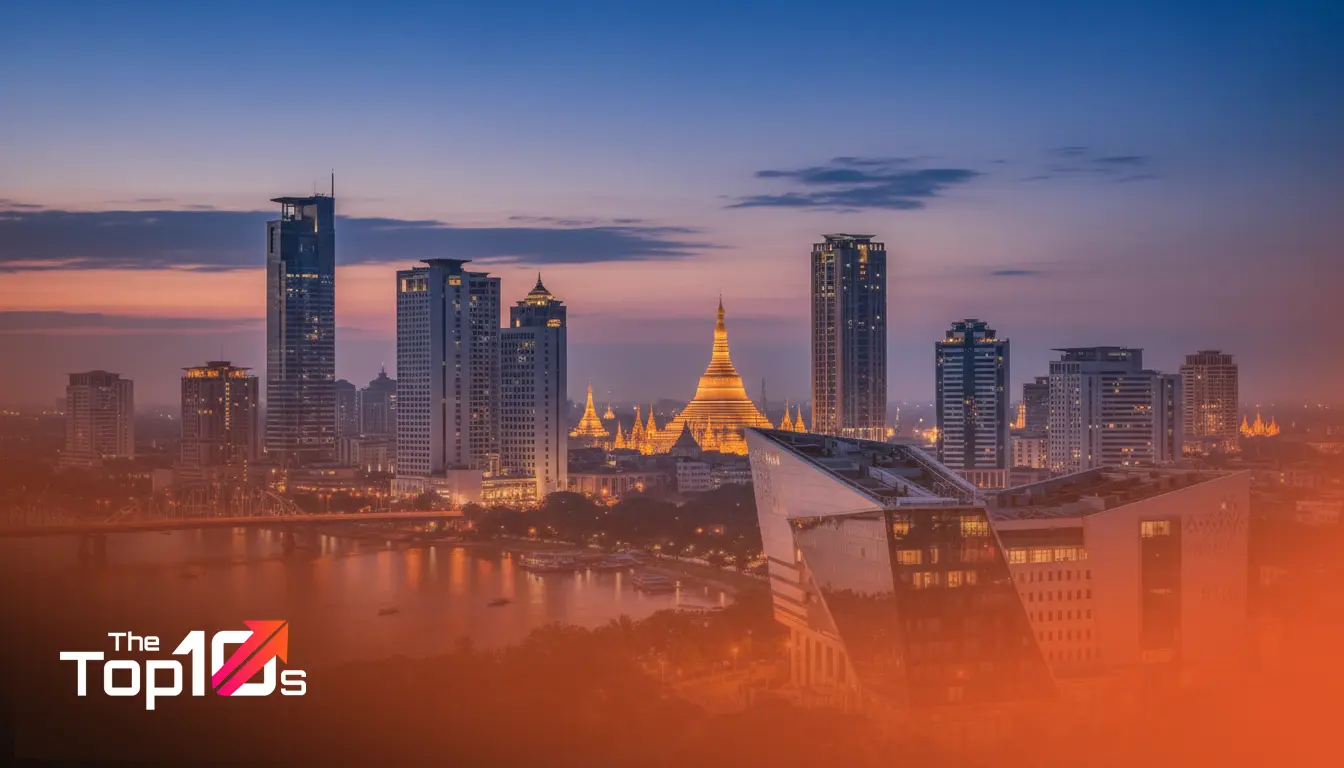
Walk down Pansodan Street in Yangon, and you see it immediately: the tension between history and the future. You have crumbling, majestic colonial red brick on one side and gleaming, steel-and-glass towers rising on the other. Building in Myanmar isn’t just about aesthetics; it’s about navigating a tropical climate that fluctuates between scorching heat and heavy monsoons, all while respecting a deep cultural heritage.
If you are planning a project here, you likely already realize that the stakes are high. Whether you are looking to restore a heritage home in Golden Valley, build a sustainable eco-resort near Bagan, or develop a commercial space in downtown Yangon, the person holding the pen matters more than the budget you set.
Finding the right partner for your build is tricky. The industry here is a mix of veteran professionals who have shaped the skyline for decades and a younger generation pushing boundaries with bamboo and passive cooling. You don’t just need someone who can draw; you need a strategist who understands local municipal regulations, sourcing limitations, and how to keep a building cool without running the AC 24/7.
Quick Takeaways
- Climate comes first: The best designers prioritize passive ventilation and rain protection over glass-box aesthetics.
- Regulatory navigation: Experienced professionals know how to handle complex permits with committees like the YCDC (Yangon City Development Committee).
- Material sourcing: Top architects have established supply chains for quality materials, which can be scarce or inconsistent in the local market.
- Scope varies: Some firms specialize strictly in design, while others offer “design-build” services to manage construction headaches.
How We Identified Leading Architects
Selecting the professionals for this list wasn’t about looking at who has the flashiest Instagram account. We looked for substance. The architectural scene in Myanmar is distinct because it requires a high degree of adaptability. We analyzed these professionals based on their ability to deliver completed projects, not just concept renderings.
Our methodology focused on long-term durability. In a tropical climate, a building that looks good on day one but molds on day one hundred is a failure. We looked for portfolios demonstrating an understanding of tropical modernism, heritage conservation, and spatial efficiency.
We also considered peer reputation. In tight-knit construction communities, word travels fast. We sought out names that are frequently associated with reliability, ethical business practices, and the ability to actually get things built in a challenging logistical environment. These are the individuals and principals driving the industry forward.
Top 10 Architects In Myanmar
Here are ten architectural leaders and firms making significant impacts on Myanmar’s built environment. They range from luxury residential specialists to sustainability advocates.
1. Spine Architects (Stephen Zawmoe Shwe)
If you have spent any time looking at high-end contemporary architecture in Yangon, you have likely seen Stephen Zawmoe Shwe’s influence. As a driving force behind Spine Architects, his work represents the gold standard for modern tropical living in the region.
Why they stand out:
Spine excels at blending clean, international modernist lines with local sensibility. They don’t fight the climate; they design for it. Their residential projects often feature deep overhangs, extensive use of timber, and layouts that encourage airflow. This approach reduces the reliance on artificial cooling, which is a massive practical benefit for homeowners.
Best suited for:
Clients looking for luxury residential villas or high-end commercial spaces who want a “magazine-ready” look that functions perfectly in the Myanmar heat.
2. Blue Temple (Raphaël Monnier)
On the other end of the spectrum is Blue Temple. Led by Raphaël Monnier, this practice challenges the concrete-heavy norm of Southeast Asian construction. They are garnering international attention for their innovative use of bamboo and small-diameter timber.
Why they stand out:
Raphaël’s work is less about imposing a structure on the land and more about growing it from the environment. They specialize in parametric design using low-cost, locally abundant materials. Their “playground” projects and community structures prove that sustainable architecture doesn’t have to look primitive—it can be incredibly sophisticated and structurally complex.
Best suited for:
Eco-tourism developers, NGOs, or homeowners who want a structure with a minimal carbon footprint and a distinct, organic aesthetic.
3. A+R Associates
A+R has carved out a reputation for handling scale without losing detail. In a market where large commercial projects can sometimes feel generic, A+R brings a level of design rigour that keeps things interesting. Their portfolio spans from sleek office interiors to substantial residential compounds.
Why they stand out:
They are particularly strong in the commercial sector. What clients appreciate here is the firm’s grasp of space planning. In dense urban environments like Yangon or Mandalay, maximizing square footage while maintaining a feeling of openness is a difficult balancing act, and A+R manages this consistently.
Best suited for:
Business owners and developers needing reliable, modern commercial architecture that maximizes leasable or usable area.
4. U Sun Oo (Architects 49 Limited)
A veteran name in the industry, U Sun Oo is associated with high-level professional practice and often collaborates with international heavyweights like Architects 49 (originally based in Thailand). This connection brings a level of technical precision and international standard compliance that is vital for large-scale institutional or corporate projects.
Why they stand out:
Experience is the key factor here. When dealing with complex structural requirements or massive mixed-use developments, you need a team that has “seen it all.” The work typically reflects a timeless, corporate modernism that ages well and conveys stability.
Best suited for:
Corporate headquarters, large mixed-use developments, and clients who prioritize risk management and technical pedigree over experimental design.
5. Design 2000
Design 2000 is one of the established local firms that has weathered various economic cycles in Myanmar, maintaining a steady output of reliable work. They have a deep understanding of the local context—specifically the regulatory hurdles that can stall lesser-experienced firms.
Why they stand out:
They are known as “safe hands.” Their aesthetic tends to be more traditional and conservative, which appeals to a specific demographic of Myanmar homeowners who prefer classic grandeur over minimalism. They understand the local craftsman’s capabilities and design accordingly, ensuring what is drawn can actually be built.
Best suited for:
Families looking for traditional, grand residential estates and developers who want a straightforward, reliable design process.
6. Hla Thida
Often operating within academic and institutional spheres, professionals like Hla Thida represent the intellectual backbone of Myanmar’s architecture. With a focus that often touches on heritage and urban planning, architects in this category are crucial for projects that interface with the city’s history.
Why they stand out:
There is a sensitivity to context in her approach. It isn’t just about the building; it’s about how the building sits within the neighborhood’s history. This is critical in areas like downtown Yangon, where heritage laws are strict and the cultural fabric is delicate.
Best suited for:
Institutional projects, cultural centers, or renovations requiring a sensitive, scholarly approach to the existing environment.
7. 360 Degree Design
This firm represents the modern wave of integrated design. They often blur the lines between architecture and interior design, ensuring the outside shell and the inside living experience are cohesive. This is a common pain point for clients—hiring an architect and an interior designer who then fight over the vision.
Why they stand out:
Cohesion. Their projects feel “finished.” The lighting, the joinery, and the structural elements speak the same language. They are particularly adept at modern hospitality projects where the guest experience needs to be seamless from the driveway to the bedroom.
Best suited for:
Boutique hotels, restaurants, and homeowners who want a turnkey design solution without managing multiple design teams.
8. POINT Architects
POINT has been gaining traction for their fresh perspective on urban living. As urban centers in Myanmar become more crowded, the need for smart, vertical living solutions increases. POINT addresses this with designs that prioritize light and air in tight spaces.
Why they stand out:
They are excellent problem solvers for difficult plots of land. If you have a narrow lot in Sanchaung or a weirdly shaped parcel in Mandalay, POINT is the type of firm that sees the constraint as a creative opportunity rather than a hindrance.
Best suited for:
Urban infill projects, apartment renovations, and developers working with challenging site conditions.
9. Landmark Myanmar
While often associated with development, the design arm behind Landmark’s projects focuses on high-value asset creation. They understand the “economics” of architecture—how design choices impact the final property value.
Why they stand out:
Their work is market-driven. They know what sells and what rents. While some architects pursue art for art’s sake, the team here is grounded in the reality of the real estate market. This makes them a favorite for investors who need the numbers to make sense.
Best suited for:
Real estate investors and commercial developers looking for designs that maximize ROI.
10. Heritage Restoration Specialists (Various)
Rather than a single firm, the tenth spot goes to the collective of specialists (often collaborating with the Yangon Heritage Trust) working on colonial restoration. Architects specializing in this niche are masters of adaptive reuse—turning old colonial offices into banks, hotels, or galleries.
Why they stand out:
Restoration in Myanmar is forensic work. You are dealing with 100-year-old brick, unknown foundations, and zero original blueprints. Specialists in this field know how to modernize a building’s utilities without destroying its soul.
Best suited for:
Owners of colonial-era properties looking to convert them into modern commercial or residential spaces without violating heritage laws.
What Defines a Great Architect in Myanmar?
Architecture in this region faces challenges that don’t exist in Europe or North America. A great architect here is part artist, part project manager, and part supply chain expert.
Mastery of Passive Cooling
Electricity supply can be inconsistent. A building that relies 100% on air conditioning is a liability. Great design orients the building to catch the prevailing wind, uses thermal mass to keep interiors cool, and employs shading devices to block direct sun. If an architect doesn’t mention “cross-ventilation” in the first meeting, that’s a red flag.
Material Resourcefulness
Importing Italian marble or German windows is possible but expensive and logistically nightmare-prone. The best local architects know how to use Myanmar’s resources—teak, bamboo, locally fired brick, and stone—in contemporary ways. This not only lowers the carbon footprint but also roots the building in its location. Interestingly, this resourcefulness is a trait shared across the region; for a comparison on how neighboring nations handle similar constraints, look at the top 10 architects in Cambodia, who also heavily utilize local vernacular materials.
Seismic Awareness
Myanmar is in a seismically active zone. Great architects don’t just design for gravity; they design for movement. They work closely with structural engineers to ensure that the beautiful cantilever you want won’t crack during a tremor.
How to Choose the Right Architect for Your Needs
Making a choice from a list is just the first step. You need to vet these professionals to see if they fit your specific personality and project scope.
Check Their “Built” Portfolio
In the digital age, 3D renderings can look incredibly realistic. Always ask to see photos of completed projects. Better yet, ask if you can visit one. You want to see how the detailing holds up after two or three monsoon seasons. Are there water stains? Cracks? How is the finish aging?
Assess Their Communication Style
Construction is stressful. You will be communicating with this person for 12 to 24 months. Do they listen to you? Do they explain technical issues in plain language? In Myanmar, where English is widely spoken in business but nuances can be lost, ensuring you are on the exact same page regarding scope and budget is vital.
Discuss Permitting Early
Ask them specifically about their experience with the YCDC or the relevant local municipality. An architect who creates a design that cannot be legally permitted is useless. They should be able to explain the approval timeline and potential hurdles for your specific zoning area.
Frequently Asked Questions
How much do architects in Myanmar charge?
Fees vary wildly based on reputation and scope. Generally, you can expect a percentage of the total construction cost, typically ranging from 3% for basic services up to 10-12% for full design, interior, and project management services. Some firms may offer a fixed lump sum for smaller projects.
Do I need a local architect if I hire a foreign firm?
Yes, usually. Even if you hire an international design lead, they will almost always partner with a “local architect of record” to handle the permitting, sign off on drawings for the municipality, and navigate local code compliance.
Can architects in Myanmar help with construction management?
Many do offering “Project Management” or “Site Supervision” as an additional service. This is highly recommended. Having your architect visit the site weekly ensures the contractor is following the plans and not cutting corners on materials.
Is it better to build new or renovate a colonial building?
Renovation is often more expensive and takes longer due to the “unknowns” hidden in old walls. However, the character of a colonial renovation is impossible to replicate with new construction. It depends on your budget and your appetite for unpredictability.
What is the best time of year to start building in Myanmar?
You want to get your foundations and roof done during the dry season (roughly October to May). A smart architect will plan the design phase during the rainy season so that ground-breaking happens as soon as the rains stop.
Next Steps for Your Project
Building in Myanmar is an adventure, but it doesn’t have to be a gamble. The talent pool here is deep, blending international education with local wisdom.
Start by shortlisting three firms from this list. Arrange face-to-face meetings—not just emails. Bring a rough brief of what you want, but keep an open mind. The best architects will likely challenge your initial ideas, offering solutions you hadn’t considered to make your building cooler, stronger, and more beautiful. Your dream project is possible, provided you pick the right partner to guide you through the process.