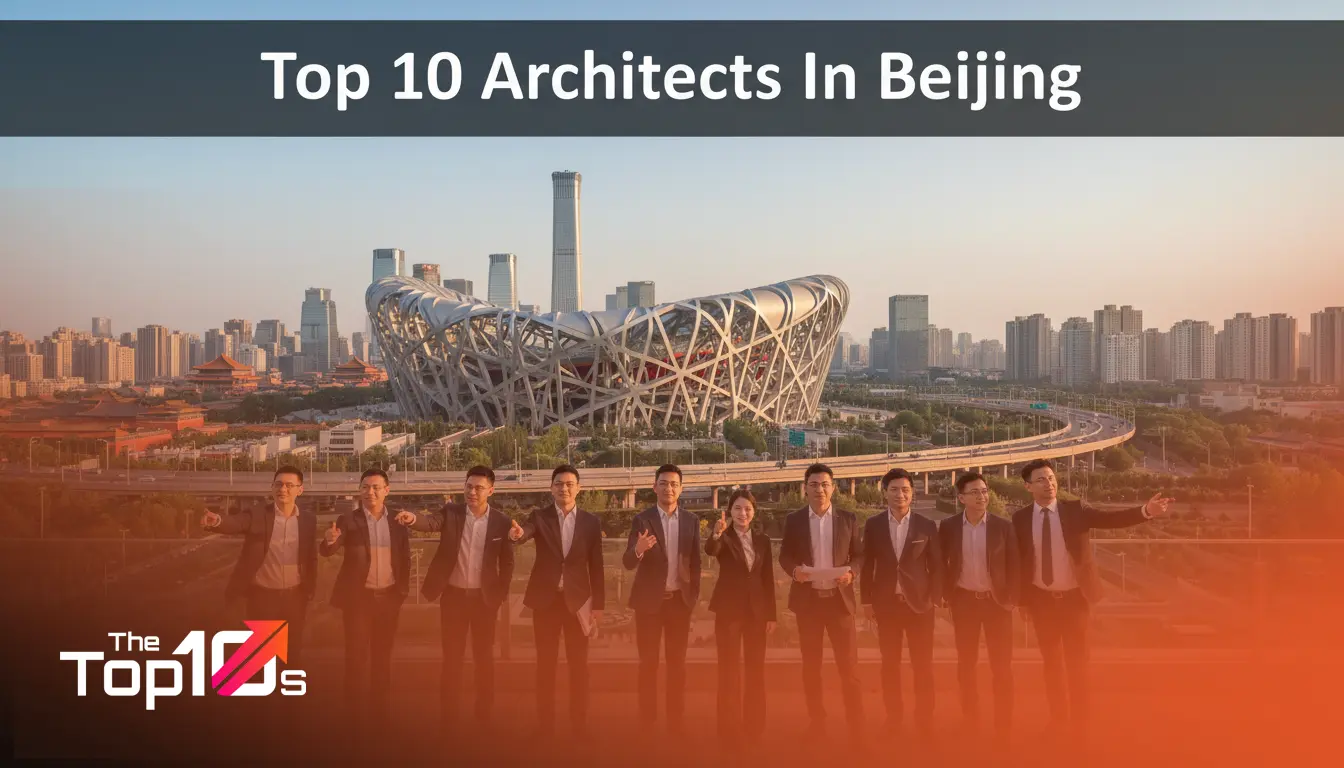
Building in Beijing isn’t just about erecting four walls and a roof; it’s about engaging with centuries of history while pushing toward a futuristic horizon. Whether you are navigating the intricate preservation rules of the Hutongs or planning a commercial landmark in the Central Business District, the person holding the pen matters more than the budget you set.
You might be wondering, with hundreds of firms claiming to be the best, how do you filter the noise? Here is the reality: a mediocre design can drain your finances and leave you with a space that fights against its environment rather than working with it. Conversely, the right professional acts as a translator between your vision and the complex regulatory reality of China’s capital.
We have analyzed the local market to bring you a curated list of professionals who understand the unique pulse of this city. These aren’t just draftsmen; they are strategic partners in development.
Quick Takeaways: Choosing Beijing Talent
- Context is King: Look for professionals who have successfully merged modern amenities with Beijing’s strict historic preservation codes.
- Portfolio Diversity: The best firms often handle both “micro-renovations” and large-scale builds, showing adaptability.
- Communication Style: Ensure your lead architect can clearly explain the “why” behind design choices, not just the “what.”
- Sustainability Focus: With new green regulations, expertise in energy-efficient design is no longer optional—it’s mandatory.
How We Identified Leading Architects
Selecting the top tier of design talent requires looking past flashy website renders. Our approach focused on substantive indicators of quality that impact the client experience. We didn’t just look for awards, although many on this list have cabinets full of them. Instead, we prioritized consistency and execution.
We evaluated firms based on their demonstrated ability to navigate Beijing’s specific urban challenges. This includes their track record with local planning bureaus and their history of completing projects on schedule. We also looked for a balance between artistic vision and technical pragmatism. A beautiful drawing is useless if it cannot be engineered within a reasonable budget.
Finally, reputation within the industry played a massive role. We sought out names that are respected by structural engineers and construction managers, as these relationships often determine whether a project runs smoothly or hits constant roadblocks.
List of 10 Best Architects in Beijing
| Name | Best for |
|---|---|
| Ma Yansong (MAD Architects) | Developers and institutions looking for a landmark project that generates global press coverage. |
| Zhang Ke (ZAO/standardarchitecture) | Clients with heritage properties or challenging urban infill sites requiring sensitive, intelligent design solutions. |
| Li Hu & Huang Wenjing (OPEN Architecture) | Institutional clients and educational organizations prioritizing sustainability and social interaction. |
| Gong Dong (Vector Architects) | Clients who value atmosphere, light, and materiality over ornamentation. |
| Zhu Pei (Studio Zhu-Pei) | Cultural stakeholders and private collectors building galleries or exhibition halls. |
| Hua Li (TAO – Trace Architecture Office) | Projects in unique geographic settings or eco-conscious developments. |
| Han Wenqiang (Arch Studio) | Homeowners and business owners looking to transform historic properties into modern dwellings or retail spaces. |
| Shuhei Aoyama (B.L.U.E. Architecture Studio) | Retail brands and private homeowners dealing with limited square footage. |
| James Shen, He Zhe, Zang Feng (People’s Architecture Office) | Social housing projects, rapid renovations, and experimental urban living solutions. |
| Liu Xiaodu (URBANUS) | Large-scale urban planners and developers shaping city districts. |
Top 10 Architects in Beijing
Here are the professionals and firms currently shaping the skyline and streetscape of the capital. Each brings a distinct philosophy to the table, ranging from avant-garde futurism to sensitive historical restoration.
1. Ma Yansong (MAD Architects)
Professional Background:
Ma Yansong is arguably the most globally recognized name operating out of Beijing today. Founder of MAD Architects, he studied at Yale and worked under Zaha Hadid before establishing his own practice. His work challenges the boxy, functionalist skyscrapers that dominate modern cities.
Area of Specialization:
He is famous for the “Shanshui City” concept, which attempts to combine the spirit of traditional Chinese landscape painting with high-density urban architecture. His focus leans heavily toward large-scale cultural buildings, residential complexes, and mixed-use landmarks.
Why They Stand Out:
MAD projects don’t look like buildings; they look like organic life forms. If you want a structure that defies geometry and becomes an instant icon, this is the direction to look. The firm excels at using fluid curves to soften the hardness of the urban environment.
Best Suited For:
Developers and institutions looking for a landmark project that generates global press coverage.
2. Zhang Ke (ZAO/standardarchitecture)
Professional Background:
Zhang Ke is a Harvard GSD graduate who has become a leading voice in “micro-urbanism.” Unlike architects who only chase height, Zhang has dedicated much of his career to revitalizing the historic fabric of Beijing. His work often involves subtle, surgical insertions into old neighborhoods.
Area of Specialization:
He specializes in adaptive reuse, particularly within the Hutongs (traditional alleyways). His “Micro-Hutong” and “Micro-Yuan’er” projects demonstrate how to modernize living conditions in tight, historic spaces without destroying their soul.
Why They Stand Out:
Zhang Ke proves that modern architecture doesn’t have to be loud. His strength lies in respect for context. He uses traditional materials like grey brick but arranges them in contemporary ways, creating spaces that feel both new and inevitably part of Beijing.
Best Suited For:
Clients with heritage properties or challenging urban infill sites requiring sensitive, intelligent design solutions.
3. Li Hu & Huang Wenjing (OPEN Architecture)
Professional Background:
Founding partners Li Hu and Huang Wenjing operate OPEN Architecture with a research-heavy approach. Before establishing OPEN, Li Hu was a partner at Steven Holl Architects. Their firm is known for rethinking standard building typologies, from schools to museums.
Area of Specialization:
Their portfolio is strong in educational and cultural institutions. They focus intensely on how a building connects with nature, often blurring the line between indoor and outdoor spaces through clever terracing and courtyards.
Why They Stand Out:
OPEN projects are intellectually rigorous. They don’t just solve a spatial problem; they often address social issues. For example, their “Garden School” project redefined how high-density campuses can still provide green space for students.
Best Suited For:
Institutional clients and educational organizations prioritizing sustainability and social interaction.
4. Gong Dong (Vector Architects)
Professional Background:
Gong Dong established Vector Architects in 2008. His approach is often described as poetic. He focuses heavily on the user’s sensory experience—how light hits a wall, how wind moves through a corridor, and how a view is framed.
Area of Specialization:
While they handle various scales, Vector is renowned for cultural projects and boutique hospitality. The “Seashore Library” (often called the loneliest library in China) is a prime example of their ability to create emotional resonance through concrete and light.
Why They Stand Out:
Technical precision meets atmosphere. Gong Dong is obsessive about details and material transitions. While many architects rely on expensive cladding to make a building look good, Vector achieves beauty through the raw structure itself.
Best Suited For:
Clients who value atmosphere, light, and materiality over ornamentation.
5. Zhu Pei (Studio Zhu-Pei)
Professional Background:
Zhu Pei creates architecture that feels rooted in the earth. He has taught at Columbia and Tsinghua University, bringing an academic depth to his practical work. His firm is one of the leading practices dedicated to contemporary art spaces in China.
Area of Specialization:
Museums, galleries, and cultural centers are his forte. He frequently experiments with structural forms that mimic traditional Chinese motifs, such as sweeping roofs or cave-like interiors, but executes them with modern engineering.
Why They Stand Out:
There is a sculptural quality to Zhu Pei’s work that is undeniable. He excels at managing large spans of space without columns, creating grand, open interiors that are perfect for exhibitions or public gatherings.
Best Suited For:
Cultural stakeholders and private collectors building galleries or exhibition halls.
6. Hua Li (TAO – Trace Architecture Office)
Professional Background:
Hua Li approaches architecture almost like an archaeologist. He is deeply interested in the site itself—the topography, the climate, and the local resources. His firm, TAO, avoids generic designs that could be placed anywhere in the world.
Area of Specialization:
He has a strong portfolio in rural revitalization and educational projects. Whether it is a coffee processing plant in Yunnan or a school in Beijing, the design always derives from the specific limitations and opportunities of the location.
Why They Stand Out:
Hua Li is a master of “tectonics”—the art of construction. You can see how his buildings are put together. He favors honest materials like timber, bamboo, and rammed earth, which often results in lower long-term maintenance costs and better environmental performance.
Best Suited For:
Projects in unique geographic settings or eco-conscious developments.
7. Han Wenqiang (Arch Studio)
Professional Background:
If you have an existing structure that feels hopeless, Han Wenqiang is the person to call. As the founder of Arch Studio, he has gained a reputation for breathing new life into difficult, cramped, or dilapidated spaces.
Area of Specialization:
Renovation and interior architecture are his sweet spots. He is particularly skilled at modernizing Siheyuan (courtyard houses) by inserting transparent corridors or mirrored floors that expand the perception of space.
Why They Stand Out:
He treats the old and new as a dialogue. Instead of hiding the history of a building, he highlights it while adding hyper-modern functionality. His work often features clean white lines contrasting against rough grey brick.
Best Suited For:
Homeowners and business owners looking to transform historic properties into modern dwellings or retail spaces.
8. Shuhei Aoyama (B.L.U.E. Architecture Studio)
Professional Background:
Though originally from Japan, Shuhei Aoyama has become a household name in Beijing’s design scene. He gained mass popularity through a home renovation TV show, but his firm, B.L.U.E., is backed by serious architectural rigor.
Area of Specialization:
He excels at small-scale residential and retail projects. Aoyama brings a Japanese sensibility of efficiency to Beijing’s chaotic urbanism. He is an expert at maximizing utility in tiny footprints.
Why They Stand Out:
His designs are incredibly human-centric. He focuses on how people actually live, moving beyond formal aesthetics to solve storage issues, lighting problems, and flow. His commercial spaces, like % Arabica coffee shops, are highly photogenic and shareable.
Best Suited For:
Retail brands and private homeowners dealing with limited square footage.
9. James Shen, He Zhe, Zang Feng (People’s Architecture Office)
Professional Background:
This trio founded People’s Architecture Office (PAO) with a mission to make design accessible. They are less about creating monuments and more about solving everyday problems through clever interventions.
Area of Specialization:
PAO is famous for the “Plugin House.” This is a modular, prefabricated system that can be slotted into crumbling courtyard houses to provide modern insulation and plumbing without demolishing the original structure.
Why They Stand Out:
They are innovators in prefabrication. If you need speed and minimal on-site disruption, their methodology is superior. They view architecture as a product that can be upgraded and adapted, rather than a static statue.
Best Suited For:
Social housing projects, rapid renovations, and experimental urban living solutions.
10. Liu Xiaodu (URBANUS)
Professional Background:
URBANUS is one of the most influential architectural think tanks in China, with offices in Beijing and Shenzhen. Liu Xiaodu leads projects that tackle the immense scale of Chinese urbanization. They don’t just design buildings; they design pieces of the city.
Area of Specialization:
Urban design and large mixed-use complexes. They are adept at handling complex government projects and large-scale commercial developments that require integrating multiple functions (transit, retail, housing) into one cohesive whole.
Why They Stand Out:
Their work is intellectually grounded in the reality of the megacity. They understand density better than almost anyone. If a project involves complicated zoning or connects to public infrastructure, URBANUS has the experience to manage it.
Best Suited For:
Large-scale urban planners and developers shaping city districts.
What Defines a Great Architect in Beijing?
In a city as layered as Beijing, technical skill is merely the baseline. A truly great architect possesses “cultural intelligence.” They understand that a building here exists in conversation with the Forbidden City, the Soviet-style blocks of the 1950s, and the glass towers of the 2000s. Whether you are looking for design talent here or researching the top 10 architects in Rajshahi, the core principle remains: excellence is about adapting global standards to local realities.
Furthermore, the best professionals are adept at navigation. The regulatory environment in the capital is stringent regarding height limits, shadow analysis, and historic preservation. A great architect anticipates these hurdles during the concept phase, saving the client from costly redesigns later. They also champion sustainability, not just as a buzzword, but as a response to Beijing’s climate, utilizing passive design to combat extreme summer heat and winter chill.
How to Choose the Right Architect for Your Needs
Finding the right partner is about alignment. A firm that designs incredible museums might be a terrible choice for a private villa. Here is a framework to guide your decision:
1. Define Your Priorities
Are you driven by budget, timeline, or design prestige? If you need a functional office built in six months, look for firms with strong project management records (like those specializing in prefabrication). If you want a magazine-cover home, look for the boutique design studios.
2. The “Sketch” Test
During interviews, ask the architect to sketch a solution to a specific problem on the spot. You aren’t judging the drawing quality; you are watching how they think. Do they ask questions about how you use the space? Or do they immediately impose their own idea? You want the listener, not just the lecturer.
3. Verify Local Authority Experience
Ask specifically about their experience with the Beijing Municipal Commission of Planning and Natural Resources. A brilliant design that cannot get a permit is worthless. Ask them to describe a time they had to negotiate a compliance issue and how they resolved it.
Frequently Asked Questions
Do I need a local Beijing architect if I have a foreign design team?
Yes. While foreign architects can provide the concept design, you are legally required to have a Local Design Institute (LDI) stamp the drawings for construction. Many top Beijing architects listed above can act as both the lead designer and the LDI, or collaborate seamlessly with international teams.
How much do architectural fees typically run in Beijing?
Fees vary wildly based on reputation and scope. Standard fees might range from 3% to 8% of construction costs, but “Star Architects” often charge a fixed design fee that is significantly higher. Always clarify if the fee includes engineering and interior design or just the architectural shell.
Can I renovate a Hutong courtyard house?
Yes, but it is strictly regulated. You generally cannot alter the external appearance, roof height, or footprint. The architects specializing in adaptive reuse (mentioned in our list) are essential here, as they know how to modernize the interior while keeping the exterior compliant with preservation laws.
How long does the design process take?
For a custom residential project, expect 3 to 6 months for design and permitting before breaking ground. Commercial projects can take 6 to 12 months for the pre-construction phase depending on complexity and government approvals.
Moving Forward With Your Project
Selecting an architect in Beijing is a significant commitment. The professionals listed here represent the pinnacle of design thinking in the capital, capable of delivering spaces that are durable, compliant, and inspiring. Don’t rush the interview process.
Your next step should be to shortlist three firms that align with your aesthetic and budget. Arrange face-to-face meetings—or site visits to their completed work—to gauge their craftsmanship firsthand. For more insights on global architectural standards and sustainable building practices, reputable sources like ArchDaily or Dezeen offer extensive project libraries. The right partnership will turn the daunting process of construction into a rewarding creative journey.