Quick Takeaways: Architectural Planning in Shenzhen
- Local Code Knowledge is Critical: Shenzhen has specific zoning and green building regulations that differ from other Chinese cities.
- Scale Matters: Choose a firm experienced with your specific project size—boutique studios for renovations, large institutes for towers.
- Sustainability is Standard: The best designs now prioritize passive cooling and energy efficiency to handle the subtropical climate.
- Collaboration is Key: For international firms, ask about their partnership with Local Design Institutes (LDIs) for execution.
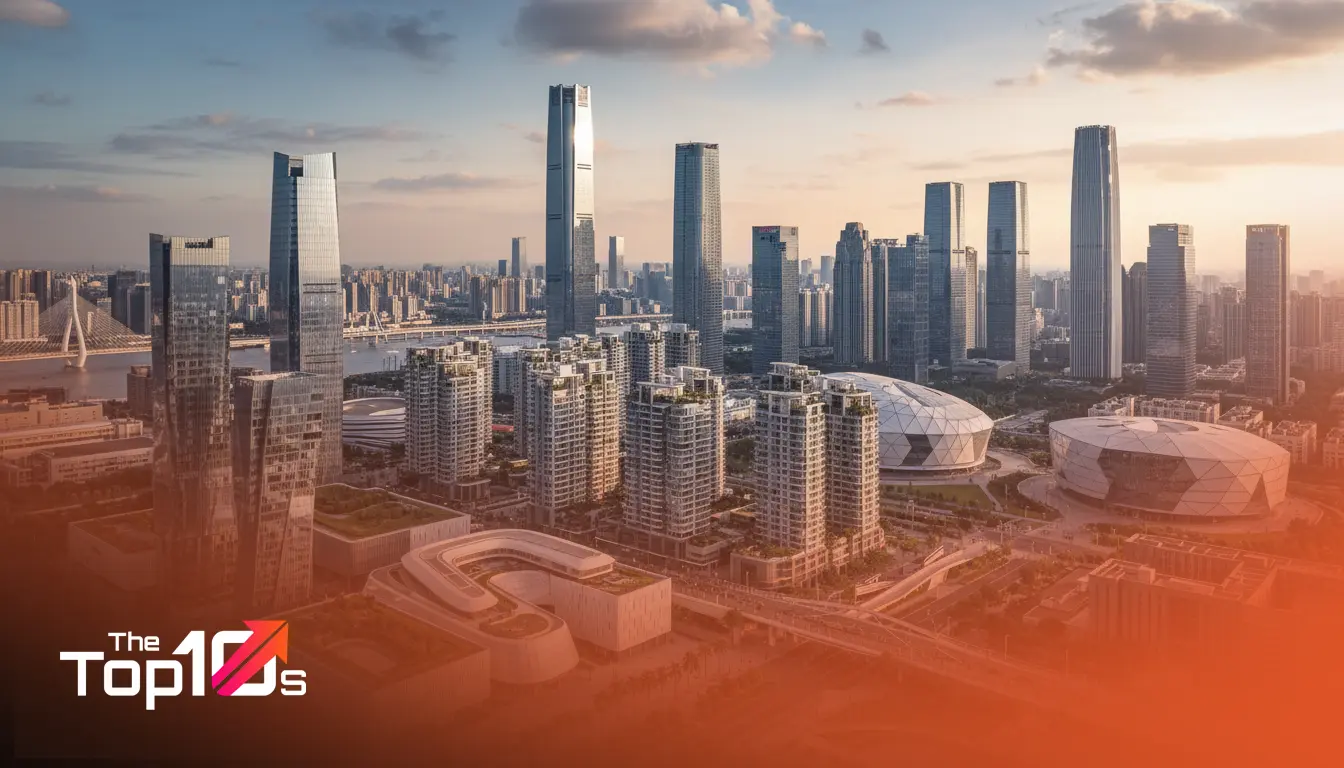
Shenzhen isn’t just a city; it is a testament to how quickly human imagination can manifest into steel and glass. In less than forty years, it transformed from a collection of fishing villages into a global metropolis and a UNESCO City of Design. If you are planning a project here, you aren’t just building a structure; you are entering one of the most competitive and innovative architectural environments on Earth.
Finding the right partner for this undertaking is substantial. The sheer volume of talent in the Pearl River Delta can be overwhelming. You have global giants designing supertall skyscrapers next to boutique local studios reimagining urban villages. The stakes are high. A well-chosen architect brings more than just blueprints; they bring regulatory foresight, cost efficiency, and a vision that endures.
Whether you are a developer looking to make a mark on the skyline or a homeowner seeking a sanctuary in the bustle, understanding who holds the top expertise is the first step. Below, we break down the most experienced architectural professionals in Shenzhen to help you navigate this vibrant market.
How We Identified Leading Architects
Selecting the top tier of design talent requires looking past flashy renderings. Our approach focuses on consistency, execution, and reputation within the industry. We analyzed firms and individuals based on several specific indicators of quality.
First, we considered portfolio depth. We looked for architects who have successfully delivered projects in Shenzhen’s unique climate and density, rather than just conceptual designs that never broke ground. Understanding the humid, subtropical environment is non-negotiable for a functional building here.
Second, we evaluated technical capability. This involves a firm’s ability to navigate complex local zoning laws and coordinate with engineering teams. In China, the collaboration between design architects and Local Design Institutes (LDIs) is often where a project succeeds or fails.
Finally, we looked at peer recognition and client feedback. We sought out names that are respected not just by awards juries, but by the contractors and developers who work with them daily. This list represents a mix of international heavyweights with strong local presence and homegrown powerhouses defining the “Shenzhen Style.”
List of 10 Best Architects in Shenzhen
| Name | Best for |
|---|---|
| Urbanus | Cultural institutions, urban regeneration projects, and clients who value deep intellectual context. |
| Foster + Partners (Shenzhen Office) | Corporate headquarters, high-tech campuses, and complex infrastructure projects. |
| Kohn Pedersen Fox (KPF) | Supertall skyscrapers, large-scale commercial mixed-use developments. |
| OMA (Office for Metropolitan Architecture) | Avant-garde commercial projects, civic buildings, and clients willing to take bold design risks. |
| CCDI (China Construction Design International) | Large-scale residential communities, massive commercial complexes, and rapid deployment projects. |
| Zaha Hadid Architects (ZHA) | Landmark cultural centers, luxury commercial towers, and projects demanding a futuristic aesthetic. |
| Gensler | Workplace interior design, retail centers, and comprehensive master planning. |
| Aedas | Transit-oriented developments, shopping malls, and hospitality projects. |
| Farrells | High-rise towers with strong public realm integration and urban planning. |
| Zhubo Design | Residential developments, educational facilities, and government projects. |
Top 10 Architects In Shenzhen
Here are the firms and architectural leaders currently setting the standard for design excellence in the region.
1. Urbanus
If you want to understand the intellectual heart of Shenzhen architecture, you look at Urbanus. Founded by partners Meng Yan, Liu Xiaodu, and Wang Hui, this firm is arguably the most influential homegrown practice in the city. They don’t just design buildings; they research the urban fabric. They are famous for their work on “urban villages”—high-density informal settlements—and finding ways to integrate them into the modern city rather than demolishing them.
Their work often focuses on cultural and public projects. They possess a rare ability to blend high-concept academic thinking with the gritty reality of rapid urbanization. Their designs feel distinctively local yet globally relevant.
Best For: Cultural institutions, urban regeneration projects, and clients who value deep intellectual context.
2. Foster + Partners (Shenzhen Office)
While headquartered in London, Foster + Partners has left an indelible mark on Shenzhen. Under the guidance of luminaries like Grant Brooker and the wider team, they have defined the city’s high-tech aesthetic. Their design for the DJI Sky City is a prime example of structural innovation, suspending floating volumes to create column-free workspaces.
They bring a level of technical precision that few can match. Their approach relies heavily on integrated design, where engineering and aesthetics are inseparable. If you need a headquarters that signals global dominance and technological prowess, this is a go-to firm.
Best For: Corporate headquarters, high-tech campuses, and complex infrastructure projects.
3. Kohn Pedersen Fox (KPF)
When you look up in Shenzhen, you are likely looking at a KPF building. They are the masters of the “supertall” tower. Most notably, they designed the Ping An Finance Centre, which dominates the city skyline. Their expertise lies in managing the immense complexity of vertical cities.
KPF understands the economics of density. Their designs maximize floor plate efficiency while creating iconic silhouettes. They are experts at mixed-use developments where retail, office, and hospitality functions must coexist seamlessly within a single vertical envelope.
Best For: Supertall skyscrapers, large-scale commercial mixed-use developments.
4. OMA (Office for Metropolitan Architecture)
Founded by Rem Koolhaas, OMA is known for challenging the status quo. Their Shenzhen Stock Exchange building, with its massive “floating podium” raised high above the ground, redefined what a skyscraper could look like. Led by partners like David Gianotten in Asia, OMA avoids standard solutions.
They are the firm you hire when you want to make a statement. Their work creates conversation and often rethinks the program of a building entirely. They analyze how people actually use space, often leading to surprising, unconventional layouts that work brilliantly.
Best For: Avant-garde commercial projects, civic buildings, and clients willing to take bold design risks.
5. CCDI (China Construction Design International)
CCDI is a massive player with deep roots in the region. Unlike the boutique firms, CCDI brings immense scale and manpower to the table. They were the executive architects for the National Aquatics Center (Water Cube) in Beijing and have a massive portfolio across Shenzhen.
They excel at execution. Because they are a large, comprehensive institute, they handle everything from master planning to mechanical engineering in-house. This reduces friction between different disciplines and often speeds up the delivery process for large developments.
Best For: Large-scale residential communities, massive commercial complexes, and rapid deployment projects.
6. Zaha Hadid Architects (ZHA)
Carrying on the legacy of the late Zaha Hadid, this firm continues to push the boundaries of geometry and form. Their work in Shenzhen, such as the Tower C at Shenzhen Bay Super Headquarters Base, showcases their signature parametric design style—fluid, futuristic, and organic.
ZHA utilizes advanced computer modeling to create structures that seem to defy gravity. Their buildings are not just functional; they are artistic landmarks. For developers, a ZHA building is an instant branding tool that garners international attention.
Best For: Landmark cultural centers, luxury commercial towers, and projects demanding a futuristic aesthetic.
7. Gensler
Gensler is the largest architecture firm in the world, and their Shenzhen presence reflects that power. They are incredibly versatile, handling everything from the overarching master plan to the interior design of a single office. Their design philosophy is deeply rooted in user experience.
They are particularly strong in workplace strategy—figuring out how office design can improve employee productivity and happiness. In a city like Shenzhen, driven by tech companies competing for talent, Gensler’s insight into the modern workplace is a valuable asset.
Best For: Workplace interior design, retail centers, and comprehensive master planning.
8. Aedas
Aedas stands out for its deep understanding of connectivity. They are world leaders in Transit-Oriented Development (TOD). In a crowded metropolis, the ability to weave a building directly into a metro station or transport hub is invaluable.
Their designs are pragmatic yet sculptural. They focus heavily on the “porosity” of a building—how people flow in and out of it from the street and transit lines. This makes their projects highly commercially successful, as they maximize foot traffic for retail podiums.
Best For: Transit-oriented developments, shopping malls, and hospitality projects.
9. Farrells
Established by Sir Terry Farrell, this firm has a long history in China. They are the minds behind the KK100 (Kingkey 100), which was a milestone in Shenzhen’s vertical growth. Farrells combines British planning sensibilities with a deep respect for the frantic pace of Chinese urbanism.
They place a high priority on the relationship between the building and the street level. Even their tallest towers are designed with human-scale plazas and public spaces at the base, ensuring the building gives something back to the city.
Best For: High-rise towers with strong public realm integration and urban planning.
10. Zhubo Design
Zhubo is another major local player that has garnered respect for blending scale with architectural sensitivity. They have a diverse portfolio that ranges from affordable housing to high-end corporate campuses. They are well-regarded for their reliability and understanding of the Chinese real estate market.
Recently, they have gained attention for experimenting with green architecture and prefabricated construction methods, which are becoming increasingly important as Shenzhen pushes for carbon neutrality.
Best For: Residential developments, educational facilities, and government projects.
What Defines a Great Architect in Shenzhen?
Choosing a professional in this specific market goes beyond looking for a beautiful portfolio. The “Shenzhen Speed” of construction and the specific climatic challenges require a distinct set of skills.
Climate-Responsive Design
Shenzhen is hot, humid, and prone to typhoons. A great architect understands passive cooling, wind resistance, and material durability. Using vast expanses of glass without proper shading coefficients is a rookie mistake here. The best designers integrate ventilation strategies and shading systems that reduce reliance on air conditioning.
Navigating the LDI Relationship
In China, foreign architects usually cannot sign off on construction drawings; they must partner with a Local Design Institute (LDI). Top architects near Shenzhen know how to manage this relationship. They ensure their design intent is preserved during the translation to construction documents, preventing the original vision from getting “value engineered” away.
Understanding Density
Land is scarce. Great architects here are masters of the vertical. They know how to stack functions—putting a hotel on top of offices on top of a subway station—without creating a logistical nightmare. This requires exceptional skill in planning circulation cores and elevators.
For those looking at the broader region, comparing talent pools can be helpful. You might find that some firms listed here also appear among the top 10 architects in Guangzhou, as many operate across the entire Greater Bay Area to service major clients.
How to Choose the Right Architect for Your Needs
Making the final decision involves asking the right questions. Here is a framework to help you evaluate your options.
Define Your Project Scope Clearly
Are you building a private villa in Nanshan or a commercial complex in Futian? If you are a homeowner, a massive firm like KPF is likely not the right fit; they are structured for mega-projects. Conversely, a small boutique studio might struggle with the staffing requirements of a 50-story tower. Match the firm’s typical project size to your own.
Ask About the Team, Not Just the Brand
With large famous firms, the “starchitect” founder is rarely the one drawing your floor plans. Ask specifically who will be the Project Architect and the Lead Designer for your job. Meet them. Their communication style and availability will determine your daily experience for the next two years.
Review Their “Built” vs. “Proposed” Work
Some firms are excellent at winning competitions with futuristic renderings but struggle to get things built. Ask to see a list of completed projects in Shenzhen from the last five years. Visit one if you can. See how the materials have aged and how the building functions in the real world.
Frequently Asked Questions
Do I need a local architect if I hire an international firm?
Yes, typically. While the international firm provides the design concept and schematic design, a Local Design Institute (LDI) is usually required by law to produce the final construction drawings and ensure code compliance. The two firms work together.
How much do architects in Shenzhen charge?
Fees vary wildly based on reputation and scope. For commercial projects, it is often a percentage of construction costs or a fixed fee per square meter. International “signature” architects command significantly higher premiums than local firms due to their branding value.
What is the “Green Building” standard in Shenzhen?
China has its own Green Building Evaluation Label (the “Three Star” system). Shenzhen is particularly strict about energy efficiency. Your architect needs to be well-versed in these standards to ensure your project gets approved.
Can architects help with government approvals?
Experienced architects can guide the process, but they usually work alongside specialized expediters or the LDI to handle the actual paperwork. Their knowledge of zoning helps prevent delays by ensuring the initial design doesn’t violate local codes.
How long does the design process take?
For a custom residential home, expect 3 to 6 months for design before construction starts. For large commercial towers, the design and approval phase can take 12 to 18 months or more depending on complexity.
Building Your Vision
Shenzhen is a city that rewards bold vision and technical excellence. Whether you are developing a skyline-defining tower or a private retreat, the architect you choose acts as the bridge between your ideas and reality. By prioritizing experience, local knowledge, and clear communication, you protect your investment and ensure the final result stands the test of time.
Take the time to interview multiple candidates. Review their past work not just for style, but for functionality. The right partnership will result in a space that doesn’t just meet your needs but elevates them.
For more insights on global architectural standards, resources from organizations like the Royal Institute of British Architects (RIBA) or the Council on Tall Buildings and Urban Habitat can provide valuable context on quality and best practices.