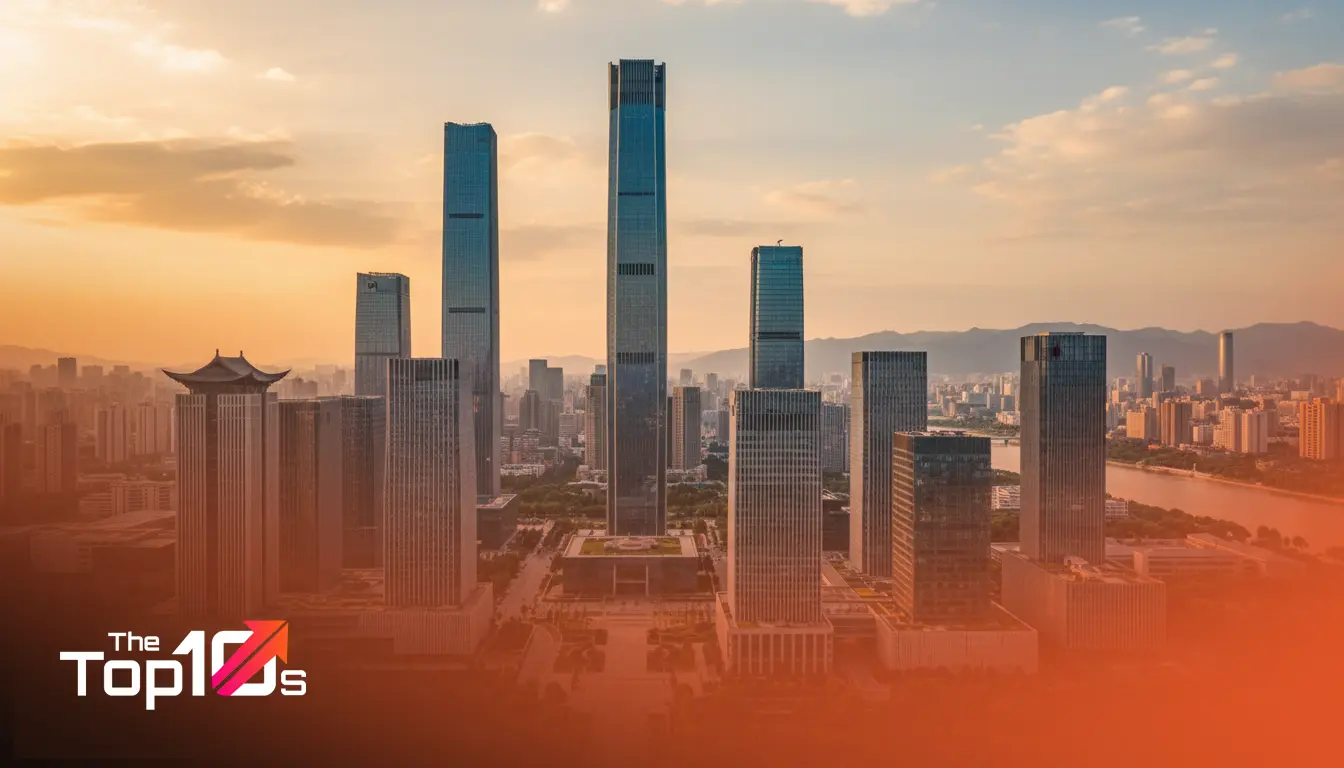
Chengdu is a city of contradictions in the best possible way. Walk down one street and you’re surrounded by bamboo forests and ancient tea houses; turn the corner, and you face the futuristic skyline of the Tianfu New Area. For anyone planning a construction project here—whether it’s a boutique hotel in Jinjiang or a corporate headquarters in the High-Tech Zone—finding the right design partner isn’t just about checking credentials. It’s about finding someone who understands this unique friction between the laid-back “Bashu” culture and rapid modernization.
You might be wondering why the selection process is so critical here specifically. The geography plays a massive role. The Sichuan basin is humid, often cloudy, and prone to specific seismic considerations. An architect who looks good on paper but lacks experience with local environmental constraints can leave you with a building that battles the elements rather than working with them.
This guide cuts through the noise. We aren’t just listing names; we are looking at the design philosophies, technical capabilities, and track records that separate the average firms from the true visionaries.
Quick Takeaways: hiring in Chengdu
- Local Climate Mastery: The best designs account for high humidity and low direct sunlight levels common in the Sichuan basin.
- Regulatory Navigation: Top firms have deep ties with local planning bureaus, essential for smooth approvals in zones like Tianfu.
- Cultural Context: Look for architects who blend modern functionality with nods to Chengdu’s heritage (like timber structures or courtyards).
- Scale Matters: Ensure the firm’s portfolio matches your project scope, from adaptive reuse to skyscrapers.
How We Identified Leading Architects
Curating a list of top-tier talent requires looking beyond flashy renderings. Our approach focuses on the substance behind the portfolio. We analyzed firms based on their tangible presence in Western China and their ability to execute complex ideas.
We looked for consistency in delivery. Does the built reality match the initial concept? We also considered the diversity of their work. A firm that can handle both the intricate detailing of a cultural center and the technical demands of a commercial tower demonstrates a versatility that is invaluable. Furthermore, we assessed their standing within the professional community—peer recognition often signals a level of technical competence that client reviews alone might miss.
Finally, we prioritized firms that demonstrate an understanding of “Place.” Chengdu has a specific architectural vernacular. The professionals listed below don’t just drop generic glass boxes into the city; they design specifically for the context of Chengdu.
List of 10 Best Architects in Chengdu
| Name | Best for |
|---|---|
| CSWADI (China Southwest Architectural Design and Research Institute) | Government projects, large-scale developers, and major infrastructure planning |
| Zaha Hadid Architects (Chengdu Studio) | Developers looking for a “crown jewel” project or institutions wanting a global architectural icon |
| Neri&Hu Design and Research Office | Luxury brands, boutique hotel owners, and clients who value artistic integrity over square footage |
| Aedas | Commercial real estate developers and corporations needing headquarters |
| CLOU Architects | Retail developers and mixed-use projects targeting a younger demographic |
| Vector Architects | Cultural projects or private clients seeking a meditative, thought-provoking design |
| LWK + PARTNERS | Urban renewal projects and large-scale residential developments |
| MUDA-Architects | Tourism projects, restaurants, and clients willing to take a design risk for a high reward |
| Sutherland Hussey Harris | Civic institutions and major public competitions |
| HKS Architects | Hospital administrators and hotel operators |
Top 10 Architects In Chengdu
1. CSWADI (China Southwest Architectural Design and Research Institute)
You cannot discuss architecture in this region without mentioning CSWADI. Established in the 1950s, this is the heavyweight champion of Western China. They aren’t just a firm; they are an institution. While they are a massive state-owned enterprise, their design studios operate with surprising agility and creativity.
Area of Specialization: Large-scale public infrastructure, airports, cultural landmarks, and urban planning.
Why they stand out: Their deep integration with local codes and engineering standards is unmatched. If you have a project that involves complex regulatory hurdles or massive structural engineering feats, CSWADI provides a level of security and capability that smaller firms simply cannot touch. They were instrumental in the design of the Chengdu Tianfu International Airport.
Best Suited For: Government projects, large-scale developers, and major infrastructure planning.
2. Zaha Hadid Architects (Chengdu Studio)
Known globally for parametric design and fluid geometries, ZHA has made a permanent mark on Chengdu with the Science Fiction Museum. Their work here feels almost extraterrestrial, yet it mimics the flow of nature. They don’t do straight lines. Everything is movement.
Area of Specialization: Iconic cultural buildings, futuristic commercial centers, and master planning.
Why they stand out: They bring global prestige. A building designed by ZHA instantly becomes a landmark. Their Chengdu team has adapted the firm’s global design language to fit the local topography, often using software to model water flow and wind patterns to inform the building’s shape.
Best Suited For: Developers looking for a “crown jewel” project or institutions wanting a global architectural icon.
3. Neri&Hu Design and Research Office
Lyndon Neri and Rossana Hu have redefined modern Chinese architecture by looking backward to move forward. Their work often involves “Total Design,” where they handle everything from the building structure down to the furniture inside. Their projects in Chengdu, such as the Valextra flagship, demonstrate a mastery of materials like brick, bronze, and concrete.
Area of Specialization: Boutique hospitality, adaptive reuse, retail, and interior design.
Why they stand out: They create atmosphere. While some architects focus on how a building looks from the street, Neri&Hu focus on how it feels to walk through it. They are masters of light and shadow, which is crucial in Chengdu’s often overcast weather.
Best Suited For: Luxury brands, boutique hotel owners, and clients who value artistic integrity over square footage.
4. Aedas
Aedas acts as a bridge between commercial viability and architectural excellence. They are one of the world’s leading global architecture and design practices, and their Chengdu portfolio is packed with high-density, mixed-use developments. They understand the economics of building tall and building dense.
Area of Specialization: Skyscrapers, mixed-use commercial complexes, and transit-oriented development (TOD).
Why they stand out: Efficiency meets aesthetics. Aedas knows how to maximize floor area ratios (FAR) without sacrificing the visual appeal of the skyline. Their designs often incorporate green terraces and public plazas, breaking up the vertical mass of their towers.
Best Suited For: Commercial real estate developers and corporations needing headquarters.
5. CLOU Architects
If you want fun, social, and vibrant spaces, CLOU is the name to know. Their work often challenges the stark seriousness of modern architecture. They use color, playful geometries, and social corridors to create places where people actually want to hang out. Their work on the Unicentre in Chengdu is a prime example of their geometric, white-and-glass aesthetic.
Area of Specialization: Retail centers, community hubs, and social spaces.
Why they stand out: They understand the “Instagrammability” of architecture without being shallow. They design for foot traffic and social interaction, making their projects highly successful for retail tenants.
Best Suited For: Retail developers and mixed-use projects targeting a younger demographic.
6. Vector Architects
Led by Gong Dong, Vector Architects brings a poetic silence to their work. In a noisy, bustling city, their buildings offer a pause. They are incredibly sensitive to site conditions, often using natural light to sculpt space. While based in Beijing, their influence and projects extend deeply into the architectural conversation across China.
Area of Specialization: Cultural institutions, libraries, and high-end residential.
Why they stand out: Materiality. They don’t just pick a material; they explore its limits. Whether it’s board-formed concrete or locally sourced brick, the tactile quality of their work is distinct.
Best Suited For: Cultural projects or private clients seeking a meditative, thought-provoking design.
7. LWK + PARTNERS
With a strong presence across the Greater Bay Area and Western China, LWK + PARTNERS is a powerhouse in delivering complex urban interventions. If you are looking at development across different regions, you might find our analysis of the top 10 architects in Shenzhen useful for comparison, as firms like LWK bridge these major economic zones effectively.
Area of Specialization: Urban regeneration, heritage conservation, and residential communities.
Why they stand out: They excel at blending the old with the new. In Chengdu, where heritage preservation is becoming increasingly important, their ability to renovate historical blocks while adding modern amenities is highly valued.
Best Suited For: Urban renewal projects and large-scale residential developments.
8. MUDA-Architects
A younger, sharper firm that has gained rapid international attention. MUDA is deeply rooted in the local context of Sichuan. Their “Garden Hotpot Restaurant” project, which snakes through a eucalyptus forest surrounding a lotus pond, went viral globally for its respectful integration with nature.
Area of Specialization: Hospitality, tourism architecture, and experimental small-scale structures.
Why they stand out: They are bold and experimental. They represent the new wave of Chinese architecture that moves away from imitating Western styles to finding a unique local voice.
Best Suited For: Tourism projects, restaurants, and clients willing to take a design risk for a high reward.
9. Sutherland Hussey Harris
This UK-based firm has established a surprising and impressive foothold in Chengdu. They were responsible for the stunning Chengdu Museum in Tianfu Square. Their work is rigorous, clean, and monumental without being oppressive.
Area of Specialization: Museums, galleries, and civic buildings.
Why they stand out: They understand how to design buildings that hold significant cultural weight. The Chengdu Museum is a masterclass in using copper and stone to create a facade that changes with the light, referencing the mountains around the basin.
Best Suited For: Civic institutions and major public competitions.
10. HKS Architects
When the project involves healthcare, sports, or massive hospitality venues, HKS brings American efficiency and global best practices to Chengdu. They understand the operational flows of complex buildings better than almost anyone.
Area of Specialization: Healthcare facilities, hotels, and sports venues.
Why they stand out: It is about performance. A hospital needs to function perfectly before it looks good, and HKS ensures that operational logic drives the design. Their hospitality work focuses on guest experience and operational efficiency.
Best Suited For: Hospital administrators and hotel operators.
What Defines a Great Architect in Chengdu?
Architecture in this city is not a “one size fits all” discipline. The best professionals share a few specific traits that allow them to succeed in the Sichuan Basin.
Mastery of Light and Humidity
Chengdu is famous for having fewer sunny days than other major Chinese cities. A great architect knows how to capture diffused light. They use skylights, reflective materials, and open courtyards to bring brightness into interiors without relying solely on artificial lighting. Furthermore, the humidity here is relentless. Superior designs incorporate cross-ventilation strategies and mold-resistant materials.
The “Linpan” Philosophy
Traditional Chengdu settlements followed the “Linpan” system—scattered dwellings shaded by woods and surrounded by water. Modern architects who succeed here often reinterpret this concept, integrating green belts and water features directly into high-density developments.
Seismic Responsibility
Situated near active fault lines, Chengdu requires rigorous structural engineering. The best architects don’t view seismic codes as a hindrance; they view them as a creative constraint, often using exposed cross-bracing or base-isolation techniques as part of the visual aesthetic.
How to Choose the Right Architect for Your Needs
Selecting from the list above depends entirely on your specific goals. Here is a framework to help you make that decision.
1. Define Your “Project Personality”
Is your project purely functional (like a data center) or is it a brand statement (like a flagship store)? If it is the former, look for firms like CSWADI or HKS. If it is the latter, boutiques like Neri&Hu or MUDA are likely better fits.
2. Evaluate the Communication Loop
Architecture is a long relationship. If you are an international investor, does the firm have a robust bilingual team? Misunderstandings in the design phase can lead to costly errors during construction. Ask who your day-to-day contact will be—do not just be dazzled by the partner who pitches the project.
3. Ask About the “Approval Roadmap”
Chengdu’s planning regulations can be complex, especially regarding height restrictions and green building standards. Ask prospective architects to explain their strategy for getting permits. Their answer will reveal how well they know the local system.
Common Mistakes to Avoid
- Ignoring Maintenance: Chengdu’s damp climate ruins cheap facades. Ensure the architect specifies durable, self-cleaning materials.
- Overlooking Interiors: Some clients spend the budget on the shell and leave the inside as an afterthought. The best projects integrate both.
- Hiring for the Wrong Scale: Don’t hire a skyscraper specialist to design a 500-square-meter villa. They won’t give it the attention it needs.
Frequently Asked Questions
How much do architects in Chengdu typically charge?
Fees vary wildly based on reputation and scope. Standard fees might range from 3% to 8% of construction costs, but international “starchitect” firms will charge a premium, often billing fixed fees for design concepts. Always clarify if the fee includes engineering and local design institute (LDI) collaboration.
Do foreign architects need a local partner in Chengdu?
Yes. By law, foreign design firms usually must collaborate with a Local Design Institute (LDI) like CSWADI to stamp the drawings for construction. The international firm does the design; the LDI ensures code compliance.
What is the biggest challenge for construction in Chengdu?
Beyond the permitting process, logistics can be tricky in the older parts of the city due to traffic and narrow streets. Additionally, scheduling construction around the rainy season is vital to prevent delays in foundation work.
Is sustainable design mandatory in Chengdu?
It is becoming that way. The government is pushing hard for green building certifications. Architects familiar with China’s 3-Star Green Building standard or LEED certification are increasingly necessary for commercial projects.
How long does the design process usually take?
For a standard commercial building, expect 3 to 6 months for schematic design and design development, followed by another 3 to 4 months for construction documents (handled by the LDI). Complex approvals can extend this timeline significantly.
Moving Forward with Your Vision
Chengdu offers a canvas unlike any other city in China. It demands a balance of boldness and sensitivity. The architects listed here have proven they can walk that line, delivering spaces that function beautifully while respecting the local culture.
Don’t rush the selection process. Review their recent work, visit their completed buildings in the city if possible, and have honest conversations about budget and timelines. The right partner will not just design a building for you; they will help you navigate the complex ecosystem of construction in Western China. For more insights on global architectural standards, resources like the Royal Institute of British Architects (RIBA) or ArchDaily can provide excellent benchmarks for what to expect in high-quality design.
Your project has the potential to become part of Chengdu’s architectural fabric. Choose a team that treats that responsibility with the seriousness it deserves.