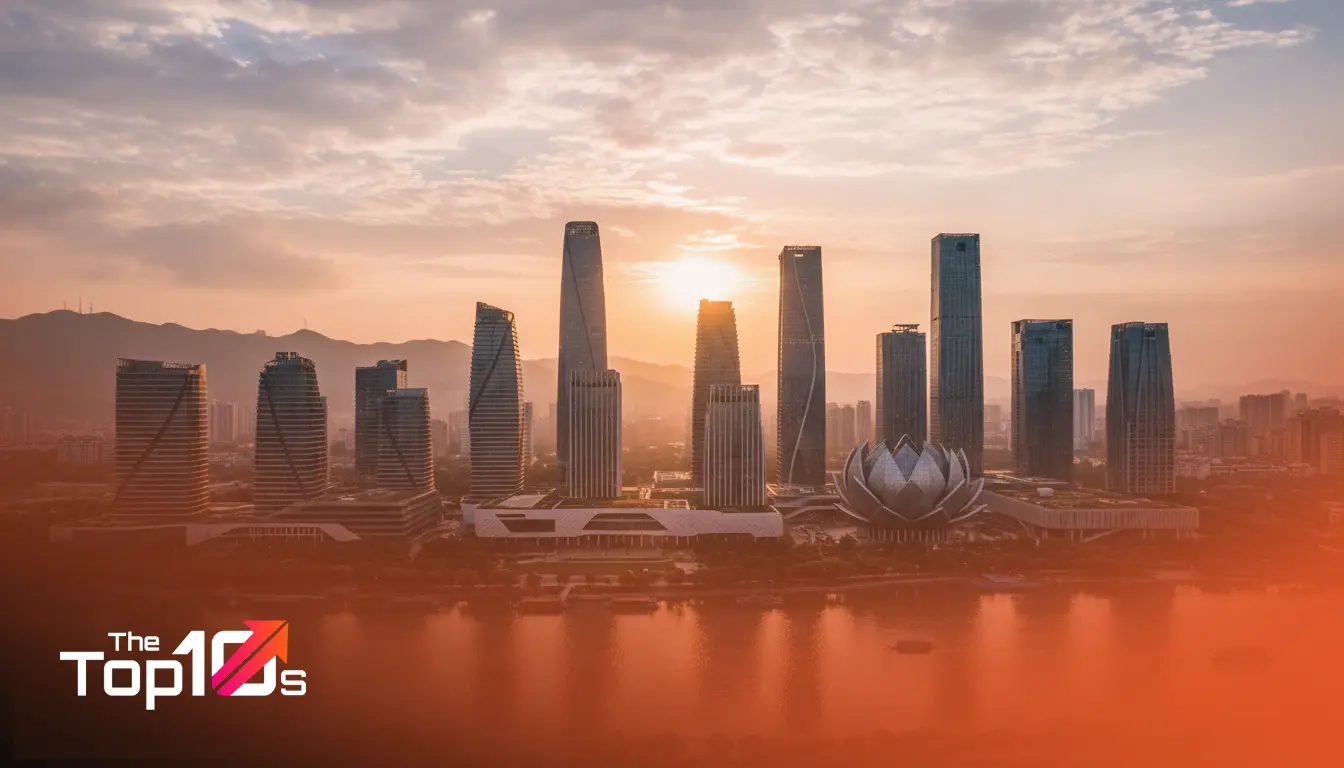
Hangzhou is a city of distinct duality. On one side, you have the misty, poetic allure of West Lake and ancient tea plantations; on the other, the high-octane energy of the Binjiang tech district. Building here requires a professional who can speak both languages fluently. Whether you are planning a boutique hotel in the hills or a headquarters in the city center, finding the right design partner is the single most critical step in your project.
You might be wondering why the selection process is so heavily emphasized here compared to other cities. The reality is that Hangzhou enforces strict preservation codes alongside ambitious urban planning goals. A mediocre design won’t just look out of place; it often won’t get approved. You need a partner who understands the nuance of “Jiangnan” aesthetics while possessing the technical capability to execute modern engineering feats.
Quick Takeaways: Hiring in Hangzhou
- Context is King: The best local architects prioritize integration with nature (landscape and water) over flashy, standalone icons.
- Regulatory Navigation: Look for professionals with a track record of smooth approvals in Zhejiang Province.
- Hybrid Expertise: Top-tier firms here often blend traditional craftsmanship with digital fabrication.
- Timeline Reality: Good design takes time. Expect the concept phase to last longer due to detailed site analysis requirements.
This guide cuts through the noise to highlight the experienced architectural professionals in Hangzhou who are shaping the city’s skyline and rural edges today. We look beyond glossy renderings to find the people who actually get things built.
How We Identified Leading Architects
Selecting a design professional is subjective, but evaluating their capability is not. We didn’t just look for who has the most Instagram followers. Instead, our methodology focused on the tangible signals of reliability and design integrity.
We examined the depth of portfolios, specifically looking for completed projects within the Yangtze River Delta region. A concept on paper is vastly different from a standing structure that has weathered a few rainy seasons. We also considered educational backgrounds and professional licensing, ensuring that the individuals listed possess the technical rigor required for complex builds.
Furthermore, reputation within the industry matters. We looked for architects who are respected by construction teams and engineers, not just design critics. The professionals listed below demonstrate a consistent ability to balance budget constraints with high-level design aspirations, based on public records and industry presence.
List of 10 Best Architects in Hangzhou
| Name | Best for |
|---|---|
| Wang Shu (Amateur Architecture Studio) | Clients looking for a landmark cultural project that prioritizes artistic integrity and historical dialogue over commercial speed. |
| Meng Fanhao (line+ studio) | Developers and government entities focused on tourism, rural renewal, or boutique hospitality projects. |
| Principals at GOA (Group of Architects) | Commercial developers and high-net-worth individuals building private villas or estates. |
| Ruan Hao (LYCS Architecture) | Educational institutions and tech companies looking for a headquarters that reflects innovation. |
| The Design Leads at gad | Large-scale investment projects where risk management and design excellence must coexist. |
| Chen Hao (The Architectural Design & Research Institute of Zhejiang University – UAD) | Municipal projects or corporate campuses requiring complex engineering solutions. |
| Shen Mo (AT DESIGN) | Private homeowners and hospitality entrepreneurs looking to create viral, destination properties. |
| Zhang Lei (AZL Architects) | Clients who appreciate brutalist undertones mixed with traditional spatial layouts. |
| Wutopia Lab (Yu Ting) | Retail and cultural clients who want to create a strong brand identity through architecture. |
| Zhao Yang (Zhao Yang Architects) | Clients seeking a retreat-style atmosphere or a private gallery. |
Top 10 Architects In Hangzhou
The following list represents a mix of internationally acclaimed masters, leaders of major design institutes, and boutique studio principals who are redefining what it means to build in Zhejiang.
1. Wang Shu (Amateur Architecture Studio)
It is impossible to discuss architecture in this region without starting here. As the first Chinese citizen to win the Pritzker Architecture Prize, Wang Shu, alongside his partner Lu Wenyu, has fundamentally shifted the global conversation regarding Chinese construction. Their studio is based in Hangzhou and is deeply intertwined with the China Academy of Art.
Specialization: Cultural institutions, academic campuses, and heritage reclamation.
Experience: Over 25 years of practice.
Notable Strengths: Wang Shu is renowned for using recycled materials—tiles, bricks, and stones salvaged from demolition sites. His approach is tactile and deeply rooted in history. He doesn’t just design buildings; he curates memories.
Best Suited For: Clients looking for a landmark cultural project that prioritizes artistic integrity and historical dialogue over commercial speed.
2. Meng Fanhao (line+ studio)
Meng Fanhao represents the new wave of Chinese architecture that bridges the gap between rural revitalization and modern luxury. As a co-founder of line+ studio, he has gained massive attention for projects like the Dongziguan Affordable Housing, which reimagined rural living through a contemporary lens.
Specialization: Rural revitalization, high-end resorts, and public infrastructure.
Experience: Approximately 15+ years.
Notable Strengths: He excels at “acupuncture” architecture—precise interventions that uplift an entire area. His work often features striking rooflines that mimic traditional calligraphy strokes but executed with modern steel and glass.
Best Suited For: Developers and government entities focused on tourism, rural renewal, or boutique hospitality projects.
3. Principals at GOA (Group of Architects)
GOA is not a single person, but the design principals here are among the most influential in the city. Historically associated with Greentown, one of China’s premier developers, this firm sets the standard for high-quality residential and commercial construction in Hangzhou.
Specialization: Luxury residential complexes, five-star hotels, and mixed-use commercial developments.
Experience: Founded in 1998, with senior principals holding 20+ years of experience.
Notable Strengths: If you want distinct execution and premium detailing, this is the team. They have mastered the “modern Chinese” style—clean lines, heavy use of stone, and layouts that cater to affluent lifestyles.
Best Suited For: Commercial developers and high-net-worth individuals building private villas or estates.
4. Ruan Hao (LYCS Architecture)
Ruan Hao brings a youthful, energetic perspective to the Hangzhou market. His firm, LYCS, is known for thinking outside the box, particularly in educational and office design. He is often recognized for his ability to solve high-density problems with playful, innovative solutions.
Specialization: Educational facilities, creative office spaces, and interior architecture.
Experience: 10+ years leading his own practice.
Notable Strengths: Ruan creates spaces that encourage interaction. His designs for schools often feature rooftop running tracks or flexible learning spaces that challenge the rigid traditional classroom model.
Best Suited For: Educational institutions and tech companies looking for a headquarters that reflects innovation.
5. The Design Leads at gad
Similar to GOA, gad is a powerhouse in the Chinese architectural scene. Their Hangzhou team is responsible for some of the most refined commercial and cultural projects in the city. The partners here focus heavily on the quality of construction and the longevity of the building envelope.
Specialization: Large-scale urban design, commercial hubs, and high-end housing.
Experience: Established in 1997.
Notable Strengths: They possess a sophisticated understanding of scale. Whether it is a massive exhibition center or a delicate tea house, their work maintains a sense of proportion that feels right for Hangzhou.
Best Suited For: Large-scale investment projects where risk management and design excellence must coexist.
6. Chen Hao (The Architectural Design & Research Institute of Zhejiang University – UAD)
As a leading figure within UAD, Chen Hao leverages the immense resources of one of China’s top universities. UAD is the engine behind many of the city’s major infrastructure and public works projects, blending academic research with practical application.
Specialization: Public buildings, sports venues, and large-scale master planning.
Experience: 20+ years.
Notable Strengths: His work is characterized by technical precision and structural boldness. Working with a university institute ensures that the engineering backing the design is cutting-edge.
Best Suited For: Municipal projects or corporate campuses requiring complex engineering solutions.
7. Shen Mo (AT DESIGN)
Shen Mo has carved out a niche in the boutique market. Known widely on social media for his stunning “homestay” (guesthouse) designs in the tea hills surrounding Hangzhou, he brings a Zen minimalist approach that appeals to the younger demographic.
Specialization: Boutique hotels, private residences, and interior renovation.
Experience: Approx. 10 years.
Notable Strengths: He understands the “Instagram moment.” His spaces are photogenic, utilizing white space, natural light, and integration with water features to create serene environments.
Best Suited For: Private homeowners and hospitality entrepreneurs looking to create viral, destination properties.
8. Zhang Lei (AZL Architects)
While active across Nanjing and Hangzhou, Zhang Lei’s influence in the Jiangnan region is profound. His work often deals with the tension between the new rural and the old urban, using brick and concrete in experimental ways.
Specialization: Cultural centers, religious buildings, and experimental housing.
Experience: 20+ years.
Notable Strengths: Zhang Lei avoids ornamentation. His buildings are often geometric and austere but reveal rich textures upon closer inspection. He focuses heavily on how a building sits on the land.
Best Suited For: Clients who appreciate brutalist undertones mixed with traditional spatial layouts.
9. Wutopia Lab (Yu Ting)
Though based in Shanghai, Yu Ting and Wutopia Lab have a significant footprint in the Zhejiang region. Known for “magical realism” in architecture, Yu Ting brings color, narrative, and distinct theatricality to his projects that is rare in the typically reserved Hangzhou market.
Specialization: Bookstores, museums, and urban renewal installations.
Experience: 20+ years.
Notable Strengths: If you want boring, look elsewhere. Yu Ting uses symbolism and bold colors to tell a story. His projects often become instant landmarks due to their visual distinctiveness.
Best Suited For: Retail and cultural clients who want to create a strong brand identity through architecture.
10. Zhao Yang (Zhao Yang Architects)
Having studied locally and worked under heavyweights in the industry, Zhao Yang has established a practice that is quiet, thoughtful, and deeply connected to the vernacular of East China. His work is less about size and more about the atmosphere.
Specialization: Small to medium-scale cultural and hospitality projects.
Experience: 10+ years.
Notable Strengths: He excels at understanding the geometry of a site. His buildings often feel like they grew out of the ground rather than being placed upon it. There is a strong emphasis on flow and courtyard living.
Best Suited For: Clients seeking a retreat-style atmosphere or a private gallery.
What Defines a Great Architect in Hangzhou?
Understanding the local architectural vernacular is non-negotiable here. A great architect in Hangzhou does not simply copy Western trends; they interpret them through the lens of local geography and culture. The city is defined by its humidity, its distinct seasons, and its visual connection to water. Therefore, material selection is paramount. Professionals here must know which woods will rot, which stones will moss beautifully, and how to ventilate a space passively.
Technology also plays a massive role. With Hangzhou being a global tech hub, leading architects are increasingly expected to utilize Building Information Modeling (BIM) to ensure efficiency. This digital capability allows for better cost control and fewer surprises during the construction phase. The intersection of shanshui (mountain-water) aesthetics with parametric design is where the most exciting work is happening right now.
Finally, communication is a defining trait. The approval processes in Hangzhou can be bureaucratic. An architect who can articulate their vision clearly to urban planning boards—and defend the integrity of the design—is an asset worth their weight in gold.
How to Choose the Right Architect for Your Needs
Hiring a design professional is a recruitment process. You are hiring a partner for a journey that could last two to three years. Here is how to ensure you make the right choice.
Define Your Scope Early
Are you building a private villa in the suburbs or renovating a heritage shop house? Some architects listed above specialize in grand institutional projects, while others thrive on intimate residential details. Match the firm’s scale to your project’s scale.
Ask About Their Local Network
Design is only half the battle. Ask prospective candidates about their relationships with local contractors and engineers. An architect who works in a silo may design a beautiful building that is unbuildable. You want someone who knows who to call when issues arise on site.
Review the “Boring” Documents
Don’t just look at the renderings. Ask to see a set of construction drawings from a previous project. Even if you don’t understand every line, the level of detail and organization in these documents is a strong indicator of how they manage a project. Disorganized drawings usually lead to a chaotic construction site.
If you are looking at projects further west, comparing the talent pool here with the Top 10 Architects In Chengdu can offer perspective on regional design differences, particularly regarding how different cities handle density and heritage.
Frequently Asked Questions
How much do architects in Hangzhou typically charge?
Fees vary wildly based on reputation and scope. Standard practices may charge a percentage of construction costs (typically 3% to 10%), while renowned “star” architects or boutique studios may charge a fixed design fee that is significantly higher. Always clarify if the fee includes engineering and landscape design or just the architectural shell.
Do I need a local architect if I have a design from abroad?
Yes. Even if you have a design concept from an international firm, you are legally required to have a Local Design Institute (LDI) stamp the drawings for approval. Many of the firms listed above, like UAD or gad, often act as the executive architect for international collaborations.
How long does the design process take?
For a custom residential project or small commercial build, expect the design phase (from concept to construction documents) to take 4 to 8 months. Rushing this phase almost always results in higher construction costs later due to changes and errors.
Can these architects help with interior design as well?
Most of the boutique firms listed, such as LYCS or AT DESIGN, offer integrated architecture and interior design services. Larger institutes may have separate departments. It is generally seamless to have one team handle both to ensure the exterior and interior languages match.
Is sustainability a mandatory requirement in Hangzhou?
Increasingly, yes. Green building standards in China are becoming stricter. Local architects are well-versed in these codes, including requirements for insulation, energy usage, and rainwater management. Ignoring these early in the design can lead to rejection during the permitting phase.
Conclusion
Building in Hangzhou is an opportunity to contribute to one of the most culturally rich skylines in Asia. The decision of who to hire should not be taken lightly. The architects listed here offer a blend of artistic vision and technical capability, but the right fit ultimately depends on your specific goals and personality.
Take the time to meet with multiple firms. innovative design is important, but shared values and clear communication are what get a project across the finish line. Whether you choose a large institute or a boutique studio, ensure they respect the unique environment of Hangzhou as much as you do. Your investment deserves nothing less than a partner who views your project as a legacy, not just another job number.
For further reading on global architectural standards and professional ethics, resources from the Royal Institute of British Architects (RIBA) and the Pritzker Architecture Prize archives provide excellent context on what constitutes world-class design excellence.