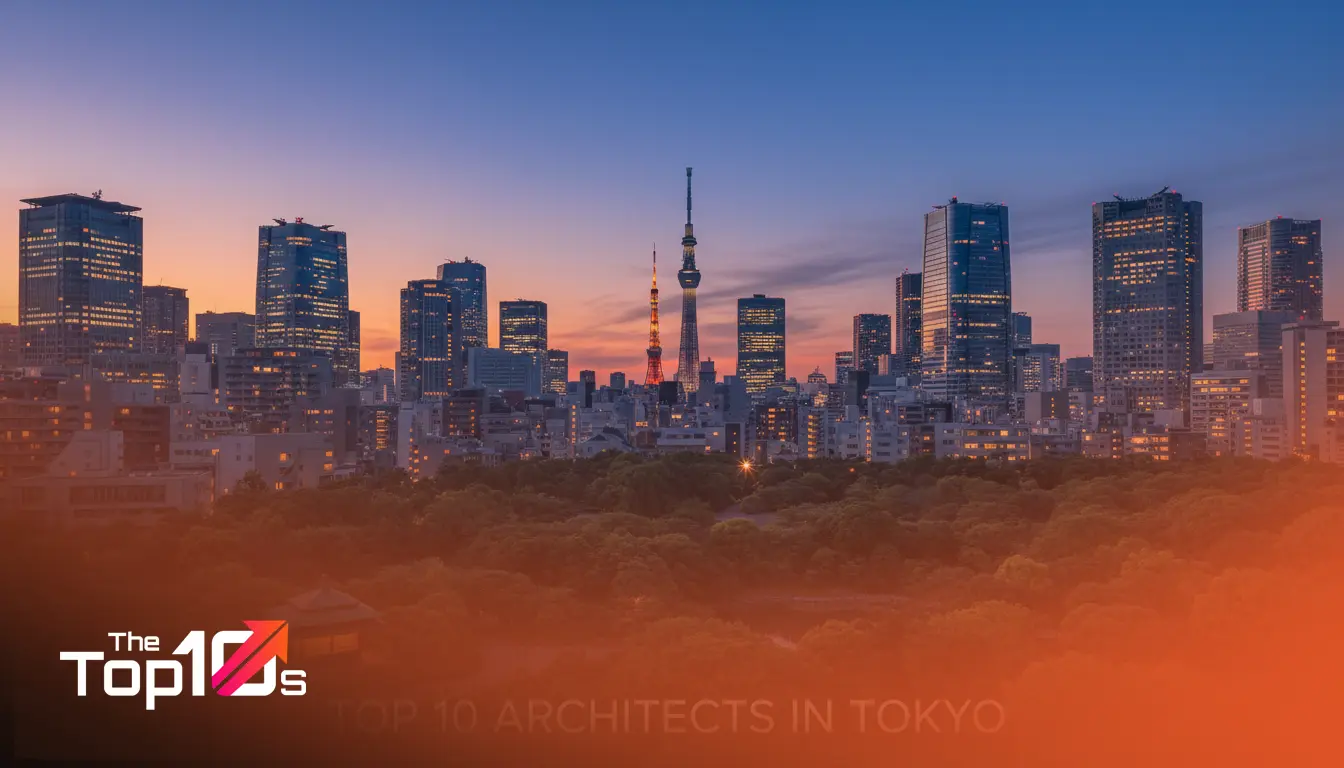
Building in Tokyo isn’t just about aesthetics; it’s about solving a high-stakes puzzle. You’re dealing with incredibly high land values, strict sunlight regulations, and the ever-present reality of seismic activity. If you are planning a project here, you likely realize that standard solutions don’t apply. The density of the city requires a level of ingenuity that you simply don’t see elsewhere.
Finding the right partner to navigate these challenges is perhaps the most critical step in your development process. Whether you are looking to squeeze a comfortable family home onto a 15-tsubo (approx. 50 sqm) lot or planning a commercial showroom in Aoyama, the architect you choose dictates the success of the investment.
This guide cuts through the noise of the thousands of registered firms in the capital. We look at the top architects in Tokyo who aren’t just designing buildings but are reshaping how people live and work in one of the world’s most complex urban environments.
Quick Takeaways: Tokyo Architecture
- Seismic Safety is Priority #1: Top firms prioritize advanced structural engineering alongside aesthetics.
- Small Spaces, Big Impact: Tokyo architects are global leaders in “micro-housing” and efficient spatial usage.
- Regulatory Navigation: Understanding Nissho-ken (sunlight rights) and zoning is just as important as the design concept.
- Communication Style: For international clients, finding bilingual firms or those accustomed to Western communication styles is crucial.
How We Identified Leading Architects
Selecting the best architects in Tokyo requires looking beyond flashy Instagram renders. Our evaluation process focuses on the substance behind the portfolio. We examined firms based on their ability to execute actual builds within the unique constraints of the Kanto Plain.
We looked for professionals who demonstrate a deep understanding of structural integrity and material innovation. A key indicator was the diversity of their work—can they handle the intimacy of a private residence as effectively as the technical demands of a commercial complex? We also considered their standing within the professional community, looking for affiliations with organizations like the Japan Institute of Architects (JIA) and their history of navigating Tokyo’s rigorous permitting system.
The architects listed below represent a mix of Pritzker Prize laureates and established studio heads who have consistently delivered high-quality, thoughtful work. They are selected based on public reputation, project durability, and design philosophy.
List of 10 Best Architects in Tokyo
| Name | Best for |
|---|---|
| Kengo Kuma & Associates | High-end developers and institutions looking for a landmark project that emphasizes sustainability and natural materials. |
| SANAA (Kazuyo Sejima + Ryue Nishizawa) | Clients seeking avant-garde, minimalist designs that prioritize light, air, and spatial fluidity over traditional privacy. |
| Atelier Bow-Wow | Individual homeowners with small or difficult plots of land who want a highly functional, custom home. |
| Shigeru Ban Architects | Clients who value ethical architecture, sustainability, and convertible spaces that adapt to the seasons. |
| Sou Fujimoto Architects | Visionary clients willing to sacrifice some conventional privacy for a living space that functions as a piece of art. |
| Tezuka Architects | Families prioritizing child-rearing environments, health, and a connection to the elements. |
| Suppose Design Office | Commercial clients needing “instagrammable” retail spaces or homeowners wanting a raw, industrial-chic aesthetic. |
| Keiji Ashizawa Design | Clients who appreciate “honest design,” craftsmanship, and understated luxury. |
| Klein Dytham architecture (KDa) | Businesses and developers needing high-energy, engaging spaces that draw crowds and build community. |
| Tadao Ando Architect & Associates | Clients seeking a monumental, timeless structure that serves as a sanctuary from the city. |
Top 10 Architects In Tokyo
Here are ten architectural practices defining the skyline and streetscape of modern Tokyo.
1. Kengo Kuma & Associates
Specialization: Cultural Institutions, Hospitality, Residential
Experience: Established in 1990
You cannot talk about modern Japanese architecture without mentioning Kengo Kuma. His philosophy revolves around “negative architecture,” where the building seeks to merge with its surroundings rather than dominate them. He is famous for reinterpreting traditional Japanese materials—wood, bamboo, and stone—for contemporary use.
Why they stand out: Kuma’s firm is masterful at bringing warmth to concrete jungles. His design for the Japan National Stadium showcased his ability to handle massive scale while maintaining a human, tactile feel using cedar louvers. For clients wanting a structure that feels organic and deeply rooted in Japanese tradition without looking dated, Kuma is the standard-bearer.
Best for: High-end developers and institutions looking for a landmark project that emphasizes sustainability and natural materials.
2. SANAA (Kazuyo Sejima + Ryue Nishizawa)
Specialization: Museums, Public Works, Contemporary Residential
Experience: Established in 1995
SANAA represents the pinnacle of lightness and transparency. Kazuyo Sejima and Ryue Nishizawa, both Pritzker laureates, create buildings that often feel like they are floating or disappearing. Their work frequently utilizes glass and white steel to blur the boundaries between the interior and the exterior.
Why they stand out: Their approach creates fluid spaces that encourage social interaction. Unlike rigid traditional layouts, a SANAA building often features open plans and non-hierarchical spaces. In a dense city like Tokyo, their ability to filter light and create a sense of openness in tight quarters is exceptional.
Best for: Clients seeking avant-garde, minimalist designs that prioritize light, air, and spatial fluidity over traditional privacy.
3. Atelier Bow-Wow
Specialization: Micro-Architecture, Urban Research, Residential
Experience: Established in 1992
Founded by Yoshiharu Tsukamoto and Momoyo Kaijima, Atelier Bow-Wow is famous for coining the term “Pet Architecture.” This refers to the tiny, odd-shaped buildings squeezed into Tokyo’s leftover spaces. They are the masters of density.
Why they stand out: They turn constraints into features. If you have a strangely shaped plot of land that other architects say is unbuildable, Atelier Bow-Wow will likely find a brilliant solution. They view the chaotic urban context of Tokyo not as a problem, but as a lively ecosystem to participate in. Their “behaviorology” approach ensures the design fits exactly how the occupants live.
Best for: Individual homeowners with small or difficult plots of land who want a highly functional, custom home.
4. Shigeru Ban Architects
Specialization: Sustainable Design, Disaster Relief, Cultural
Experience: Established in 1985
Shigeru Ban is globally recognized for his humanitarian work and his innovative use of paper tubes as structural elements. However, his permanent works in Tokyo are equally impressive, characterized by “invisible structures” and seamless transitions between inside and out.
Why they stand out: Ban challenges the notion of what a building material can be. His designs often feature movable walls or shutter systems that completely open a house to the outdoors. His “Curtain Wall House” in Tokyo is a prime example of his radical approach to privacy and openness.
Best for: Clients who value ethical architecture, sustainability, and convertible spaces that adapt to the seasons.
5. Sou Fujimoto Architects
Specialization: Residential, Experimental Public Spaces
Experience: Established in 2000
Sou Fujimoto views architecture as something between nature and artifact. His “primitive future” concept often results in structures that look like grids, forests, or clouds. He creates spaces that challenge how we define a “room.”
Why they stand out: Fujimoto’s “House NA” in Tokyo is a vertical accumulation of glass boxes, offering a completely new way to live in a city. He strips away heavy walls, offering a lifestyle that feels connected to the street yet elevated above it. His work is visually striking and intellectually stimulating.
Best for: Visionary clients willing to sacrifice some conventional privacy for a living space that functions as a piece of art.
6. Tezuka Architects
Specialization: Residential, Educational (Kindergartens), Medical
Experience: Established in 1994
Takaharu and Yui Tezuka create buildings that facilitate life and happiness. They are famous for the “Roof House,” where the family lives on the roof as much as inside, and the Fuji Kindergarten, which is an oval roof deck where kids run endlessly.
Why they stand out: Their designs are incredibly human-centric and often playful. They prioritize fresh air, sunlight, and family connection. In a Tezuka house, walls are often optional, and the architecture encourages movement. They understand that a home is a backdrop for family memories, not just a shelter.
Best for: Families prioritizing child-rearing environments, health, and a connection to the elements.
7. Suppose Design Office
Specialization: Commercial Interiors, Residential, Hospitality
Experience: Established in 2000
Led by Makoto Tanijiri and Ai Yoshida, Suppose Design Office blurs the line between furniture, interior design, and architecture. They often use raw materials like concrete and wood in unexpected ways, creating spaces that feel modern but lived-in.
Why they stand out: They are excellent at manipulating volume and perception. Even in budget-constrained projects, they manage to create a sense of luxury through clever material choices and lighting. Their commercial work, such as hotel lobbies and retail stores in Tokyo, is trendy and highly photogenic.
Best for: Commercial clients needing “instagrammable” retail spaces or homeowners wanting a raw, industrial-chic aesthetic.
8. Keiji Ashizawa Design
Specialization: Residential, Product Design, Metalwork
Experience: Established in 2005
Keiji Ashizawa’s background includes steel fabrication, which gives his architecture a distinct sense of “honest construction.” He founded Ishinomaki Laboratory, a DIY furniture brand, showing his dedication to functional, simple design.
Why they stand out: His work is quiet, logical, and beautifully detailed. He doesn’t rely on gimmicks. An Ashizawa house is about the perfect joinery of a staircase or the exact framing of a view. His “paralllel” design approach means he considers the furniture and the architecture simultaneously.
Best for: Clients who appreciate “honest design,” craftsmanship, and understated luxury.
9. Klein Dytham architecture (KDa)
Specialization: Retail, Hospitality, Office, Community Spaces
Experience: Established in 1991
Founded by Astrid Klein and Mark Dytham, this firm brings a vibrant, international energy to Tokyo. They are the minds behind the Daikanyama T-Site, often cited as one of the world’s most beautiful bookstores.
Why they stand out: They understand how to create “destinations.” Their use of pattern, color, and texture stands in contrast to the typical Japanese minimalism. They are also the founders of PechaKucha Night, demonstrating their deep connection to the creative community. As foreign architects fully embedded in Tokyo, they bridge cultures effortlessly.
Best for: Businesses and developers needing high-energy, engaging spaces that draw crowds and build community.
10. Tadao Ando Architect & Associates
Specialization: Cultural, Spiritual, High-end Residential
Experience: Established in 1969
A self-taught architect and former boxer, Tadao Ando is a living legend. His signature style involves smooth, unadorned concrete walls, geometric precision, and a masterful play of light and shadow.
Why they stand out: An Ando building is a spiritual experience. By restricting the material palette to concrete and glass, he forces the inhabitant to focus on the light, the wind, and the space itself. While his office is based in Osaka, his influence and projects in Tokyo (like the Omotesando Hills or 21_21 Design Sight) are profound.
Best for: Clients seeking a monumental, timeless structure that serves as a sanctuary from the city.
What Defines a Great Architect in Tokyo?
Architecture in Tokyo differs from almost anywhere else in the world. The criteria for “greatness” here goes beyond visual appeal; it is about mastering the invisible forces of the city.
Mastery of “Ma” (Negative Space)
In a city where land is the most expensive commodity, how an architect treats empty space is vital. The Japanese concept of Ma isn’t just about emptiness; it’s about the interval between things. Great local architects use courtyards, light wells, and setbacks to make a 60-square-meter house feel like a sanctuary rather than a cage.
Seismic and Regulatory Ingenuity
Japan has some of the strictest building codes in the world. A top-tier architect doesn’t just hand off structural issues to an engineer; they integrate structural bracing into the aesthetic. They know how to navigate Nissho-ken (sunlight rights), which dictates how a building’s height and angle must not steal sun from neighbors. This regulation is why so many Tokyo roofs have that distinctive slanted “cut-off” shape.
Global Context and Urban Density
Architectural innovation isn’t limited to Japan. Similar rapid urbanization challenges are driving creativity elsewhere. For instance, looking at the Top 10 Architects In Hangzhou reveals parallel trends in balancing heritage with modernity. However, Tokyo’s specific mix of ancient zoning laws and futuristic technology creates a unique design vernacular that requires local expertise.
How to Choose the Right Architect for Your Needs
Hiring an architect is a relationship that will last two to three years. Here is how to ensure you pick the right partner.
1. Define Your “Must-Haves” vs. “Nice-to-Haves”
Before meeting anyone, clarify your non-negotiables. Do you need a garage? (Rare and expensive in central Tokyo). Do you need absolute soundproofing? Are you willing to climb stairs, or is an elevator mandatory? Architects like Sou Fujimoto might suggest ladders and glass floors—if that doesn’t fit your lifestyle, knowing this early saves time.
2. The Portfolio Check
Look for projects of a similar scale to yours. A firm famous for museums might not give a private renovation the attention it needs. Conversely, a boutique firm might struggle with the permitting required for a commercial tower. Ask to visit a completed project to see how the materials have aged after five or ten years.
3. Communication and Language
If you do not speak fluent Japanese, this is a major factor. Construction terminology is complex. Some firms, like Klein Dytham or Kengo Kuma, have robust international teams. Smaller ateliers may require you to hire a separate project manager to bridge the language gap.
4. Understanding the Fee Structure
Architectural fees in Japan typically range from 10% to 15% of the construction cost. However, “star” architects may charge more. Be clear about what this fee covers. Does it include structural engineering? Site supervision? Interior fittings? Transparency here prevents conflict later.
Frequently Asked Questions
How much does it cost to build a house in Tokyo?
Construction costs vary wildly, but for a custom-designed home by a reputable architect, you should budget between 800,000 to 1,500,000 JPY per tsubo (3.3 sqm). This does not include the land cost. Prices have risen recently due to material shortages and labor costs.
Can I build a western-style home in Tokyo?
Yes, but you must comply with Japanese building standards. Insulation standards in Japan have historically been lower than in Europe or North America, though this is changing. If you want high-performance insulation or central heating, you must specify this early, as it is not the default in many Japanese builds.
How long does the design and build process take?
For a custom home, expect the process to take 12 to 18 months minimum. The design and permitting phase alone can take 6 months. Actual construction for a timber-frame house usually takes 6 months, while reinforced concrete takes longer.
Do I need an architect for a renovation?
For cosmetic changes (wallpaper, kitchen swap), a “reform” company is sufficient. However, if you are moving walls, adding windows, or reinforcing the structure against earthquakes, you absolutely need a qualified architect (Kenchikushi) to ensure safety and legal compliance.
What is the difference between a 1st Class and 2nd Class Architect in Japan?
A Kenchikushi (Architect) is licensed by the government. A 1st Class Architect can design buildings of any structure or size. A 2nd Class Architect is limited to smaller scale buildings, typically wooden residential structures. For most private homes, a 2nd Class license is sufficient, but top firms are usually led by 1st Class Architects.
Moving Forward with Your Project
Building in Tokyo is an intense experience, but the reward is living in a space that is custom-tailored to your life in one of the world’s most exciting cities. The architects listed here represent the best of the best, but the “right” choice depends entirely on your specific vision.
Take the time to meet with multiple firms. Look for a partner who listens more than they talk, and who shows excitement not just for the design, but for solving the specific problems your site presents. Great architecture in Tokyo isn’t just about the way a building looks; it’s about the quality of life it provides in the spaces between the walls.
For further inspiration on global design standards, resources like ArchDaily offer extensive project libraries. Start your research, define your scope, and enjoy the process of creating something permanent in this ever-changing metropolis.