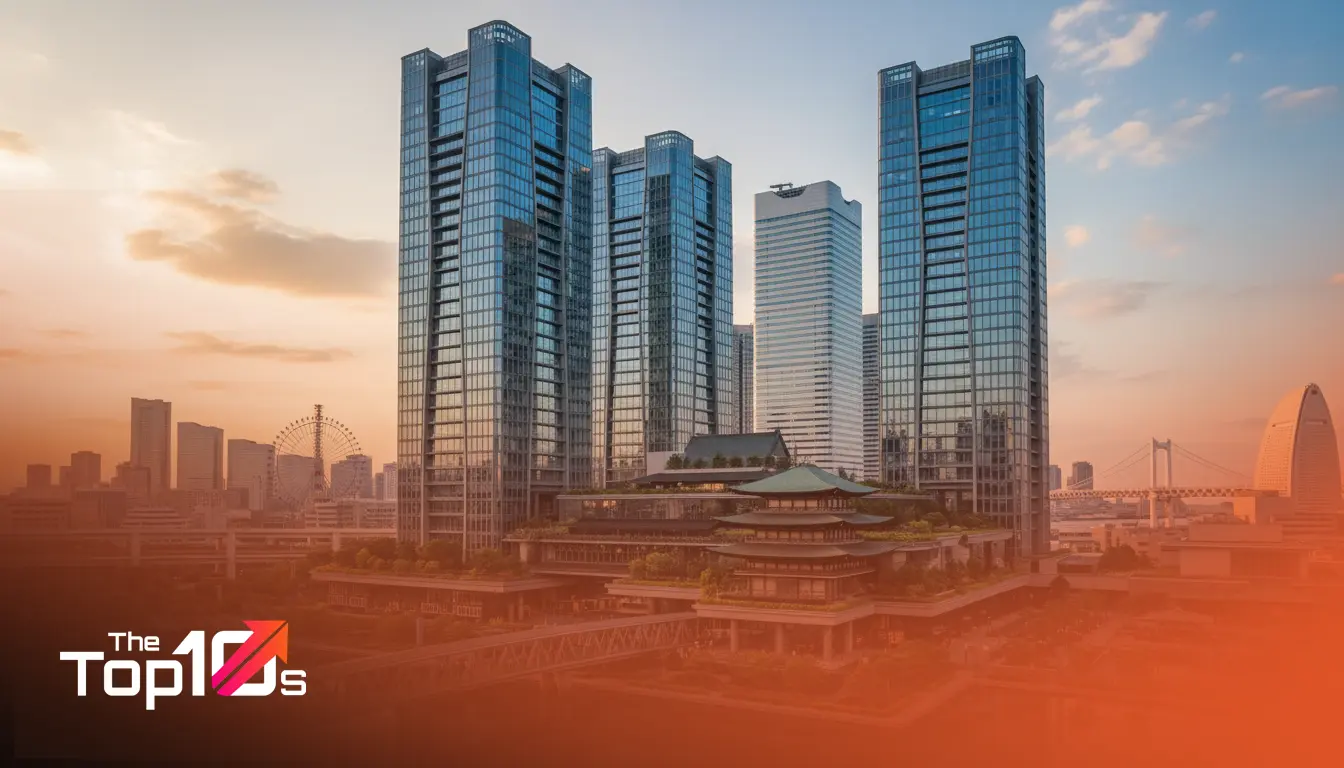
Yokohama possesses a character entirely distinct from its colossal neighbor, Tokyo. From the steep slopes of the Yamate district to the windswept bay areas of Minato Mirai, this port city offers a unique canvas for architectural expression. But building here brings specific challenges. The topography is often irregular, the seismic regulations are strict, and the desire to balance ocean views with privacy requires a skilled hand.
Choosing the right partner for your project isn’t just about picking someone who can draw a pretty façade. It is about finding a professional who understands the local soil conditions, navigates Kanagawa’s zoning laws, and translates your lifestyle into three-dimensional space. Whether you are looking to construct a custom family home, renovate a historic property, or develop a commercial space, the architect you select becomes the lens through which your vision is realized.
Quick Takeaways: Managing Your Search
- Local Expertise Matters: Yokohama’s hilly terrain requires engineers and architects familiar with complex foundations and retaining walls.
- Communication Style: Ensure your potential architect explains technical constraints in plain language, not just jargon.
- Design Philosophy: Don’t just look at the final photo; ask how they solved problems during the construction phase.
- Regulatory Knowledge: Confirm their experience with strict fire codes in dense residential pockets.
You might be wondering how to sift through the noise to find true quality. The best architects in Yokohama blend technical rigor with artistic intuition. They don’t just build structures; they craft environments that respond to the wind, the light, and the people living within them.
How We Identified Leading Architects
Selecting top-tier design professionals requires looking beyond glossy magazine spreads. Our methodology for curating this list focused on substantive indicators of quality and reliability. We analyzed public portfolios to gauge versatility—can the firm handle both a tight urban wedge and a sprawling hillside retreat?
We also considered longevity and reputation within the Kanto region. A firm’s ability to sustain operations and maintain relationships with local contractors often signals operational health. Furthermore, we looked for design educators and practitioners who contribute to the broader architectural conversation, suggesting they stay current with materials and sustainability trends.
While we cannot verify every past interaction, we prioritized studios that demonstrate a consistent track record of completed projects in Kanagawa Prefecture, utilizing publicly available feedback and industry recognition as our guide.
List of 10 Best Architects in Yokohama
| Name | Best for |
|---|---|
| ON Design Partners | Community-focused residential, homes that connect with the neighborhood |
| Apollo Architects & Associates | Private structures, clients who value privacy and security |
| Takeshi Hosaka Architects | Experimental residential design, difficult plots of land with poor sun exposure |
| Naf Architect & Design | Custom homes, renovation, and interior design, families who want a distinct yet practical house |
| Edward Suzuki Associates | High-end residential, commercial, and sustainable design, luxury projects with premium materials |
| Suppose Design Office | Commercial interiors, residential, and product design, modern and photogenic spaces |
| Star Pilots | Residential, shared offices, and mixed-use facilities, clients who want a home with personality |
| Be-Fun Design | Micro-housing, multi-dwelling units, and narrow lots, investors or homeowners with small plots of land |
| Tetsuo Yamaji Architects | Contemporary residential and installation art, clients who appreciate minimalism with a unique twist |
| Life Style Koubou | Hillside construction, villas, and nature-integrated homes, plots on steep hills with a view |
Top 10 Architects in Yokohama
These ten studios represent a diverse mix of styles, from brutalist concrete mastery to warm, timber-framed renovation experts. Each brings a specific strength to the table.
1. ON Design Partners
Led by Osamu Nishida, ON Design Partners is arguably one of the most socially engaged firms operating out of Yokohama. Their office is located near the waterfront, and their work frequently addresses the relationship between public space and private living. They gained significant attention for the “Yokohama Apartment,” a project that rethought communal living.
Specialization: Community-focused residential, urban interventions, and public spaces.
Experience: Established in 2004.
Why Consider Them: If you are interested in a home that connects with the neighborhood or involves multi-generational living, their approach to “openness” is refreshing. They excel at turning constraints into social opportunities.
2. Apollo Architects & Associates
Satoshi Kurosaki’s firm has built a reputation for sleek, safe, and incredibly private structures. While they operate across Tokyo and Kanagawa, their portfolio features numerous projects in Yokohama’s dense residential zones. They are particularly famous for using reinforced concrete and timber to create secure sanctuaries that still feel airy inside.
Specialization: Modern residential, resort villas, and medical facilities.
Experience: Over 20 years of practice.
Why Consider Them: Ideal for clients who value privacy and security but refuse to compromise on natural light. Their mastery of courtyards and skylights brings the outdoors in without exposing you to the street.
3. Takeshi Hosaka Architects
Takeshi Hosaka is known for questioning the fundamentals of what a house should look like. His “Daylight House” in Yokohama is a prime example of bringing illumination into a site completely surrounded by high-rises. He treats natural light as a primary building material.
Specialization: Experimental residential design and religious architecture.
Experience: Founded in 2004.
Why Consider Them: Perfect for the adventurous client. If you have a “difficult” plot of land with poor sun exposure, Hosaka is the type of creative mind who can invent a solution rather than just coping with the problem.
4. Naf Architect & Design
Akio Nakasa leads this firm with a dual approach that balances bold structural ideas with practical livability. They often employ unconventional layouts to maximize space in narrow Japanese lots. Their work in Kanagawa demonstrates a deep understanding of how to separate family zones from guest or public areas.
Specialization: Custom homes, renovation, and interior design.
Experience: Active since roughly 2001.
Why Consider Them: Great for families who want a house that looks distinct from the outside but functions practically on the inside. They are adept at creating flow in tight spaces.
5. Edward Suzuki Associates
Edward Suzuki brings an international pedigree to Japanese architecture. His philosophy, “GoOD Design” (God is in the details), focuses on harmonizing nature with the built environment. His work often features greenery integrated directly into the structure, softening the hard lines of urban living.
Specialization: High-end residential, commercial, and sustainable design.
Experience: Decades of international and local experience.
Why Consider Them: Best suited for luxury projects where the budget allows for premium materials and intricate landscaping integration. His style offers a sophisticated resort-like atmosphere.
6. Suppose Design Office
Though they have roots in Hiroshima, Makoto Tanijiri and Ai Yoshida have become a powerhouse across Japan, including significant work in the Kanto region. They blur the lines between interior and exterior, often using raw materials like concrete and wood in unexpected, elegant ways.
Specialization: Commercial interiors, residential, and product design.
Experience: Established in 2000.
Why Consider Them: If you want your home or office to feel like a boutique hotel or a gallery. Their aesthetic is incredibly photogenic and modern, appealing to younger professionals and design enthusiasts.
7. Star Pilots
This Tokyo-based firm frequently operates in neighboring Yokohama and brings a playful, almost narrative quality to their buildings. They are not afraid of color or unusual roof shapes. Their work often feels friendly and approachable rather than austere or intimidating.
Specialization: Residential, shared offices, and mixed-use facilities.
Experience: Led by Yuyasu Hosoya since 2007.
Why Consider Them: Excellent for clients who want a home with personality. If you dislike the “concrete box” aesthetic and want something that feels warm and slightly whimsical, they are a strong contender.
8. Be-Fun Design
As the name suggests, this firm tackles the challenge of urban housing with creativity. They are specialists in “Ju-taku” (housing) on micro-lots. Yokohama has many subdivided plots that seem unbuildable; Be-Fun Design often finds ways to stack rooms vertically to extract maximum value from small footprints.
Specialization: Micro-housing, multi-dwelling units, and narrow lots.
Experience: Active since 2008.
Why Consider Them: For investors or homeowners with very small or oddly shaped pieces of land. They are experts at efficient layouts that don’t feel claustrophobic.
9. Tetsuo Yamaji Architects
A younger, sharper studio gaining traction for intellectual and clean designs. Yamaji approaches architecture with a rigorous logic, often stripping away excess to reveal the structural beauty of a building. His work fits well within the modernizing neighborhoods of Yokohama.
Specialization: Contemporary residential and installation art.
Experience: Established in 2015.
Why Consider Them: Good for those who appreciate minimalism but want a unique structural twist. His designs often feature interesting geometric plays that act as conversation starters.
10. Life Style Koubou
While some architects focus on the object, Life Style Koubou focuses on the trees and the earth. They are known for projects that navigate difficult slopes—a common issue in Yokohama. They often elevate structures or split levels to work with the land rather than bulldozing it flat.
Specialization: Hillside construction, villas, and nature-integrated homes.
Experience: Over 15 years in the field.
Why Consider Them: The go-to choice if you bought a plot on a steep hill with a view. They understand the engineering required to keep a home safe on a slope while maximizing the vista.
What Defines a Great Architect in Yokohama?
Yokohama presents a completely different set of variables compared to other Japanese cities. For instance, while you might prioritize strict preservation of wooden heritage when researching the top 10 architects in Kyoto, seeking a professional in Yokohama often means finding someone who can handle heavy humidity, salt air from the bay, and the demands of modern urban density.
Mastery of Topography
Much of Yokohama is built on plateaus and valleys. A superior architect here understands “zoning” not just as lines on a map, but as three-dimensional slices. They know how to design foundations that resist sliding and how to position windows so you see the harbor, not your neighbor’s retaining wall.
Seismic and Climate Resilience
The best architects in Yokohama don’t just follow the building code; they anticipate the environment. This means selecting exterior materials that can withstand salty sea breezes without corroding and designing structures that absorb seismic energy efficiently. According to the Architectural Institute of Japan, integrating structural safety with aesthetic freedom is the hallmark of advanced design competence.
Collaborative Spirit
In a city as dense as this, construction affects neighbors. Top professionals handle the “soft skills”—negotiating with neighborhood associations and managing noise complaints during the build. This diplomacy is often just as important as the blueprint itself.
How to Choose the Right Architect for Your Needs
Hiring a design professional is a recruitment process. You are the CEO of your project, and they are the executive you are bringing on board.
Define Your Priorities Early
Before you send that first email, categorize your needs. Are you driven by a strict budget, a specific deadline, or a non-negotiable design aesthetic? If your budget is tight, look for architects who specialize in “low-cost” or industrial materials. If you have a historic property, find a renovation specialist.
The Portfolio Test
Don’t just look at the wide-angle shots. Zoom in. Look at how different materials meet—where the floor hits the wall, or how the roof connects to the siding. These details reveal the architect’s level of care. Ask to see photos of projects five years after completion to see how well they have aged.
Interview for “Bad News”
Ask a potential hire: “Tell me about a time a project went wrong and how you fixed it.” Construction always has hiccups. You want a partner who handles crisis with a cool head, not one who claims they never make mistakes.
Frequently Asked Questions
How much do architects in Yokohama typically charge?
Design fees generally range between 10% and 15% of the total construction cost. However, renowned firms may charge higher percentages or fixed design fees. Always clarify if structural engineering and application fees are included in this percentage or billed separately.
Can these architects help with finding land?
Many architects offer pre-purchase consultation. In Yokohama, this is highly recommended because a cheap plot of land might require expensive retaining walls or foundation piles. Paying an architect for a few hours of their time to inspect a site before you buy can save you millions of yen.
How long does the design process take?
For a custom home, expect the design and permitting phase to take anywhere from 6 to 10 months before ground is even broken. Construction then takes another 6 to 12 months. Rushing the design phase often leads to expensive changes during construction.
Do I need an architect for a renovation?
For minor cosmetic updates, a contractor is sufficient. However, if you are moving walls, changing the roofline, or addressing seismic retrofitting (which is crucial in older Yokohama homes), an architect is essential to ensure structural integrity and legal compliance.
Is it possible to build a modern house in a traditional neighborhood?
Yes, but it requires finesse. Skilled architects use setbacks, roof angles, and screening to introduce modern geometry without disrupting the “harmony” of the street, preventing friction with long-term residents.
Moving Forward with Your Project
Building in Yokohama offers the chance to create something truly special—a space that captures the energy of the port and the tranquility of the hills. The architects listed above represent the pinnacle of design capability in the region, but the “best” one is simply the one who listens to you most effectively.
Take your time reviewing their past work. Schedule initial consultations with at least three firms to compare their communication styles. Remember, this building will likely stand for decades; investing time now to find the right partner ensures those decades are spent in a space that brings you joy every time you walk through the door.