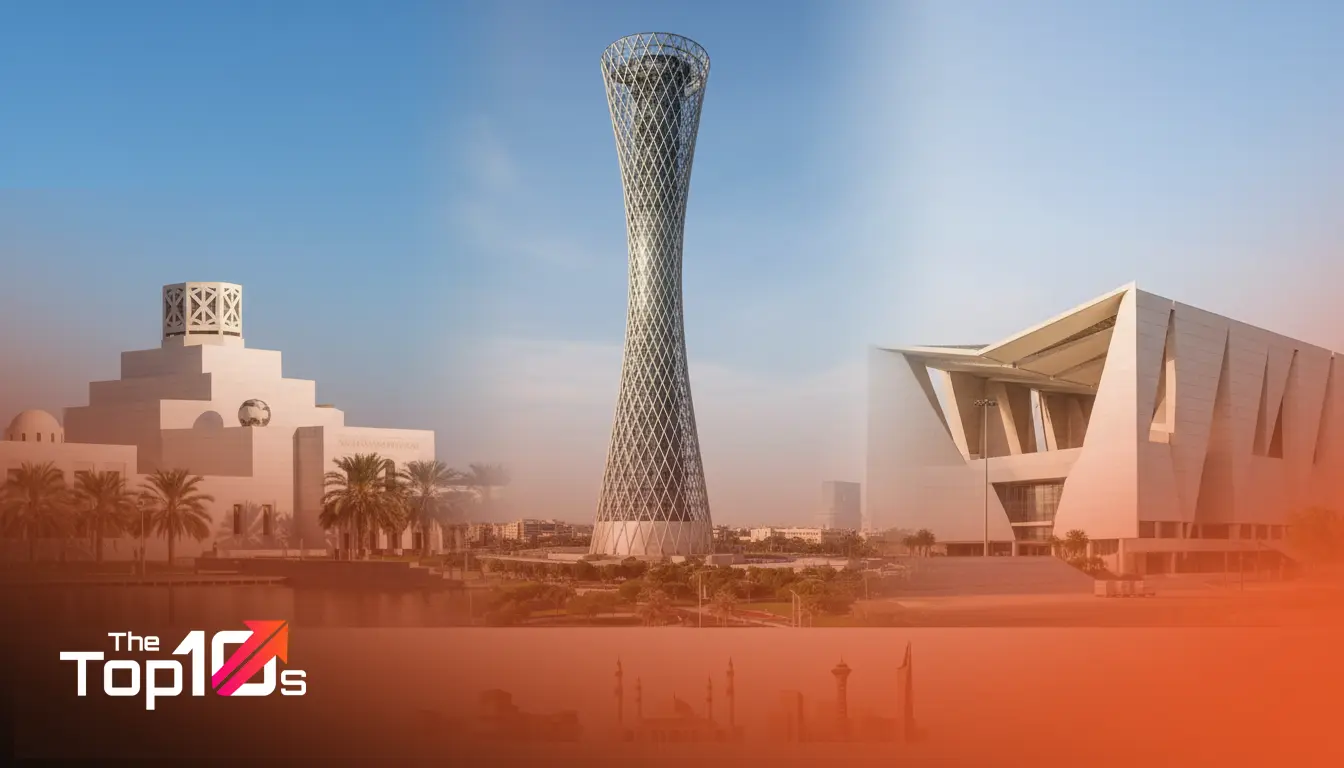
Walking through Doha today feels different than it did just a decade ago. The skyline isn’t just taller; it’s smarter, more culturally resonant, and frankly, more ambitious. If you are standing on a plot of land in The Pearl, Lusail, or Al Rayyan holding a vision for a new structure, you understand that the stakes are high. Building here isn’t merely about erecting walls; it is about creating something that withstands the harsh desert climate while contributing to a nation sprinting toward its 2030 vision.
Finding the right partner to translate that vision into concrete and glass is the single most critical decision you will make. A great architect does more than draw blueprints. They navigate the complex municipality approvals, balance your budget against rising material costs, and ensure your building doesn’t just look good on opening day, but functions flawlessly ten years down the line.
Quick Takeaways for Project Owners
- Local Expertise Matters: International names are great, but firms with a long history in Qatar understand the specific nuances of Ministry permissions and climate control.
- Sustainability is Standard: With the push for GSAS (Global Sustainability Assessment System) certification, green design is now a requirement, not a luxury.
- Specialization is Key: A firm famous for West Bay skyscrapers might not be the best fit for a private majlis or luxury villa.
- Look Past the Renderings: Evaluate architects based on their built projects, not just their digital concepts.
Whether you are planning a commercial tower or a private family estate, the market is flooded with options. We have sifted through the noise to highlight professionals who are shaping the physical fabric of Qatar right now.
How We Identified Leading Architects
Selecting the names for this list wasn’t a random process. We moved beyond simple popularity and looked at the metrics that actually matter to a client. Our evaluation focused on firms and principals who demonstrate consistent delivery. We looked for longevity in the market—firms that have weathered economic shifts and kept building.
We also analyzed portfolio diversity. Does the architect have a proven track record with the specific typology of buildings relevant to you? We considered their standing with local planning authorities, as a beautiful design is useless if it never gets a permit. Finally, we looked for a balance between aesthetic innovation and technical practicality. The professionals listed below represent a mix of large multidisciplinary powerhouses and specialized design studios.
List of 10 Best Architects in Qatar
| Name | Best For |
|---|---|
| Arab Engineering Bureau (AEB) – Ibrahim Jaidah | Clients who want a landmark building that makes a strong cultural statement. |
| MZ & Partners | Developers looking for iconic, commercially viable structures that dominate the skyline. |
| KEO International Consultants | Large corporate clients or government entities needing a comprehensive, risk-averse delivery model. |
| Qatar Design Consortium (QDC) | Investors prioritizing functionality, budget adherence, and technical precision over pure artistic flair. |
| Allies and Morrison (Doha Office) | Projects that require thoughtful integration into existing neighborhoods or historical contexts. |
| Lacasa Architects & Engineering Consultants | Real estate developers focused on ROI and efficient floor plates. |
| Gad & Tiermann | Private homeowners wanting a custom, high-end residence with attention to detail. |
| Dewan Architects + Engineers | Hotel operators and developers needing experienced hospitality designers. |
| James Cubitt & Partners | Institutional clients requiring durable, low-maintenance facilities. |
| EHAF Consulting Engineers | Projects where complex structural engineering needs to be integrated seamlessly with the architectural design. |
Top 10 Architects in Qatar
The following firms and professionals represent the upper echelon of design talent currently operating within the state. They have been selected based on reputation, portfolio quality, and their ability to execute complex projects.
1. Arab Engineering Bureau (AEB) – Ibrahim Jaidah
You cannot discuss architecture in Qatar without mentioning Ibrahim Jaidah and AEB. Founded in 1966, this firm is arguably the patriarch of the local architectural scene. Jaidah is renowned for pioneering a style that respects Qatari heritage while utilizing modern technology. His work often features traditional motifs—like the Al Thumama Stadium which mimics the ‘gahfiya’ cap—reinterpreted for contemporary use.
Primary Strengths: Cultural preservation, large-scale commercial projects, and government buildings.
Best Suited For: Clients who want a landmark building that makes a strong cultural statement.
2. MZ & Partners
Walk around West Bay, and you are likely looking at an MZ & Partners creation. Founded by Marwan Zgheib, this firm has been instrumental in defining the modern Doha skyline. They are the minds behind the iconic Tornado Tower. Their approach is often bold, sculptural, and unapologetically modern, utilizing steel and glass to create distinctive silhouettes.
Primary Strengths: High-rise towers, master planning, and mixed-use developments.
Best Suited For: Developers looking for iconic, commercially viable structures that dominate the skyline.
3. KEO International Consultants
KEO is a massive entity in the Middle East, offering a one-stop-shop for architecture, engineering, and project management. Their Qatar portfolio is vast, covering everything from infrastructure to luxury hospitality. Because they handle engineering in-house, their designs are often incredibly efficient and constructible, minimizing the friction that usually happens between designers and engineers.
Primary Strengths: Integrated delivery, huge infrastructure projects, and complex urban planning.
Best Suited For: Large corporate clients or government entities needing a comprehensive, risk-averse delivery model.
4. Qatar Design Consortium (QDC)
Established in 1977, QDC provides a level of reliability that appeals to many institutional clients. They might not always grab the headlines with avant-garde shapes, but their track record for delivering functional, high-quality buildings is solid. They have a massive team capable of handling heavy workloads and tight deadlines.
Primary Strengths: Industrial projects, consultancy services, and reliable project management.
Best Suited For: Investors prioritizing functionality, budget adherence, and technical precision over pure artistic flair.
5. Allies and Morrison (Doha Office)
While originally a UK-based practice, Allies and Morrison has embedded itself deeply in the fabric of Doha, particularly through their work on the Msheireb Downtown project. Their philosophy centers on “placemaking”—creating spaces between buildings that are just as important as the buildings themselves. Their work is subtle, contextual, and incredibly thoughtful regarding human scale.
Primary Strengths: Urban regeneration, master planning, and culturally sensitive modernism.
Best Suited For: Projects that require thoughtful integration into existing neighborhoods or historical contexts.
6. Lacasa Architects & Engineering Consultants
With a strong regional presence, Lacasa has made significant inroads in the Qatar market. They are particularly adept at residential and commercial towers that require high efficiency (good net-to-gross floor area ratios) without sacrificing aesthetics. They understand the economics of development very well.
Primary Strengths: Residential developments, commercial towers, and maximizing leasable areas.
Best Suited For: Real estate developers focused on ROI and efficient floor plates.
7. Gad & Tiermann
For those looking for something more bespoke, specifically in the luxury residential sector, smaller boutique firms often offer better service. Gad & Tiermann brings a European sensibility to local projects. Their work often involves high-end interiors and architecture that feels personal and curated rather than corporate.
Primary Strengths: Luxury villas, interior architecture, and boutique commercial spaces.
Best Suited For: Private homeowners wanting a custom, high-end residence with attention to detail.
8. Dewan Architects + Engineers
Dewan has been a major player across the Gulf for decades. In Qatar, they have contributed to the hospitality and education sectors. Their style is adaptable; they don’t force a signature look but rather respond to the client’s brief with technical competence. They are particularly strong in hospitality design, understanding the flow required for hotels and resorts.
Primary Strengths: Hospitality, education, and mixed-use complexes.
Best Suited For: Hotel operators and developers needing experienced hospitality designers.
9. James Cubitt & Partners
This firm has a reputation for delivering solid educational and institutional buildings. They have a methodical approach to design that emphasizes durability and function. Their work in Qatar often involves complex stakeholder management, making them a safe pair of hands for public sector projects.
Primary Strengths: Education facilities, healthcare, and public infrastructure.
Best Suited For: Institutional clients requiring durable, low-maintenance facilities.
10. EHAF Consulting Engineers
Rounding out our list is EHAF, a firm that consistently ranks high in global architecture lists. They are known for bridging the gap between high design and structural engineering. Their projects in Qatar range from residential towers to commercial hubs, often featuring clean lines and modern geometry.
Primary Strengths: Structural innovation, high-rise residential, and commercial centers.
Best Suited For: Projects where complex structural engineering needs to be integrated seamlessly with the architectural design.
It is worth noting that the architectural talent pool in the Gulf is interconnected. Many firms operating here also have significant influence nearby. For a broader perspective on regional talent, you might find it interesting to compare these names with the top 10 architects in Saudi Arabia, as many operate cross-border.
What Defines a Great Architect in Qatar?
Designing in Doha is not the same as designing in London or New York. The environment here is unforgiving. A truly great architect in this region understands the movement of the sun. They know how to orient a building to minimize heat gain while maximizing natural light, reducing the reliance on air conditioning.
Furthermore, cultural context is non-negotiable. The concept of privacy in residential design, for instance, remains paramount for many Qatari families. The separation of majlis areas from family living quarters requires a nuanced understanding of social dynamics. Top-tier professionals also stay updated on the Global Sustainability Assessment System (GSAS), which is Qatar’s performance-based sustainability rating system.
Finally, technology plays a massive role. The best firms use Building Information Modeling (BIM) not just to draw, but to simulate how the building will perform before a single shovel hits the ground.
How to Choose the Right Architect for Your Needs
Hiring an architect is often a long-term relationship, sometimes lasting two to three years. You need chemistry and trust. Here is a framework to help you decide.
Define Your Scope Clearly
Are you building a private villa, a commercial showroom, or a high-rise? Some firms mentioned above will not take on single private residences, while others thrive on them. Match the firm’s size to your project size. You do not need a multinational corporation to design a guest house, and you shouldn’t hire a boutique solo practitioner to design a mall.
Check the “Built” Portfolio
Renderings are seductive. They can make anything look magical. But you must ask to see photos of completed projects. Better yet, go visit one. How are the materials holding up against the dust and humidity? Does the building look tired after five years? This “aging test” is the ultimate indicator of quality.
Ask About the Team
The name on the door usually isn’t the person drawing your plans. Ask specifically: “Who will be my day-to-day contact?” and “Who is the lead designer for my project?” Ensure you are comfortable with the people actually doing the work.
Understand the Fee Structure
Architectural fees in Qatar can vary wildly. Some charge a percentage of construction costs (typically ranging from 4% to over 10% depending on scope), while others charge a lump sum. Be clear on what that fee includes. does it cover site supervision? Does it cover obtaining the DC1 and DC2 approvals from the municipality? Hidden costs in the permitting phase can be significant.
Frequently Asked Questions
Do I need a local architect if I hire an international designer?
Yes, usually. Even if you hire a famous architect from Europe or the US, they will almost always partner with a local “Architect of Record.” The local firm is responsible for code compliance, stamping drawings, and navigating the Ministry of Municipality approvals.
How long does the design approval process take in Qatar?
It varies, but patience is required. The process involves multiple stages, from initial planning permission (DC1) to detailed civil defense and services approvals (DC2). It is wise to budget several months for this pre-construction phase to avoid frustration.
What is the average cost of hiring an architect in Qatar?
Fees depend heavily on the firm’s reputation and the project complexity. For full design and supervision services, expect to pay anywhere between 5% and 12% of the total construction cost. Lower fees often mean less detailed drawings, which can lead to expensive variation orders during construction.
Can architects in Qatar handle interior design as well?
Most full-service firms (like KEO or AEB) have dedicated interior design departments. However, for private luxury villas, some clients prefer to hire a separate specialized interior designer to work alongside the architect.
What is the biggest mistake clients make when hiring an architect?
Rushing the design phase. Clients often want to start building immediately. However, changes made on paper are cheap; changes made on the construction site are incredibly expensive. Investing time in a detailed design upfront saves money later.
Making Your Final Decision
Your choice of architect will dictate the quality of your daily life or the profitability of your investment. Don’t rush this step. The professionals listed above represent the best of what Qatar has to offer, combining local knowledge with world-class standards.
Take the time to interview at least three firms. Ask tough questions about their availability and their experience with the specific challenges of your site. The right partner will not just agree with everything you say; they will challenge you, improve your ideas, and guide you toward a result that is better than what you imagined. Start the conversation today, and build something that contributes to the future of Qatar.