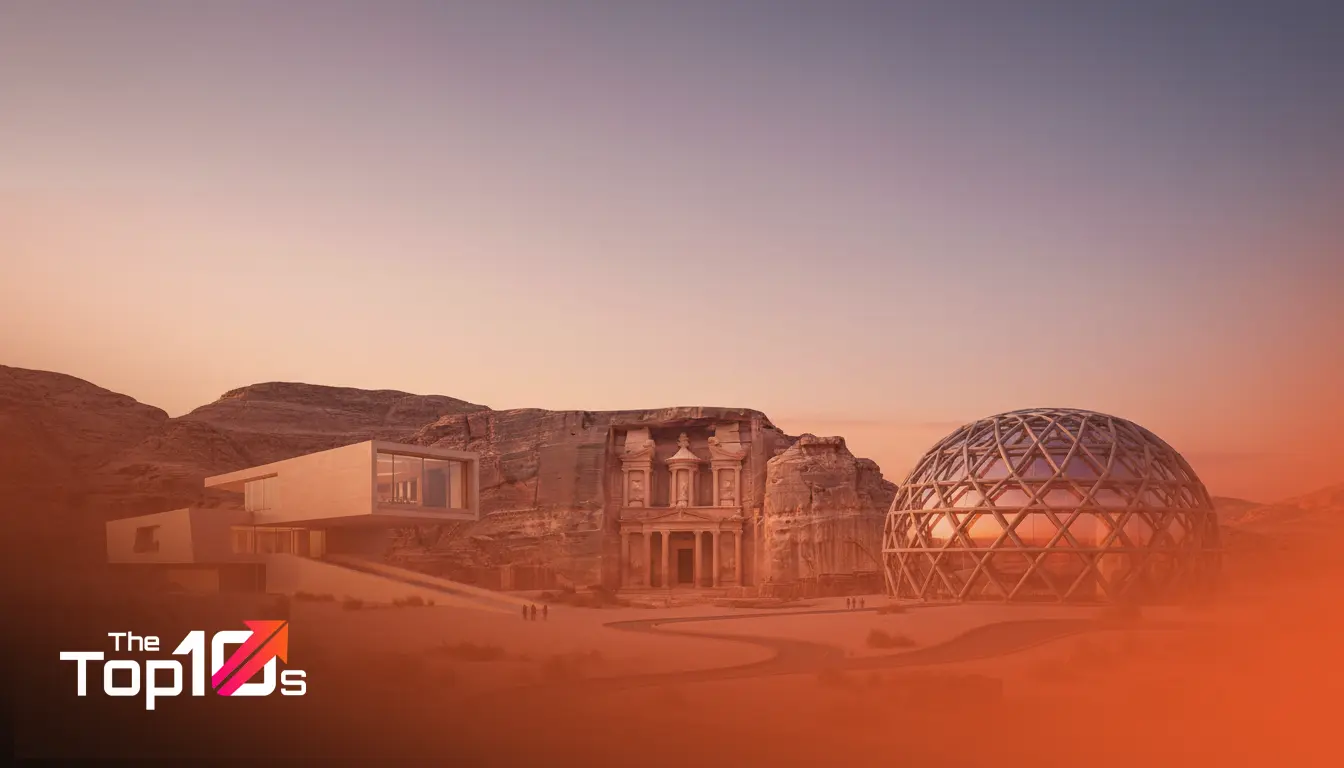
Walk through the streets of Amman, and you notice something distinct immediately: the stone. It’s not just a material; it’s a language. The “White City” has a unique architectural identity defined by municipal laws requiring local limestone, yet within these constraints, a quiet revolution is happening. From the rolling hills of Dabouq to the bustling commercial hubs of Abdali, Jordanian architecture is evolving from purely traditional forms into sharp, climate-responsive modernism.
But here is the challenge. If you are planning to build a custom home, a commercial complex, or a renovation project, the sheer number of firms can feel overwhelming. You aren’t just looking for someone who can draw blueprints. You need a partner who understands the strict regulations of the Jordan Engineers Association (JEA), knows how to handle the topography of steep Amman hills, and respects your budget.
This guide cuts through the noise. We looked at the portfolios, the reputation, and the design philosophies of the leading professionals in the Kingdom to help you find the right match for your vision.
Quick Takeaways: hiring in Jordan
- Regulatory Reality: Jordan has strict zoning and “stone laws.” Your architect must be an expert in local code compliance.
- Topography Matters: Amman is a city of hills. Flat plots are rare. Look for designers who excel at stepped sections and retaining walls.
- Specialization is Key: The firm that designed the Queen Alia Airport extension might not be the best fit for a 300sqm private villa.
- Timelines vary: Permitting in Jordan can take time. An experienced architect knows how to navigate the Greater Amman Municipality (GAM) approval process efficiently.
How We Identified Leading Architects
Selecting the names for this list wasn’t about looking at who has the flashiest Instagram account. We focused on the signals that actually matter to a client. Architecture is a service industry first and an art form second.
Our methodology examined the depth of built work rather than just conceptual renders. We looked for consistency in delivery—does the finished building look like the initial promise? We also considered the diversity of their portfolios. Some firms on this list are massive multi-disciplinary engines suitable for corporate HQs, while others are boutique ateliers perfect for a bespoke family home.
We also weighed their standing within the regional design community. Reputation among peers often reflects technical competence and ethical practice. Finally, we looked for a balance between honoring Jordanian heritage and pushing the envelope with contemporary techniques.
List of 10 Best Architects in Jordan
| Name | Best for |
|---|---|
| Khammash Architects (Ammar Khammash) | Environmental narrative and innovative use of local materials |
| Maisam Architects & Engineers (Meisa Batayneh) | Modern luxury and large-scale investments |
| Symbiosis Designs (Khalid Nahhas) | Ultra-modern and minimalist architecture |
| Dar Al-Omran (Rasem Badran) | Authentically Arab yet functional modern living spaces |
| Sahel Al Hiyari Architects | Residential and boutique commercial projects with unique textures and screens |
| Faris & Faris Architects | Elegant, highly functional spaces that feel warm and lived-in |
| Bitar Consultants | Large-scale investments and commercial developments |
| Tahhan and Bushnaq | Adaptive reuse and architecture that engages with the urban fabric of the city |
| UPA (Urban Products Architects) | Contemporary and industrial aesthetic with a focus on details |
| Consolidated Consultants (CC Group) | Sheer scale and capacity for institutions and large private developments |
Top 10 Architects in Jordan
The professionals listed below represent the upper echelon of design capability in the Kingdom. They vary in style and scale, but they share a commitment to quality environments.
1. Khammash Architects (Ammar Khammash)
Few names command as much respect in the intersection of nature and architecture as Ammar Khammash. He isn’t just an architect; he is an artist and an anthropologist. His approach involves reading the “DNA” of the site before a single line is drawn.
Based in Amman, this firm is renowned for projects that seem to grow out of the earth. If you visit the Wild Jordan Center or the Royal Academy for Nature Conservation in Ajloun, you see his signature: distinct respect for the environment and innovative use of local materials. He is the go-to professional for clients who want their project to have a deep cultural and environmental narrative rather than just modern gloss.
2. Maisam Architects & Engineers
Led by the formidable Meisa Batayneh, Maisam has established itself as a powerhouse not just in Jordan, but across the Middle East. They tackle complex challenges with a philosophy they call “integrated design.” This means they don’t just solve for aesthetics; they solve for social impact and economic viability.
Their portfolio includes major landmarks like the Abdali Gateway. However, they also handle high-end residential work. This firm fits developers or homeowners who want a rigorous, engineering-backed approach to modern luxury. They are particularly strong in coordinating large teams for complicated builds.
3. Symbiosis Designs
Founded by Khalid Nahhas, Symbiosis Designs represents the sharp edge of minimalism in Jordan. You won’t find faux-classical columns or unnecessary ornamentation here. Nahhas focuses on the manipulation of light, mass, and void.
His residential projects often feature clean concrete lines, expansive glass, and a gallery-like atmosphere. If your taste leans towards the ultra-modern and you appreciate architecture that feels like a habitable sculpture, Symbiosis is a top contender. The firm is known for meticulous attention to detail and rigorous geometry.
4. Dar Al-Omran (Rasem Badran)
Rasem Badran is arguably the most internationally celebrated architect to come out of the region, having won the Aga Khan Award for Architecture. Dar Al-Omran, the firm he established, carries this legacy forward. Their work is a masterclass in humanizing space.
They excel at weaving traditional Islamic spatial concepts—like the courtyard and the mashrabiya—into modern concrete structures. This is not about copying the past, but reinterpreting it. They are ideal for clients who want a home or building that feels authentically Arab yet functions perfectly for 21st-century living.
5. Sahel Al Hiyari Architects
Sahel Al Hiyari brings a painterly eye to architecture. His work often challenges the standard definition of a Jordanian house. He is known for rethinking the typical limestone cladding, sometimes using it in unexpected ways to create textures and screens.
His practice is largely residential and boutique commercial. Al Hiyari is a strong match for clients who are art collectors or creative professionals themselves, looking for a home that defies the “cookie-cutter” layouts often seen in West Amman.
6. Faris & Faris Architects
This firm has carved out a reputation for creating elegant, highly functional spaces that feel warm and lived-in. Their architecture often bridges the gap between the stark modernism of the west and the material warmth of the east.
They are known for being highly collaborative and approachable. Many clients appreciate their ability to translate vague ideas into concrete plans without imposing a rigid “house style.” Whether it is a renovation in Jabal Amman or a new build in Dabouq, their work consistently shows high-quality finishing and sensible layouts.
7. Bitar Consultants
With decades of history, Bitar Consultants is one of the pillars of the Jordanian engineering and architectural sector. They offer a full-service experience, handling everything from the initial sketch to the electrical engineering and site supervision.
This multidisciplinary approach makes them a safe pair of hands for large-scale investments or commercial developers who need a “one-stop-shop” to minimize risk. Their style is versatile, ranging from contemporary corporate towers to traditionally inspired educational facilities.
8. Tahhan and Bushnaq
If you are looking for adaptive reuse or architecture that engages with the urban fabric of the city, keep Tahhan and Bushnaq on your radar. They have gained attention for projects that breathe new life into older structures, as well as sensitive new builds.
Their work often features a playful yet respectful dialogue with the street. They are excellent problem solvers, particularly when dealing with the tricky, irregular plots found in established neighborhoods like Weibdeh or Shmeisani.
9. UPA (Urban Products Architects)
UPA focuses on the details. They view architecture as a product design process, where every junction and material transition matters. Their aesthetic is often sleek, industrial, and highly contemporary.
This is a younger, more agile firm compared to the giants on this list. They attract clients who are looking for fresh ideas and are willing to experiment with materials like steel and exposed concrete, moving away from the heavy, traditional stone aesthetic where regulations allow.
10. Consolidated Consultants (CC Group)
For sheer scale and capacity, CC Group is a heavyweight. While they are often associated with massive infrastructure and urban planning projects, their architectural division produces high-caliber work for institutions and large private developments.
If you are a developer looking to build a mixed-use complex or a corporate headquarters, their deep bench of specialists ensures that fire safety, structural integrity, and sustainability are baked into the design from day one.
What Defines a Great Architect in Jordan?
Architecture in Jordan is harder than it looks. A designer here cannot simply copy-paste a glass box from a magazine in Europe. The harsh sun, the chilly winters, and the steep terrain demand a specific set of skills.
Mastery of Stone
Since municipal laws generally require stone cladding in Amman, a great architect knows how to make this heavy material feel light. They know the difference between Ma’an stone and Ajloun stone, and how each ages. They use stone not just because they have to, but to create thermal mass that keeps homes cool in August and warm in January.
Topographical Intelligence
Amman is a city of stairs and slopes. The best designs embrace the incline. Instead of flattening the site with expensive retaining walls, skilled architects step the building down the hill, creating terraces and views that flat plots can never offer. This minimizes excavation costs and creates unique living experiences.
Regional Awareness
The best professionals understand their context within the broader Middle East. Interestingly, many design trends flow across borders here. If you are an investor looking at the wider region, you might notice similarities in how top firms handle climate challenges. For instance, comparing the portfolios of Jordanian firms with the top 10 architects in Oman reveals a shared dedication to modernizing traditional Islamic elements, though the material palettes differ significantly due to local geology.
How to Choose the Right Architect for Your Needs
Picking a name from a list is just the start. Here is how to vet your potential partner effectively.
Check Their “Stamps” Capability
In Jordan, drawings must be stamped by a registered member of the Jordan Engineers Association to get a building permit. Some boutique designers are brilliant concept artists but lack the license to stamp. If you hire a designer, ensure they have a partner firm of record to handle the legal paperwork.
Visit a Finished Site
Renderings are easily manipulated. Ask to see a project that was completed three years ago. How is the stone holding up? Is there water damage? Did the design actually work for the people living there? A building’s true test is time.
Discuss the Budget Upfront
Construction costs in Jordan have risen. A common friction point is when an architect designs a “Ferrari” when the client has a “sedan” budget. Be honest about your numbers in the first meeting. A skilled architect will tell you immediately if your expectations align with current market rates per square meter.
For more insights on global architectural standards and project management, resources like the Royal Institute of British Architects (RIBA) offer excellent client guides that apply universally. Additionally, verifying a firm’s local standing through the Jordan Engineers Association website is a smart due diligence step.
Frequently Asked Questions
How much do architects charge in Jordan?
Fees vary wildly based on reputation and scope. Some charge a percentage of the total construction cost (typically between 4% and 10% for full supervision), while others charge a lump sum per square meter. Always clarify if the fee includes site supervision, as this is critical for quality control.
Do I need an architect for a small renovation?
If you are moving structural walls or adding square footage, yes. You need a permit from the municipality, which requires stamped drawings. for purely cosmetic changes (painting, tiling), you generally do not need an architect, though a designer can help with the vision.
How long does the design process take?
For a custom family home, expect the design phase to take 3 to 6 months before you break ground. Obtaining the building permit from the Greater Amman Municipality can add several weeks or even months to the timeline depending on the complexity of the plot.
Can I use a foreign architect for my project in Amman?
You can, but they must partner with a local Jordanian engineering office. The local firm acts as the architect of record to ensure the plans meet Jordanian codes, seismic requirements, and insulation standards.
What is the “Stone Law” in Amman?
Most areas in Amman fall under regulations that require building facades to be clad in natural stone. This gives the city its unified white/beige appearance. Modern architects often find creative ways to mix this with glass, steel, or fair-faced concrete where regulations allow exceptions or in specific zones.
Building for the Future
Your choice of architect will dictate not just how your building looks, but how it feels to inhabit every day. The professionals listed above have proven they can navigate the unique constraints of Jordan—from the steep hills of the capital to the specific demands of the climate.
Don’t rush the selection process. Meet with multiple firms. Look at their past work, not just on a screen, but in person. The right architect is one who listens to your needs and elevates them into something permanent. Whether you are building a legacy home or a commercial landmark, the talent in Jordan is world-class and ready to execute your vision.