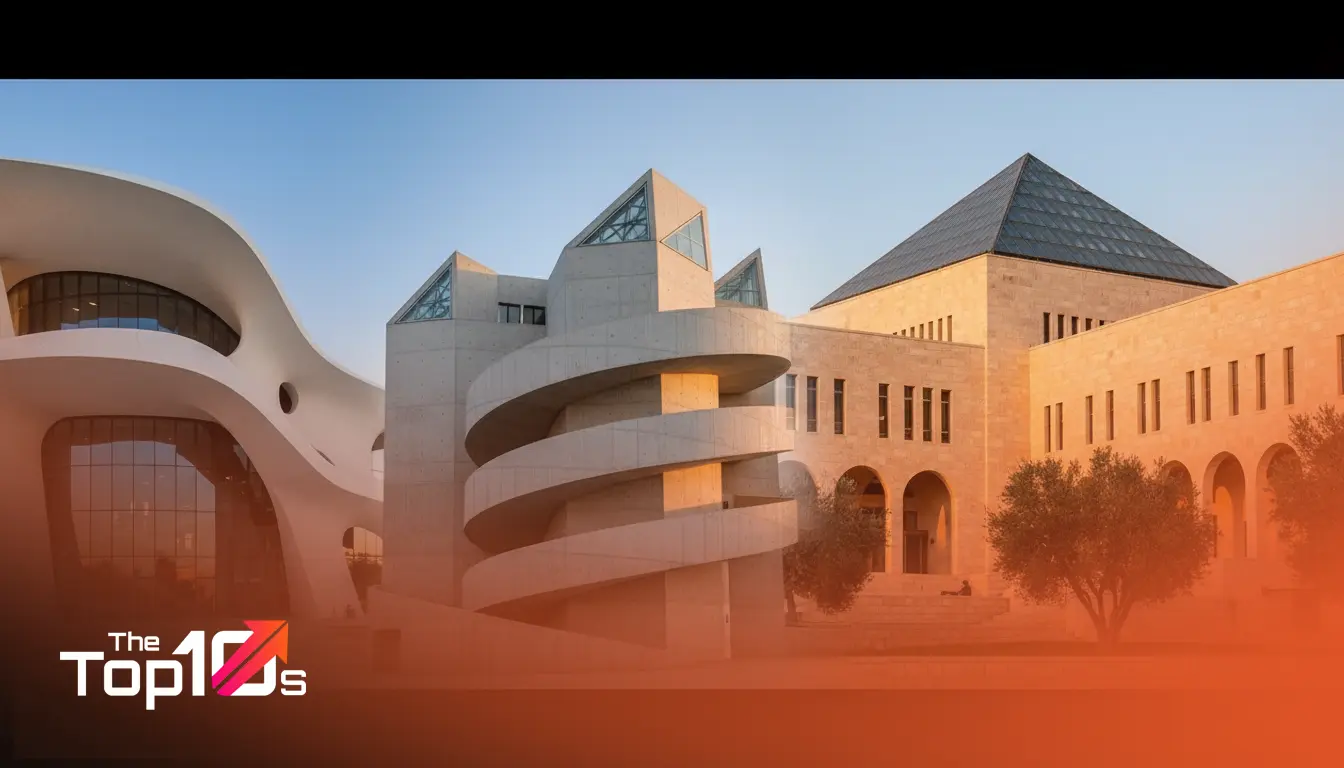
Walking through the streets of Tel Aviv or the winding alleys of Jerusalem, you notice something immediately: a striking tension between the ancient and the hyper-modern. One minute you are looking at Ottoman-era stone arches, and the next, a glass-encased skyscraper that seems to defy gravity. Building here isn’t just about aesthetics; it is about navigating strict preservation laws, distinct climate challenges, and rigorous security regulations.
For anyone planning a project in this region, finding the right partner is the difference between a dream home and a bureaucratic nightmare. The design professionals operating here have to be part artist, part lawyer, and part diplomat. Whether you are looking to renovate a Bauhaus apartment or construct a commercial complex in the Negev, the talent pool is deep, but finding the specific fit for your vision takes effort.
Quick Takeaways: Architectural Planning in Israel
- The “Mamad” Factor: every new residential build requires a reinforced security room (Mamad). The best designers integrate this seamlessly rather than treating it as an afterthought.
- Permitting Patience: The “Hetter Bniya” (building permit) process can be lengthy. Look for professionals with a proven track record of navigating local municipality bureaucracy.
- Climate Control: With intense Mediterranean sun, passive cooling and shadow analysis are not optional—they are essential for livability.
- Renovation Reality: In cities like Tel Aviv, historic preservation rules (shimur) heavily dictate what you can and cannot do to a building’s exterior.
How We Identified Leading Architects
Selecting the names for this list went beyond simply looking at flashy websites or counting Instagram followers. We analyzed the substance behind the portfolio. In a market as dense as Israel’s, consistency matters more than a single viral project.
Our methodology focused on firms and individuals who demonstrate mastery over the unique topographical and regulatory constraints of the region. We looked for professionals with a history of successful project delivery—meaning the final building looks like the initial render. We also considered peer reputation within the Israeli design community and client feedback regarding communication styles. Finally, we prioritized versatility: the ability to handle the strict “Jerusalem Stone” cladding requirements in the capital just as effectively as the clean, white lines preferred along the coast.
List of 10 Best Architects in Israel
| Name | Best For |
|---|---|
| Pitsou Kedem Architects | Clients seeking high-end, minimalist luxury residential projects who are not afraid of bold, modern materials. |
| Kimmel Eshkolot Architects | Large-scale public projects, museums, or luxury residential clients who want their home to feel like a piece of livable art. |
| Ilan Pivko Architects | Developers and homeowners who want an iconic, statement property that creates a conversation. |
| Bar Orian Architects | Urban renewal projects, apartment complexes, and maximizing rights in dense city centers. |
| Jacobs-Yaniv Architects | Families looking for a bespoke private home that balances modern design with comfort and practicality. |
| MYS Architects | Commercial developers, corporate headquarters, and large-scale medical or retail facilities. |
| Orly Shrem Architects | Luxury villas and clients who want a seamless flow between indoor design and outdoor landscaping. |
| Gottgens Architects (formerly Gottesman-Szmelcman) | Institutional projects, boutique hotels, and clients valuing context-sensitive design. |
| Raz Melamed | Purists who love modern architecture and want a home that feels like a quiet sanctuary. |
| Yoav Messer Architects | Sustainable projects, public bridges, and clients open to alternative construction methods. |
Top 10 Architects In Israel
The following professionals represent a mix of established veterans and bold modernists, covering residential, commercial, and public sectors.
1. Pitsou Kedem Architects
If you have seen a breathtaking, minimalist luxury home in Herzliya or Ramat HaSharon recently, there is a good chance it came from Pitsou Kedem’s studio. Since founding his practice in 2000, Kedem has established a distinct visual language based on light, shadow, and restraint.
Why they stand out: This firm strips away the unnecessary. They are masters of the “open plan,” often dissolving the boundaries between the interior living space and the garden. Their work frequently features perforated metal screens and exposed concrete, allowing air and light to filter through while maintaining privacy—a crucial balance in dense neighborhoods.
Best for: Clients seeking high-end, minimalist luxury residential projects who are not afraid of bold, modern materials.
2. Kimmel Eshkolot Architects
Founded by Etan Kimmel and Michal Eshkolot, this firm has garnered international attention for its sensitive handling of public spaces and cultural institutions. Their work often involves complex geometries and a deep respect for the surrounding environment.
Notable approach: They do not impose a structure on the land; they weave it into the land. A prime example is the Mount Herzl Memorial Hall, which uses an undulating brick “light funnel” structure. However, they apply this same thoughtful rigor to private residences and urban planning.
Best for: Large-scale public projects, museums, or luxury residential clients who want their home to feel like a piece of livable art.
3. Ilan Pivko Architects
Ilan Pivko is something of a celebrity in the local architecture scene, known for designs that refuse to be ignored. His work is often characterized by unconventional shapes and a willingness to challenge the conservative nature of Israeli urban planning.
Design philosophy: Pivko does not do “bland.” His portfolio includes the Florentine Quartet and various luxury towers that redefine the skyline. He brings a sculptural quality to buildings, often using rounded corners and organic forms that stand out against the typical rectangular blocks of Tel Aviv.
Best for: Developers and homeowners who want an iconic, statement property that creates a conversation.
4. Bar Orian Architects
Walk through central Tel Aviv, and you are likely walking past a Bar Orian project without realizing it. Tal and Gidi Bar Orian have become the go-to experts for high-density urban renewal. They specialize in “Tama 38” projects (earthquake retrofitting and renovation) and new urban infill.
Key strength: They understand the city. Their designs manage to maximize square footage—a necessity in one of the world’s most expensive real estate markets—without sacrificing aesthetic quality. They blend modern glass extensions with historic eclectic-style bases seamlessly.
Best for: Urban renewal projects, apartment complexes, and maximizing rights in dense city centers.
5. Jacobs-Yaniv Architects
Oshri Yaniv and Tamar Jacobs bring a warm, human-centric approach to design. Their practice is smaller and more intimate than the massive commercial firms, allowing for deeply personal residential work. They met studying at the Architectural Association in London and brought that global sensibility back to Tel Aviv.
Signature style: Their work feels lived-in and grounded. They often utilize raw materials like iron, unrefined concrete, and local wood, but they assemble them with warmth. They pay exceptional attention to how a family actually moves through a house, rather than just how it looks in a photo.
Best for: Families looking for a bespoke private home that balances modern design with comfort and practicality.
6. MYS Architects
When you need scale, you look at MYS. Resulting from the merger of two veteran firms, this is one of the largest architectural practices in Israel. They are the engine behind many of the country’s malls, hospitals, and office towers.
Operational scope: They have the manpower and technical capacity to handle massive, complex permits and engineering feats. If you are planning a commercial high-rise or a mixed-use development, their ability to coordinate hundreds of consultants is invaluable.
Best for: Commercial developers, corporate headquarters, and large-scale medical or retail facilities.
7. Orly Shrem Architects
Orly Shrem operates at the intersection of architecture, interior design, and landscape. Based near the coast, her work often reflects the breezy, Mediterranean lifestyle of the Israeli elite. There is a resort-like quality to her residential projects.
Visual language: She excels at creating “total design” concepts. You aren’t just getting a building shell; you are getting a cohesive vision where the furniture, lighting, and garden all speak the same language. Her spaces often feature high ceilings and massive doorways that frame the sea or the garden.
Best for: Luxury villas and clients who want a seamless flow between indoor design and outdoor landscaping.
8. Gottgens Architects (formerly Gottesman-Szmelcman)
Asaf Gottesman and his team have built a reputation for academic and mixed-use buildings that prioritize context. They are rigorous about the “why” behind every design decision. Their work often feels intellectual yet accessible.
Why they made the list: They are particularly adept at handling projects that sit next to historic sites, a common challenge in Israel. They manage to be contemporary without disrespecting the history next door. Their prowess extends to hospitality, having designed award-winning university buildings and hotels.
Best for: Institutional projects, boutique hotels, and clients valuing context-sensitive design.
9. Raz Melamed
Raz Melamed is a name gaining significant traction for crisp, clean lines. He operates strictly in the realm of modernism. His architecture is quiet, geometric, and incredibly precise.
Design focus: Melamed often creates strong axes within a house—lines of sight that travel from the front door, through the living area, and out to the pool. He uses a monochromatic palette, letting the geometry and light create the drama rather than colorful decorations.
Best for: Purists who love modern architecture and want a home that feels like a quiet sanctuary.
10. Yoav Messer Architects
If you are interested in sustainability and adaptive reuse, Yoav Messer is a key figure. He gained widespread recognition for the “Bridge of the Strings” in Be’er Sheva and projects utilizing shipping containers.
Innovation angle: Messer isn’t afraid to experiment with materials. He looks at cost-effective construction methods and eco-friendly solutions. His studio approaches projects with a problem-solving mindset, often resulting in unconventional but highly functional structures.
Best for: Sustainable projects, public bridges, and clients open to alternative construction methods.
What Defines a Great Architect in Israel?
Architecture in this region requires a specific set of skills that goes beyond drawing pretty floor plans. The environment is harsh; the sun is intense for eight months of the year, and the humidity along the coastal plain can be suffocating. A top-tier professional understands solar orientation instinctively.
Furthermore, security is a hard constraint. Since the early 1990s, every new residential build must include a Merkhav Mugan (protected space). In amateur hands, this room looks like a bunker stuck in the middle of a house. Great designers use it as a functional bedroom, study, or walk-in closet, hiding the heavy blast doors and filtration systems so they don’t dominate the aesthetic.
Materiality is also dictated by location. In Jerusalem, municipal bylaws require buildings to be clad in Jerusalem stone. A skilled architect knows how to use this ancient material in modern ways—playing with different cuts, textures, and laying patterns to avoid a dated look.
How to Choose the Right Architect for Your Needs
Hiring a design partner is a recruitment process. You are entering a relationship that could last three to five years. Here is how to evaluate your options:
- Check their “Permitting” Track Record: Ask specifically about their experience with the local committee where you are building. An architect who knows the city engineers in Tel Aviv might struggle with the nuances of the planning committee in Zichron Ya’akov.
- Ask about “Pikuach Elyon”: This refers to “top supervision” during construction. How often do they visit the site? In Israel, contractors often cut corners. You need an architect who is tough on site and verifies that the iron is where it should be.
- Review the Budget Reality: Ask for the final cost of their last three projects versus the initial budget. If there is a consistent 30% gap, you need to know that upfront.
- Look for Chemistry: Israelis can be direct. You want a partner who communicates clearly and isn’t afraid to tell you when your ideas might violate zoning laws or blow the budget.
If you are looking at regional trends beyond the Levant, specifically regarding Mediterranean coastal design, it is worth comparing how neighboring countries handle similar climates. For instance, you can review the approach taken by the top 10 architects in Turkey to see parallel evolutions in merging historical preservation with modern living.
Frequently Asked Questions
What is the difference between an Architect and a Practical Engineer?
In Israel, a registered Architect (Adrichal) studies for five years and can design buildings of any height or complexity. A Practical Engineer (Handassai) usually studies for two years and is limited to designing simple structures, typically up to four stories (approximately 11-13 meters high). For complex luxury homes or high-rises, a registered architect is required.
How much do architects in Israel charge?
Fees vary wildly, but standard practice is often a percentage of the total construction cost, usually ranging between 4% and 8%. Some high-end firms may charge a fixed fee or a higher percentage for complex renovations. Always clarify if this fee includes consultant coordination (engineers, plumbing, electricity).
How long does it take to get a building permit in Israel?
This is the pain point of Israeli construction. Depending on the municipality and the complexity of the request (and whether you are asking for variances), it can take anywhere from 8 months to 2 years. A good architect can sometimes expedite this by submitting compliant plans from day one.
What is “Tama 38”?
Tama 38 is a national master plan intended to strengthen older buildings against earthquakes. It incentives developers to reinforce buildings by allowing them to add extra floors (profit). Many architects specialize specifically in these complex negotiations between existing tenants and developers.
Do I need a separate interior designer?
Many Israeli architecture firms offer “Total Design,” handling both the shell and the interior. However, for high-end luxury, some clients prefer hiring a separate interior specialist. If you do this, ensure they are hired early so they can collaborate with the architect on wall placements and electrical plans.
Taking the Next Step
Building in Israel is an adventure. The results can be spectacular—stone villas that glow in the sunset or penthouses that capture the Mediterranean breeze—but the process requires resilience. The names listed above represent the upper echelon of design capability in the country.
Your next move should be to create a shortlist of three firms. Arrange face-to-face meetings. Do not just look at their portfolios; listen to how they speak about challenges. The right partner will not just say “yes” to everything you want; they will guide you toward what is possible, legal, and beautiful.
For more insights on global architectural standards, you can visit resources like ArchDaily for design inspiration or check the Israel Association of United Architects for local regulatory updates.