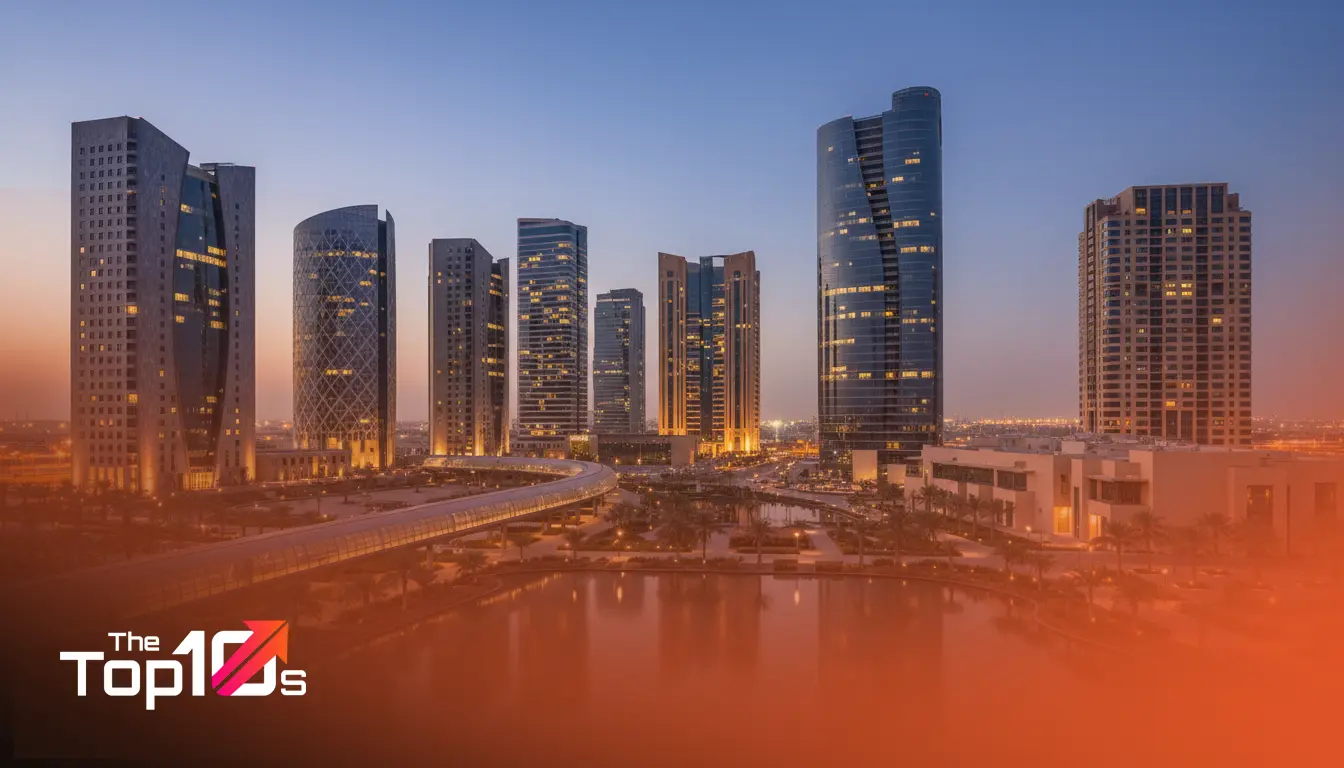
Riyadh isn’t just expanding; it is being reimagined. If you drive down King Fahd Road or look toward the developing districts in the north, you see more than concrete and glass. You see a city actively reshaping its identity through design. For developers, homeowners, and investors, this transformation brings a unique challenge: finding the right partner to translate a vision into a structural reality.
The stakes are incredibly high. In a climate where temperatures routinely soar above 45°C, and where zoning regulations are evolving rapidly alongside Vision 2030 initiatives, picking a design partner is about more than aesthetics. It is about technical competence, regulatory foresight, and sustainable engineering.
Finding the best architects in Riyadh requires sifting through a crowded market of international giants and talented local boutiques. Whether you are planning a luxury private villa in Al Malqa or a mixed-use commercial complex, the success of your project hinges on the team you appoint today. Below, we break down the leading design professionals shaping the Saudi capital and what you need to know before signing a contract.
Quick Takeaways: Assessing Riyadh’s Design Talent
- Regulatory Agility: Top firms must navigate the Saudi Building Code (SBC) and evolving municipal zoning requirements effortlessly.
- The “Salmani” Influence: There is a growing preference for “Salmani” architecture—a style championed by King Salman that blends modern functionality with authentic Najdi heritage.
- Sustainability is Non-Negotiable: With energy costs rising and green initiatives taking center stage, look for expertise in passive cooling and LEED/Mostadam certification.
- Scale Matters: Large international firms excel at mega-projects, while local boutique studios often provide better agility for private residential work.
How We Identified Leading Architects
Selecting a design partner is subjective, but evaluating their capability shouldn’t be. To compile this list of experienced architectural professionals in Riyadh, we looked beyond flashy renderings. We analyzed the tangible elements that determine project success.
Our methodology focuses on the “buildability” of a firm’s designs. We looked for practices that demonstrate a history of taking projects from concept to completion without major compromises. Factors included their longevity in the Saudi market, their understanding of the local supply chain, and their ability to handle the complex permitting process with the Riyadh Municipality.
Furthermore, we considered peer reputation. In the construction industry, word travels fast. We looked for firms that engineers and contractors respect—a strong signal that an architect produces clean, executable drawings rather than just pretty pictures.
List of 10 Best Architects in Riyadh
| Name | Best for |
|---|---|
| Omrania | Developers handling high-profile, complex projects |
| Henning Larsen | Corporate headquarters and government entities |
| Abdulmohsen Al Thayeb (Al Thayeb Architects) | Private homeowners in upscale districts |
| KEO International Consultants | Investors needing a comprehensive design and supervision service |
| Dewan Architects + Engineers | Commercial developers focused on ROI |
| Gerber Architekten | Institutional clients and cultural projects |
| U+A | Real estate developers creating gated communities |
| ECHO Architecture | Business owners launching restaurants or boutiques |
| NAGA Architects | Clients seeking traditional grandeur or neoclassical luxury estates |
| AE7 | Large-scale government or healthcare projects |
Top 10 Architects in Riyadh
Here are the design firms and independent practices currently setting the standard for architecture in the capital.
1. Omrania
Background: You cannot discuss Riyadh’s skyline without mentioning Omrania. Founded in 1973, this firm has been instrumental in defining the city’s modern aesthetic. They are a multidisciplinary giant with deep roots in the Kingdom.
Specialization: Large-scale commercial, iconic landmarks, and urban planning.
Why they stand out: Omrania understands the local context better than almost anyone. Their work on the Kingdom Centre and the Tuwaiq Palace demonstrates an ability to blend massive structural engineering with cultural sensitivity. They don’t just import designs; they create architecture that feels native to Saudi Arabia.
Best suited for: Developers handling high-profile, complex projects that require deep regulatory relationships and massive resource allocation.
2. Henning Larsen
Background: A Danish powerhouse with a massive footprint in Saudi Arabia. They brought Scandinavian sensibility to the desert, focusing heavily on light and sustainability.
Specialization: Public spaces, educational institutions, and sustainable districts.
Why they stand out: Their work on the King Abdullah Financial District (KAFD) is a masterclass in climate-responsive design. They utilize advanced modeling to angle buildings in ways that minimize solar gain while maximizing natural light. It represents a smart, data-driven approach to desert architecture.
Best suited for: Corporate headquarters and government entities looking for LEED-certified, futuristic designs.
3. Abdulmohsen Al Thayeb (Al Thayeb Architects)
Background: For those seeking a more personal touch, Al Thayeb offers a boutique approach that larger firms often miss. This Saudi-led practice has gained a strong following for modern residential work.
Specialization: Luxury residential villas and boutique commercial spaces.
Why they stand out: They excel at the “Modern Saudi” aesthetic—clean lines, privacy-focused layouts, and high-end finishes. Their understanding of the Saudi family’s lifestyle needs (such as separation of guest and family zones) is intuitive and seamlessly integrated into modern forms.
Best suited for: Private homeowners in upscale districts who want a custom, distinctive villa.
4. KEO International Consultants
Background: KEO is a titan in the industry, operating across the Middle East for decades. In Riyadh, they act as a one-stop-shop, offering architecture, engineering, and project management.
Specialization: Mixed-use developments, hospitality, and infrastructure.
Why they stand out: Their strength lies in integrated delivery. Because they handle engineering in-house, their architectural designs are structurally sound from day one. This reduces the friction between the design and construction phases, often saving clients time and money on change orders.
Best suited for: Investors needing a comprehensive “turnkey” design and supervision service for large developments.
5. Dewan Architects + Engineers
Background: With a significant presence across the GCC, Dewan has established itself as a reliable partner for commercial developers. They balance artistic flair with commercial viability.
Specialization: Hospitality, high-rise residential towers, and retail.
Why they stand out: Dewan is known for efficiency. They understand developer math—how to maximize leasable area without sacrificing the building’s visual appeal. Their recent projects in Riyadh show a keen awareness of the shift toward walkable, community-centric developments.
Best suited for: Commercial developers focused on ROI and efficient floor plate design.
6. Gerber Architekten
Background: This German firm made waves with the King Fahad National Library, one of the most celebrated renovation projects in the city. They bring rigorous German engineering standards to Saudi projects.
Specialization: Public buildings, libraries, and cultural centers.
Why they stand out: Their approach to “building within a building” and adaptive reuse is innovative. If you have a complex site or a renovation project that requires a delicate touch, their technical precision is unmatched. They use textile facades and innovative materials to handle the Riyadh sun.
Best suited for: Institutional clients and cultural projects requiring unique technological solutions.
7. U+A
Background: U+A has rapidly grown its reputation by delivering sleek, contemporary designs that appeal to a younger demographic. They are heavily involved in the newer giga-projects and residential communities.
Specialization: Master planning and contemporary residential communities.
Why they stand out: They are masters of the “lifestyle” aspect of architecture. Their designs prioritize how people move through a space, focusing on landscaping and community interaction. It’s less about the individual building and more about the living experience.
Best suited for: Real estate developers creating gated communities or lifestyle centers.
8. ECHO Architecture
Background: A dynamic firm that has gained traction for its creativity in the retail and F&B (Food and Beverage) sectors. As Riyadh’s dining and entertainment scene explodes, ECHO has been at the forefront.
Specialization: Retail, F&B interiors, and boutique commercial.
Why they stand out: They understand the “Instagrammability” of architecture, which is crucial for modern retail success. However, they back this up with functional layouts that work for operations. Their designs are bold, textured, and lighting-focused.
Best suited for: Business owners launching restaurants, cafes, or boutique retail concepts.
9. NAGA Architects
Background: NAGA has built a reputation for opulence. Their portfolio is filled with high-end private palaces and luxury estates that spare no expense.
Specialization: Ultra-luxury residential and classical design.
Why they stand out: If your taste leans toward the classical, ornamental, or grand, NAGA is the specialist. They have skilled artisans and designers who understand proportion, detailing, and grand entrances better than most modernist firms.
Best suited for: Clients seeking traditional grandeur or neoclassical luxury estates.
10. AE7
Background: AE7 is a global practice with a very strong local operational team. They are often the silent force behind major master plans, ensuring that the infrastructure supports the architecture.
Specialization: Healthcare, master planning, and government projects.
Why they stand out: Reliability. AE7 is known for handling complex logistics and delivering documentation that stands up to scrutiny. For projects that span several years and phases, their project management and architectural integration are vital assets.
Best suited for: Large-scale government or healthcare projects where technical compliance is paramount.
For those expanding their property portfolio across the Gulf, understanding regional talent is just as critical. You might want to compare the talent pool in Riyadh with other emerging hubs, such as the top 10 architects in Ras Al Khaimah, to see how design trends are shifting across borders.
What Defines a Great Architect in Riyadh?
Architecture in Riyadh is distinct from anywhere else in the world. A design that wins awards in London or Singapore might fail miserably here if it doesn’t account for the environment. Great architecture in this region rests on three pillars: thermal comfort, privacy, and durability.
The sun is the primary design constraint. Trusted architects near Riyadh know that glass facades must be protected by shading devices, louvers, or high-performance glazing. If an architect shows you a rendering of a floor-to-ceiling glass box with no shading on a west-facing wall, they likely don’t understand the local climate. This isn’t just about comfort; it’s about energy bills. Poor design leads to massive cooling loads.
Cultural nuance is equally vital. The concept of the Majlis and the separation of public and private spheres within a home remain relevant. Even in modern designs, the visual connectivity between the street and the living room needs careful management. The best designers use courtyards (finaa) and screens (mashrabiya) to provide openness without sacrificing privacy.
How to Choose the Right Architect for Your Needs
Hiring a design professional is a commitment that can last anywhere from six months to several years. Making the wrong choice can lead to stalled permits, budget overruns, and a building that doesn’t function as intended. Here is a framework for making that decision.
Check Their “Built” Portfolio
Many firms have beautiful websites full of conceptual renderings. Always ask: “Which of these have been built?” You want to see photos of completed projects. This proves the architect can navigate the MOMRA (Ministry of Municipal and Rural Affairs) approval process and solve on-site construction problems.
Understand Their Fees vs. Services
Architectural fees in Riyadh can vary wildly. Some charge a percentage of construction costs (typically 4% to 10%), while others charge a lump sum. Be clear on what that fee covers. Does it include the structural and MEP (Mechanical, Electrical, Plumbing) engineering? Does it include site supervision? A “cheap” architect who only provides basic drawings will cost you a fortune in contractor change orders later.
The Compatibility Test
You will be communicating with this person or team constantly. Do they listen? When you express a concern about budget, do they acknowledge it or brush it off? The best relationship is collaborative. If an architect tries to impose their “signature style” over your functional needs, it is a red flag.
Frequently Asked Questions
How much do architects in Riyadh charge for residential projects?
Fees depend heavily on the scope. For full design and supervision, expect to pay between 5% and 10% of the total construction cost. Some firms charge a fixed rate per square meter, which can range from SAR 150 to SAR 400+ depending on the complexity and reputation of the firm.
Do I need a license to build in Riyadh?
Yes. All construction requires a building permit from the Riyadh Municipality. Your architect acts as the primary agent in this process, submitting drawings through the “Balady” platform. This is why hiring a licensed, locally registered architect is mandatory.
What is “Salmani” Architecture?
Salmani architecture is an aesthetic initiative inspired by King Salman. It encourages designs that reflect authentic Najdi identity—using local materials like limestone and mud-brick textures—while utilizing modern construction methods. It rejects the generic “glass box” style in favor of buildings with local character.
Can international architects work on my private villa?
International firms can design your project, but they must partner with a local engineering office of record to stamp the drawings and submit them for permits. Many international architects listed above have established local offices to handle this seamlessly.
How long does the design process take?
For a standard luxury villa, the design phase (Concept to Detailed Design) typically takes 3 to 6 months. Obtaining the building permit may take an additional few weeks, provided the design complies with the Saudi Building Code.
Building Your Vision
Riyadh is in the midst of a construction golden age. The architects operating here today are some of the most skilled professionals in the world, forced to innovate by the demands of the climate and the ambition of the market. Whether you choose a boutique local studio or a multinational corporation, ensure their values align with yours.
Take your time reviewing portfolios. Visit their completed buildings if possible. The right architect does more than draw plans; they protect your investment and elevate your quality of life. In a city moving as fast as Riyadh, a well-designed space is your anchor.
For more insights on construction standards and green building regulations, you can refer to resources from the Ministry of Municipal and Rural Affairs or the Royal Institute of British Architects (RIBA) for global best practices.