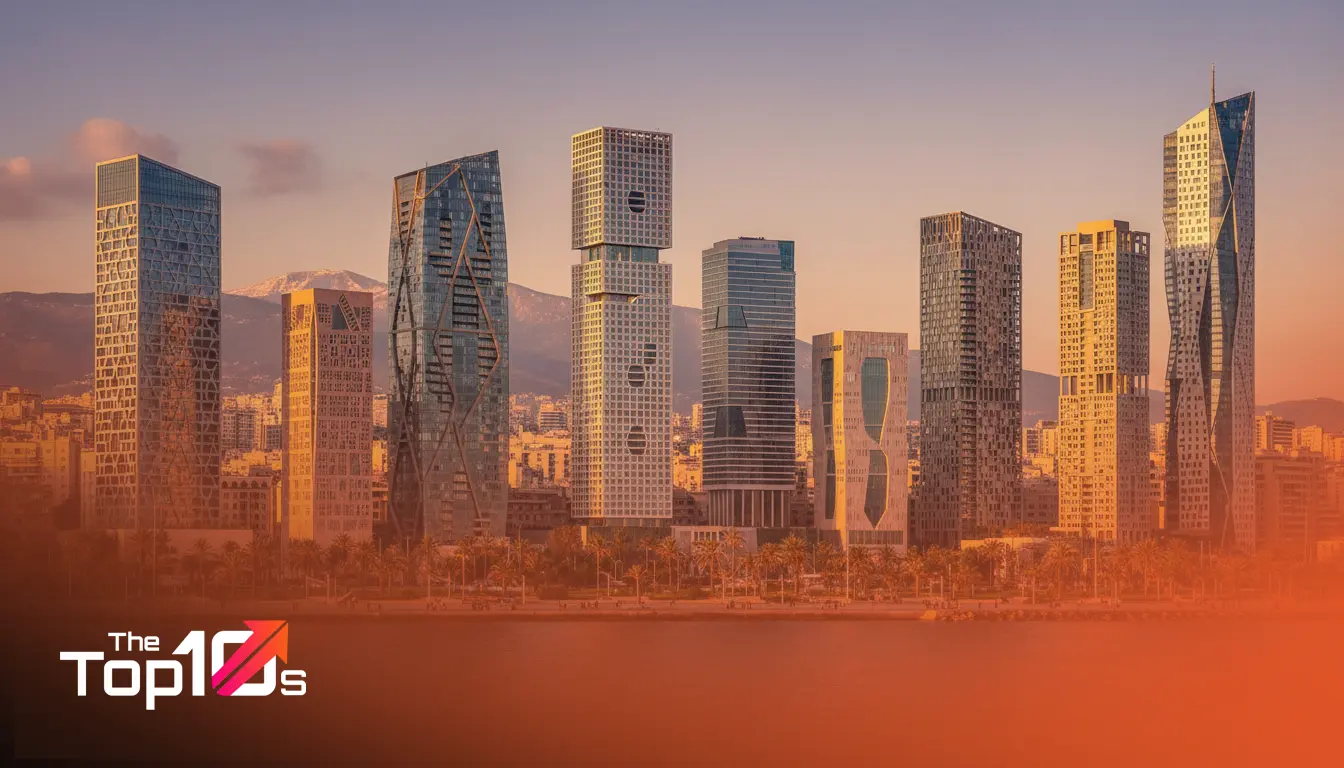
Walking through the streets of Gemmayzeh or staring up at the skyline of Ashrafieh, you quickly realize that Beirut isn’t just a city; it’s a living, breathing museum of contrasts. You have Ottoman-era heritage houses sitting shoulder-to-shoulder with ultra-modern glass towers. For anyone looking to build or renovate here, that complexity is both a blessing and a challenge. Choosing the right partner to navigate this unique urban fabric matters more here than perhaps anywhere else in the region.
The best architects in Beirut don’t just draw blueprints. They act as cultural interpreters, engineering problem-solvers, and master planners who understand that a building here needs to be resilient as well as beautiful. Whether you are planning a commercial development in Downtown or restoring a family villa in the mountains nearby, the professional you choose will dictate not just the aesthetic, but the long-term viability of your investment.
Finding that perfect match requires looking past flashy renderings. It requires understanding who can handle local regulations, who understands the Mediterranean light, and who can deliver a project that stands the test of time. Below, we explore the professionals shaping the face of Lebanon today.
Quick Takeaways: Finding Your Match
- Context is King: Beirut’s zoning laws and heritage protections are complex. Look for firms with a proven track record of navigating local bureaucracy.
- Restoration vs. New Build: Some architects specialize in breathing life into old structures, while others thrive on blank canvases. Know your project type before searching.
- Resilience Matters: Given local energy and infrastructure challenges, prioritize designers who integrate sustainable, self-sufficient systems (solar, water collection).
- Portfolio Diversity: A broad portfolio often indicates an ability to adapt to client needs rather than imposing a single “signature style” on every project.
How We Identified Leading Architects
Selecting a design partner is rarely about finding the person with the most awards, though recognition certainly helps. Our approach to highlighting these trusted architects near Beirut focuses on consistency, reputation, and executed reality. We looked for professionals who have moved beyond theoretical concepts to deliver tangible, high-quality structures.
We analyzed public portfolios to gauge design versatility. A firm that can handle the delicate restoration of a heritage site with the same skill as a high-tech commercial hub demonstrates deep technical competency. We also considered the firm’s longevity and their standing within the broader Middle Eastern architectural community. Feedback from the construction sector—contractors and engineers who actually build these designs—often points toward architects who produce accurate, buildable plans rather than just pretty pictures.
Finally, we looked for design philosophy. The most experienced architectural professionals in Beirut are those who address the specific climate and social dynamics of Lebanon, creating spaces that foster community and comfort.
List of 10 Best Architects in Beirut
| Name | Best For |
|---|---|
| Bernard Khoury / DW5 | Landmark property, bold artistic statement |
| Nabil Gholam Architects | Luxury residential and high-profile commercial projects |
| Lina Ghotmeh — Architecture | Narrative, sustainability, and craft |
| Raed Abillama Architects | Sensitive renovation of heritage properties |
| Hashim Sarkis Studios | Institutional projects or large-scale residential developments |
| Karim Nader Studio | Renovation and reuse of existing structures |
| GM Architects (Galal Mahmoud) | Hospitality and luxury lifestyle projects |
| Paul Kaloustian Studio | Experimental and organic architecture |
| Youssef Tohme Architects and Associates (YTAA) | Privacy, structural boldness, and raw material palettes |
| Accent Design Group | Commercial developments requiring efficient design |
Top 10 Architects In Beirut
The following professionals represent a mix of established industry giants and innovative studios that are redefining Lebanese architecture.
1. Bernard Khoury / DW5
Few names are as synonymous with the contemporary, sometimes provocative edge of Beirut architecture as Bernard Khoury. His work often reflects the raw, industrial reality of the city. He doesn’t try to hide the scars of the urban landscape; he incorporates them.
Operating under the DW5 entity, Khoury is perhaps best known for the legendary B018 nightclub, constructed underground with a retractable roof. His approach is often described as experimental and fiercely modern. This studio is an excellent fit for developers or homeowners who want a landmark property that makes a bold, artistic statement rather than blending into the background.
2. Nabil Gholam Architects
If you are looking for sophistication and polished elegance, Nabil Gholam’s portfolio is a masterclass in refinement. His firm has a massive footprint not just in Lebanon, but across the Middle East and Europe. The work here tends to be sleek, maximizing views and integrating seamlessly with the surrounding environment.
The firm handles everything from large-scale urban planning to high-end private residences. What stands out is their attention to the “skin” of the building—using screens, greenery, and innovative glazing to manage the harsh Mediterranean sun while maintaining transparency. It is a top choice for luxury residential and high-profile commercial projects.
3. Lina Ghotmeh — Architecture
Lina Ghotmeh has gained international acclaim for her “Archeology of the Future” approach. Her designs feel rooted in the earth, often using textures and materials that mimic the history of the site. A prime example is the Stone Garden tower near the port, which features a hand-chiseled façade that serves as both a memory of the city’s past and a beacon for its future.
Her work is deeply research-based. She is ideal for clients who value narrative, sustainability, and craft. If you want a building that tells a story and engages deeply with its environment, Ghotmeh’s studio offers a poetic yet robust architectural language.
4. Raed Abillama Architects
There is a specific talent required to take a crumbling traditional house and turn it into a modern masterpiece without losing its soul. Raed Abillama excels at this. His firm balances preservation with contemporary intervention better than almost anyone in the region.
Take a look at the Falamanki venue or various private winery projects; they exude a sense of place. Abillama’s team is highly versatile, managing complex residential compounds and commercial spaces with equal skill. They are a strong option for clients who possess a heritage property and need a sensitive, thoughtful renovation that still offers modern luxury.
5. Hashim Sarkis Studios
With a foot in academia (as Dean of Architecture at MIT) and a foot in practice, Hashim Sarkis brings a rigorous intellectual depth to his projects. His work in Beirut and the surrounding coastal areas often explores the relationship between the built form and the landscape.
His designs are never cluttered. There is a geometry and logic to his buildings that feels timeless. Whether designing housing complexes or civic buildings, the studio focuses on how people move through and inhabit space. This firm is well-suited for institutional projects or large-scale residential developments requiring thoughtful urban integration.
6. Karim Nader Studio
Karim Nader is often referred to as a “repetition of the new.” His work focuses heavily on renovation and the reuse of existing structures, which is a critical necessity in a dense city like Beirut. He views architecture as a cinematic experience, focusing on light, shadow, and memory.
His studio is smaller and more agile than some of the corporate giants, allowing for a highly personalized design process. Nader is particularly skilled at modernizing mid-century apartments and villas, stripping them back to their essence and introducing modern elements that highlight the original character.
7. GM Architects (Galal Mahmoud)
For those interested in hospitality and luxury lifestyle projects, GM Architects is a heavyweight. Galal Mahmoud’s approach is heavily influenced by the Mediterranean lifestyle—living outdoors as much as indoors. His designs often blur the lines between the exterior terrace and the interior living room.
The firm creates resort-like atmospheres even in urban settings. Their use of natural materials, water features, and airy layouts makes them a favorite for hotels, beach resorts, and luxury private villas. If the goal is a property that feels like a permanent vacation, this is the firm to investigate.
8. Paul Kaloustian Studio
Paul Kaloustian challenges conventional shapes. His buildings often feature fluid lines, floating volumes, and a distinct lack of rigid corners. He treats architecture almost like sculpture, changing the way a building sits on a street corner or a hillside.
This experimental approach results in structures that feel light and airy, despite using concrete and steel. His studio is perfect for clients who are bored with standard “block” architecture and want a home or office that feels dynamic and organic.
9. Youssef Tohme Architects and Associates (YTAA)
Youssef Tohme’s work is characterized by intensity and honesty. He often uses concrete in bold, brutalist ways, but pairs it with flexible elements that allow residents to control their environment. He understands the chaotic urban density of Beirut and designs defensive yet open spaces that provide privacy.
His projects often feature “skins” or moveable facades that allow a building to breathe. This is practical architecture for a hot, busy city. Clients looking for privacy, structural boldness, and raw material palettes will find a kindred spirit here.
10. Accent Design Group
Led by Elie Abs, Accent Design Group leans into the technological side of architecture. They utilize advanced modeling and parametric design to create efficient, geometric structures. Their work often looks futuristic, optimizing layouts for views and sunlight using data-driven design.
This firm represents the new guard of architectural practice, combining engineering precision with creative form. They are an excellent choice for commercial developers looking to maximize floor area ratios without sacrificing design quality.
What Defines a Great Architect in Beirut?
Architecture in Lebanon operates under a unique set of constraints. A great architect here needs to be part artist and part crisis manager. The visual appeal is important, but functionality is what makes a building livable in the long run.
Mastering the Light and Climate
Beirut is humid and sunny. Novice designers often create glass boxes that turn into greenhouses, requiring massive amounts of air conditioning. Skilled local architects understand passive cooling. They use orientation, cross-ventilation, and shading devices (mashrabiya) to keep buildings cool naturally. As noted by global platforms like ArchDaily, region-specific climate response is a hallmark of good design in the Middle East.
Resilience and Self-Sufficiency
Infrastructure reliability can be inconsistent. Top-tier architects now integrate water filtration systems, solar power arrays, and generator soundproofing into the initial design phases. It isn’t an afterthought; it’s part of the core planning. This ensures that the home or office functions smoothly regardless of external grid conditions.
Navigating the Old and New
Beirut is a palimpsest—layers of history built over one another. The best designers respect this. They don’t just bulldoze; they dialogue with the surroundings. Whether it’s preserving a 1920s façade or ensuring a new tower doesn’t block a neighbor’s light, contextual awareness is the sign of a mature architect.
How to Choose the Right Architect for Your Needs
Hiring a design professional is a commitment that can last two to four years. You need a partner you can trust. Here is how to narrow down your options.
Review the “Built” Portfolio
Renderings are easy to make perfect; photos of completed buildings tell the truth. Look at projects that are five or ten years old. Do they still look good? Have the materials aged well? This reveals the architect’s understanding of durability and maintenance.
Assess Their Communication Style
Construction in Lebanon involves navigating contractors, municipalities, and suppliers. You need an architect who speaks clearly and firmly. During your initial consultation, ask them about a time a project went wrong and how they fixed it. Their answer will tell you a lot about their problem-solving skills.
Check Regional Experience
If you are planning a project outside of the capital, ensure your architect understands the logistics of that specific area. Interestingly, design principles often transcend borders in this region. For example, if you are looking at investment properties regionally, reviewing the Top 10 Architects in Amman can provide insight into how neighboring professionals handle similar arid and semi-arid climates, offering inspiration for stone usage and courtyard designs that work well in Lebanon too.
Common Myths vs. Reality
Myth: Architects are only for luxury mansions.
Reality: A good architect can actually save you money on a modest budget by planning space efficiently and preventing costly construction errors.
Myth: You should hire the cheapest design fee.
Reality: Low design fees often lead to incomplete drawings. This results in “change orders” during construction, which are far more expensive than paying for a detailed plan upfront.
Myth: Sustainability is just a trend.
Reality: In a country with high energy costs, energy-efficient design is a financial necessity, not just an environmental choice.
Frequently Asked Questions
Do I need a license to build a small extension in Beirut?
Yes, almost all structural additions require a permit from the Order of Engineers and Architects and local municipalities. Working with a registered architect is mandatory to file these papers legally.
How much do architects in Beirut charge?
Fees vary significantly based on reputation and scope. Some charge a percentage of total construction cost (typically between 5% and 15%), while others charge a flat fee or per square meter. Always clarify if this fee includes site supervision.
Can these architects handle interior design as well?
Most of the firms listed above offer comprehensive services, meaning they handle the architecture (the shell) and the interior design. This is often the best route to ensure a cohesive look throughout the property.
What is the difference between an architect and a civil engineer?
The architect focuses on the design, functionality, layout, and aesthetics. The civil engineer focuses on the structural stability—ensuring the columns and beams can hold the weight. You need both, and usually, the architect hires the engineer as part of their team.
Are sustainable buildings more expensive to build?
The upfront cost might be slightly higher due to insulation and better glazing, but the operational costs (electricity and heating) are significantly lower. Organizations like the Pritzker Architecture Prize frequently highlight that the world’s best architecture prioritizes this long-term efficiency.
Building Your Vision
Selecting one of the top architects in Beirut is the first step toward turning a concept into concrete reality. Whether drawn to the industrial storytelling of Bernard Khoury or the environmental sensitivity of Lina Ghotmeh, the talent pool in this city is world-class.
Take your time with this decision. Meet with multiple firms, visit their completed sites if possible, and ask tough questions about budgets and timelines. The right architect will not just design a building for you; they will advocate for your vision through every pour of concrete and placement of glass.