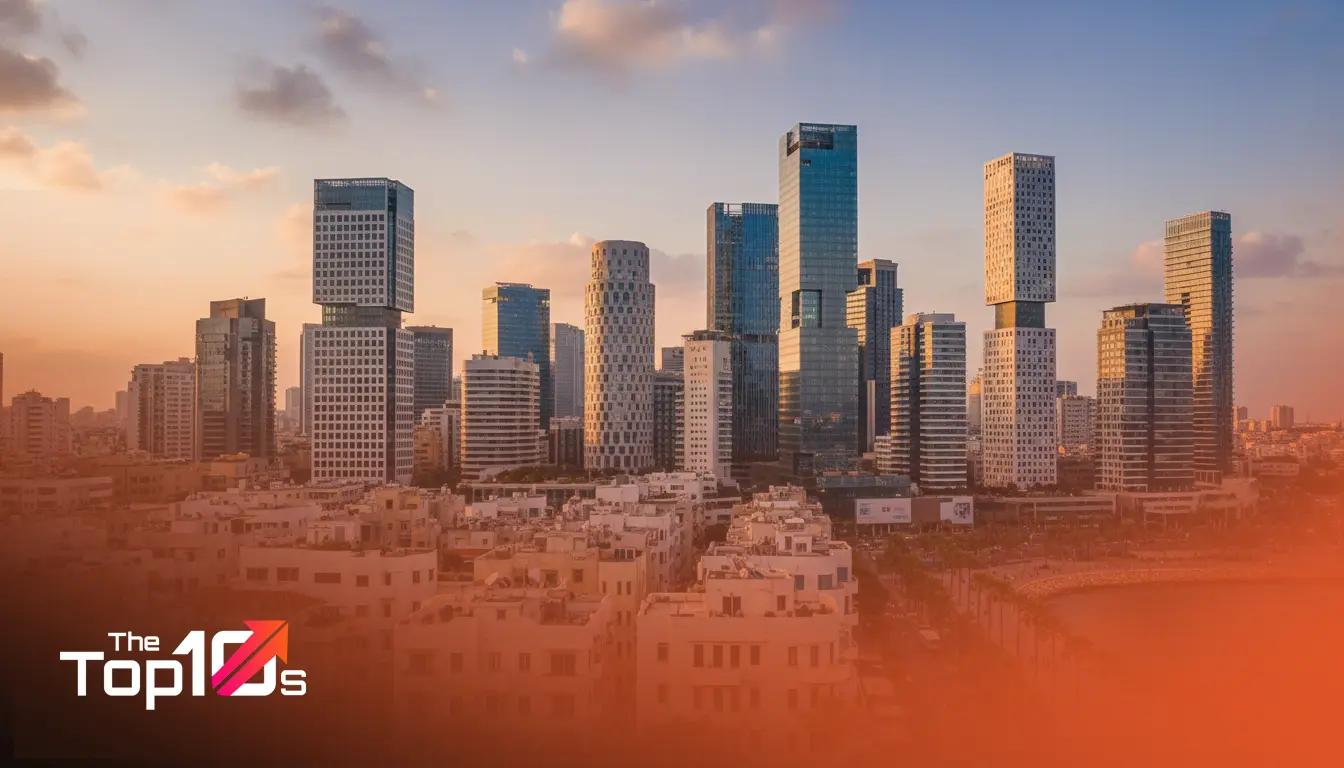
Walking through Tel Aviv feels like moving through an open-air museum of design. One moment you are staring at a crumbling 1930s Bauhaus gem on Rothschild Boulevard, and the next, you are craning your neck to see the top of a glass-and-steel skyscraper in the Sarona district. This chaotic, beautiful mix is what makes building here so exciting—and incredibly complicated.
If you are planning a project in the “White City,” you already know the stakes are high. Real estate is among the most expensive in the world, municipal regulations are notoriously strict, and the humid Mediterranean climate demands specific material choices. You cannot simply hire someone with a license and hope for the best. You need a visionary who can navigate city hall as well as they can sketch a floor plan.
Finding the right partner for your build is arguably the most critical financial decision you will make this year. Whether you are dreaming of a minimalist villa in Afeka, a penthouse renovation in Neve Tzedek, or a commercial development downtown, the professional you choose dictates the success of the investment.
Quick Takeaways: hiring in Tel Aviv
- Context is King: Tel Aviv has strict preservation laws (UNESCO zones). Your architect must understand these constraints intimately.
- The “Permit” Factor: Bureaucracy here is slow. Experienced local architects know how to expedite the licensing process.
- Climate Control: Great local design manages intense sunlight and humidity without relying solely on air conditioning.
- Specialization Matters: A firm famous for skyscrapers might not be the right fit for your historic apartment renovation.
How We Identified Leading Architects
Selecting the names for this list wasn’t about picking the firms with the flashiest Instagram accounts. We looked for substance. Our evaluation process focused on the signals that actually matter to a client putting their money on the line.
We analyzed public portfolios to gauge versatility. Could these professionals handle the tight constraints of a city-center lot? We looked at longevity and firm stability, prioritizing those who have weathered the ups and downs of the Israeli real estate market. Reputation played a massive role; we listened to what is being discussed in local design forums and industry publications regarding project delivery and client satisfaction.
Finally, we considered regulatory fluency. In Tel Aviv, artistic talent means nothing if the architect cannot get the plans approved by the municipality. The professionals listed below demonstrate a balance of creative excellence and practical, administrative competence.
List of 10 Best Architects in Tel Aviv
| Name | Best for |
|---|---|
| Pitsou Kedem Architects | Luxury private residences and high-end commercial spaces. |
| Bar Orian Architects | Urban renewal projects, luxury apartment complexes, and historic preservation. |
| Kimmel Eshkolot Architects | Institutional projects and culturally significant residential designs. |
| Jacobs-Yaniv Architects | Family homes and thoughtful interior-architectural renovations. |
| Ilan Pivko Architects | Clients seeking unique, artistic, and statement-making architecture. |
| Gottesman-Szmelcman Architecture | High-end residential and academic/mixed-use developments. |
| Paritzki & Liani Architects | Clients who view architecture as art and want experimental, bespoke solutions. |
| Orly Shrem Architects | Total design solutions (architecture + interiors) for luxury living. |
| Yoav Messer Architects | Sustainable design and adaptive reuse projects. |
| Chyutin Architects | Public buildings and minimalist, structured residential estates. |
Top 10 Architects in Tel Aviv
This selection represents a diverse cross-section of the city’s design talent, ranging from luxury residential specialists to urban renewal experts.
1. Pitsou Kedem Architects
If there is a name synonymous with modern Israeli luxury, this is likely it. Pitsou Kedem founded his studio in 2000, and he has since reshaped the aesthetic of high-end homes in the region. His work is instantly recognizable: clean lines, massive concrete volumes that somehow feel weightless, and a masterful use of light and shadow.
The studio specializes in stripping away the unnecessary. They often incorporate elements like the “Mashrabiya” (perforated screens) to filter the harsh Middle Eastern sun while maintaining privacy. This isn’t just about looking good; it’s about climate-responsive living. If you have a significant budget and want a home that looks like it belongs on the cover of an international design magazine, this studio is a strong contender.
Best For: Luxury private residences and high-end commercial spaces.
2. Bar Orian Architects
Established by Tal and Gidi Bar Orian in 1990, this firm has arguably done more to influence the current skyline of Tel Aviv than almost any other. You cannot walk through the center of town without passing one of their projects. They are the heavyweights of urban renewal, particularly “Tama 38” projects and preservation work.
Their strength lies in blending the old with the new. They frequently take historic eclectic or Bauhaus buildings and add modern glass extensions that float above the original structures. It is a delicate balancing act that requires immense technical skill and deep knowledge of preservation laws. They handle high-density residential complexes with a level of sophistication that prevents them from feeling crowded.
Best For: Urban renewal projects, luxury apartment complexes, and historic preservation.
3. Kimmel Eshkolot Architects
Founded by Etan Kimmel and Michal Eshkolot, this firm operates at the intersection of architecture and landscape. They are well-known for public buildings and museums, notably the Steinhardt Museum of Natural History, but their residential work is equally impressive. They don’t just design a building; they design the environment around it.
Their approach often involves heavy use of technology and sustainability. They recently won international acclaim for the Mount Herzl Memorial Hall, demonstrating an ability to handle emotionally resonant and technically complex public works. For private clients, this translates to homes that are thoughtful, enduring, and deeply integrated into their surroundings.
Best For: Institutional projects and culturally significant residential designs.
4. Jacobs-Yaniv Architects
Run by Oshri Yaniv and Tamar Jacobs, this studio brings a sense of warmth and intimacy to modernism. While some Tel Aviv architecture can feel cold or overly industrial, Jacobs-Yaniv injects soul into their projects using materials like untreated wood, iron, and rough stone. Their spaces feel lived-in and human-scale.
They have extensive experience with residential renovations, capable of taking a dark, cramped apartment and transforming it into an airy, functional space. Their philosophy centers on the user experience—how a family actually moves through and uses a house—rather than just making a visual statement. It is a practical, grounded approach to design.
Best For: Family homes and thoughtful interior-architectural renovations.
5. Ilan Pivko Architects
Ilan Pivko is something of a celebrity in the local architecture scene, known for designs that are bold, sometimes controversial, and never boring. He doesn’t subscribe to the “white box” minimalism that dominates much of the city. Instead, his work often features curves, daring structural choices, and a distinct artistic flair.
Pivko’s portfolio includes everything from boutique hotels to the “Florentine Quartet.” His style appeals to clients who want their property to be a conversation piece. If you are looking for conventional or understated, this might not be the match for you. But for those seeking drama and high-impact aesthetics, his firm delivers consistently.
Best For: Clients seeking unique, artistic, and statement-making architecture.
6. Gottesman-Szmelcman Architecture
This firm brings a European sensibility to the Israeli Levant. Asaf Gottesman and Ami Szmelcman have built a reputation for academic rigor and precise detailing. Their work spans from university buildings to luxury villas in Herzliya Pituach and Tel Aviv.
What stands out is their versatility. They manage to maintain a very high standard of finish whether they are designing a campus or a private home. Their residential architecture often features large, open volumes that connect seamlessly with the outdoors, perfect for the coastal climate. They are particularly adept at handling complex mixed-use developments that require a sophisticated understanding of urban planning.
Best For: High-end residential and academic/mixed-use developments.
7. Paritzki & Liani Architects
Founded by Paola Liani and Itai Paritzki, this international studio views architecture as a laboratory. They are experimental with materials and geometry. One of their famous projects involved creating a ceiling that mimics the movement of the sea, demonstrating their willingness to push boundaries.
Despite the experimental nature of their work, their spaces remain highly functional. They often focus on visual axes—how the eye travels through a room toward the view outside. This makes them exceptional at working with the tight, sometimes awkward plots found in Tel Aviv, turning constraints into unique design features.
Best For: Clients who view architecture as art and want experimental, bespoke solutions.
8. Orly Shrem Architects
Orly Shrem has a distinct signature that fuses architecture with interior design and lighting. You rarely feel a disconnect between the shell of the building and the furniture inside; it is all one cohesive vision. Her work exudes a resort-like quality, often creating private sanctuaries that feel miles away from the bustling city streets outside.
She is known for “total design.” If you hire this firm, you are usually looking for someone to handle every aspect of the visual experience. The vibe is typically Mediterranean luxury—earthy tones, high ceilings, and lush integration with garden spaces.
Best For: Total design solutions (architecture + interiors) for luxury living.
9. Yoav Messer Architects
Yoav Messer is a strong advocate for sustainable and reuse architecture. He gained significant attention for using shipping containers in functional structures, showing that good design doesn’t always require traditional expensive materials. However, his practice extends far beyond that niche into high-end residential and public buildings.
His designs are modern, energetic, and often colorful. He places a heavy emphasis on how the building interacts with the public or the street. For commercial clients or developers looking to make a building that feels approachable and eco-conscious, Messer brings a refreshing perspective.
Best For: Sustainable design and adaptive reuse projects.
10. Chyutin Architects
For decades, Chyutin Architects has been a pillar of the Israeli architectural community. Their work is characterized by geometric purity and restraint. They have won numerous competitions for public buildings, including courthouses and senate buildings, which speaks to their organizational capability.
In the residential sector, they apply that same discipline. Their houses are structured, logical, and incredibly calm. There is no clutter in their design thinking. It is ideal for clients who appreciate order, symmetry, and quiet elegance over loud stylistic gestures.
Best For: Public buildings and minimalist, structured residential estates.
What Defines a Great Architect in Tel Aviv?
Designing in this city requires a specific set of skills that goes beyond drawing pretty facades. The “White City” is a UNESCO World Heritage site, meaning thousands of buildings are under strict preservation orders. A great architect here must be part historian.
They need to understand how to retrofit a 1930s structure with modern plumbing and elevators without violating the city’s conservation guidelines. Furthermore, density is a major issue. Tel Aviv is crowded. The best professionals know how to maximize privacy even when the neighbors are only a few meters away. They use angles, landscaping, and screening to create an illusion of seclusion.
Then there is the heat. We aren’t in Europe. Glass boxes turn into greenhouses if not oriented correctly. Top-tier local designers use passive cooling techniques, airflow planning, and shading elements to make homes comfortable and energy-efficient. Architectural excellence isn’t limited to the Mediterranean coast, however. If you are exploring design in other regions—perhaps reviewing the top 10 architects in Bursa for a comparative look at regional styles—you will find that climate adaptation is a universal marker of quality design.
How to Choose the Right Architect for Your Needs
Hiring a designer is like a short-term marriage. You will be communicating with this person constantly for 12 to 24 months. Here is how to ensure you make a compatible match.
Define Your Project Type First
Don’t hire a specialist in high-rise commercial towers to renovate your 80-square-meter apartment. The skill sets are different. Look for a portfolio that matches the scale and complexity of your specific project.
Ask About Bureaucracy
During the interview, ask specifically about the permitting process (known locally as the “Hetter Bniya”). Ask them: “How long are permits currently taking in this district, and what is your strategy for handling objections?” If they give you a vague answer, be wary. You want someone who knows the people at the planning department by name.
Review Communication Styles
Does the architect listen more than they talk? Some “starchitects” view clients merely as patrons for their art. If you have strong opinions about your home, you need a collaborator, not a dictator. Ask to speak to a past client and specifically ask how the architect handled disagreements or budget overruns.
Check the Licensing
Ensure your candidate is a registered architect in Israel (Rishum Mehandesim v’Adrichalim). There is a distinction between an interior designer (who does not require a license) and a registered architect who can legally sign off on building permits. For structural changes, you need the latter.
Frequently Asked Questions
How much do architects in Tel Aviv charge?
Fees vary wildly based on reputation and project scope. Generally, you can expect to pay between 5% and 10% of the total construction cost for full architectural services. Some top-tier firms may charge a higher fixed fee or a higher percentage. Always clarify if this fee includes interior design and site supervision.
What is the difference between an architect and a practical engineer (Handassai)?
A registered architect has a university degree (5 years) and can plan buildings of any height or complexity. A practical engineer has a technical degree and is generally limited to planning simple structures up to four stories (often sufficient for private homes). Architects typically have broader design training.
How long does it take to get a building permit in Tel Aviv?
This is the pain point of Israeli real estate. While reforms are happening, it is not uncommon for permits to take 12 to 18 months, depending on the complexity and zoning issues. A good architect can sometimes shorten this, but they cannot perform miracles.
Can I use an architect from outside Tel Aviv?
Absolutely, but there is a distinct advantage to hiring a local. An architect based in Jerusalem or Haifa might not be as familiar with the specific quirks of the Tel Aviv municipality’s planning committee, which could lead to delays.
What is a “Tama 38” project?
Tama 38 is a national initiative to strengthen older buildings against earthquakes. In Tel Aviv, this is a major driver of construction. It allows developers to add floors to existing buildings in exchange for renovating the structure. Specialized architects are required for these highly complex regulatory projects.
Moving Forward with Your Project
Embarking on a construction project in Tel Aviv is an adventure. The energy of the city is infectious, but the logistical hurdles are real. The difference between a stressful money pit and a dream home usually comes down to the team you assemble at the start.
Don’t rush the selection process. Meet with three or four of the firms listed above. Look at their work in person if possible—photos can be deceiving. Trust your gut regarding the personal chemistry. When you find a professional who shares your vision and understands the unique rhythm of this city, you will be well on your way to creating something exceptional.