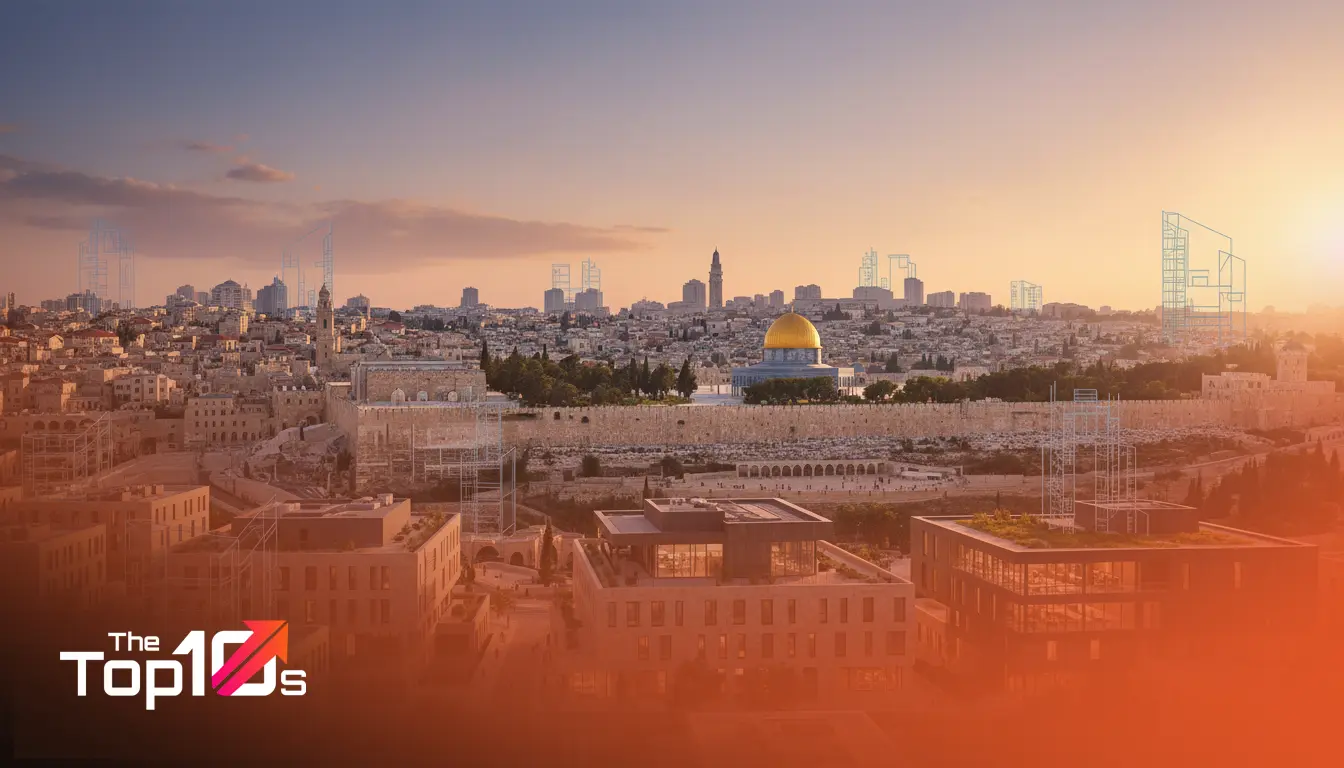
Building in Jerusalem isn’t quite like building anywhere else. If you are planning a project here, you likely already feel the weight of history pressing against your modern design aspirations. You aren’t just dealing with blueprints and contractors; you are navigating a city where the “Jerusalem Stone” law dictates the facade of every structure and where topography shifts dramatically from one street to the next.
Finding someone who can balance the strict preservation regulations of the municipality with the need for contemporary functionality is a tall order. Whether you are renovating an Ottoman-era home in Baka, planning a luxury complex in Mamilla, or designing a commercial space in Talpiot, the person holding the pen matters as much as the location itself.
I’ve looked at the local market to help you cut through the noise. We aren’t just looking for people who can draw pretty pictures. We are looking for professionals who understand zoning (Taba), who know how to push paperwork through City Hall at Safra Square, and who treat light and stone with the respect they deserve.
Quick Takeaways: Choosing Talent in Jerusalem
- Local Knowledge is Non-Negotiable: Jerusalem’s topography and preservation laws are unique. An architect from the coastal plain might struggle with the specific engineering and aesthetic requirements of the Judean Hills.
- Specialization Matters: Some firms excel at high-rise luxury, others at historic preservation. Match the portfolio to your specific project type.
- Patience is Key: The permitting process here is notorious. You need an architect with the stamina and connections to navigate bureaucracy.
- The “Stone” Factor: Look for designers who use Jerusalem stone creatively, not just as a mandatory cladding.
How We Identified Leading Architects
Curating a list of this nature requires more than a cursory glance at Instagram feeds. To identify the professionals listed below, we looked at a specific set of criteria that signals reliability and design excellence in the local context. We didn’t just look for flash; we looked for substance.
Our research focused on firms and individuals who have demonstrated a deep understanding of the local landscape. We examined their portfolio depth—do they have completed projects that have stood the test of time? We also considered their reputation regarding regulatory navigation. In a city like this, an architect’s ability to secure permits is just as valuable as their ability to design a staircase.
We also looked for peer recognition and public feedback. Who are the names that come up when other builders talk? While we cannot verify every single claim made by a firm, we prioritized those with a consistent track record of delivering finished projects that respect the city’s unique visual character.
List of 10 Best Architects in Jerusalem
| Name | Best For |
|---|---|
| Safdie Architects | Monumental projects or high-end developments that require a fusion of urban planning and iconic design. |
| Kolker Kolker Epstein (KKE) | Government-level planning, technical capacity, and experience with complex municipal projects. |
| Matti Rosenshine Architects | Residential and educational buildings that feel organic, with a focus on manipulating natural light and creating interesting geometries. |
| Salameh Architects | Private villas and commercial centers where cultural context is paramount, with a focus on seamless blends of traditional and modern design. |
| Kimmel Eshkolot Architects | Cultural institutions or luxury residential projects where elegance and preservation are key, with a focus on sensitive integration with ancient stones. |
| Molcho Architects | High-end residential renovations or new builds in neighborhoods like German Colony or Rehavia, with a focus on luxury living spaces and smart home integration. |
| Nakash Architects | Urban renewal and public buildings, with a focus on pragmatic yet aesthetically pleasing designs and maximizing rights and space within existing city blocks. |
| SAYA Design for Change | Public spaces and peace-building infrastructure, with a focus on understanding the social and political implications of where and what they are building. |
| Chyutin Architects | Institutional clients or large-scale commercial competitions, with a focus on clean, modernist lines and a stark, beautiful contrast to the chaotic textures of the city. |
| Ian Stern Architects | High-standard renovations, with a focus on making old Jerusalem apartments livable for modern families and a practical, customer-service oriented approach. |
Top 10 Architects in Jerusalem
Here are ten architectural practices and individuals who are shaping the skyline and streetscapes of Israel’s capital. Each brings a different flavor to the design table.
1. Safdie Architects
You cannot discuss architecture in this city without acknowledging the heavy hitters. Moshe Safdie’s firm operates on a global scale, but their imprint on Jerusalem is undeniable. From the Mamilla Alrov center to the Yad Vashem Holocaust History Museum, their work defines modern Jerusalem public space.
This firm is best suited for monumental projects or high-end developments that require a fusion of urban planning and iconic design. They excel at integrating massive structures into the existing urban fabric without overwhelming it. If you have a project that aims to be a landmark, this is the tier you are looking at.
2. Kolker Kolker Epstein (KKE)
KKE is a staple in the Israeli architectural scene. They have a massive portfolio that spans public buildings, urban planning, and large-scale residential projects. Their work often centers on the functionality of the city, handling complex municipal projects that require intense coordination.
Their strength lies in their technical capacity and experience with government-level planning. They understand the “system” deeply. This firm is an excellent potential partner for developers or institutions looking for a team that can handle logistics and design with equal proficiency.
3. Matti Rosenshine Architects
For a more boutique, design-forward approach, Matti Rosenshine brings a refreshing perspective. His work often involves residential and educational buildings that feel organic. A great example is his work in the older neighborhoods, where he manages to make new construction feel like it has always been there, yet distinctly modern.
Rosenshine is particularly skilled at manipulating natural light and creating interesting geometries. This practice is ideal for homeowners or boutique developers who want a property with a unique artistic identity rather than a cookie-cutter apartment block.
4. Salameh Architects
Operating out of East Jerusalem and serving the wider region, Salameh Architects brings a sophisticated touch to residential and commercial design. Their work often reflects a seamless blend of traditional Arab architecture elements with stark, modern lines.
They are strong candidates for private villas and commercial centers where cultural context is paramount. Their portfolio suggests a keen eye for interior-exterior flow, making them a solid choice for clients who prioritize living spaces that connect with the landscape.
5. Kimmel Eshkolot Architects
While they operate nationally, their work in Jerusalem, such as the Davidson Center near the Western Wall, shows an incredible sensitivity to archaeology and history. They are masters of “quiet” architecture—structures that don’t scream for attention but are beautiful in their restraint.
This team is perfect for cultural institutions or luxury residential projects where the goal is elegance and preservation. They know how to build around ancient stones without trying to compete with them.
6. Molcho Architects
If you are looking at high-end residential renovations or new builds in neighborhoods like German Colony or Rehavia, Molcho is a name that often surfaces. They specialize in luxury living spaces that maximize comfort while adhering to strict preservation guidelines.
Their approach is very client-centric, focusing on high-spec interiors and smart home integration. This is the firm for the homeowner who wants a turnkey luxury experience and refuses to compromise on finish quality.
7. Nakash Architects
Specializing in urban renewal and public buildings, Nakash Architects has a reputation for pragmatic yet aesthetically pleasing designs. In a city undergoing a wave of “Tama 38” (earthquake reinforcement and renovation) projects, having an architect who understands urban renewal is vital.
They are well-suited for residential building committees or developers working on infill projects. They understand how to maximize rights and space within the tight constraints of existing city blocks.
8. SAYA Design for Change
SAYA is fascinating because they often work at the intersection of architecture and geopolitical planning. While this sounds abstract, their grounding in Jerusalem’s complex reality makes them incredibly sharp designers for public spaces and peace-building infrastructure.
However, they also engage in tangible design work. They are best for clients—often NGOs or public bodies—who need a design team that understands the social and political implications of where and what they are building.
9. Chyutin Architects
Known for clean, white, modernist lines that somehow work perfectly against the golden limestone of the city. They have designed major academic buildings and courthouses. Their style is unapologetically modern, offering a stark, beautiful contrast to the chaotic textures of the city.
Chyutin is a strong choice for institutional clients or large-scale commercial competitions. Their work projects authority and order, making it a favorite for civic buildings.
10. Ian Stern Architects
Catering frequently to the Anglo community and those looking for high-standard renovations, Ian Stern has carved out a niche in making old Jerusalem apartments livable for modern families. The challenge in Jerusalem is often taking a 100-year-old shell and adding modern HVAC, plumbing, and flow.
This firm is highly practical and customer-service oriented. If you bought a ruin in a historic quarter and need someone to hold your hand through the transformation into a modern home, this is a great place to start.
Note: While examining regional design excellence, it is interesting to compare the heavy stone textures of Jerusalem with the coastal openness found in other Mediterranean regions. For a contrast in style, you might look at the top 10 architects in Antalya to see how climate dictates form differently across the basin.
What Defines a Great Architect in Jerusalem?
You might be wondering why you can’t just hire a great designer from Tel Aviv or London. The answer lies in the specific DNA of this city. A great Jerusalem architect possesses a specific set of skills that go beyond software proficiency.
Mastery of Materiality
The “Jerusalem Stone” isn’t just a cladding; it’s a language. The best architects know how to detail stone so it doesn’t look like cheap wallpaper. They understand how to mix different finishes—Tubzeh (rough), Taltek (pocked), or honed—to create depth and shadow on a facade. If an architect treats the stone as an afterthought, the building will look flat and lifeless.
Topographical Intuition
Jerusalem is a city of hills and valleys. A standard flat-lot design doesn’t work here. The top professionals know how to step a building down a slope, ensuring that the basement apartments still get light and that the rooflines respect the view of the valley. They view the slope as an asset, not a problem to be leveled.
Regulatory Patience
We touched on this, but it bears repeating. The planning committees here are strict, dealing with issues of archaeology, religion, and politics. A great architect is part diplomat. They know when to push for a modern variance and when to bow to tradition. According to the Israel Association of Architects, navigating local zoning is one of the primary challenges for practitioners in the region.
How to Choose the Right Architect for Your Needs
Selecting the right partner is about alignment. A firm that designs museums might be terrible at designing your kitchen extension. Here is a framework to help you decide.
Define Your Scope Clearly
Are you doing a “Tama 38” project, a historic preservation renovation, or a ground-up build? If you are renovating a listed building, you need a specialist in preservation conservation. If you are building a commercial tower, you need a firm with heavy BIM (Building Information Modeling) capabilities.
Ask the Hard Questions
When you interview these firms, don’t just look at the photos. Ask them:
- “Can you show me a project where you had a difficult permitting issue and how you solved it?”
- “How do you handle budget overruns regarding excavation?” (Excavation in Jerusalem often reveals antiquities, which stops work. You need a plan for this).
- “Who will actually be managing my account day-to-day?”
Check the Chemistry
Architecture is a long relationship. A custom home build can take 2-4 years here. You need to actually like the person you are hiring. If they talk over you in the first meeting, they will ignore you during construction.
Frequently Asked Questions
How much does an architect cost in Jerusalem?
Fees vary wildly based on reputation and scope. generally, for full service (planning through supervision), expect to pay between 5% to 8% of the total construction cost. For smaller renovations, some may charge a fixed fee or an hourly rate.
What is the “Jerusalem Stone” law?
dating back to the British Mandate, this municipal bylaw requires all buildings in Jerusalem to be faced with local limestone. This gives the city its unified, golden look. A good architect knows how to work within this constraint creatively.
How long does it take to get a building permit in Jerusalem?
It is a slow process. Depending on the complexity and zoning (Taba) status, it can take anywhere from 8 months to 2 years. Professionals with strong relationships at the municipality can sometimes expedite the process, but no one can perform miracles.
Can I build a modern-style house in Jerusalem?
Yes, but it usually requires a skilled integration of materials. You can have large glass openings and steel beams, but they almost always must be framed or accompanied by stone. The most successful modern designs here are those that reinterpret traditional forms rather than ignoring them.
What happens if we find archaeological remains during digging?
This is a real risk. If the Israel Antiquities Authority declares your site an archaeological zone, work may stop for salvage excavations. An experienced local architect will check the archaeological probability of your plot before you even buy it.
Moving Forward with Your Project
Choosing an architect in Jerusalem is one of the most significant financial decisions you will make regarding your property. It is the difference between a home that feels like a sanctuary and a construction site that never ends. The professionals listed above represent a mix of established authority and creative agility.
Your next step is to shortlist three of these firms. Visit their completed projects—not just the website photos, but the actual buildings. Stand outside. Look at how the stone has aged. See if the building feels like it belongs. Then, set up those consultations. The right partner is out there, ready to translate your vision into the stone and light of this incredible city.