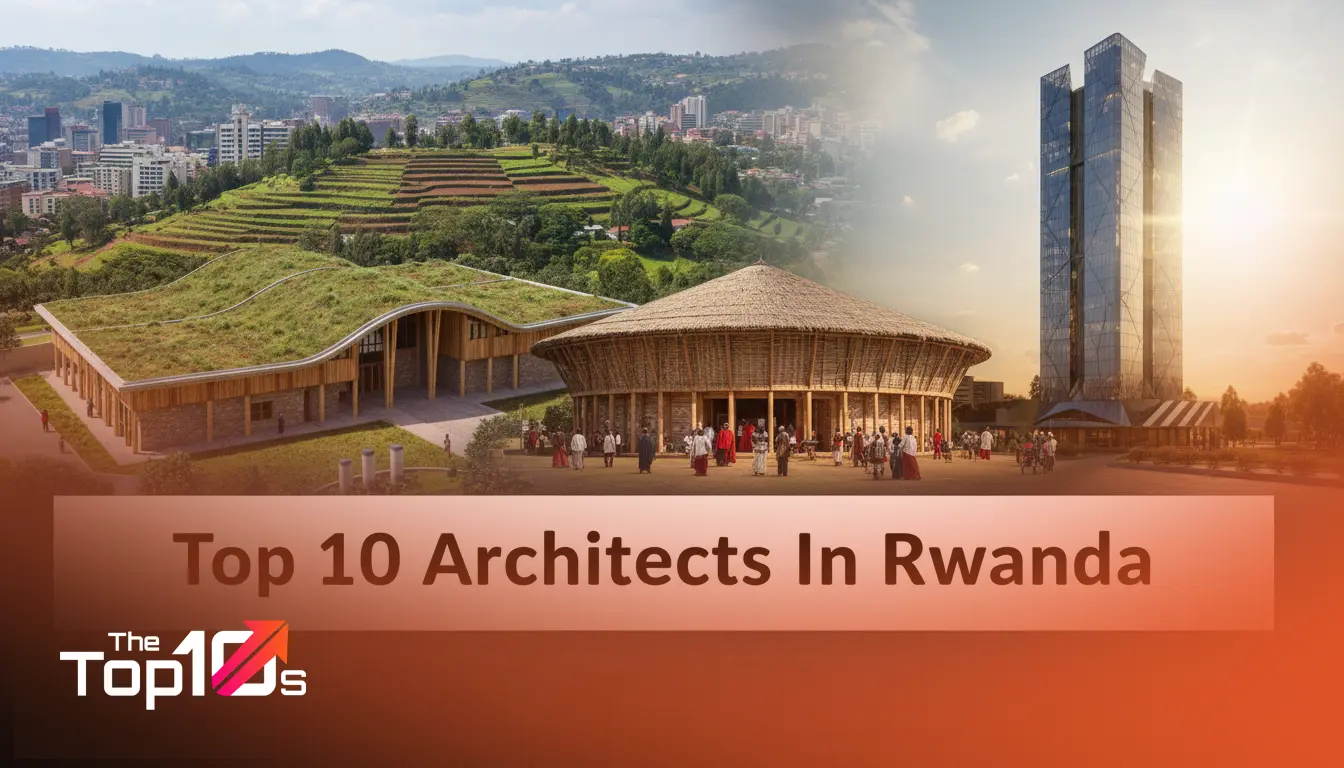
Walk through the streets of Kigali today, particularly neighborhoods like Rebero or Kiyovu, and the transformation is impossible to miss. We aren’t just seeing new buildings; we are witnessing a complete reimagining of what Rwandan spaces look like. But here is the reality that many aspiring homeowners and developers overlook: Rwanda is the “Land of a Thousand Hills,” and building here requires more than just a good eye for design.
It requires technical mastery of difficult terrain. A beautiful rendering means nothing if the architect doesn’t understand how to stabilize a steep slope or navigate the specific zoning regulations of the Kigali Master Plan 2050. Whether you are planning a boutique hotel near Volcanoes National Park or a family residence in the city suburbs, the person holding the pen (or mouse) dictates the success of your investment.
Finding experienced architectural professionals in Rwanda isn’t about finding the cheapest option or the one with the flashiest Instagram feed. It is about finding a partner who understands the intersection of modern aesthetics, sustainable local materials, and structural integrity. This guide breaks down who is leading the industry right now and, more importantly, how to distinguish the experts from the amateurs.
Quick Takeaways: Architectural Planning in Rwanda
- Topography is King: Rwanda’s terrain is challenging. The best architects excel at slope management and retaining wall integration.
- Zoning Compliance: Strict adherence to the Kigali Master Plan is non-negotiable. Ensure your architect is well-versed in the local permitting system (BMS).
- Material Innovation: Leading firms are moving toward “Green Building,” utilizing Ruliba clay blocks, volcanic stone, and compressed earth.
- Scope of Work: Clarify early if you need full project management or just the design drawings. The distinction affects your budget significantly.
How We Identified Leading Architects
Selecting the names for this list wasn’t a random exercise. We looked beyond self-promotion and focused on tangible indicators of quality and reliability within the Rwandan construction sector. The architectural field here is competitive, and reputation travels fast.
Our methodology focused on three core pillars. First, we examined portfolio diversity and complexity. An architect who has successfully delivered a complex commercial hub or a hospital has demonstrated a level of project management that differs vastly from someone who has only done simple renovations. We looked for completed structures, not just conceptual 3D models.
Second, we considered regulatory fluency. The City of Kigali has rigorous standards. We sought out professionals known for smooth permitting processes and adherence to zoning laws, which saves clients months of delays. Finally, we looked at peer recognition within the construction community—engineers, contractors, and past clients whose feedback signals trust and professional integrity.
List of 10 Best Architects in Rwanda
| Name | Best for |
|---|---|
| MASS Design Group (Rwanda Office) | Institutional clients, NGOs, and developers looking for high-impact, sustainable projects that garner international attention. |
| GMK Architecture | Commercial developers and large-scale residential projects requiring strict project management. |
| Landmark Studio | Luxury residential homeowners and boutique commercial spaces. |
| FBW Group (Rwanda) | Complex developments where coordination between design and engineering is critical. |
| Active Social Architecture (ASA) | Eco-conscious clients and community-focused projects. |
| Light Earth Designs | Visionary clients who want a unique, environmentally responsible landmark. |
| Creates Architects | Middle to high-end residential builds. |
| FAT (Future Africa Tectonics) | Mixed-use developers and urban planning projects. |
| Sud-Ouest Architecture | Renovation projects and bespoke private villas. |
| Kigali-Based Boutique Studios (Emerging Talent) | Private homeowners with specific budgets who want high involvement. |
Top 10 Architects in Rwanda
The following professionals and firms represent a mix of established heavyweights and innovative studios pushing boundaries in sustainable design and modern living.
1. MASS Design Group (Rwanda Office)
If you have followed architectural news in East Africa over the last decade, you have likely heard of MASS. They are not just designing buildings; they are rethinking how infrastructure serves society. Their Rwanda office has been pivotal in projects that prioritize health and human dignity.
Notable Strengths: They are global leaders in “purpose-built” architecture. Their work often utilizes local labor and materials to lower carbon footprints while boosting the local economy. The Ellen DeGeneres Campus of the Dian Fossey Gorilla Fund is a prime example of their capability.
Best Suited For: Institutional clients, NGOs, and developers looking for high-impact, sustainable projects that garner international attention.
2. GMK Architecture
GMK has established itself as a staple in the local industry. When you see large-scale commercial complexes or well-planned residential estates, there is a good chance GMK had a hand in it. They bring a level of corporate professionalism that reassures large investors.
Notable Strengths: Their team is known for technical rigor. They bridge the gap between creative design and the hard realities of engineering requirements, ensuring that what is drawn can actually be built within budget.
Best Suited For: Commercial developers and large-scale residential projects requiring strict project management.
3. Landmark Studio
For those seeking modern, high-end aesthetics, Landmark Studio consistently delivers. They have carved out a niche in creating visually striking buildings that fit comfortably within the urban fabric of Kigali. Their designs often feature clean lines and extensive use of glass.
Notable Strengths: They excel at maximizing plot potential. Whether it is a tight urban lot or a sprawling hillside property, they know how to orient a building to capture views while maintaining privacy.
Best Suited For: Luxury residential homeowners and boutique commercial spaces.
4. FBW Group (Rwanda)
FBW is a multi-disciplinary powerhouse with a strong footprint across East Africa. Their strength lies in their integrated approach; they handle architecture, structural engineering, and project management under one roof. If you are looking at projects across the region, you might also find their work comparable to the top 10 architects in Kenya, as they operate to high international standards across borders.
Notable Strengths: Reliability. Because they handle the engineering in-house, there is less friction between the vision and the structural reality. This often leads to smoother construction phases.
Best Suited For: Complex developments where coordination between design and engineering is critical.
5. Active Social Architecture (ASA)
ASA brings a thoughtful, community-centric approach to the table. They are renowned for educational and social infrastructure, but their design principles translate beautifully into private projects that require a sensitive touch.
Notable Strengths: They are masters of brick and ventilation. Their designs often do away with the need for heavy air conditioning by utilizing passive cooling techniques, which is a massive long-term cost saver.
Best Suited For: Eco-conscious clients and community-focused projects.
6. Light Earth Designs
If sustainability is your non-negotiable, Light Earth Designs should be on your radar. They challenge the convention of concrete by championing the use of earth tiles and other low-carbon materials without sacrificing modern beauty.
Notable Strengths: Innovation in materials. They have pioneered the use of thin-shell earth vaulting in Rwanda, creating spaces that feel organic, cool, and incredibly distinct from the standard concrete block structures.
Best Suited For: Visionary clients who want a unique, environmentally responsible landmark.
7. Creates Architects
This firm has been gaining traction for their sleek, contemporary residential designs. They understand the aspirations of the modern Rwandan homeowner who wants global design standards adapted to the local context.
Notable Strengths: Attention to interior flow. They don’t just design the shell; they think deeply about how a family moves through the kitchen, living, and outdoor spaces.
Best Suited For: Middle to high-end residential builds.
8. FAT (Future Africa Tectonics)
FAT is an architectural practice that engages deeply with the theoretical and practical sides of building in Africa. They look at architecture through the lens of rapid urbanization, trying to solve problems rather than just decorate spaces.
Notable Strengths: Urban planning and mixed-use developments. They look at the bigger picture of how a building interacts with the street and the neighborhood.
Best Suited For: Mixed-use developers and urban planning projects.
9. Sud-Ouest Architecture
Bringing a blend of European design sensibility and local knowledge, Sud-Ouest has delivered several elegant projects in the region. Their work often feels understated yet sophisticated.
Notable Strengths: Renovation and adaptive reuse. They have a knack for taking existing structures or difficult sites and breathing new, modern life into them without destroying their character.
Best Suited For: Renovation projects and bespoke private villas.
10. Kigali-Based Boutique Studios (Emerging Talent)
The architectural scene is vibrant, and sometimes the best fit is a smaller, hungry studio rather than a corporate giant. Independent licensed architects in Rwanda are increasingly delivering high-quality personalized service for single-family homes.
Notable Strengths: Agility and cost-effectiveness. Smaller studios often provide direct access to the principal architect throughout the entire process, rather than handing you off to a junior draftsperson.
Best Suited For: Private homeowners with specific budgets who want high involvement.
What Defines a Great Architect in Rwanda?
You might assume that a great portfolio is all that matters, but in the Rwandan context, excellence requires specific local competencies. The visual aspect is just the tip of the iceberg.
Mastery of Terrain
Rwanda is vertical. A standard “flat land” design stamped onto a plot in Gacuriro will result in astronomical retaining wall costs and potential drainage disasters. Great architects here design with the slope, stepping the building down the hill rather than fighting the earth. This not only saves money on excavation but creates dynamic, interesting living spaces.
Navigating the BMS (Building Permitting Management System)
The Rwanda Institute of Architects works closely with city authorities, but the online permitting system can be strict. A top-tier architect knows exactly what the district officers look for regarding setbacks, green coverage ratios, and waste treatment. Their drawings get approved faster because they anticipate the requirements before submission.
Climate-Responsive Design
We have a temperate tropical highland climate. It rains heavily, and the sun can be intense. The best designs feature generous overhangs to protect walls from torrential rain and utilize cross-ventilation to keep interiors cool without relying on AC. If an architect shows you a design with flat roofs and no drainage plan, proceed with caution.
How to Choose the Right Architect for Your Needs
Making a choice from the list above can feel overwhelming. Here is a practical framework to help you narrow down the trusted architects near Rwanda that fit your specific project.
1. Match the Specialist to the Project
Don’t hire a commercial specialist to design a cozy three-bedroom home, and don’t hire a residential boutique firm to plan a shopping mall. Look at what they build 80% of the time. You want an expert, not someone experimenting with your money.
2. Ask About “Construction Administration”
This is where many projects fail. Ask the architect: “Will you visit the site during construction?” Some architects only sell drawings. Ideally, you want a contract that keeps them involved to ensure the builder follows the plans. If they don’t oversee the build, mistakes will happen.
3. Visit a Completed Site
Renderings are seductive; reality is honest. Ask to see a building they completed three years ago. How is it aging? are there cracks? Is the client still happy? This “time-test” is the ultimate indicator of quality.
Frequently Asked Questions
How much do architects charge in Rwanda?
Fees vary significantly based on reputation and scope. generally, you can expect to pay between 3% to 10% of the total construction cost for full services (design plus supervision). Some firms charge a flat fee per square meter, but ensure this includes structural and MEP (mechanical, electrical, plumbing) drawings.
Do I need a local architect if I have a design from abroad?
Yes. According to Rwandan building codes, any permit application submitted to the city must be signed and stamped by an architect registered with the Rwanda Institute of Architects (RIA). They must verify that the foreign design meets local safety and zoning standards.
How long does it take to get a building permit in Kigali?
If your architect submits a compliant dossier, approvals can happen in as little as 21 to 30 days. However, if revisions are requested due to zoning errors, it can drag on for months. This is why hiring an experienced professional is crucial.
What is the difference between an architect and a structural engineer?
The architect designs the space, aesthetics, and functionality. The structural engineer ensures the building stands up. In Rwanda, you need both. Most architectural firms will either have an engineer on staff or a trusted partner they work with to produce the structural dossier required for permits.
Can architects help with land selection?
Absolutely. It is highly recommended to take an architect to view a plot before you buy it. They can spot expensive issues—like bad soil conditions or restrictive zoning overlays—that a real estate agent might not mention.
Final Thoughts on Building in Rwanda
Embarking on a construction project in Rwanda is an exciting venture. The country is growing, and the standard of architecture is rising every year. But the gap between a dream project and a successful build is bridged by the quality of your planning team.
Don’t rush the selection process. Meet with two or three of the firms listed above. Discuss your budget openly and pay attention to who listens more than they talk. The right architect will not just design a building for you; they will guide you through the complexities of the terrain and regulations to deliver a space that stands the test of time.