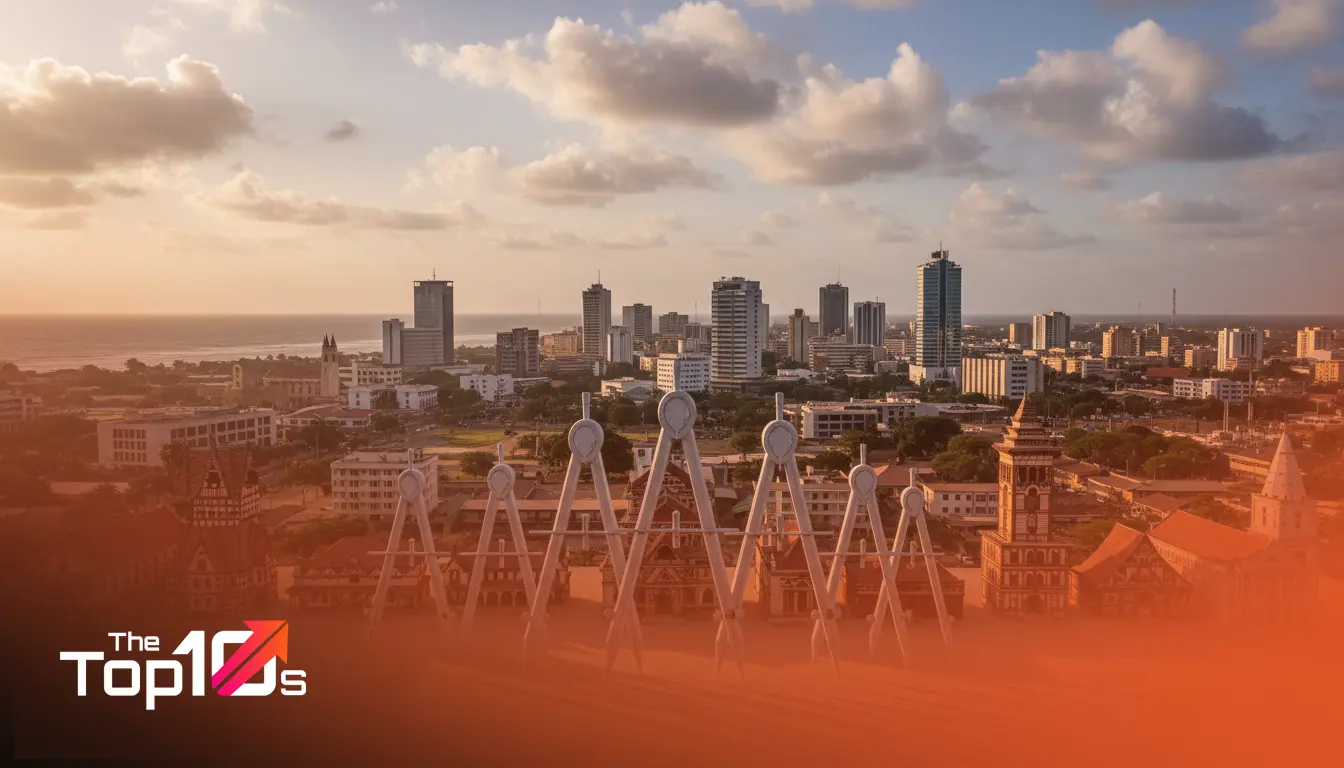
Walking through the bustling streets of Lomé, from the breezy Boulevard du Mono to the rapidly expanding neighborhoods of Agoè, one thing becomes clear: the city is transforming. Whether it’s a sleek new corporate headquarters or a family villa designed to catch the coastal breeze, the structures we build define how we live. But here is the reality many property owners face—a great vision can quickly turn into a construction nightmare without the right guidance.
Choosing a design professional isn’t just about finding someone who can draw a floor plan. It is about finding a partner who understands the unique soil conditions of the Togolese coast, navigates the complexities of obtaining a building permit, and translates your abstract ideas into concrete reality. You need a strategist as much as an artist.
Quick Takeaways: Architectural Planning in Lomé
- Regulatory Compliance: Always verify that your architect is registered with ONAT (Ordre National des Architectes du Togo).
- Climate Awareness: The best designs in Lomé prioritize natural ventilation and shading to handle the tropical humidity.
- Scope of Work: Clarify early on if the firm handles just the design or also supervises the construction site.
- Budget Alignment: Experienced professionals can help value-engineer a project to fit your financial limits without sacrificing safety.
When you start looking for the best architects in Lomé, you might feel overwhelmed by the options. Some firms specialize in massive commercial developments, while others focus on intimate residential spaces. This guide cuts through the noise to help you understand who is leading the industry and how to find the perfect match for your specific needs.
How We Identified Leading Architects
Compiling a list of top design professionals requires more than just a Google search. To highlight the most reliable and creative minds in the region, we looked at a specific set of criteria that signals professionalism and competence. We did not simply rely on who has the flashiest website.
Our methodology focused on public reputation and tangible output. We examined the depth of experience a firm brings to the table. An architect who has successfully delivered projects in Togo for over a decade brings a different level of expertise regarding local supply chains and contractor reliability than a newcomer. We also looked for diversity in portfolios—versatility often indicates strong problem-solving skills.
Another critical factor was professional standing. Connection to the Ordre National des Architectes du Togo (ONAT) is non-negotiable for legitimized practice. While we haven’t personally inspected every site, we analyzed project galleries, client feedback loops, and the firm’s ability to merge modern aesthetics with local functionality. The goal was to identify trusted architects near Lomé who consistently demonstrate design excellence.
List of 10 Best Architects in Lome
| Name | Best for |
|---|---|
| Cabinet d’Architecture et d’Urbanisme (CAU) | Commercial developments, office buildings |
| Perspective Cabinet d’Architecture | High-end residential developments, personalized homes |
| Archi-Concept | Visually striking properties, innovative designs |
| Cabinet Arcade | Urban planning, mixed-use developments, apartment complexes |
| Groupe Architechna | Technically challenging sites, institutional projects, schools and clinics |
| Archi-Consult | Cost-efficient designs, value engineering, residential and commercial renovations |
| Afric’Arts | Cultural identity, traditional African architectural motifs, locally sourced materials |
| Cabinet Espace | Sustainable design, eco-friendly solutions, passive cooling techniques |
| S.A.U. Architecture (Société d’Architecture et d’Urbanisme) | Urban development, master planning, large-scale site development |
| Cabinet Bati-Concept | Modern residential villas, smaller commercial spaces, client-responsive designs |
Top 10 Architects In Lome
Below is a curated look at ten architectural practices and professionals making significant contributions to the built environment in Lomé. These selections reflect a mix of established veterans and dynamic firms pushing design boundaries.
1. Cabinet d’Architecture et d’Urbanisme (CAU)
CAU stands as a significant entity in the Togolese construction sector. With a history of tackling large-scale projects, this firm has cemented its reputation through consistency. Their portfolio often spans public infrastructure and administrative buildings, which requires a high level of technical rigor and project management capability.
They are particularly known for adhering to strict timelines, a quality that is crucial for commercial developers. Their design language tends to be functional and modernist, prioritizing durability in the tropical climate. If you are planning a commercial complex or an office building, their experience with high-traffic structures makes them a strong candidate.
2. Perspective Cabinet d’Architecture
Perspective has carved out a niche for blending contemporary aesthetics with practical livability. You will often see their work featured in high-end residential developments. They understand that a home in Lomé needs to be a sanctuary from the heat and the noise of the city.
Their approach often involves open floor plans and the strategic use of local materials to reduce thermal gain. Clients who value a personalized touch and a collaborative design process often gravitate toward this firm. They are excellent for homeowners who want a modern villa that feels unique rather than cookie-cutter.
3. Archi-Concept
Innovation is the driving force behind Archi-Concept. This firm frequently explores how modern technology can interface with traditional building methods. Their designs often feature bold geometric lines and innovative facade treatments that protect interiors from the harsh sun while maintaining visual interest.
They are well-regarded for their 3D modeling capabilities, allowing clients to visualize every corner of the project before a single brick is laid. This visualization process helps prevent costly changes during construction. They are a solid choice for investors looking for visually striking properties that stand out in the real estate market.
4. Cabinet Arcade
Cabinet Arcade brings a wealth of experience to the table, particularly in urban planning and mixed-use developments. Their philosophy centers on the idea that buildings must interact harmoniously with their surroundings. They don’t just design structures; they consider the streetscape and community impact.
Their strength lies in navigating complex zoning regulations and maximizing land use efficiency. For developers looking to build apartment complexes or retail spaces in dense areas of Lomé, Arcade’s ability to optimize limited space is a valuable asset.
5. Groupe Architechna
Architechna is synonymous with technical precision. While some architects focus purely on the artistic side, this group places a heavy emphasis on structural integrity and engineering synergy. This makes them particularly adept at handling technically challenging sites, such as those with difficult soil conditions or drainage issues.
Their projects often exude a sense of solidity and permanence. They are frequently sought after for institutional projects like schools and clinics where safety and longevity are paramount. If your project has complex technical requirements, Architechna is worth investigating.
6. Archi-Consult
For those seeking a balance between cost-efficiency and design flair, Archi-Consult offers a pragmatic approach. They have built a reputation for helping clients get the most out of their budget without compromising on the essential quality of the build. They are adept at value engineering.
Their portfolio includes a wide range of mid-sized residential and commercial renovations. They are particularly good at breathing new life into older structures, making them a great option for renovation projects or adaptive reuse in Lomé’s older districts.
7. Afric’Arts
As the name suggests, Afric’Arts places a strong emphasis on cultural identity within architecture. They strive to integrate African artistic motifs and spatial concepts into modern structures. This results in buildings that feel deeply rooted in the local culture rather than imported from a Western catalog.
Their work is characterized by the use of vibrant textures and locally sourced materials like laterite stone and wood. This firm is ideal for clients, perhaps in the hospitality or cultural sectors, who want their building to tell a story about Togolese heritage.
8. Cabinet Espace
Cabinet Espace focuses on the concept of “spatial flow.” Their designs prioritize how people move through a building, ensuring that layouts are intuitive and comfortable. This human-centric approach results in homes and offices that just feel “right” when you are inside them.
They are strong proponents of sustainable design principles, frequently incorporating passive cooling techniques to reduce reliance on air conditioning. For eco-conscious clients who want to lower their long-term energy bills, Cabinet Espace offers smart, environmentally responsive solutions.
9. S.A.U. Architecture (Société d’Architecture et d’Urbanisme)
S.A.U. is a heavyweight in the realm of urban development. Their expertise extends beyond individual buildings to master planning and large-scale site development. They understand the macro-level challenges of urbanization in Lomé, such as drainage, traffic flow, and utility integration.
This firm is best suited for corporate clients or government bodies undertaking major development schemes. Their ability to coordinate with various engineering disciplines and manage large teams sets them apart in the sector.
10. Cabinet Bati-Concept
Rounding out our list is Bati-Concept, a firm known for its agility and client responsiveness. They have gained traction among private homeowners for their transparent communication style and willingness to iterate designs until the client is perfectly satisfied.
They specialize in modern residential villas and smaller commercial spaces. Their designs are often clean, minimalist, and functional. If you are a first-time builder looking for a guide who will walk you through the process step-by-step, Bati-Concept is a strong contender.
For those interested in how architectural trends compare across the region, you might find it interesting to look at the top 10 architects in Ouagadougou, where Sahelian influences create a distinct contrast to Lomé’s coastal style.
What Defines a Great Architect in Lome?
Architecture in Togo operates under specific conditions that don’t apply elsewhere. A great architect here isn’t just someone who makes pretty pictures; they are a master of context. The first major factor is climate responsiveness. Lomé is humid. Designs that ignore airflow and rely entirely on air conditioning are not just expensive to run; they are prone to mold and rapid degradation.
Top architectural professionals in Lomé understand the importance of cross-ventilation, deep overhangs to shade windows, and materials that resist salinity. The salty air near the coast can corrode standard metal fixtures in a few years. A skilled architect specifies materials that withstand this corrosive environment, saving you money on maintenance down the road.
Furthermore, the best architects navigate the gap between design and execution. In Lomé, the construction workforce has varying levels of skill. A great architect produces drawings that are not only accurate but also clear and executable by local masons and contractors. They act as a bridge, ensuring that the intricate detail designed on a computer screen actually translates to the brick-and-mortar reality on site.
How to Choose the Right Architect for Your Needs
Selecting the right partner is a decision that affects your finances and your peace of mind for years. Start by defining your project scope. Are you building a commercial high-rise or a family compound? Specialists usually outperform generalists. If an architect mostly does hospitals, they might not have the nuanced touch required for a cozy private residence.
Ask the right questions during the interview:
- “Can you show me a project you designed that was built five years ago?” (This reveals how well their buildings age).
- “How do you handle the permitting process with the municipality?”
- “What is your fee structure? Is it a percentage of the build cost or a flat fee?”
Don’t skip the portfolio review. Look past the 3D renders. Ask to see photos of completed buildings. Renders are idealized; photos show reality. Pay attention to the details in the photos—the finishes, the lighting, and how the building sits in its environment.
Finally, trust your gut regarding communication. You will be working with this person for months, maybe years. If they don’t listen to you during the initial consultation, they won’t listen when you have a crisis on the construction site. Compatibility in communication style is just as important as technical skill.
Frequently Asked Questions
Do I legally need an architect for my project in Lomé?
Yes, for most substantial construction projects in Togo, especially those requiring a building permit (Permis de Construire), you are required to have plans signed by an architect registered with the Ordre National des Architectes du Togo (ONAT). This ensures the structure meets safety and urban planning standards.
How much do architects in Lomé charge?
Fees vary significantly based on the firm’s reputation and the project’s complexity. Typically, fees range from 5% to 10% of the total construction cost. Some firms may offer a lump sum fee for smaller, well-defined projects. Always get the fee structure in writing before work begins.
What is the difference between an architect and a structural engineer?
The architect focuses on the design, functionality, aesthetics, and spatial planning of the building. The structural engineer ensures the building stands up, calculating loads for beams, columns, and foundations. In Lomé, these professionals usually work together closely to ensure the design is safe and buildable.
Can an architect help me find a contractor?
Absolutely. Experienced experienced architectural professionals in Lomé have a network of trusted contractors and artisans. They can help you tender the project, compare bids from different construction companies, and recommend builders who have a track record of quality.
How long does the design process take?
For a standard single-family home, the design phase—from initial concept to final technical drawings—can take anywhere from two to four months. This depends on how quickly you make decisions and the complexity of the design. Rushing this phase often leads to expensive mistakes during construction.
Does the architect supervise the construction?
This is usually an additional service, but it is highly recommended. “Mission de suivi” or supervision ensures the builder follows the plans exactly. Without the architect checking the site, corners might be cut, or materials might be swapped for inferior ones without your knowledge.
Building Your Vision in Lomé
Embarking on a construction project in Lomé is an exciting journey, but it is not one you should take alone. The difference between a stressful, budget-busting project and a successful investment often comes down to the quality of your design partner. The architects listed above represent the best of what the city has to offer—professionals who combine technical expertise with local wisdom.
Take your time to research. Schedule consultations with a few firms to see who understands your vision. Remember, the cheapest design fee often leads to the most expensive construction errors. Invest in quality planning now, and you will reap the rewards in a building that is safe, beautiful, and valuable for decades to come. Whether you are dreaming of a seaside retreat or a bustling office hub, the right architect is the key to unlocking that reality.