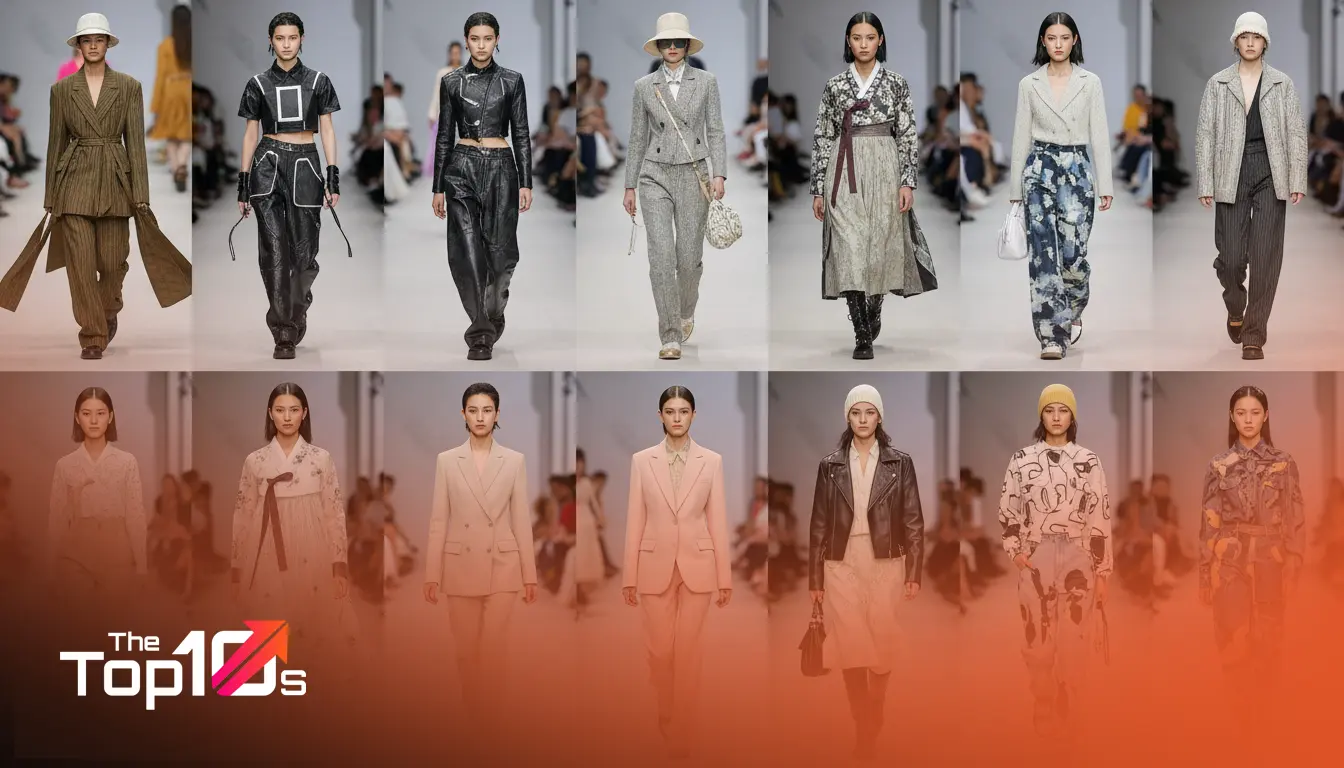
Walk through the streets of Hongdae or Apgujeong in Seoul, and you quickly realize something: fashion here isn’t just about clothing; it’s a competitive sport. South Korea has rapidly evolved from a manufacturing hub into a global creative powerhouse, setting trends that ripple from Seoul Fashion Week to the sidewalks of Paris and New York. While K-Pop stars often act as the vessels for these styles, the true magic lies in the minds of the architects behind the fabric.
You aren’t alone if you find yourself captivated by the sharp tailoring, oversized silhouettes, and fearless streetwear that define the “K-Fashion” aesthetic. But with hundreds of emerging labels and established houses, identifying the true visionaries can feel overwhelming. Are you looking for avant-garde deconstruction, heritage-infused couture, or the next wave of luxury streetwear?
Quick Takeaways
- Seoul is Hybrid: The top designers blend high-end luxury tailoring with gritty streetwear sensibilities.
- Global Education: Many leading Korean designers trained at Central Saint Martins or Antwerp, bringing European technique to Korean aesthetics.
- Gender Fluidity: Expect a heavy emphasis on unisex cuts and oversized silhouettes (the “oversized” look is a staple).
- Speed is Key: Korean fashion moves fast, often anticipating digital trends before Western counterparts.
This guide cuts through the hype. We are looking at the individuals who are actively shaping the visual language of modern apparel, moving beyond fleeting viral moments to establish lasting legacies.
Interestingly, while Seoul has its own distinct flavor, the rise of Asian fashion is a regional phenomenon. For instance, the meticulous craftsmanship found here often rivals the top 10 fashion designers in Japan, though Korean designers often lean more heavily into digital culture and youth-driven trends.
How We Identified Leading Fashion Designers
Selecting the “best” in a field as subjective as fashion requires a grounded approach. We didn’t just look at who has the most Instagram followers. Instead, we analyzed the substance behind the style. Our selection process prioritized creative consistency and technical authority.
We looked for professionals who demonstrate a mastery of pattern making and fabric manipulation. A great designer understands how a garment moves on the body, not just how it looks in a static photo. We also considered their standing within the global industry—specifically, their ability to sustain a brand over multiple seasons rather than vanishing after one hit collection.
Market presence played a role as well. These designers have established distribution channels, whether through high-end retailers like SSENSE and Net-a-Porter, or through their own flagship successes. Finally, we looked for a distinct voice. In an era of copycats, these ten individuals offer a perspective that is unmistakably their own.
List of 10 Best Fashion Designers in South Korea
| SNO | Name | Best For |
|---|---|---|
| 1 | Woo Young Mi (Wooyoungmi) | The sophisticated professional who wants menswear that feels modern, artistic, and impeccably constructed without being loud. |
| 2 | Jung Wook-jun (Juun.J) | Fashion-forward individuals who view clothing as armor and aren’t afraid of exaggerated, dramatic silhouettes. |
| 3 | Rok Hwang (Rokh) | Fans of “Old Celine” and intellectual fashion who appreciate versatility and construction details. |
| 4 | Minju Kim | Those who want statement pieces that spark joy, featuring bold graphics and feminine, architectural shapes. |
| 5 | Kiminte Kimhekim (KIMHĒKIM) | Trendsetters who want highly photogenic, conversation-starting pieces that blend French atelier skills with Korean pop sensibilities. |
| 6 | Rejina Pyo | The modern working woman who wants artistic, sculptural clothing that remains practical for the office or gallery openings. |
| 7 | Bajowoo (99%IS-) | Streetwear collectors and punks who value DIY aesthetics and aggressive, non-conformist designs. |
| 8 | Hyein Seo | A younger demographic looking for edgy, tactical fashion that feels cinematic and tough. |
| 9 | Lee Sang Bong | Lovers of art and culture who appreciate garments that tell a story about heritage and calligraphy. |
| 10 | Sohee Park (Miss Sohee) | Red carpet moments and gala attendees looking for dramatic, sustainable luxury. |
Top 10 Fashion Designers in South Korea
1. Woo Young Mi (Wooyoungmi)
Specialization: Luxury Menswear / Architectural Tailoring
Experience: 35+ Years
Often referred to as the “Godmother of Korean Menswear,” Woo Young Mi is a pioneer who shattered glass ceilings in a male-dominated industry. launching her brand in 2002, she became the first Korean designer to join the Fédération de la Haute Couture et de la Mode in Paris. Her work is characterized by an intellectual approach to the male wardrobe.
She treats clothing like architecture. You will notice precise cuts, unexpected details in the collar or cuffs, and a sophisticated color palette that rarely screams but always commands attention. Her aesthetic softens the rigid lines of traditional masculinity, introducing a romantic, artistic flair to suits and coats.
Best For: The sophisticated professional who wants menswear that feels modern, artistic, and impeccably constructed without being loud.
2. Jung Wook-jun (Juun.J)
Specialization: Avant-Garde Streetwear / “Street Tailoring”
Experience: 25+ Years
If you have seen an oversized trench coat that looks like armor yet drapes like silk, you are likely looking at the work of Jung Wook-jun. Since debuting in 2007, Juun.J has become synonymous with “Street Tailoring.” He takes classic military and sartorial references and deconstructs them, playing with volume in ways that defy gravity.
His work frequently appears on global icons like Rihanna and Kanye West, cementing his status as a bridge between high fashion and hype culture. Jung creates silhouettes that swallow the wearer in the most protective, stylish way possible, often utilizing stiff wools and leathers to maintain structural integrity.
Best For: Fashion-forward individuals who view clothing as armor and aren’t afraid of exaggerated, dramatic silhouettes.
3. Rok Hwang (Rokh)
Specialization: Deconstructed Luxury / Conceptual Womenswear
Experience: 15+ Years
Rok Hwang represents the new guard of Korean talent with a heavy European influence. An alumnus of the prestigious Central Saint Martins and a former designer under Phoebe Philo at Celine, Hwang brings a quiet, intense perfectionism to his label, Rokh. His aesthetic is all about “imperfect perfection.”
Hwang takes familiar items—a beige trench coat, a floral dress—and takes them apart. He might add extra buttons, slash the hem, or create a fastening system that allows the wearer to style the garment in five different ways. It is intellectual fashion that remains surprisingly wearable. His ability to mix masculine tailoring with fragile, raw-edged femininity sets him apart.
Best For: Fans of “Old Celine” and intellectual fashion who appreciate versatility and construction details.
4. Minju Kim
Specialization: Playful Femininity / Voluminous Prints
Experience: 10+ Years
Minju Kim exploded onto the global stage after winning Netflix’s Next in Fashion, but industry insiders respected her long before the cameras rolled. Her design language is fundamentally joyful. She uses fashion to tell fairy tales, utilizing bold, self-designed prints and massive, cloud-like shapes.
While many Korean designers lean toward edgy or dark aesthetics, Kim embraces color and softness. However, do not mistake her playfulness for simplicity. The construction required to maintain her signature voluminous skirts and structured bodices requires immense technical skill. She proves that couture-level technique can be fun.
Best For: Those who want statement pieces that spark joy, featuring bold graphics and feminine, architectural shapes.
5. Kiminte Kimhekim (KIMHĒKIM)
Specialization: Viral Couture / Neo-Romanticism
Experience: 12+ Years
Kiminte Kimhekim creates moments. A former artisan at Balenciaga, he understands the rigors of couture but applies them with an obsession for social media-friendly aesthetics. His brand gained notoriety for integrating oversized bows, pearls, and even hair into his garments.
His strength lies in juxtaposition. He will pair a classic French blazer with logo-heavy leggings, or create a dress entirely out of organza hearts. It is a fusion of the aristocratic and the playful. Kimhekim captures the “selfie era” perfectly without sacrificing quality; the garments are beautifully finished, even if the concepts are sometimes provocative.
Best For: Trendsetters who want highly photogenic, conversation-starting pieces that blend French atelier skills with Korean pop sensibilities.
6. Rejina Pyo
Specialization: Sculptural Daily Wear / Contemporary Womenswear
Experience: 12+ Years
Rejina Pyo designs for real women who have busy lives but refuse to sacrifice style. Based in London but deeply rooted in her Korean heritage, Pyo focuses on “everyday dressing” elevated to art. Her clothes are distinct because of their surprising proportions and vibrant colors.
She might take a standard midi dress and give it puffed sleeves that hold their shape perfectly, or design a bag that looks like a piece of modern sculpture. Her approach is less about shock value and more about longevity. These are clothes intended to remain in a wardrobe for years, defying the fast-fashion cycle prevalent in Seoul.
Best For: The modern working woman who wants artistic, sculptural clothing that remains practical for the office or gallery openings.
7. Bajowoo (99%IS-)
Specialization: Punk / Grunge / Customization
Experience: 15+ Years
If you want to see the rebellious underbelly of Seoul, look at Bajowoo. His brand, 99%IS-, is the antithesis of the polished K-Drama look. Deeply influenced by punk rock and underground subcultures, Bajowoo’s work is gritty, chaotic, and heavily customized.
He is famous for his “Gobchang” pants—trousers featuring intense ruching that resembles intestines—which became a global streetwear staple. His design process often involves burning, painting, and ripping fabrics by hand. It is aggressive and raw, appealing to a demographic that values authenticity and anti-establishment themes.
Best For: Streetwear collectors and punks who value DIY aesthetics and aggressive, non-conformist designs.
8. Hyein Seo
Specialization: Dystopian Streetwear / Youth Culture
Experience: 10+ Years
Hyein Seo is the cool girl’s designer. Another graduate of the Royal Academy of Fine Arts in Antwerp, she gained instant fame when Rihanna wore her graduation collection at Paris Fashion Week. Her style often references dystopian themes, tactical gear, and bad-girl aesthetics.
Her designs frequently feature cut-outs, strappy details, and technical fabrics. While sexy, the clothes also feel tough. She taps into the “tech-wear” trend but adapts it for the female form, creating garments that feel ready for a cyberpunk future. Her limited drops often sell out quickly, driven by a cult-like following.
Best For: A younger demographic looking for edgy, tactical fashion that feels cinematic and tough.
9. Lee Sang Bong
Specialization: Heritage / Hangul Calligraphy / Avant-Garde
Experience: 40+ Years
You cannot discuss Korean fashion without acknowledging the legends. Lee Sang Bong is a master who famously integrates Hangul (the Korean alphabet) into his high-fashion designs. He treats the script as a graphic element, painting it across structured dresses and suits.
His work is a celebration of Korean roots presented through a Western couture lens. He focuses on structured, geometric shapes that mimic traditional pottery or architecture. While many younger designers look to the future, Lee looks inward at history, making him a favorite for cultural dignitaries and red carpet events.
Best For: Lovers of art and culture who appreciate garments that tell a story about heritage and calligraphy.
10. Sohee Park (Miss Sohee)
Specialization: Demi-Couture / Sustainable Glamour
Experience: 5+ Years
Sohee Park is the newcomer making the biggest waves in the luxury sector. Based in London, her label Miss Sohee brings a level of opulence that recalls the golden age of haute couture. She is known for using deadstock fabrics and recycled crystals to create massive, flowering gowns.
Her silhouettes often mimic nature—peonies, shells, and waves—rendered in vibrant satins and velvets. While her career is young, her impact is undeniable, having dressed celebrities like Miley Cyrus and Cardi B. She represents the future of Korean design: sustainable, global, and unapologetically glamorous.
Best For: Red carpet moments and gala attendees looking for dramatic, sustainable luxury.
What Defines a Great Fashion Designer in South Korea?
Understanding the Korean fashion landscape requires recognizing the tension between tradition and speed. The designers listed above share a few defining traits that elevate them above the mass market.
The “Pali-Pali” Paradox
Korea is famous for its “Pali-Pali” (hurry-hurry) culture. Trends cycle through Seoul at lightning speed. However, the great designers resist this urge. They adopt the energy of this speed—the boldness and the willingness to try new things—but they apply slow-fashion techniques. They use the digital literacy of the youth culture to market old-school craftsmanship.
Material Innovation
South Korea has a robust textile manufacturing history. Top designers leverage this local access to develop proprietary blends. You will often find fabrics that look heavy but feel light, or materials that reflect light in unusual ways. The mastery of synthetics mixed with natural fibers is a hallmark of Korean technical design.
The Perfect Fit
There is an obsession with fit in the Korean market. Whether the garment is meant to be skin-tight or oversized, the shoulder placement and the hemline are calculated to the millimeter. Even the “baggy” look is carefully engineered so it doesn’t look sloppy. This attention to the silhouette is what separates high-end Korean designers from fast-fashion alternatives.
How to Choose the Right Fashion Designer for Your Needs
Investing in pieces from these designers is a commitment. Here is how to decide which creative vision aligns with your lifestyle.
Assess Your Volume Tolerance
Korean fashion often plays with volume. Ask yourself: Are you comfortable wearing oversized shoulders or wide-leg trousers? If you prefer classic, slim fits, designers like Woo Young Mi might appeal more than Juun.J. If you love drama, go for Minju Kim.
Check the Production Origin
While the design happens in Seoul, production varies. Many top-tier designers manufacture locally in Korea, which usually ensures high-quality stitching and finishing. Always check the label or product description to understand the sourcing.
Consider the “Statement” Factor
Are you building a capsule wardrobe or looking for a standout piece? Rejina Pyo creates clothes that fit seamlessly into a daily rotation. In contrast, Hyein Seo or Kimhekim creates pieces that dominate an outfit. Know the role the garment needs to play in your closet before buying.
Frequently Asked Questions
Are Korean luxury brands cheaper than European brands?
Generally, yes. While top-tier designers like Juun.J and Wooyoungmi command luxury prices, they are often 20-30% lower than comparable French or Italian heritage brands. You are paying for the design and quality, not just a century-old logo.
Where can I buy these designers internationally?
Most of these designers are stocked on major global platforms like SSENSE, Farfetch, Net-a-Porter, and Matches Fashion. Additionally, many have direct-to-consumer websites that ship globally from Seoul or distribution centers in Europe.
Is Korean sizing different from US or EU sizing?
This is a common point of confusion. Korean domestic sizing can run small, particularly in the shoulders and hips. However, the designers listed here produce for the global market, so they typically use standard EU sizing (36, 38, 40) or international S/M/L standards. Always check the specific measurements, especially for “oversized” items, which are intentionally large.
What is the biggest trend in Korean fashion for 2025/2026?
Expect to see a continued rise in “Gorpcore” fusion—technical outdoor gear mixed with soft, romantic elements. Sustainability is also becoming non-negotiable, with more designers experimenting with eco-friendly vegan leathers and upcycled materials.
Conclusion
The fashion emerging from South Korea is no longer just a regional curiosity; it is a driving force in the global style narrative. The designers we’ve highlighted—from the structural genius of Woo Young Mi to the punk rebellion of Bajowoo—prove that Seoul offers something for every aesthetic inclination.
Choosing to wear one of these designers is a vote for innovation. It shows an appreciation for a design culture that respects heritage but refuses to be bound by it. As we look toward 2026, the influence of these creatives will only grow. Take the time to explore their collections, look at the fabrics up close, and find the silhouette that makes you feel most like yourself. The world is watching Seoul, and now you know exactly who to look for.