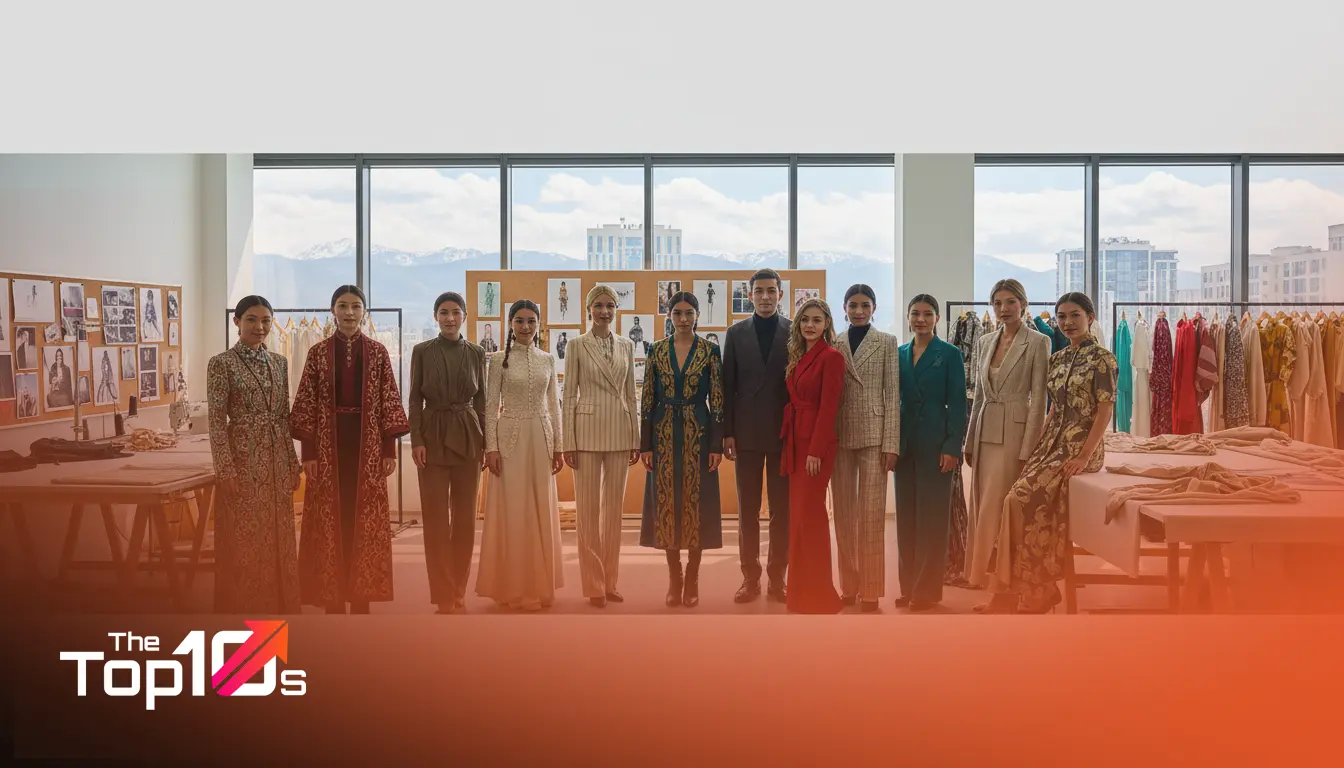
Walking through the leafy streets of Almaty or the futuristic boulevards of Astana, you quickly realize something: style isn’t just a hobby here; it’s a cultural language. While the world often looks to Paris or Milan, a quiet storm has been brewing in Central Asia. The best fashion designers in Kazakhstan are redefining what it means to blend nomadic heritage with sharp, avant-garde modernism.
You might be surprised to find that the local aesthetic isn’t stuck in the past. Sure, you will see traditional ornaments, but they are often reimagined on oversized hoodies, deconstructed trenches, or ethno-futurist evening wear. For anyone interested in global style, ignoring this region is a mistake. In fact, if you have already explored the Top 10 Fashion Designers In Mongolia, you will recognize a similar thread of resilience and reverence for nature, yet the Kazakh approach brings a distinct urban gloss that stands on its own.
Finding the right creative talent, however, can be tricky. The market is flooded with fast fashion, making it harder to spot the true artisans who understand garment construction and storytelling. Whether you are a retailer looking for the next breakout brand or a fashion enthusiast hunting for a statement piece, knowing who leads the industry matters.
Quick Takeaways: The Kazakh Fashion Scene
- Heritage is Key: Top designers almost always nod to the “Nomad” identity, but often through subtle cuts rather than loud prints.
- Almaty is the Hub: While Astana is the capital, Almaty remains the creative beating heart and home to the most influential ateliers.
- Versatility Rules: The climate shifts drastically from scorching summers to freezing winters, so designers excel at outerwear and layering.
- Global Ambition: Many names listed here regularly show collections in Paris, Milan, and New York.
How We Identified Leading Fashion Designers
Selecting the top creative minds isn’t about looking at Instagram follower counts. We looked closer at the mechanics of their careers. Our methodology focuses on consistency, craftsmanship, and the ability to evolve. A designer might have one great season, but true influence comes from sustaining a vision over years.
We prioritized experienced fashion design professionals in Kazakhstan who have demonstrated a clear point of view. Did they establish a signature silhouette? Do they source high-quality textiles? We also considered their standing within the professional community—participation in events like Kazakhstan Fashion Week or Visa Fashion Week Almaty signals a commitment to the industry standards.
Finally, we looked at client feedback and accessibility. The most talented artist is of little help if they cannot deliver a finished garment on time or communicate effectively with buyers. The names selected represent a mix of established legends and explosive contemporary talents.
List of 10 Best Fashion Designers in Kazakhstan
| SNO | Name | Best for |
|---|---|---|
| 1 | Aida Kaumenova | Women who want to project elegance and cultural pride without looking like they are wearing a costume. |
| 2 | Ainur Turisbek | The avant-garde enthusiast who prefers architectural shapes and leather over floral prints. |
| 3 | Aya Bapani | Collectors looking for statement outerwear or red-carpet pieces that tell a historical story. |
| 4 | Saltanat Baimukhamedova (Salta) | Minimalists who value comfort, clean geometry, and European-style understatement. |
| 5 | Roxana Adilbekova (Roxwear) | Gen Z and millennials looking for high-concept streetwear and distinctive casual pieces. |
| 6 | Saken Zhaksybayev (ZHSaken) | Socialites and fashion lovers who want playful, feminine, and photogenic attire. |
| 7 | Aigerim Akenova (AiKen) | Creatives and intellectuals who view clothing as an extension of their personality. |
| 8 | Kuralai Nurkadilova (Kuralai) | Formal events, galas, and weddings where traditional glamour is required. |
| 9 | Leonid Zherebtsov | Bold personalities who enjoy structural experimentation and street-style photography. |
| 10 | Adilya Botabayeva (Yang Lain) | Eco-conscious consumers and travelers who need versatile, multi-functional clothing. |
Top 10 Fashion Designers in Kazakhstan
Here are the creatives currently shaping the visual identity of the region, ranging from high-end couture to conceptual streetwear.
1. Aida Kaumenova
If you talk about Kazakh fashion, Aida Kaumenova’s name inevitably comes up first. She is often credited with making national dress fashionable for the modern woman. Before her, traditional clothing was largely reserved for stage performances or holidays. Kaumenova changed the script by integrating velvet, intricate embroidery, and soft silhouettes into wearable, everyday luxury.
Her fashion house operates with a level of professionalism that sets the standard in Almaty. She specializes in “prêt-à-porter de luxe,” meaning ready-to-wear that feels like couture. Her ability to mix comfort with the rich visual language of Kazakh ornaments makes her a staple for local celebrities and government officials.
Best Suited For: Women who want to project elegance and cultural pride without looking like they are wearing a costume.
2. Ainur Turisbek
Ainur Turisbek represents the dark, edgy underbelly of the Central Asian aesthetic. Her style is a sharp departure from flowy silks; think structured leather, military-inspired cuts, and a monochromatic palette dominated by black. It is aggressive, intellectual, and incredibly chic.
Since launching her brand, Turisbek has successfully taken her collections to Paris, proving that Kazakh design appeals to a European sensibility. Her background isn’t just in design; she brings a philosophical depth to her work, often exploring themes of strength and existentialism. The garments are constructed with rigorous attention to tailoring, often blurring the lines between menswear and womenswear.
Best Suited For: The avant-garde enthusiast who prefers architectural shapes and leather over floral prints.
3. Aya Bapani
Where others whisper about heritage, Aya Bapani shouts it from the mountaintops. She is a master of felt—a material deeply rooted in nomadic history. Bapani takes this dense, difficult fabric and manipulates it into heavy, sculptural coats and dresses that look like armor for a steppe princess.
Her work is deeply artistic. Growing up in a family of artisans, she inherited a tactile understanding of wool and silk. Her pieces often feature heavy ornamentation and ancient symbols, yet the cut remains flattering to the female form. It is “Neo-Folklore” at its finest.
Best Suited For: Collectors looking for statement outerwear or red-carpet pieces that tell a historical story.
4. Saltanat Baimukhamedova (Salta)
Saltanat Baimukhamedova, known by her brand name Salta, revolutionized the local market by introducing minimalism. When she started, the trend was “more is more.” Salta stripped everything back. Her designs are characterized by clean lines, geometric shapes, and a lack of unnecessary embellishment.
She designs for the modern urbanite who has a job to do. The clothes are incredibly comfortable, often using natural fabrics like cotton and linen in loose, breathable cuts. It’s the kind of clothing you can wear to an art gallery opening or a business meeting. This approach has made her one of the most commercially successful trusted fashion designers near Kazakhstan.
Best Suited For: Minimalists who value comfort, clean geometry, and European-style understatement.
5. Roxana Adilbekova (Roxwear)
For a look at the future, you have to turn to Roxana Adilbekova. Her brand, Roxwear, captures the energy of the post-Soviet youth. This is streetwear with a brain. She draws inspiration from the gritty reality of urban life, the internet age, and the cultural clash of East and West.
Her collections often feature deconstructed hoodies, graphic tees with Cyrillic typography, and experimental denim. It is not just clothing; it is a commentary on identity. Adilbekova has tapped into a global “cool kid” aesthetic that resonates just as much in Berlin or Seoul as it does in Almaty.
Best Suited For: Gen Z and millennials looking for high-concept streetwear and distinctive casual pieces.
6. Saken Zhaksybayev (ZHSaken)
Saken Zhaksybayev is as much a lifestyle brand as he is a designer. A prominent figure in the social scene, he understands exactly what the cosmopolitan woman wants to wear to brunch, to a cocktail party, or on a flight to Dubai. His brand, ZHSaken, focuses on femininity and lightness.
You won’t find heavy conceptual burdens here. Instead, expect silk dresses, feathers, sequins, and pastel colors. His strength lies in styling and presentation. He knows how to make clothes that look good in photos and feel good on the body. It is approachable luxury.
Best Suited For: Socialites and fashion lovers who want playful, feminine, and photogenic attire.
7. Aigerim Akenova (AiKen)
Aigerim Akenova operates in a space where art meets apparel. Her brand, previously associated with the label “Mechanical Piano,” is known for complex storytelling. She treats fabric like a canvas, often incorporating hand-painted elements, unusual textures, and transformable garments.
Her aesthetic is bohemian yet structural. You might find a dress that can be worn three different ways, or a jacket with hidden narrative details in the lining. Akenova appeals to the intellectual buyer who wants a connection with the creator. She creates slow fashion intended to be kept for decades.
Best Suited For: Creatives and intellectuals who view clothing as an extension of their personality.
8. Kuralai Nurkadilova (Kuralai)
As one of the first designers to gain international recognition post-independence, Kuralai Nurkadilova is an industry veteran. She has dressed contestants for Miss World and has showcased in major fashion capitals. Her brand House of Kuralai covers a broad spectrum, from haute couture to uniform design.
Her experience shows in the construction of her garments. She excels at evening wear—corsetry, draping, and intricate beadwork are her hallmarks. While she respects trends, she generally sticks to classic glamour that appeals to a mature, sophisticated clientele.
Best Suited For: Formal events, galas, and weddings where traditional glamour is required.
9. Leonid Zherebtsov
Leonid Zherebtsov brings a sharp, architectural edge to the list. He became a favorite among local influencers because his clothes are instantly recognizable. He often plays with asymmetry, oversized proportions, and bold typographic prints.
There is a rebellious streak in his work, but it is disciplined. The tailoring is precise. He often mixes sportswear elements with formal tailoring—think a blazer paired with cycling shorts, or a classic shirt reimagined with exaggerated sleeves. He designs for the woman who wants to be looked at.
Best Suited For: Bold personalities who enjoy structural experimentation and street-style photography.
10. Adilya Botabayeva (Yang Lain)
Sustainability is moving to the forefront of the conversation in Central Asia, and Adilya Botabayeva is leading that charge with her brand, Yang Lain. She focuses on “transforming” fashion—literally. Many of her pieces are modular, meaning sleeves can be detached, or lengths adjusted.
Beyond the modularity, there is a commitment to upcycling and reducing waste. Her aesthetic is futuristic and functional. It imagines a world where we own fewer clothes but do more with them. It is a fresh perspective in a market that traditionally values excess.
Best Suited For: Eco-conscious consumers and travelers who need versatile, multi-functional clothing.
What Defines a Great Fashion Designer in Kazakhstan?
Understanding the local fashion landscape requires looking beyond the sketchpad. The environment here demands a specific set of skills. First, there is the climate factor. A designer in this region must understand the extreme continental weather. The best collections seamlessly transition from breathable cottons for 35°C summers to insulating wools for -20°C winters. It’s not just about looking good; it’s about survival.
Then there is the cultural balancing act. Local consumers have a deep respect for “uyat” (a cultural concept of shame/modesty) and tradition, yet they possess a hunger for modernity. Great designers navigate this by offering hemlines and silhouettes that respect conservative norms without looking dated. They reinterpret the “oyu” (ornament) so it doesn’t look like a souvenir shop item, but rather a sophisticated graphic element.
Fabric sourcing is another defining trait. Kazakhstan does not have a massive textile manufacturing base, so top designers must be expert sourcers, bringing in high-grade silks from Uzbekistan, wools from Italy, or tech fabrics from Korea. The ability to secure these materials determines the longevity of the garment.
How to Choose the Right Fashion Designer for Your Needs
Selecting a designer isn’t one-size-fits-all. Before you commit to a custom order or buy a collection piece, consider these factors.
Assess Your Lifestyle Needs
Are you attending a “Toi” (a large traditional wedding or celebration)? You will need a designer like Aida Kaumenova or Kuralai who understands the grandeur required for such events. If you are a creative director working in a tech hub, the minimalist approach of Salta or the edge of Roxwear will serve you better.
Check the Production Timeline
If you are commissioning a custom piece, be realistic about timing. Good ateliers in Almaty are busy. A complex evening gown can take four to eight weeks. Always ask about their current workload before falling in love with a sketch.
Look at the “Inside”
This is a practical tip: when visiting a showroom, turn the garment inside out. The best fashion designers in Kazakhstan pride themselves on lining and stitching. If the interior finish is messy, the garment won’t hold up. The top names listed above maintain high internal standards.
Frequently Asked Questions
Do Kazakh fashion designers sell internationally?
Yes, many top designers like Ainur Turisbek and Roxwear have international shipping options or stockists abroad. However, for some bespoke ateliers, you may need to contact them directly via WhatsApp or Instagram to arrange an order.
What is the price range for designer clothing in Kazakhstan?
Prices vary wildly. A streetwear t-shirt from a local brand might cost $40-$80, while a ready-to-wear dress from a mid-range designer could be $150-$300. Couture or heavy evening wear from top names can easily range from $1,000 to over $5,000 depending on the materials.
Can I get custom sizing?
Absolutely. One of the biggest advantages of the local market is that “atelier culture” is still very strong. Most designers on this list offer made-to-measure services for an additional fee, ensuring a perfect fit.
Is sustainable fashion popular in Kazakhstan?
It is a growing niche. While the mass market is still catching up, designers like Adilya Botabayeva (Yang Lain) and others are pushing for upcycling and zero-waste patterns. Always ask the brand about their fabric sources if this is a priority for you.
Conclusion
The fashion landscape in Kazakhstan is vibrant, contradictory, and deeply exciting. It sits right at the intersection of the Silk Road and the digital age. Whether you are drawn to the dark, architectural leather of Ainur Turisbek or the soft, felted history of Aya Bapani, there is genuine artistry here waiting to be worn.
Don’t just scroll through their feeds—visit the showrooms if you can. Feel the weight of the fabric and talk to the teams behind the labels. Supporting these designers isn’t just a transaction; it’s an investment in a unique cultural narrative that is finally getting the global attention it deserves. Your wardrobe will thank you for the upgrade.