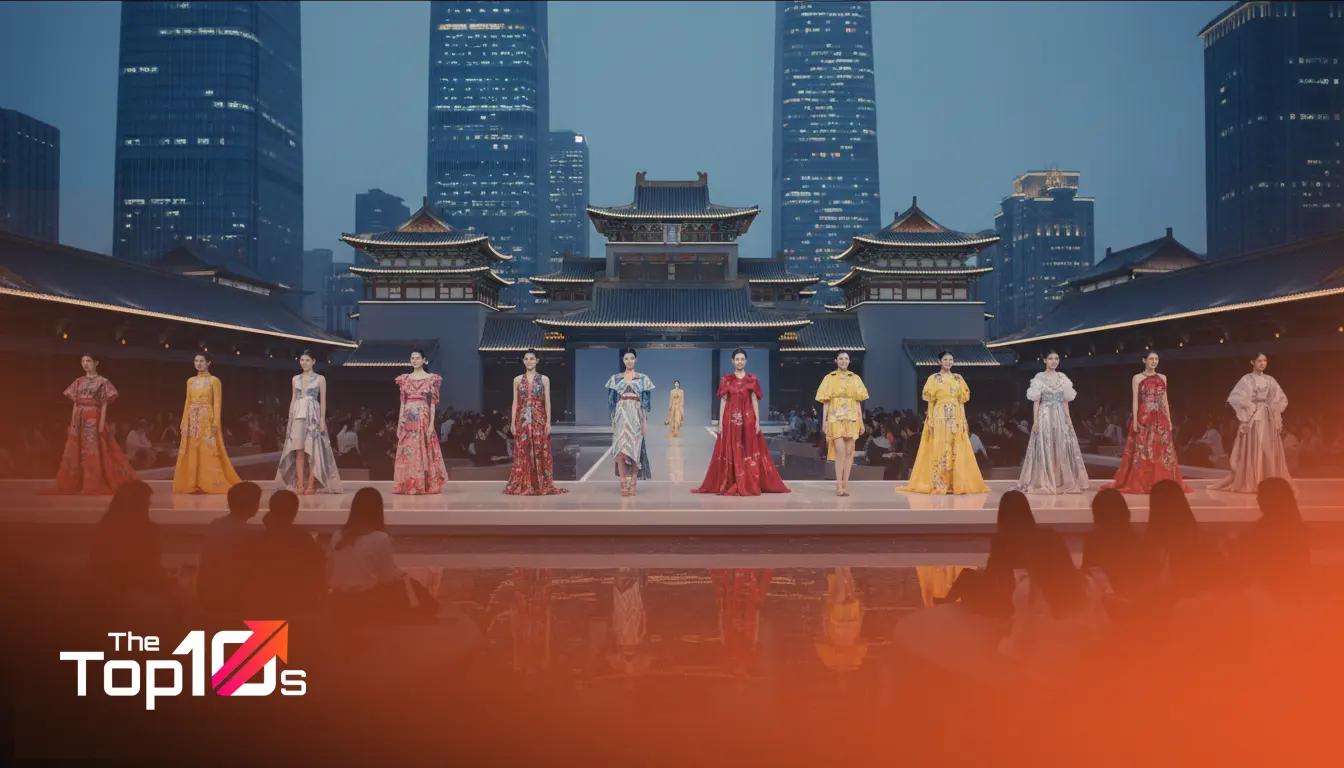
Beijing isn’t just a political powerhouse or a city of ancient history; it has quietly transformed into one of the most exciting, avant-garde fashion capitals in Asia. If you walk through the 798 Art District or stroll down the streets of Sanlitun, you won’t just see trends; you’ll see a collision of imperial heritage and futuristic grit that simply doesn’t exist anywhere else.
For buyers, brand collaborators, and fashion enthusiasts, understanding the talent pool in China’s capital is crucial. The shift has been massive—moving away from the old “Made in China” stereotype toward a bold “Designed in China” reality. The designers here aren’t just copying Western silhouettes; they are deconstructing them, infusing them with local narrative, and rebuilding them with rigorous craftsmanship.
Finding the right creative partner or inspiration in this sprawling metropolis can feel overwhelming. The ecosystem is vast, ranging from high-gloss couture houses catering to the elite to underground studios experimenting with techno-fabrics. This guide cuts through the noise to highlight the professionals who are truly shaping the visual language of the city.
Quick Takeaways: The Beijing Design Scene
- Heritage Meets Sci-Fi: The most successful local designers often blend traditional craftsmanship (like embroidery) with severe, modern silhouettes.
- CAFA Influence: Many top talents are alumni of the Central Academy of Fine Arts, known for producing conceptual rather than purely commercial designers.
- Sustainability is Rising: There is a growing, serious movement toward “slow fashion” and earth-conscious textiles among Beijing’s elite creators.
- Beyond Apparel: The best designers here treat clothing as wearable art, often focusing on sculptural elements and textile innovation.
How We Identified Leading Fashion Designers
Selecting the top tier of design talent in a city as large as Beijing requires looking beyond Instagram follower counts or celebrity endorsements. Our methodology focuses on the substance of the work and the sustainability of the business model. We analyzed these professionals based on a specific set of criteria intended to separate fleeting hype from genuine industry influence.
First, we looked at originality and design identity. Does the designer have a signature aesthetic that is instantly recognizable without a logo? We also considered their mastery of materials. In a city with access to some of the world’s best silk and wool mills, how a designer manipulates fabric speaks volumes about their expertise.
Furthermore, we evaluated their professional standing. This involves their presence at major industry events like China Fashion Week, their international stockist lists, and their reputation among local luxury buyers. Finally, we looked at consistency. The names on this list haven’t just produced one good collection; they have demonstrated the ability to evolve their vision over multiple seasons while maintaining high quality.
List of 10 Best Fashion Designers in Beijing
| SNO | Name | Best for |
|---|---|---|
| 1 | Guo Pei | Clients seeking museum-quality garments, red carpet statements, or ultra-luxury bridal wear that acts as an heirloom. |
| 2 | Ma Ke (Wuyong) | Art collectors and consumers who value sustainability, natural dyes, and anti-fashion aesthetics over trends. |
| 3 | Xander Zhou | Retailers looking for edgy, conceptual menswear and individuals who want to push the boundaries of masculinity in fashion. |
| 4 | Vega Zaishi Wang | The modern professional woman who wants clothing that feels like armor—structured, distinctive, and powerful. |
| 5 | Zhang Da (Boundless) | Design purists who appreciate complex construction and understated, comfortable avant-garde clothing. |
| 6 | Masha Ma | Urbanites seeking a sleek, international look that fits just as well in New York or London as it does in Beijing. |
| 7 | Ban Xiaoxue | Those who love the “Natural Style” aesthetic but want high-end construction and unique fabrications. |
| 8 | Chi Zhang | Younger demographics and buyers looking for statement pieces like spiked jackets, bold prints, and velvet hoodies. |
| 9 | Laurence Xu | Galas, stage performances, and clients who want to wear their culture loud and proud. |
| 10 | Huishan Zhang | The sophisticated woman looking for elegance that hints at Chinese heritage without looking like a costume. |
Top 10 Fashion Designers in Beijing
These ten individuals and studios represent the spectrum of Beijing’s fashion capability, from high-concept art pieces to wearable luxury.
1. Guo Pei
You can’t discuss Beijing fashion without starting with Guo Pei. She is arguably the most famous couturier in China, known globally for her breathtaking, architectural gowns that often take thousands of hours to construct. Her work is deeply rooted in imperial history, utilizing embroidery techniques that were once reserved for the royal family.
Specialization: Haute Couture and Bespoke Bridal
Experience: 30+ Years
Best Suited For: Clients seeking museum-quality garments, red carpet statements, or ultra-luxury bridal wear that acts as an heirloom.
2. Ma Ke (Wuyong)
Ma Ke represents the philosophical pole of Beijing’s design world. She famously rejected the commercial fashion schedule to focus on “Wuyong” (Useless), a studio dedicated to preserving traditional craftsmanship and ecological integrity. Her clothes are treated to look weathered and earthy, focusing on the spiritual connection between the wearer and the garment.
Specialization: Sustainable High Fashion, Textile Art
Experience: 25+ Years
Best Suited For: Art collectors and consumers who value sustainability, natural dyes, and anti-fashion aesthetics over trends.
3. Xander Zhou
If Guo Pei is the history, Xander Zhou is the future. Based in Beijing but showing globally, Zhou is a pioneer in modern menswear. His work often explores “techno-orientalism,” blending sci-fi concepts with traditional Chinese elements. He treats menswear as a platform for experimentation, challenging gender norms and silhouette expectations.
Specialization: Avant-Garde Menswear
Experience: 15+ Years
Best Suited For: Retailers looking for edgy, conceptual menswear and individuals who want to push the boundaries of masculinity in fashion.
4. Vega Zaishi Wang
Vega Zaishi Wang is known for a distinct aesthetic that is intellectual, aloof, and incredibly sharp. Her designs often focus on strong shapes and geometric purity, reflecting the strength of modern Asian women. She is also known for integrating technology into her designs, having experimented with electroluminescent fabrics in past collections.
Specialization: Contemporary Womenswear
Experience: 15+ Years
Best Suited For: The modern professional woman who wants clothing that feels like armor—structured, distinctive, and powerful.
5. Zhang Da (Boundless)
Zhang Da is a designer’s designer. His label, Boundless (Mei Bian), is celebrated for its unique approach to pattern making. He often uses “flat cutting” techniques, where garments appear two-dimensional until worn, at which point they take on surprising, volumetric shapes. His approach is quiet, avoiding loud branding in favor of intellectual construction.
Specialization: Conceptual Casualwear
Experience: 20+ Years
Best Suited For: Design purists who appreciate complex construction and understated, comfortable avant-garde clothing.
6. Masha Ma
Masha Ma has successfully bridged the gap between the Beijing underground and the Paris runways. Her aesthetic is often described as “industrial chic,” utilizing sharp tailoring, metallic textures, and a futuristic vibe. She manages to make aggressive, cool clothing that remains surprisingly wearable and flattering.
Specialization: Luxury Ready-to-Wear
Experience: 15+ Years
Best Suited For: Urbanites seeking a sleek, international look that fits just as well in New York or London as it does in Beijing.
7. Ban Xiaoxue
Winner of the Woolmark Prize, Ban Xiaoxue is a master of texture. His work is often inspired by nature, attempting to translate the feeling of moss, water, or stone into fabric. He uses layering and custom-developed textiles to create garments that feel poetic and romantic without being overly sweet.
Specialization: Textured Womenswear and Menswear
Experience: 12+ Years
Best Suited For: Those who love the “Natural Style” aesthetic but want high-end construction and unique fabrications.
8. Chi Zhang
Chi Zhang captures the rebellious energy of Beijing’s youth. Known for his signature gas mask logo, his clothing is streetwear with a dark, glamorous edge. He addresses issues like pollution and societal pressure through his designs, making him a favorite among the city’s club kids and celebrities.
Specialization: Luxury Streetwear
Experience: 15+ Years
Best Suited For: Younger demographics and buyers looking for statement pieces like spiked jackets, bold prints, and velvet hoodies.
9. Laurence Xu
Laurence Xu is the master of East-meets-West theatricality. He famously combines ancient Chinese brocades (Yun Jin) with Western draping techniques. His runway shows are spectacles, often featuring dragon robes reimagined as evening gowns. While Guo Pei is architectural, Xu is fantastical.
Specialization: Red Carpet Couture
Experience: 20+ Years
Best Suited For: Galas, stage performances, and clients who want to wear their culture loud and proud.
10. Huishan Zhang
While he spends significant time in London, Huishan Zhang’s production and roots are deeply tied to Beijing. He is often credited with modernizing the Cheongsam (Qipao). He takes traditional Chinese tropes and cleans them up for a global luxury customer, using lace, pearls, and clean lines.
Specialization: Feminine Luxury Wear
Experience: 12+ Years
Best Suited For: The sophisticated woman looking for elegance that hints at Chinese heritage without looking like a costume.
What Defines a Great Fashion Designer in Beijing?
Understanding the Beijing fashion landscape requires acknowledging a specific set of characteristics that separates the good from the great. It is not enough to simply sew well; a top-tier designer in this city must navigate a complex cultural dialogue.
Conceptual Depth vs. Wearability
The best designers in Beijing are rarely purely commercial. There is an expectation, largely driven by the influence of local art academies, that fashion should have a concept. However, the masters know how to distill these high concepts into garments that function in real life. If a piece looks incredible on a runway but falls apart on the subway, it won’t last in this competitive market.
Sourcing Capabilities
Proximity to production hubs allows Beijing designers unique access to materials. A great designer here doesn’t just buy fabric off the rack; they often work directly with mills to develop custom weaves. Whether it’s heavy wools for the harsh northern winters or delicate silks for summer, material knowledge is non-negotiable.
The “New Chinese” Aesthetic
There is a nuanced trend known as “Guochao” (national wave), where designers reinterpret Chinese heritage. The best designers do this subtly—a collar shape here, a button knot there—rather than slapping a dragon on a t-shirt. This ability to respect tradition while modernizing it is a hallmark of Beijing’s design excellence.
How to Choose the Right Fashion Designer for Your Needs
Whether you are a retailer looking to stock a new brand or an individual looking for a custom piece, making the right choice involves asking the right questions. The diversity in Beijing’s scene means you need to be specific about your requirements.
Assess Your Narrative Alignment
Look at the story the designer is telling. If you are a brand that focuses on minimalism and utility, a partnership with a theatrical designer like Laurence Xu might be a mismatch, regardless of his fame. Review their “About” pages and past press to see if their philosophy matches your own.
Understand Production Scales
Some designers on this list, like Ma Ke, operate on a very slow, artisanal timeline. Others, like Chi Zhang, are set up for faster, volume-based streetwear production. Be clear about your timeline. If you need a custom gown for an event next month, a couture house may not be able to accommodate you without a significant rush fee, if at all.
Look for Regional Expertise
Just as we analyze talent here, it’s fascinating to see how design scenes evolve in other specific regions, such as the Top 10 Fashion Designers In Rajshahi. While the aesthetic output differs, the principle of valuing local expertise remains the same. In Beijing, ensure your designer understands the local climate (which can be extreme) and the cultural context of where the garment will be worn.
Frequently Asked Questions
How much does a custom piece from a top Beijing designer cost?
Pricing varies wildly based on the designer’s positioning. A ready-to-wear piece from an independent studio might range from $300 to $800 USD. However, bespoke couture from names like Guo Pei can easily start in the tens of thousands due to the labor-intensive embroidery and material costs.
Do these designers communicate in English?
Most of the designers listed, particularly those who show internationally like Xander Zhou and Masha Ma, have teams that are fluent in English. However, for smaller, more artisanal studios, you might face a language barrier, and hiring a local translator or agent is often a smart move to ensure details aren’t lost.
Can I visit their studios in Beijing?
Many designers have showrooms or flagship stores in areas like Sanlitun Taikoo Li or the 798 Art District that are open to the public. However, visiting a working atelier usually requires an appointment and a serious inquiry regarding a purchase or collaboration.
Are Beijing fashion designers sustainable?
Sustainability is a growing focus, but it isn’t universal. Designers like Ma Ke are global leaders in eco-fashion, while others prioritize aesthetics over environmental impact. If this is a priority for you, look specifically for designers using terms like “upcycled,” “natural dyes,” or “slow fashion.”
Taking the Next Step
The fashion landscape in Beijing is dense, intellectual, and incredibly fast-moving. The designers listed here offer a gateway into a world where ancient technique meets modern rebellion. But reading about them is only the first step.
To truly understand the value these creatives can bring to your wardrobe or your business, you need to engage with the work physically. Start by following their latest collections on social platforms to see their current direction. If you are a buyer, reach out for a line sheet. If you are a consumer, plan a visit to a multi-brand boutique in Beijing like Dongliang, which stocks many of these local heroes.
Fashion in Beijing is more than just clothing; it is a statement of cultural confidence. Choosing to wear or stock these designers is a choice to participate in one of the most vibrant creative conversations happening in the world today.