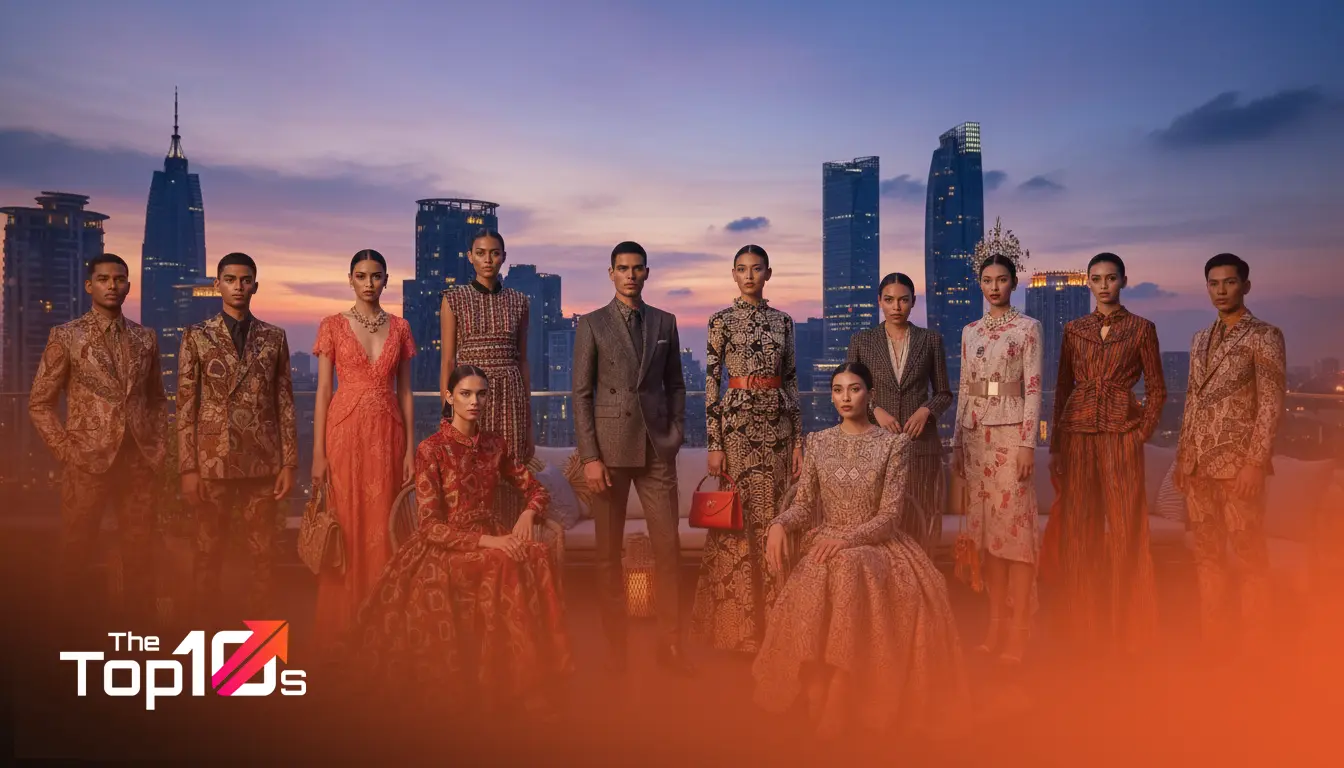
Jakarta isn’t just Indonesia’s political center; it is a sprawling, breathing canvas of sartorial expression. Walk into any high-end ballroom in Senayan or a creative studio in Kemang, and you notice something specific: the clothing tells a story. It’s rarely just about following global trends. Instead, the best fashion designers in Jakarta masterfully blend centuries-old heritage—think Batik, Tenun, and Songket—with sharp, modern silhouettes that rival anything you’d see in Paris or Milan.
Finding the right creative partner to interpret your style is personal. It involves trust. You aren’t just buying a dress or a suit; you are investing in craftsmanship that has to withstand the scrutiny of Jakarta’s high society and the practical demands of the tropical climate. Whether you need a custom Kebaya for a wedding or avant-garde ready-to-wear for a gala, the talent pool here is incredibly deep.
Quick Takeaways: Jakarta’s Design Scene
- Heritage is King: The top designers almost always incorporate traditional textiles (Wastra) into modern cuts.
- Modest Fashion Powerhouse: Jakarta is a global capital for luxury modest wear, offering chic, covered options.
- Customization is Standard: Unlike many Western capitals, “made-to-measure” is the norm here, not just for the ultra-wealthy.
- Plan Ahead: For bridal or couture pieces, renowned studios often have waiting lists of 3 to 6 months.
How We Identified Leading Fashion Designers
Selecting the most capable names in such a saturated market requires looking beyond Instagram follower counts. We analyzed the local industry to highlight professionals who demonstrate consistency, technical skill, and artistic integrity.
Our selection process focused on several non-negotiable markers of quality. First, we looked at longevity and evolution. Has the designer maintained relevance over time, or did they fade after one hit collection? We also considered their handling of materials. In Indonesia, the ability to treat delicate, hand-woven fabrics with respect is a crucial skill set. Finally, we observed their reputation within the industry—specifically, how they manage client expectations and production timelines. The names listed below represent a cross-section of legends who built the industry and innovators reshaping it.
List of 10 Best Fashion Designers in Jakarta
| SNO | Name | Best for |
|---|---|---|
| 1 | Biyan Wanaatmadja | Socialites and brides seeking a look of understated, intricate opulence. |
| 2 | Sebastian Gunawan | Galas, red carpet events, and brides who want a fairy-tale entrance. |
| 3 | Anne Avantie | Modern weddings and formal state events requiring national dress with a twist. |
| 4 | Tex Saverio | International performers, editorial shoots, and collectors of wearable art. |
| 5 | Peggy Hartanto | The modern working woman and cocktail parties. |
| 6 | Sapto Djojokartiko | Daytime luxury events and women who value comfort as much as aesthetics. |
| 7 | Ria Miranda | Modest dressers seeking chic, feminine daily and formal wear. |
| 8 | Didit Hediprasetyo | High-net-worth individuals looking for exclusivity and Parisian standards. |
| 9 | Auguste Soesastro | Art gallery openings and clients who value ethical production. |
| 10 | Oscar Lawalata | Cultural enthusiasts and relaxed resort wear. |
Top 10 Fashion Designers in Jakarta
This list reflects the diversity of the capital’s aesthetic, ranging from intricate bridal couture to sustainable minimalism.
1. Biyan Wanaatmadja
Few names command as much respect in the Indonesian fashion hierarchy as Biyan. For over three decades, his brand has defined romantic, ethereal luxury. His work often feels like a dream sequence, characterized by intricate beadwork, embroidery, and a sophisticated layering of textures.
Specialization: Romantic high fashion and luxury ready-to-wear.
Why he stands out: Biyan doesn’t chase trends. His aesthetic is consistent—feminine, detailed, and timeless. He is the go-to choice for women who want to look graceful rather than flashy. His ability to mix varying prints and textures without making the outfit look chaotic is a testament to his master eye.
Best for: Socialites and brides seeking a look of understated, intricate opulence.
2. Sebastian Gunawan
If you are looking for high-octane glamour, Sebastian Gunawan is the name that likely comes up first. Educated in Milan, he brings a distinct European sensibility to Asian silhouettes. His designs are structural, often utilizing crystals, sequins, and dramatic volumes to create impact.
Specialization: Evening gowns and bridal couture.
Why he stands out: His construction techniques are impeccable. A Sebastian Gunawan gown provides internal structure that shapes the wearer, offering confidence alongside style. He understands the “red carpet” moment better than almost anyone in the city.
Best for: Galas, red carpet events, and brides who want a fairy-tale entrance.
3. Anne Avantie
Anne Avantie is not just a designer; she is a cultural icon. She is credited with revolutionizing the Kebaya (Indonesia’s traditional blouse-dress combo). Before her, the Kebaya was seen as rigid and strictly traditional. She deconstructed it, added asymmetrical cuts, and introduced new fabrics, making it appealing to younger generations.
Specialization: Contemporary Kebaya and Batik couture.
Why she stands out: Her designs are emotional. She designs for the curves of Indonesian women, celebrating the female form in a way that feels indigenous yet modern. Her pieces are instantly recognizable by their daring lace placement and silhouette-hugging fits.
Best for: Modern weddings and formal state events requiring national dress with a twist.
4. Tex Saverio
Often described as the “Alexander McQueen of Indonesia,” Tex Saverio creates art, not just clothes. His fame skyrocketed after Lady Gaga wore one of his creations, followed by Jennifer Lawrence in The Hunger Games. His work is fantasy brought to life—metallic elements, laser-cut leather, and dramatic theatricality.
Specialization: Avant-garde couture.
Why he stands out: Tex pushes the boundaries of what is physically possible in garment construction. He treats fashion as sculpture. If you want something that defies gravity and convention, his studio is the place to visit.
Best for: International performers, editorial shoots, and collectors of wearable art.
5. Peggy Hartanto
Representing the younger, sharper side of Jakarta’s scene, Peggy Hartanto focuses on clean lines and bold color blocking. Her aesthetic is decidedly minimalist, a stark contrast to the heavy embellishment typical of older Indonesian couture. Her label has been worn by international celebrities like Beyoncé and Gigi Hadid.
Specialization: High-end ready-to-wear and cocktail attire.
Why she stands out: Her cutting technique is architectural. She uses sheer panels and geometric shapes to create visual interest without relying on beads or sequins. It is intellectual fashion that remains highly wearable.
Best for: The modern working woman and cocktail parties.
6. Sapto Djojokartiko
Sapto has carved a unique niche by blending surrealist inspiration with Javanese folklore. His designs often feature signature embroidery patterns that look like sketches on skin. The vibe is bohemia-meets-aristocracy.
Specialization: Delicate embroidery and relaxed luxury.
Why he stands out: His fabric choices are incredibly soft and fluid. While many designers focus on structure, Sapto focuses on movement. His “Penara” and “Arnit” collections demonstrate how repetitive, subtle motifs can create a powerful visual language.
Best for: Daytime luxury events and women who value comfort as much as aesthetics.
7. Ria Miranda
Jakarta is a global hub for modest fashion, and Ria Miranda is one of its pioneers. She shifted the perception of Muslim wear from dark and heavy to soft, pastel, and feminine. Her brand has a massive, loyal community (often called “Ria Miranda Loyal Community”).
Specialization: Modest wear (Muslim fashion) and printed scarves.
Why she stands out: Her use of color theory is superb. She works almost exclusively in muted pastels—dusty pinks, sage greens, and soft blues. The result is a look that is serene and approachable, proving that coverage doesn’t mean hiding one’s personality.
Best for: Modest dressers seeking chic, feminine daily and formal wear.
8. Didit Hediprasetyo
Splitting his time between Jakarta and Paris, Didit brings true Haute Couture credentials to the table. He is one of the few Indonesian designers listed in the official calendar of Paris Fashion Week. His work is sleek, focusing on the manipulation of Songket (woven gold/silver threads) into drapey, Parisian silhouettes.
Specialization: Couture tailoring and structural elegance.
Why he stands out: Didit removes the “costume” feel from traditional fabrics. He might use a heavy Sumatran weave but cut it into a sharp blazer or a corset, making heritage textiles wearable in a cosmopolitan setting.
Best for: High-net-worth individuals looking for exclusivity and Parisian standards.
9. Auguste Soesastro
If you appreciate “slow fashion,” Auguste Soesastro is a champion of the movement in Jakarta. Under his label Kraton, he focuses on impeccable tailoring and natural fibers. He avoids synthetic shortcuts, often employing techniques that take hundreds of hours.
Specialization: Sustainable luxury and architectural minimalism.
Why he stands out: He is a purist. You won’t find glue in his hems; everything is stitched. His designs are intellectual and severe in their beauty, stripping away the unnecessary to focus on the person wearing the clothes.
Best for: Art gallery openings and clients who value ethical production.
10. Oscar Lawalata
Oscar Lawalata (now Asha Smara Darra) has dedicated a career to preserving Indonesia’s textile heritage. The focus here is on the fabric itself. Whether it is Ikat from the eastern islands or Batik from Java, the design serves to highlight the cloth.
Specialization: Traditional textile revitalization.
Why stands out: The approach is almost anthropological. Working directly with artisans in remote villages, this designer ensures that the weaving techniques survive. The clothes have a loose, resort-like feel that fits perfectly with Indonesia’s tropical humidity.
Best for: Cultural enthusiasts and relaxed resort wear.
What Defines a Great Fashion Designer in Jakarta?
The Jakarta fashion ecosystem is unique. A great designer here needs more than just sketching skills; they need a deep understanding of cultural context. In this city, clothing is often a uniform of status and respect.
First, mastery of climate control is essential. Jakarta is hot and humid, yet indoor venues are often frozen by air conditioning. A skilled designer knows how to choose fabrics that breathe outdoors but provide warmth and structure indoors. This often means lining heavy beaded gowns with natural silks rather than synthetics.
Second, is the ability to handle Wastra Nusantara (textiles of the archipelago). There are unwritten rules about how certain Batik motifs should be cut and placed. A motif meant for royalty shouldn’t be placed at the hemline, for instance. Top designers navigate these cultural nuances effortlessly, ensuring your outfit is respectful as well as stylish. If you are exploring regional talent beyond Indonesia, you might see similar cultural dedication among the top 10 fashion designers in Manila, who also blend colonial history with indigenous fabrics.
How to Choose the Right Fashion Designer for Your Needs
Committing to a designer is a significant decision. To ensure the collaboration yields the outfit of your dreams, consider these factors:
Assess the “House Style”
Do not ask a minimalist like Auguste Soesastro to make a glittery princess ballgown. While they technically can do it, you are not utilizing their strength. Review their portfolio and choose a designer whose natural aesthetic aligns with your vision.
Understand the Production Timeline
Jakarta works on its own time. “Rubber time” (Jam Karet) is a real phenomenon, but top designers usually run tight ships. However, sourcing hand-woven fabrics can take months. Ask immediately: “If I order today, when is the first fitting?” For weddings, 6 months is the minimum safety net.
Budget Transparency
Custom wear in Jakarta varies wildly in price. A custom cocktail dress can range from 5 million IDR to 50 million IDR depending on the name on the label and the intricacy of the beadwork. Be upfront about your budget. A good designer will tell you what is achievable within your range rather than surprising you with a bill later.
Frequently Asked Questions
Is it cheaper to buy fabric myself or let the designer source it?
Usually, it is better to let the designer source it. They have established relationships with textile mills and know how different fabrics drape. If you bring your own fabric, especially vintage Batik, the designer may charge a “cutting fee” and cannot guarantee how the material will behave.
Do Jakarta designers do virtual consultations?
Since the pandemic, many top studios have adopted virtual consultations for initial discussions. However, for the measuring and final fitting stages, physical presence is highly recommended to ensure the perfect fit.
What is the difference between “Made-to-Measure” and “Bespoke”?
Made-to-measure usually involves taking a standard pattern from the designer’s collection and adjusting it to your measurements. Bespoke is creating a completely new design from scratch, strictly for you. Bespoke will always be significantly more expensive.
Can I ask a designer to copy a dress from a photo?
You should avoid this. Reputable designers view this as disrespectful. You can bring photos for “inspiration” or to show a silhouette you like, but allow the designer to interpret it in their own style.
What should I wear to a fitting?
Wear the undergarments and shoes (or shoes of the same height) that you plan to wear with the final outfit. This is critical for getting the hemline and posture correct.
Conclusion
Navigating the fashion landscape in Jakarta offers an exciting opportunity to explore your personal identity through cloth. Whether you are drawn to the mystical allure of Anne Avantie’s Kebayas or the architectural rigor of Peggy Hartanto, the talent in this city is world-class.
The key to a successful experience lies in collaboration. approach these designers not just as service providers, but as artists who can translate your personality into a tangible form. Do your research, understand your own needs, and trust their expertise. When the fit is right, the result is more than just a garment—it’s a piece of confidence you can wear.