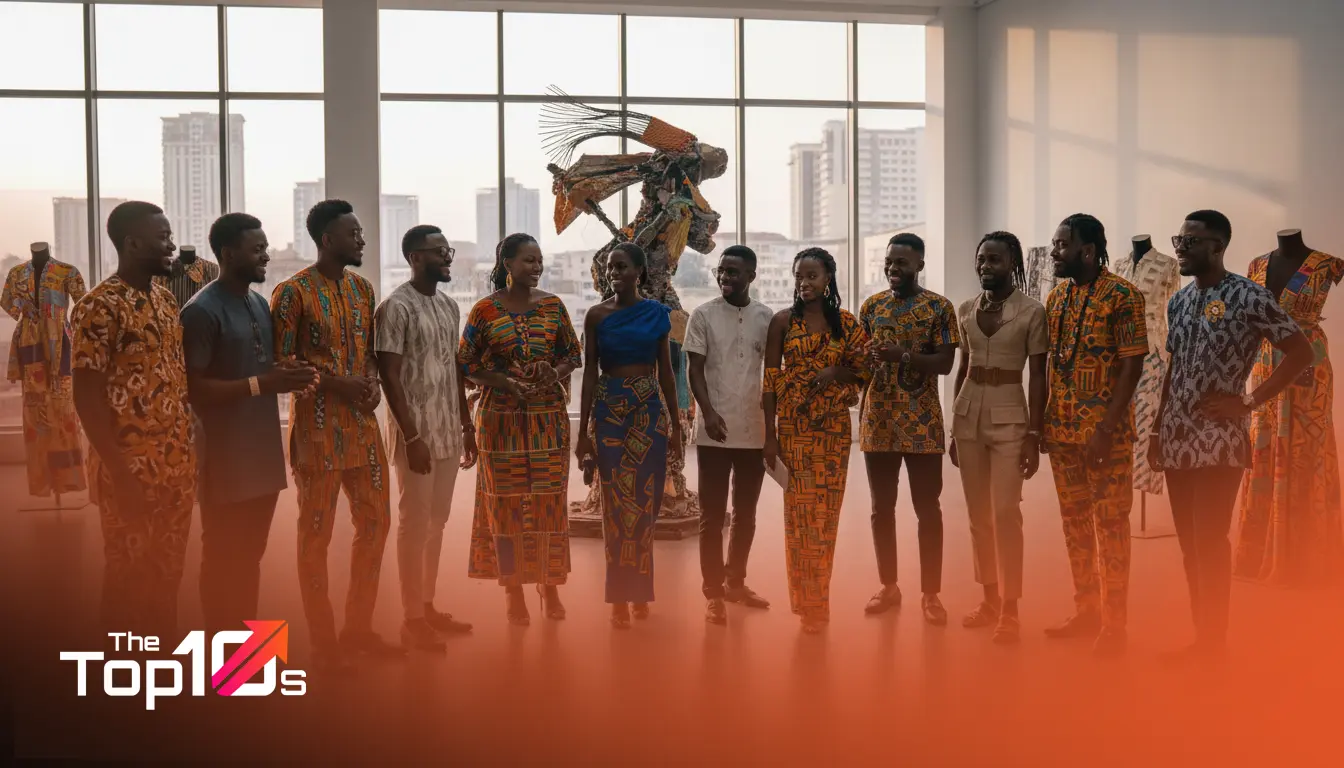
Walking through the streets of Osu or attending a gallery opening in East Legon, you notice something immediately: style isn’t just a hobby in Ghana; it is a distinct, vibrant language. The days when Ghanaian fashion was solely synonymous with basic wax print styles are long gone. Today, we are witnessing a renaissance of structure, texture, and global-tier luxury that rivals Paris or Milan, but with a soul that is distinctly African.
You might be wondering why this matters to you. Whether you are a retailer looking to stock the next big thing, a bride hunting for a Kente gown that breaks the internet, or simply a collector of fine garments, navigating the local talent pool can be overwhelming. There are hundreds of labels popping up on Instagram daily, but filtered photos don’t always translate to quality finishing or reliable timelines.
I’ve spent years analyzing the apparel trade across West Africa, watching brands rise and fall based on their ability to scale and maintain quality. The designers listed below aren’t just making pretty clothes; they are building institutions. They understand the physics of fabric, the nuance of our climate, and the demands of the modern consumer.
Quick Takeaways: The Ghanaian Fashion Scene
- Fusion is King: The top designers successfully blend indigenous textiles (Kente, Fugu/Smock) with Western silhouettes.
- Finishing Matters: The distinction between a local tailor and a fashion designer often lies in the lining, hem consistency, and zipper quality.
- Global Reach: Many of these names showcase in New York and London, meaning their sizing and production standards align with international expectations.
- Slow Fashion: Most designers here operate on a made-to-measure or small-batch model, prioritizing sustainability over mass production.
How We Identified Leading Fashion Designers
Separating the skilled artisans from the true fashion houses requires looking beyond follower counts. To curate this list of Ghana’s top fashion designers, we utilized a rigorous qualitative framework. We didn’t just look at who is popular today; we looked at who has the infrastructure to be here tomorrow.
Our assessment focused on consistency of output. Does the brand release coherent collections, or just random outfits? We also examined technical execution. This involves looking closely at garment construction—how patterns match at the seams and how fabrics are manipulated to fit the body. Reputation played a significant role as well; we considered feedback regarding client communication, adherence to deadlines, and the longevity of the garments after multiple wears. Finally, we looked for a unique design identity—creators who are setting trends rather than just copying what is already on the market.
List of 10 Best Fashion Designers in Ghana
| SNO | Name | Best For |
|---|---|---|
| 1 | Christie Brown (Aisha Ayensu) | The cosmopolitan woman who wants to make a statement in the boardroom or at a gala without screaming for attention. |
| 2 | Pistis Ghana (Kabutey & Sumaiya Dzietror) | Brides and red-carpet attendees. If you need a garment that fits like a second skin and features intricate hand-beading, this is the studio to visit. |
| 3 | Duaba Serwaa (Nelly Hagan-Deegbe) | The art lover. Her clothes are structural and geometric, perfect for someone who views fashion as wearable sculpture rather than just clothing. |
| 4 | Chocolate Clothes Global (Kwaku Bediako) | The modern gentleman. whether it’s for a wedding or a high-stakes business meeting, these suits command respect. |
| 5 | Ophelia Crossland | High-society events. If the dress code says “Royal Ascott” or “Presidential Ball,” Ophelia is the go-to designer. |
| 6 | Atto Tetteh | The creative professional. It’s for the man who finds a standard blue suit boring and wants to express personality through texture and color blocking. |
| 7 | Yartel (Casey Ghansah) | Someone looking for the “wow” factor. His designs are frequently spotted at award shows like the AMVCAs. |
| 8 | Larry Jay | The conscious consumer. Perfect for resort wear, weekend lounging, or artistic gatherings where comfort meets style. |
| 9 | Abrantie The Gentleman (Oheneba Yaw Boamah) | Grooms and groomsmen. His aesthetic works perfectly for the traditional engagement ceremony, offering a polished look that photographs beautifully. |
| 10 | Lauren Haute Couture (Lauren Ama Bartels) | Birthday shoots and milestone celebrations. Her clothes are designed to be photographed. |
Top 10 Fashion Designers In Ghana
These ten designers represent the pinnacle of Ghanaian creativity, ranging from high-concept couture to polished ready-to-wear.
1. Christie Brown (Aisha Ayensu)
If there is one name that redefined the perception of African fashion in the modern era, it is Christie Brown. Founded by Aisha Ayensu, this label serves as the bridge between the heritage of our grandmothers and the aesthetic of the modern working woman. Aisha didn’t just use African prints; she reimagined them with embroidery, beading, and structural corsetry.
Specialization: Luxury Ready-to-Wear & Accessories
Best Suited For: The cosmopolitan woman who wants to make a statement in the boardroom or at a gala without screaming for attention. Her pieces are conversation starters.
2. Pistis Ghana (Kabutey & Sumaiya Dzietror)
When you talk about Ghanaian weddings, the conversation inevitably turns to Pistis. This husband-and-wife duo has mastered the art of the “Kente Gown,” transforming heavy woven cloth into corseted, draped masterpieces that look weightless. Their ability to manipulate rigid traditional fabrics into fluid evening wear shows a level of technical prowess that few possess.
Specialization: Bridal & Haute Couture
Best Suited For: Brides and red-carpet attendees. If you need a garment that fits like a second skin and features intricate hand-beading, this is the studio to visit.
3. Duaba Serwaa (Nelly Hagan-Deegbe)
Nelly Hagan-Deegbe walked away from the heavy use of wax prints early on to focus on textures. Duaba Serwaa is famous for its signature origami pleats and triangular folds. The brand uses a mix of woven materials and stretchy fabrics to create architectural shapes that are surprisingly comfortable.
Specialization: Textural Contemporary Wear
Best Suited For: The art lover. Her clothes are structural and geometric, perfect for someone who views fashion as wearable sculpture rather than just clothing.
4. Chocolate Clothes Global (Kwaku Bediako)
Menswear in Ghana used to be limited to basic kaftans or ill-fitting suits. Kwaku Bediako changed that narrative with Chocolate Clothes. He brought sharp, Savile Row-inspired tailoring to African aesthetics. His cuts are precise, often monochromatic, and frequently seen on heads of state and celebrities across the continent.
Specialization: Premium Menswear
Best Suited For: The modern gentleman. whether it’s for a wedding or a high-stakes business meeting, these suits command respect.
5. Ophelia Crossland
Ophelia Crossland creates fairy tales. As a designated Swarovski partner, her work is characterized by sparkle, intricate embellishments, and feminine silhouettes. She doesn’t shy away from volume or drama. Her designs often feel regal, borrowing elements from Victorian eras and blending them with Ghanaian royalty.
Specialization: Luxury Womenswear & Embellishment
Best Suited For: High-society events. If the dress code says “Royal Ascott” or “Presidential Ball,” Ophelia is the go-to designer.
6. Atto Tetteh
Atto Tetteh tells stories through fabric. His brand is built on the concept of the young African man who is confident yet vulnerable. The designs are known for being eclectic yet wearable, often mixing stripes, checks, and local motifs in ways that shouldn’t work but absolutely do.
Specialization: Contemporary Menswear (and Androgynous styles)
Best Suited For: The creative professional. It’s for the man who finds a standard blue suit boring and wants to express personality through texture and color blocking.
7. Yartel (Casey Ghansah)
In recent years, Yartel has surged to the forefront of the fashion industry in Ghana, particularly in the realm of evening wear. Casey Ghansah has a gift for understanding the female form. His corsetry is aggressive yet elegant, creating hourglass silhouettes that leave clients stunned. He uses lace and sheer fabrics to create illusions that are tasteful and alluring.
Specialization: Evening Wear & Red Carpet
Best Suited For: Someone looking for the “wow” factor. His designs are frequently spotted at award shows like the AMVCAs.
8. Larry Jay
Stepping away from the glitz, Larry Jay offers something soulful and ethical. Drawing inspiration from 70s fashion and nature, the brand is known for its unisex tunics, jute accents, and flowy silhouettes. It represents a slower, more deliberate approach to fashion that resonates with the global sustainability movement.
Specialization: Ethical Unisex & Sustainable Fashion
Best Suited For: The conscious consumer. Perfect for resort wear, weekend lounging, or artistic gatherings where comfort meets style.
9. Abrantie The Gentleman (Oheneba Yaw Boamah)
Abrantie means “Gentleman,” and the brand lives up to the name. Oheneba creates pieces that celebrate African heritage with a very clean, geometric aesthetic. He is particularly famous for his unique take on the traditional tunic, adding zippers, asymmetric cuts, and color bars that make traditional wear feel futuristic.
Specialization: Afro-Modern Menswear
Best Suited For: Grooms and groomsmen. His aesthetic works perfectly for the traditional engagement ceremony, offering a polished look that photographs beautifully.
10. Lauren Haute Couture (Lauren Ama Bartels)
Lauren represents the new guard of high fashion in Accra. Her rise has been meteoric, driven by designs that are unapologetically glamorous. She fuses bold colors with extreme structural elements—think giant bows, exaggerated sleeves, and deep necklines. She designs for the woman who enjoys being the center of attention.
Specialization: High Glamour Womenswear
Best Suited For: Birthday shoots and milestone celebrations. Her clothes are designed to be photographed.
What Defines a Great Fashion Designer in Ghana?
You might see a nice dress on a mannequin, but that doesn’t necessarily mean the designer behind it is “great.” In the Ghanaian context, greatness requires a specific set of attributes that go beyond sketching.
Cultural Translation is vital. The best designers know how to take a fabric like Kente—which has centuries of royal history—and cut it in a way that respects the tradition while making it wearable for a 21st-century dinner party. It is a delicate balance between preservation and innovation.
Operational Excellence is the second pillar. Can the designer source high-quality linings that don’t tear after two months? Do they understand color theory enough to know which shade of teal complements melanated skin under warm lighting? The leading names in the industry have mastered the supply chain, ensuring that the silk they use is authentic and the zippers are durable.
Finally, it comes down to the Client Experience. Ghana operates heavily on custom orders. A great designer acts as a consultant, guiding you away from unflattering styles and towards silhouettes that enhance your natural features, rather than just taking your money and sewing exactly what you asked for, even if it won’t look right.
How to Choose the Right Fashion Designer for Your Needs
Selecting a designer is a partnership. To avoid disappointment, you need to align your expectations with the designer’s strengths. Here is a practical framework for making that choice.
Assess the Occasion vs. The Specialist
Don’t go to a minimalist designer for a maximalist wedding gown. If you need a corporate wardrobe overhaul, look for brands like Christie Brown or Atto Tetteh. If you need a show-stopping gown for an awards night, Yartel or Pistis are better suited. Every designer has a “DNA”—don’t try to force them to be something they aren’t.
Understanding Timelines
This is where many people face challenges. “Ghana time” is a cliché, but production delays are real due to electricity or supply issues. Top-tier designers usually require a lead time of 4 to 8 weeks for bespoke pieces. If you need something for next week, you are better off buying off-the-rack (ready-to-wear) from their showroom rather than requesting a custom garment.
The Budget Conversation
Be realistic about costs. You are paying for intellectual property, brand cachet, and premium labor. If a quote seems high, remember that you are often paying for hand-finishing and imported fabrics. Ask for a breakdown: does the price include the fabric, or do you need to provide it? Most high-end designers prefer to source their own fabrics to guarantee quality.
Frequently Asked Questions
Do Ghanaian fashion designers ship internationally?
Yes, most established designers (including all 10 listed above) handle international shipping, typically via DHL. They are accustomed to taking measurements virtually over video calls or instructing clients on how to get measured by a local tailor to ensure a proper fit.
What is the difference between “bespoke” and “ready-to-wear” in Ghana?
Ready-to-wear (RTW) refers to standard-sized clothes available for immediate purchase in a boutique or online. Bespoke involves creating a unique pattern from scratch based on your specific body measurements and design preferences. Bespoke is significantly more expensive and time-consuming.
How much does a custom dress cost from a top Ghanaian designer?
Prices vary wildly based on fabric and complexity. However, for the top-tier designers listed here, expect starting prices for custom evening wear to range from $500 to over $3,000 USD. Bridal wear sits at a higher price point due to the intricacy of the work.
Can I bring my own fabric to these designers?
It depends on the brand. Some designers, like Pistis or specialized menswear brands, may prefer to use their curated fabrics to ensure the structure of the garment holds up. Others are happy to work with your provided Vlisco wax print or Kente, provided it meets their quality standards.
Next Steps for Your Sartorial Journey
The fashion ecosystem in Ghana is thriving, offering a blend of heritage and modernity that you won’t find anywhere else. Whether you choose the sharp lines of Chocolate Clothes or the fluid grace of Larry Jay, you are investing in artistry.
Don’t just scroll through their feeds. Visit their showrooms if you are in Accra. Feel the fabrics. Talk to the assistants. Fashion is tactile, and the best way to appreciate the work of these fashion designers in Ghana is to experience it firsthand. If you are abroad, start with a small ready-to-wear piece to test the fit and service before committing to a major bespoke order.