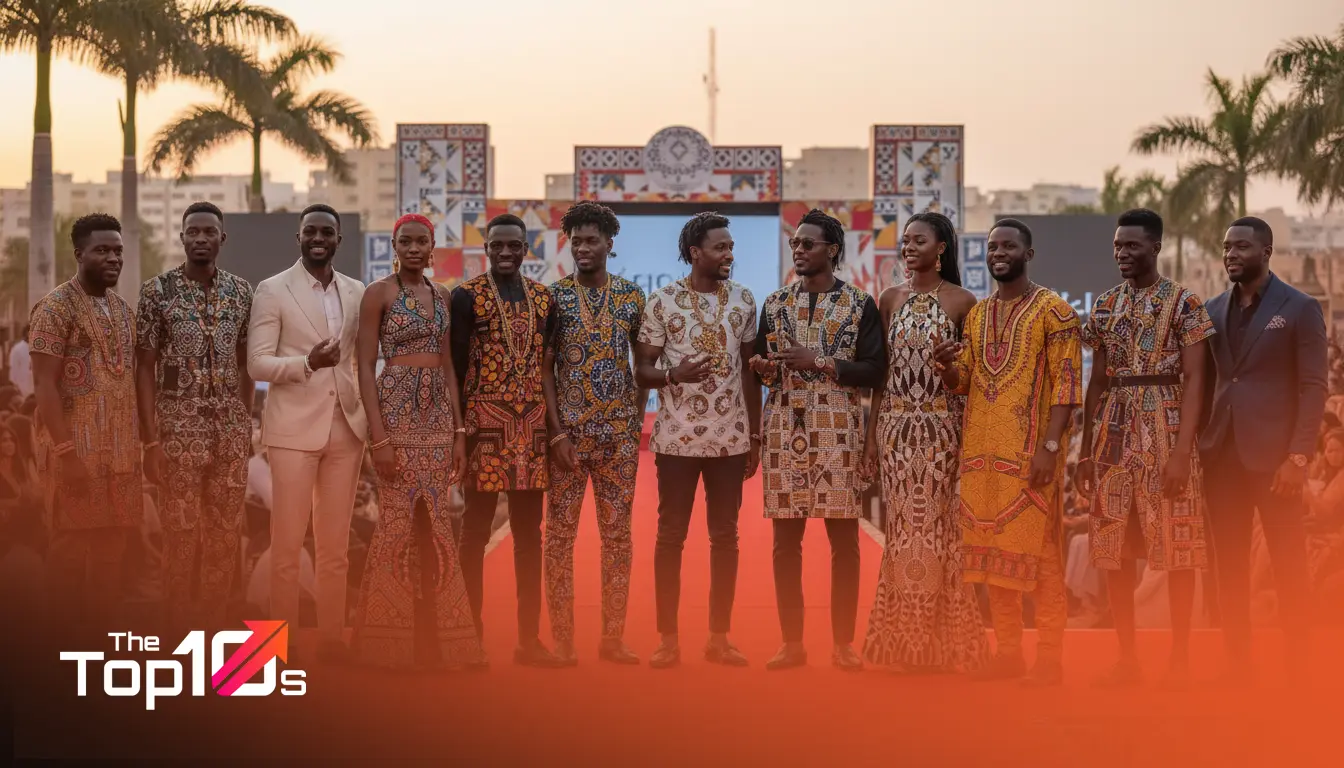
Walk down the Corniche in Dakar or stroll through the bustling markets of Sandaga, and one thing becomes immediately clear: style isn’t just a hobby here; it’s a form of communication. In Senegal, what you wear speaks volumes about your heritage, your social standing, and your artistic vision before you ever say a word. The energy is palpable, driven by a generation of creatives who are stitching the country’s rich history into futuristic silhouettes.
You aren’t looking for a list of generic tailors. You are likely searching for visionaries—designers who understand the weight of Pagne Tissé (woven cloth) but aren’t afraid to cut it into a modern pantsuit. You want craftsmanship that rivals Paris or Milan, but with a soul that is distinctly Sahelien.
Finding the right designer, however, can feel overwhelming. With thousands of ateliers spanning from Saint-Louis to the Plateau, distinguishing between a skilled seamstress and a true fashion architect takes a sharp eye. This guide cuts through the noise to highlight the creative minds currently defining Senegalese luxury.
Quick Takeaways: Senegalese Fashion at a Glance
- Heritage is King: The best designers actively preserve traditional textiles like Manjak and Bazin Riche while updating the cuts.
- Global Reach: Many designers on this list dress international celebrities, from Beyoncé to Lupita Nyong’o, proving the export quality of their work.
- Wait Times Matter: Unlike fast fashion, “Made in Senegal” luxury often requires patience. Custom pieces can take weeks.
- Beyond the Boubou: While traditional wear is vital, the current trend leans heavily toward “Afro-fusion”—pieces wearable in a New York boardroom or a Dakar gala.
How We Identified Leading Fashion Designers
Selecting the top tier of talent in a country overflowing with creativity requires looking beyond Instagram follower counts. Our selection methodology focuses on substance over hype. We analyzed these designers based on the longevity of their brands and the consistency of their collections over the last five years.
We looked for professionals who demonstrate mastery over fabric manipulation—specifically how they handle complex local textiles versus imported silks and cottons. Reputation within the local industry played a massive role; we considered who the local elite trust for their Tabaski (Eid) outfits and who international buyers seek out during Dakar Fashion Week.
Crucially, this list prioritizes designers who have established a clear, recognizable signature. When you see a piece from these ateliers, you know exactly who made it without needing to check the label. We also evaluated their business infrastructure: do they have functioning ateliers, reliable production schedules, and a professional approach to client relations?
List of 10 Best Fashion Designers in Senegal
| SNO | Name | Best For |
|---|---|---|
| 1 | Collé Ardo Sow | Those seeking a piece of history. If you need a garment that commands respect at a high-stakes event or a state dinner, this is the atelier to visit. |
| 2 | Adama Paris (Adama Ndiaye) | The cosmopolitan woman who travels between continents and wants her wardrobe to reflect a global, yet rooted, identity. |
| 3 | Sarah Diouf (Tongoro Studio) | Digital nomads and fashion-forward buyers looking for breezy, impactful clothing that works perfectly for a summer getaway. |
| 4 | Selly Raby Kane | Creatives, artists, and performers who want to stand out and view clothing as a form of rebellion. |
| 5 | Diarra Bousso (Diarrablu) | The eco-conscious consumer who values intellect in design and needs versatile pieces for a capsule wardrobe. |
| 6 | Sophie Zinga (Baax Studio) | Women who prefer understated elegance and prioritize fabric feel and cut over embellishment. |
| 7 | Algueye (House of Soudan) | Religious holidays, weddings, and formal ceremonies where respecting tradition is the primary goal. |
| 8 | Rama Diaw | Lovers of natural dyes and those who want a casual, sophisticated look for weekend outings. |
| 9 | Sisters of Afrika | The modern working woman who needs stylish, colorful outfits that are easy to wear and care for. |
| 10 | Mokodu Fall | Men and women who want to make a loud, artistic statement and aren’t afraid of color. |
Top 10 Fashion Designers in Senegal
Senegal’s fashion scene is a blend of the old guard—who set the standards for couture—and the new wave pushing boundaries with technology and sustainability. Here are the ten names shaping the industry right now.
1. Collé Ardo Sow
You cannot discuss Senegalese fashion without bowing to the matriarch. Collé Ardo Sow represents the gold standard of high fashion in Dakar. She is credited with revitalizing the use of Pagne Tissé, a traditional woven fabric that was once relegated to simple loincloths. By complexifying the weave and integrating it into haute couture, she preserved a dying art form.
Specialization: Haute Couture and Bridal.
Experience: Over 40 years.
Notable Strength: Her signature “seed pearl” stitch is practically impossible to replicate by machine, ensuring every piece is unmistakably authentic.
Best For: Those seeking a piece of history. If you need a garment that commands respect at a high-stakes event or a state dinner, this is the atelier to visit.
2. Adama Paris (Adama Ndiaye)
Adama Ndiaye is more than a designer; she is an ecosystem builder. As the founder of Dakar Fashion Week, she has been instrumental in putting the city on the global map. Her designs often reflect a multicultural existence, blending the cosmopolitan vibes of Paris with the vibrant tenacity of West Africa. Her work is rarely subtle—it demands attention.
Specialization: Urban-Chic and Ready-to-Wear.
Experience: 20+ years.
Notable Strength: Bold prints and architectural shapes. She excels at creating pieces that feel modern and global while retaining an African soul.
Best For: The cosmopolitan woman who travels between continents and wants her wardrobe to reflect a global, yet rooted, identity.
3. Sarah Diouf (Tongoro Studio)
If you have seen Beyoncé on vacation or in her “Spirit” music video, you have likely seen Tongoro. Sarah Diouf disrupted the market by focusing on a direct-to-consumer online model that bypassed traditional retail hurdles. Tongoro defines the “Made in Africa” success story, proving that Senegalese production can meet international logistics standards.
Specialization: Resort Wear and Statement Accessories.
Experience: ~10 years.
Notable Strength: Branding and silhouette. Her fluid, oversized jumpsuits and distinct graphic prints are instantly recognizable and highly photogenic.
Best For: Digital nomads and fashion-forward buyers looking for breezy, impactful clothing that works perfectly for a summer getaway.
4. Selly Raby Kane
Where many designers look to the past, Selly Raby Kane looks to the future—and perhaps other planets. Her work is deeply influenced by surrealism, sci-fi, and the chaotic beauty of Dakar’s street life. She uses materials like PVC and fake hair, mixing them with traditional fabrics to create wearable art.
Specialization: Avant-Garde and Alternative Fashion.
Experience: 12+ years.
Notable Strength: Unconventional material use. She isn’t afraid to make a jacket look like an insect or use bold, clashing patchwork that somehow works perfectly.
Best For: Creatives, artists, and performers who want to stand out and view clothing as a form of rebellion.
5. Diarra Bousso (Diarrablu)
Diarra Bousso brings a mathematician’s brain to fashion design. Literally. A former math teacher, she uses algorithms to generate her unique prints, minimizing waste and ensuring uniqueness. Her brand, Diarrablu, focuses on sustainability and versatility, with pieces that are often adjustable to fit various body types.
Specialization: Sustainable Contemporary Wear.
Experience: ~8 years.
Notable Strength: The intersection of technology and artisanal craft. Her “convertible” clothing allows one piece to be worn in multiple ways.
Best For: The eco-conscious consumer who values intellect in design and needs versatile pieces for a capsule wardrobe.
6. Sophie Zinga (Baax Studio)
Sophie Zinga offers a quieter, more introspective take on luxury. Her aesthetic is minimalist, focusing on clean lines, exquisite silk fabrics, and a soft color palette that contrasts with the typically loud prints of the region. She studied at Parsons in New York, and that precision tailoring shows in every seam.
Specialization: Minimalist Luxury and Evening Wear.
Experience: 10+ years.
Notable Strength: Fabric sourcing. She uses some of the finest silks and satins available in Dakar, creating garments that feel like water on the skin.
Best For: Women who prefer understated elegance and prioritize fabric feel and cut over embellishment.
7. Algueye (House of Soudan)
For those who love the grandeur of the traditional Boubou, House of Soudan is a legendary name. The brand is synonymous with the mastery of Bazin Riche—a polished, heavy cotton fabric that rustles as you walk. Their dyeing techniques and embroidery are meticulously detailed, often involving gold thread and intricate geometric patterns.
Specialization: Traditional Luxury and Bazin.
Experience: 25+ years.
Notable Strength: Embroidery precision. The density and durability of their embroidery set them apart from market-stall tailors.
Best For: Religious holidays, weddings, and formal ceremonies where respecting tradition is the primary goal.
8. Rama Diaw
Hailing from Saint-Louis, Rama Diaw brings the colonial elegance and river-city charm of her hometown into her designs. She is famous for her use of indigo and batik prints. Her work feels incredibly grounded and approachable, bridging the gap between high fashion and daily wearability.
Specialization: Neo-Traditional Ready-to-Wear.
Experience: 15+ years.
Notable Strength: Pattern mixing. She expertly pairs indigo prints with modern cuts, keeping the heritage of Saint-Louis alive.
Best For: Lovers of natural dyes and those who want a casual, sophisticated look for weekend outings.
9. Sisters of Afrika
This brand has exploded in popularity by making luxury accessible. They bridge the gap between custom couture and ready-to-wear. Their designs often feature the “Kimono” cut and vibrant, rich colors that flatter a wide range of body types. They have successfully commercialized the Senegalese aesthetic for a broader African audience.
Specialization: Commercial Luxury and Resort Wear.
Experience: ~8 years.
Notable Strength: Fit consistency. Unlike many local brands, their sizing is standardized and reliable for online ordering.
Best For: The modern working woman who needs stylish, colorful outfits that are easy to wear and care for.
10. Mokodu Fall
Mokodu Fall is an artist first, designer second. He literally paints on his garments. His collections are walking canvases, featuring portraits of African figures or abstract expressionist strokes. Wearing a Mokodu Fall blazer is like wearing a signed painting; no two are exactly alike.
Specialization: Art-Fashion Fusion and Menswear.
Experience: 10+ years.
Notable Strength: Uniqueness. Since the artwork is hand-painted directly onto the fabric, you are guaranteed a one-of-a-kind item.
Best For: Men and women who want to make a loud, artistic statement and aren’t afraid of color.
What Defines a Great Fashion Designer in Senegal?
Identifying the “best” isn’t just about who designs the prettiest dress. In the Senegalese context, specific markers separate the masters from the novices.
The “Teranga” of Client Relations
Senegal is the land of Teranga (hospitality). A top-tier designer incorporates this into their business model. It’s about the consultation process. Does the designer listen to your needs regarding modesty, climate, or occasion? The best designers act as collaborators, guiding you toward the best silhouette for your body rather than forcing a trend upon you.
Mastery of Construction
Many people overlook the inside of the garment. In Dakar, where humidity can be high, lining matters. A great designer ensures the interior of the garment is as beautiful as the exterior. This means clean seams (overlocked or French seams), quality zippers that don’t snag, and hem weights that allow the fabric to drape correctly.
Fabric Knowledge
The interplay between rigid fabrics like Wax and fluid fabrics like Silk is complex. A skilled Senegalese designer knows that Bazin shrinks and needs specific pre-treatment, or that Pagne Tissé requires structural reinforcement to hold a suit shape. This technical knowledge prevents the garment from warping after the first dry clean.
How to Choose the Right Fashion Designer for Your Needs
Before you book a consultation or place an order, consider this decision framework to ensure you get exactly what you envision.
1. Define the Occasion
Are you attending a “Grand Boubou” traditional wedding, or a cocktail party? For the former, go to specialists like Algueye. For the latter, Sophie Zinga or Tongoro are safer bets. Misaligning the designer’s specialty with your event is a common recipe for disappointment.
2. Assess Your Timeline
Honesty is rare in fashion production timelines. If a designer says “two weeks,” ask if that includes fittings. Always add a buffer week to their estimate. If you need something immediately, stick to brands with ready-to-wear stock like Sisters of Afrika or Diarrablu.
3. Check the “Finish” Portfolio
Don’t just look at the model photos. Zoom in. Look at the hems. Are the patterns aligned at the seams? High-end pricing should guarantee high-end finishing. If the stitching looks rushed in their portfolio, it will look rushed on your body.
Future Trends: Senegal Fashion in 2026 and Beyond
The industry is moving fast. As we look toward 2026, the reliance on imported fabrics is shifting. We are seeing a massive return to locally grown cotton and decentralized production. Innovations in 3D design are allowing customers to visualize custom pieces before a single thread is cut, reducing waste—a trend spearheaded by tech-forward brands like Diarrablu.
Expect to see more “Phygital” fashion—where purchasing a physical garment might come with a digital twin for social media use. The definition of Senegalese luxury is expanding from “opulence” to “innovation.”
Frequently Asked Questions
What is the average price for a designer outfit in Senegal?
Pricing varies wildly. A high-quality ready-to-wear dress might start around 60,000 FCFA ($100), while intricate couture or heavy Bazin embroidery can easily exceed 500,000 FCFA ($800+). Always clarify if the fabric cost is included in the quote.
Can I order these brands internationally?
Yes. Brands like Tongoro, Diarrablu, and Sisters of Afrika have established robust international shipping channels (DHL/FedEx). For couture designers like Collé Ardo Sow, you typically need to visit the atelier or arrange a private consultation via WhatsApp.
Do these designers do menswear?
Many do. Mokodu Fall and traditional houses like House of Soudan excel in menswear. However, brands like Sophie Zinga are strictly womenswear. Always check their current lookbook.
What is the difference between a tailor and a fashion designer?
A tailor executes a design you bring them. A fashion designer creates a vision, sources the specific textiles to match that vision, and understands the engineering of the garment. You pay a tailor for labor; you pay a designer for their intellectual property and expertise.
Next Steps for Your Wardrobe
Senegal offers a fashion experience that is visceral and deeply personal. The designers listed here are not just making clothes; they are curating the visual identity of modern Africa. If you are in Dakar, visiting these showrooms is an essential cultural experience.
Start by following their current collections online to see whose aesthetic resonates with your personal style. Reach out early—craftsmanship takes time, and the best ateliers are often booked months in advance. Whether you choose the structural brilliance of Selly Raby Kane or the timeless elegance of Collé Ardo Sow, you are investing in art that holds its value.