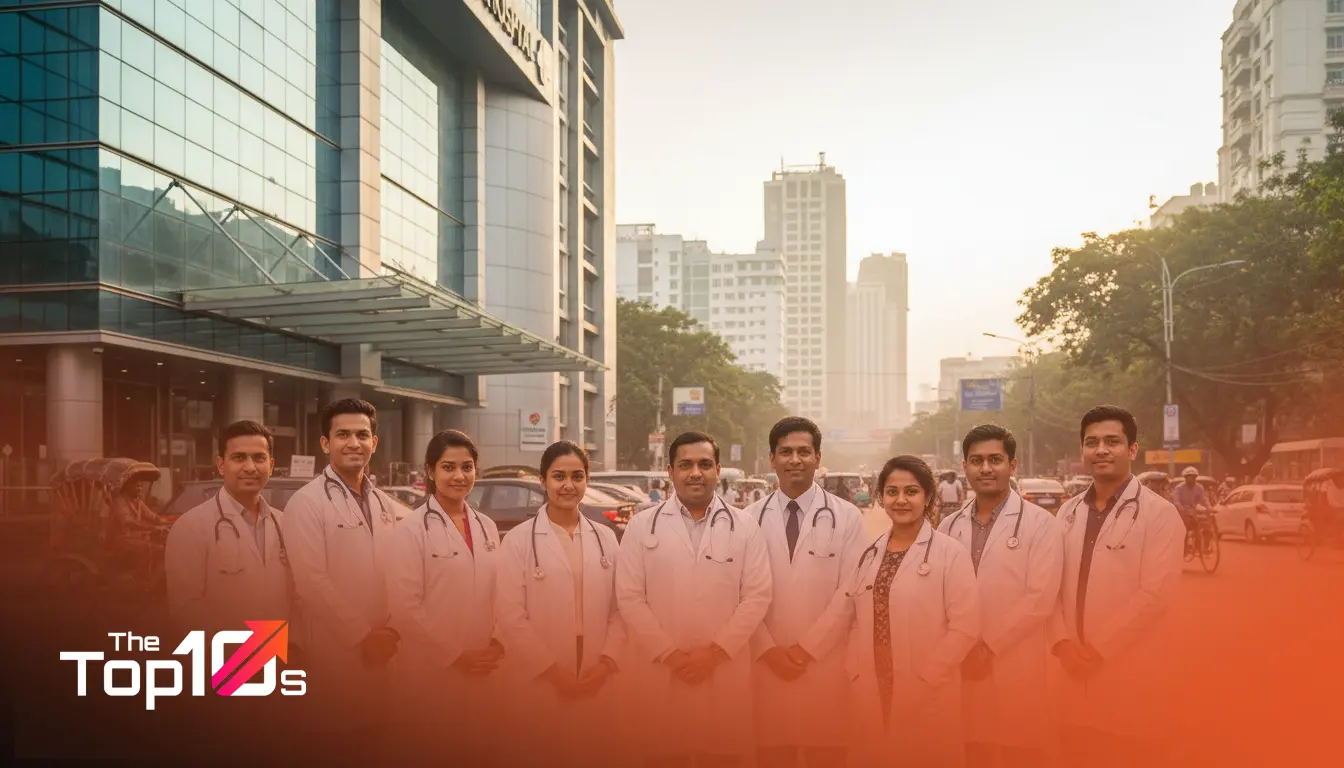
Finding a reliable specialist when you or a loved one feels unwell isn’t just about healthcare; it’s about peace of mind. If you live in Dhaka, you know the reality: traffic is heavy, time is short, and the sheer number of clinics can feel overwhelming. You aren’t just looking for a medical degree; you want someone who actually listens, diagnoses accurately, and doesn’t rush you out the door after two minutes.
We have all been there. You ask a cousin, check a Facebook group, or rely on a neighbor’s suggestion. But hearsay often leads to confusion. That is why compiling a list of the best doctors in Dhaka requires looking beyond just popularity. It requires analyzing patient outcomes, accessibility, and genuine expertise.
🚀 Quick Takeaways
- Experience Matters: The doctors listed here generally possess over 15-20 years of clinical practice.
- Wait Times Are Real: Top-rated specialists often have booking queues of 2-4 weeks. Plan accordingly.
- Location Strategy: With Dhaka’s traffic, choosing a specialist near your residence (Gulshan, Dhanmondi, or Mirpur) is a logistical necessity.
- Verification: Always double-check current hospital affiliations as specialists frequently shift consultancies.
Whether you need a top-tier cardiologist, a trusted pediatrician, or a neurologist who understands complex cases, this guide cuts through the noise. We are focusing on the top-rated physicians in Dhaka who have consistently demonstrated excellence in their fields.
How We Evaluated These Specialists
You might be wondering how one objectively ranks doctors. It is not about who has the flashiest billboard or the most followers on social media. Our selection criteria lean heavily on tangible trust markers and professional standing.
We looked at clinical longevity. Medicine is an art refined by repetition. Doctors who have seen thousands of cases over decades often develop an intuition that textbooks cannot teach. We also considered hospital affiliations. Top doctors usually practice at reputable institutions like Square Hospital, Evercare, or BSMMU, where they have access to modern diagnostic tools.
Another critical factor is peer recognition. Who do other doctors go to when they get sick? That is often the truest test of competence. Finally, we analyzed patient feedback regarding communication style. A brilliant doctor who cannot explain your condition clearly often leaves you feeling more anxious than when you arrived.
List of 10 Best Doctors in Asia
| SNO | Name | Best for |
|---|---|---|
| 1 | Prof. Dr. Quazi Deen Mohammad | Stroke rehabilitation, epilepsy, and complex neuromuscular disorders. |
| 2 | Prof. Dr. ABM Abdullah | Undiagnosed chronic fevers, multi-system diseases, and second opinions on confusing diagnoses. |
| 3 | Prof. Dr. Abdul Wadud Chowdhury | Interventional cardiology, heart failure management, and hypertension. |
| 4 | Prof. Dr. Sayeba Akhter | High-risk pregnancy, fibroids, and maternal health complications. |
| 5 | Prof. Dr. Pran Gopal Datta | Hearing impairment, tonsillitis, and complex sinus surgeries. |
| 6 | Prof. Dr. Md. Abid Hossain Mollah | Neonatal care, hormonal issues in children, and general pediatric wellness. |
| 7 | Prof. Dr. Samanta Lal Sen | Burn trauma recovery, hand surgery, and corrective cosmetic procedures. |
| 8 | Prof. Dr. Syed Atiqul Haq | Rheumatoid arthritis, SLE (Lupus), and ankylosing spondylitis. |
| 9 | Prof. Dr. Deen Mohd. Noorul Huq | Cataracts, glaucoma, and age-related macular degeneration. |
| 10 | Prof. Dr. M. U. Kabir Chowdhury | Psoriasis, allergic dermatitis, and cosmetic dermatology. |
Top 10 Doctors In Dhaka
Here is a breakdown of ten highly regarded medical professionals in the capital, spanning various critical specializations.
1. Prof. Dr. Quazi Deen Mohammad (Neurology)
If you mention neurology in Bangladesh, this name almost invariably comes up first. Prof. Dr. Quazi Deen Mohammad has become synonymous with treating complex nerve and brain disorders. Formerly the Director of the National Institute of Neurosciences & Hospital, his reputation is built on handling cases that other physicians find baffling.
Why he stands out: His approach is notably diagnostic. He is known for spending time analyzing the patient’s history rather than immediately prescribing a mountain of tests. He is particularly sought after for stroke recovery management and chronic headache disorders.
Best for: Stroke rehabilitation, epilepsy, and complex neuromuscular disorders.
2. Prof. Dr. ABM Abdullah (Internal Medicine)
Considered a legend in the field of internal medicine, Prof. Dr. ABM Abdullah serves as the personal physician to the Prime Minister, but his clinic remains open to the public. He possesses an uncanny ability to diagnose rare diseases that don’t fit into neat categories. His textbook on medicine is a staple for students, which speaks volumes about his academic authority.
Why patients trust him: He represents the “old school” style of medicine where the clinical eye is valued over unnecessary machinery. Patients appreciate his direct, no-nonsense manner.
Best for: Undiagnosed chronic fevers, multi-system diseases, and second opinions on confusing diagnoses.
3. Dr. Devi Shetty (Cardiac Surgery – Visiting Consultant)
While based in India, Dr. Shetty’s influence on Dhaka’s cardiac care is immense through his association with local hospitals like Imperial and others where he occasionally consults or directs surgical teams. However, regarding strictly local talent, Prof. Dr. Abdul Wadud Chowdhury is the go-to authority. As the Head of Cardiology at Dhaka Medical College, he manages high-risk heart patients daily.
Why he stands out: Dr. Chowdhury is celebrated for his preventive cardiology approach. He focuses heavily on managing hypertension and cholesterol before surgery becomes the only option.
Best for: Interventional cardiology, heart failure management, and hypertension.
4. Prof. Dr. Sayeba Akhter (Gynecology & Obstetrics)
Women’s health requires a mix of surgical skill and immense empathy. Prof. Dr. Sayeba Akhter is globally recognized for inventing the “Sayeba’s Method,” a low-cost solution to stop postpartum hemorrhage that has saved thousands of lives. Her contribution to maternal health places her in a league of her own.
Why she stands out: Beyond her global accolades, she is known locally for handling high-risk pregnancies that other clinics might turn away. She provides a sense of safety to expecting mothers facing complications.
Best for: High-risk pregnancy, fibroids, and maternal health complications.
5. Prof. Dr. Pran Gopal Datta (ENT)
Ear, Nose, and Throat issues can range from annoying to debilitating. Prof. Dr. Pran Gopal Datta, a recipient of the Independence Day Award, is the definitive expert in this space. Formerly the Vice-Chancellor of Bangabandhu Sheikh Mujib Medical University (BSMMU), his clinical precision is unmatched.
Why patients trust him: Many people suffer from chronic sinusitis or hearing loss for years without a solution. Dr. Datta is known for decisive treatment plans that address the root cause, often resolving chronic issues permanently.
Best for: Hearing impairment, tonsillitis, and complex sinus surgeries.
6. Prof. Dr. Md. Abid Hossain Mollah (Pediatrics)
When it comes to children, parents want reassurance as much as medication. Dr. Abid Hossain Mollah is widely respected for his gentle demeanor and exceptional diagnostic skills with infants and adolescents. He currently heads the Pediatrics department at BIRDEM General Hospital.
Why he stands out: He avoids over-prescribing antibiotics, a common concern among modern parents. His focus is on holistic child development and nutrition alongside treating acute illnesses.
Best for: Neonatal care, hormonal issues in children, and general pediatric wellness.
7. Prof. Dr. Samanta Lal Sen (Plastic & Reconstructive Surgery)
Dr. Samanta Lal Sen is a national hero in the medical community, primarily for his tireless work in burn unit development in Bangladesh. If you require reconstructive surgery due to trauma or burns, he is the authority. His work goes beyond aesthetics; it restores function and dignity.
Why he stands out: His dedication to public service is palpable. He treats patients from all walks of life with equal dedication, making top-tier reconstructive care accessible.
Best for: Burn trauma recovery, hand surgery, and corrective cosmetic procedures.
8. Prof. Dr. Syed Atiqul Haq (Rheumatology)
Autoimmune diseases and arthritis are notoriously difficult to manage. Prof. Dr. Syed Atiqul Haq pioneered the development of Rheumatology as a distinct discipline in Bangladesh. Before him, many patients with Lupus or Rheumatoid Arthritis struggled to find specialized care.
Why patients trust him: He stays updated with the latest biologic treatments. Patients with debilitating joint pain often find their mobility restored under his regimen.
Best for: Rheumatoid arthritis, SLE (Lupus), and ankylosing spondylitis.
9. Prof. Dr. Deen Mohd. Noorul Huq (Ophthalmology)
Eye care in Dhaka has advanced significantly, and Prof. Dr. Noorul Huq has been a major driver of that progress. As a former Director-General of Health Services, his administrative and clinical experience is vast. He specializes in intricate eye surgeries.
Why he stands out: He is particularly skilled in cataract and glaucoma surgeries using modern, minimally invasive techniques. His calm hand is exactly what you want when dealing with vision.
Best for: Cataracts, glaucoma, and age-related macular degeneration.
10. Prof. Dr. M. U. Kabir Chowdhury (Dermatology)
Skin issues in Dhaka’s humid, dusty climate are rampant. Prof. Dr. M. U. Kabir Chowdhury is a veteran in dermatology, known for treating everything from severe acne to complex allergic reactions. He practices at Holy Family Red Crescent Medical College Hospital.
Why he stands out: He treats skin conditions as systemic issues, often looking at diet and lifestyle triggers rather than just prescribing topical creams. His success rate with chronic eczema is high.
Best for: Psoriasis, allergic dermatitis, and cosmetic dermatology.
What Defines a “Great” Doctor in Dhaka?
Identifying the medical specialists in Dhaka who are right for you goes deeper than a degree on the wall. The context of Dhaka plays a huge role. A great doctor here understands the environmental factors—pollution, stress, and diet—that contribute to local health trends.
Accessibility is also a defining trait. The most skilled surgeon is of little help if you cannot reach them in an emergency. The best doctors have efficient teams or junior fellows who can triage concerns when the primary consultant is in surgery. Furthermore, modern healthcare demands a shift from reactive to proactive care. The physicians worth keeping are the ones who tell you how to stay out of the hospital, not just how to behave once you are in it.
Choosing the Right Physician for Your Needs
Selecting a doctor is a personal strategy. Here is a framework to help you decide who to book an appointment with.
Check the Hospital Affiliation
The hospital matters as much as the doctor. If a specialist sits at a facility with poor diagnostic equipment, their ability to treat you is limited. Ensure the doctor practices at a hospital with a reliable lab and clean ICU facilities.
Consider the Logistics
This is specific to Dhaka. If you live in Uttara, seeing a doctor in Old Dhaka for a chronic condition requiring weekly visits is a recipe for burnout. Try to find a top-tier specialist within a reasonable radius of your home.
Verify Credentials and Reviews
Look for board certifications (FCPS, FRCS, MD). While online reviews can be skewed, patterns don’t lie. If twenty people say a doctor is dismissive, they probably are. Conversely, if patients consistently mention that a doctor saved their life or solved a mystery diagnosis, pay attention.
It is also worth noting that excellence isn’t limited to one city. Just as patients might research the top 10 doctors in Kochi for specialized medical tourism, people across Bangladesh look to Dhaka’s elite physicians for the highest standard of domestic care.
Frequently Asked Questions
How do I book an appointment with these top doctors?
Most senior professors have private chambers or practice at major hospitals like Square, United, or Labaid. You typically need to call the hospital hotline or their personal assistant. For highly popular doctors, booking 2-3 weeks in advance is standard.
Are consultation fees standardized in Dhaka?
No. Fees vary significantly based on the doctor’s seniority and the hospital. Generally, a consultation with a top-tier professor ranges from 1,000 to 2,500 BDT. Follow-up visits are sometimes discounted, but not always.
Can I get online video consultations?
Since the pandemic, many of these specialists have adopted telemedicine platforms. Apps like Doctorola or the hospitals’ own portals often allow for video booking, which is excellent for follow-ups where physical examination isn’t strictly necessary.
What if I need immediate emergency care?
Do not wait for a specific famous doctor in an emergency. Go immediately to the nearest major hospital emergency room (ER). The ER physicians will stabilize you, and then you can request a referral to a specific specialist once the crisis is managed.
Do these doctors accept health insurance?
Individual doctors do not “accept” insurance directly in the Western sense. However, if you are treated at a hospital they are affiliated with, and you have cashless insurance coverage (like MetLife, Pragati, etc.), the hospital billing department will handle the claim.
Taking the Next Step for Your Health
Your health is your most valuable asset, and entrusting it to the right person is a major decision. The doctors listed above represent the pinnacle of medical expertise in Dhaka, but the “best” doctor is ultimately the one who makes you feel heard and cared for.
Don’t wait until a small symptom becomes a big problem. Pick a specialist from this list who aligns with your specific needs and location, and make that appointment. Review their current chamber schedule, prepare your previous medical records, and approach the consultation with clear questions. Proactive action is the best medicine.