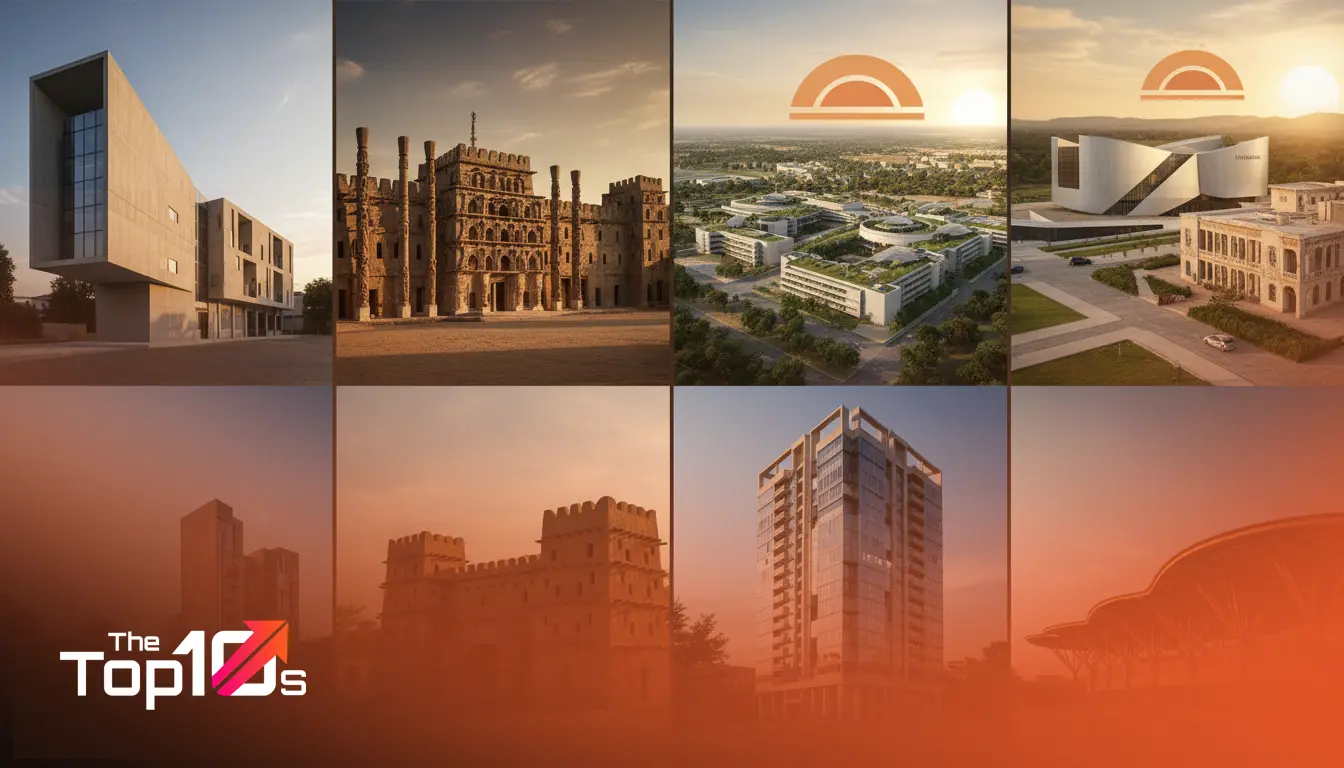
Building in Benin isn’t just about putting walls up; it’s a negotiation with the climate. Whether you are planning a commercial hub in Cotonou or a private retreat near Porto-Novo, the heat, humidity, and seasonal rains dictate the rules. If you ignore them, you end up with a structure that costs a fortune to cool and fights against its environment rather than working with it.
Finding a professional who understands these nuances is critical. You aren’t just hiring someone to draw blueprints. You are partnering with a strategist who knows how to navigate local zoning laws, source durable materials like laterite or specialized concrete, and manage the chaotic reality of construction sites in West Africa.
This guide cuts through the noise. We aren’t listing every firm with a website. Instead, we are focusing on the professionals who are shaping the skyline of Benin today—those who balance modern aesthetics with functional, climate-responsive design.
Quick Takeaways
- Regulatory Compliance is Non-Negotiable: Ensure your architect is registered with the Ordre National des Architectes et des Urbanistes du Bénin (ONAUB).
- Climate is King: The best designers prioritize passive cooling and cross-ventilation to reduce long-term energy costs.
- Scope Matters: Some firms specialize in high-end residential, while others excel at large-scale institutional projects. Match their strength to your needs.
- Local Presence: An architect based locally in Cotonou or Porto-Novo will have better control over site supervision than a remote consultant.
How We Identified Leading Architects
Separating a skilled architect from a drafter requires looking beyond flashy 3D renderings. To compile this list, we analyzed factors that actually impact the success of a building project in Benin. We looked for a track record of completed projects rather than just conceptual designs.
Our evaluation considered the firm’s standing with the ONAUB, which is the primary regulatory body ensuring professional standards in the country. We also looked at versatility. Does the architect rely on the same design for every client, or do they adapt to the site’s specific topography and orientation? Feedback from the local construction community also played a role. A great design is useless if the architect cannot communicate effectively with contractors to get it built. Finally, we assessed their approach to sustainability—specifically, how well their buildings handle the West African tropical climate without excessive reliance on air conditioning.
List of 10 Best Architects in Benin
| Name | Best for |
|---|---|
| Romarick Atoke (Cota & Cota) | Sustainable and culturally relevant architecture |
| Cabinet d’Architecture et d’Urbanisme (CAU) | Complex, large-scale projects |
| Agence CODA | Urban villas and apartment complexes |
| Imhotep Architects Benin | Timeless geometry and robust construction methods |
| Studio U.A. (Urbanisme & Architecture) | Commercial developments or mixed-use projects |
| Archimode | High-end luxury market |
| Babatoundé Yessoufou | Cost-effective construction techniques |
| Eco-Build Benin | Sustainable and environmentally responsible projects |
| Concept Design Studio | Interior architecture capabilities and hospitality projects |
| Global Architecture & Partners | International standards and complex, high-stakes commercial developments |
Top 10 Architects in Benin
Here are the professionals and firms currently setting the standard for architectural excellence across the Republic of Benin.
1. Romarick Atoke (Cota & Cota)
Romarick Atoke is a name that frequently surfaces when discussing sustainable and culturally relevant architecture in West Africa. His approach often challenges the heavy use of imported glass and steel, favoring designs that respect the local context.
He is known for integrating bioclimatic principles. This means his buildings often feature deep overhangs, natural ventilation paths, and thermal massing to keep interiors cool naturally. His work appeals to clients who want modern functionality but wish to retain an African aesthetic identity. If you are looking for a home or office that feels like it belongs in Benin rather than a generic European suburb, his studio is a strong contender.
2. Cabinet d’Architecture et d’Urbanisme (CAU)
As one of the more established entities in the region, CAU has a reputation for handling complex, large-scale projects. Their portfolio typically spans government buildings, educational institutions, and large commercial complexes.
Experience is their primary asset. Navigating the bureaucratic hurdles of obtaining building permits and approval in Benin can be daunting, and CAU has decades of institutional memory in this area. They are technically precise and known for rigorous project management. This firm is ideal for corporate developers or institutions needing a reliable partner who can manage significant budgets and strict timelines without fumbling the regulatory details.
3. Agence CODA
Agence CODA represents the new wave of Beninese architecture. Their designs often feature clean lines, minimalism, and a smart use of space, making them popular among urban professionals in Cotonou.
They shine in the residential sector, particularly with urban villas and apartment complexes. What sets them apart is their ability to maximize small or irregular plots of land—a common challenge in dense city centers. Their aesthetic tends to be contemporary, utilizing concrete and wood in ways that feel sophisticated yet durable. Homeowners looking for a sleek, magazine-quality finish often gravitate toward this team.
4. Imhotep Architects Benin
Taking inspiration from the legendary Egyptian architect, this firm focuses heavily on the structural integrity and longevity of their designs. They are not known for chasing fleeting trends; instead, they prioritize timeless geometry and robust construction methods.
Their strength lies in versatility. Imhotep handles everything from renovation projects to new builds. They have a particular knack for rehabilitating older structures, breathing new life into them while preserving their character. If you have an existing property that needs a complete transformation, or if you value durability above all else, Imhotep offers a solid, grounded approach to design.
5. Studio U.A. (Urbanisme & Architecture)
Studio U.A. bridges the gap between individual building design and broader urban planning. They understand that a building doesn’t exist in a vacuum; it interacts with the street, the neighborhood, and the city’s infrastructure.
This perspective makes them excellent for commercial developments or mixed-use projects where traffic flow, parking, and public access are just as important as the building’s facade. They often employ modern software for 3D modeling, allowing clients to visualize exactly how the project will sit within its environment. Developers looking to create community hubs or retail spaces will find their macro-level thinking valuable.
6. Archimode
Archimode has carved out a niche in the high-end luxury market. Their designs are often characterized by grandeur, expansive interiors, and high-quality finishes. They understand the aspirations of affluent clients who want their homes to be a statement of success.
While they focus on aesthetics, they do not neglect functionality. Their designs often include modern amenities and smart home integrations. They are particularly skilled at lighting design, using both natural and artificial light to create dramatic interior atmospheres. This firm is best suited for private clients with a healthy budget who want a bespoke, luxurious residence.
7. Babatoundé Yessoufou
Babatoundé Yessoufou is recognized for a disciplined, technical approach to architecture. His work often emphasizes structural logic and efficiency. You won’t find wasted space or unnecessary ornamentation in his projects.
He is a strong advocate for cost-effective construction techniques that do not sacrifice quality. This makes him a favorite among investors who need to maximize ROI (Return on Investment). His detailed construction drawings leave little room for ambiguity on the building site, which helps prevent costly change orders during the build. He is an excellent choice for pragmatic clients who value precision and budget control.
8. Eco-Build Benin
As the name suggests, this practice focuses heavily on environmental responsibility. They are pioneers in using compressed earth blocks (CEB) and other locally sourced materials that have a lower carbon footprint than standard cement blocks.
Eco-Build isn’t just about being “green”; it’s about thermal comfort. Their buildings are often significantly cooler inside, reducing the need for constant air conditioning. This approach is gaining traction as energy costs rise. If you are interested in a sustainable project that supports local industry and reduces long-term operating costs, this team offers expertise that few others can match.
9. Concept Design Studio
Concept Design Studio is known for its creative flair and interior architecture capabilities. While many architects stop at the shell of the building, this firm integrates interior design into the architectural process from day one.
This holistic approach results in spaces that flow naturally. They are particularly good at hospitality projects—hotels, restaurants, and lounges—where the “vibe” is critical to the business’s success. If you are launching a business where customer experience and atmosphere are paramount, Concept Design Studio understands how to craft those environments.
10. Global Architecture & Partners
Rounding out the list is Global Architecture & Partners, a firm that brings international standards to the local market. They often collaborate with foreign consultants, bringing global best practices to Beninese projects.
They are well-equipped for corporate headquarters and industrial projects requiring specialized systems (like complex HVAC or data infrastructure). Their documentation standards are high, which is essential for corporate clients who answer to boards or international stakeholders. They represent a safe pair of hands for complex, high-stakes commercial developments.
What Defines a Great Architect in Benin?
Architecture in Benin requires a specific set of skills that goes beyond what is taught in European or American design schools. The environment here is demanding, and a great architect knows how to tame it.
Climate Responsiveness
The most critical factor is ventilation. The humidity in coastal cities like Cotonou can be oppressive. An expert architect designs buildings that “breathe.” They orient the structure to catch prevailing winds and use solar shading devices (brise-soleil) to block direct sunlight before it hits the glass. If an architect shows you a design that is a glass box without shading, they likely don’t understand the local context.
Material Knowledge
Importing materials is expensive and often causes delays. The best professionals know how to use local resources creatively. Whether it’s using teak wood for cladding or treating local timber to resist termites, they understand material longevity. For deeper insights into how materials dictate design across the continent, you can look at how the top 10 architects in Malawi adapt their material choices to their specific rift valley climate—the principles of local adaptation remain the same.
Project Coordination
In Benin, the architect often acts as the project manager. The construction industry is fragmented, and contractors vary wildly in quality. A great architect doesn’t just hand over drawings; they visit the site regularly to ensure the steel reinforcement is tied correctly and the concrete mix is right. They are your eyes and ears on the ground.
How to Choose the Right Architect for Your Needs
Selecting the right partner is less about looking at pretty pictures and more about understanding your own project goals. Here is a framework to help you decide.
Define Your Project Type
Are you building a personal residence, a commercial complex, or an industrial facility? Don’t hire a specialist in luxury villas to design a warehouse. Review their portfolio to ensure they have completed projects similar to yours. Ask to visit a completed building to see how it has aged.
Check ONAUB Registration
Never skip this step. The Ordre National des Architectes et des Urbanistes du Bénin maintains a list of licensed professionals. Hiring an unregistered architect can lead to legal issues, inability to get building permits, and no recourse if the design is flawed.
Assess Communication Style
During your initial consultation, do they listen more than they talk? Do they explain technical terms in plain French (or English)? You will be working with this person for 12 to 24 months. If the communication feels strained now, it will be a nightmare when problems arise on site.
Discuss Budget Early
Be honest about what you can spend. A good architect will respect your budget and design within it, or tell you plainly if your expectations are unrealistic. Beware of architects who promise the moon on a shoestring budget; this usually leads to unfinished buildings.
Frequently Asked Questions
How much do architects charge in Benin?
Fees usually range from 5% to 10% of the total construction cost, depending on the complexity of the project. Some firms may charge a fixed fee for standard residential designs. Always clarify if this fee includes site supervision, as that is often billed separately.
Do I need a permit to build in Cotonou?
Yes, absolutely. You need a Permis de Construire (Building Permit). Your architect is responsible for preparing the technical dossier required for this application. Building without a permit puts you at risk of fines or demolition by municipal authorities.
Can I use a foreign architect for my project in Benin?
You can, but they usually must partner with a local architect registered with ONAUB to sign off on the plans and handle local regulatory submissions. A local partner is also crucial for understanding site conditions and sourcing materials.
What is the difference between an architect and a structural engineer?
The architect designs the layout, aesthetics, and functionality of the space. The structural engineer calculates the loads to ensure the building stands up (foundations, columns, beams). In Benin, for any multi-story building, you need both professionals working together.
How long does the design process take?
For a standard family home, the design phase—from initial concept to final construction drawings—typically takes 2 to 4 months. Larger commercial projects can take 6 months or more before ground is broken.
Next Steps for Your Project
Your building is a legacy. Whether it’s a family home or a business headquarters, the quality of the design will determine its value for decades. Don’t rush the selection process.
Start by shortlisting three firms from the list above that align with your aesthetic style. Schedule face-to-face consultations with each. Bring your land survey documents and a clear list of requirements. Pay attention to who asks the smartest questions about your lifestyle or business operations, not just who has the lowest fee.
The right architect will save you money in the long run by preventing costly construction errors and designing a building that is energy-efficient and durable. For more resources on global architectural standards, you can refer to the Royal Institute of British Architects or the International Union of Architects for general guidelines on professional practice.