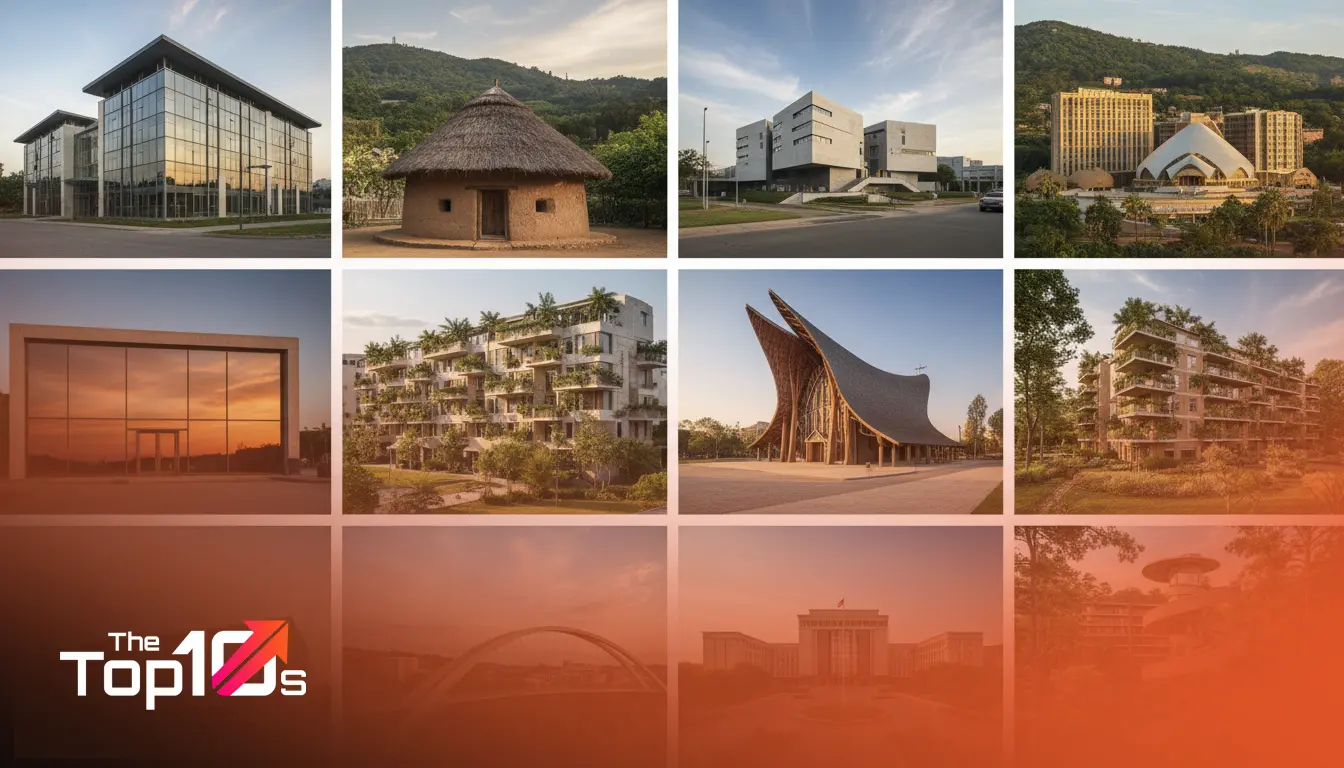
Building in Cameroon is an adventure. Whether you are navigating the humid, coastal air of Douala or the hilly, red-earth terrain of Yaoundé, the physical environment demands respect. But here is the thing: a successful project isn’t just about battling the elements; it’s about translating a vision into concrete, steel, and glass without losing your mind in the process.
You might be standing on a plot of land right now, imagining a multi-story commercial complex or a family villa, wondering who can actually pull this off. The construction industry here is booming, but it is also noisy. Distinguishing between a skilled draftsperson and a licensed, visionary architect is the difference between a building that lasts generations and one that becomes a money pit within five years.
We aren’t just talking about drawing pretty pictures. We are talking about professionals who understand the Ordre National des Architectes du Cameroun (ONAC) regulations, who know how to source local materials, and who can manage a site when the rainy season hits. Below, we look at the professionals shaping the skyline of Central Africa.
Quick Takeaways: Hiring Talent in Cameroon
- Check the Credentials: Ensure your architect is registered with ONAC (Ordre National des Architectes du Cameroun). It is non-negotiable for legality.
- Climate is King: The best designers prioritize ventilation and moisture control suitable for the tropical climate.
- Site Visits Matter: Don’t just look at 3D renders. Ask to see a physical building they completed three years ago to check durability.
- Scope of Work: Clarify early if they are handling just the design or the full project supervision.
How We Identified Leading Architects
Finding the “best” in any creative field is subjective, but in architecture, results speak louder than opinions. Our selection process didn’t rely on who has the flashiest Instagram account. Instead, we looked for tangible indicators of reliability and design intelligence.
We prioritized firms and individuals with a visible track record of completed projects in Cameroon’s major cities. We looked for longevity in the market—firms that have weathered economic shifts and kept building. We also considered stylistic versatility. A top-tier architect should be able to adapt their style to the client’s needs rather than copying and pasting the same blueprint across the country.
Finally, we considered regulatory compliance. The professionals listed here are recognized for their adherence to professional standards, acting as the bridge between strict government building codes and your creative desires.
List of 10 Best Architects in Cameroon
| Name | Best For |
|---|---|
| Danièle Diwouta-Kotto (V.A.A. – Villes et Architectures d’Afrique) | Local materials in innovative ways, cultural history of the Sawa people and colonial legacy of Douala |
| Cabinet E2A (Epie & Associates) | Commercial real estate or high-density residential projects, technical precision, modern functionality |
| Cabinet Kotto & Partners | Government contracts and large public infrastructure, structural engineering capability combined with architectural design |
| Architechna (Flaubert Tchantchou) | Modern, international flair, industrial-chic residential lofts, spatial planning |
| Cabinet d’Architecture et d’Urbanisme (CAU) | Urban planning, educational and health facilities, flow, safety, and durability |
| Hermann Kamte & Associates (HKA) | Futurism and sustainability, biomimicry, wooden structures, cutting-edge green technology |
| Cabinet Archi-Concept | Reliability, generalist firm, renovation of existing colonial homes, new builds from scratch, quality control |
| G2 Architectes | Commercial and industrial sector, logistics of business, warehouse, showroom, or factory design |
| SOH Architects | Polished, international flair, communication, value engineering |
| Cabinet Bati-Concept | Middle-to-high-end residential housing, Cameroonian family dynamic, value engineering |
Top 10 Architects In Cameroon
These ten firms and individuals represent a mix of established veterans and dynamic design studios. They cover the spectrum from high-end residential villas to complex commercial infrastructure.
1. Danièle Diwouta-Kotto (V.A.A. – Villes et Architectures d’Afrique)
If you mention architecture in Cameroon, Danièle Diwouta-Kotto is often the first name that comes up, and for good reason. Based in Douala, she has spent decades redefining what African architecture looks like. She doesn’t just build; she studies the history of colonial and indigenous structures to create something entirely new.
Her firm, V.A.A., is renowned for using local materials in innovative ways. She is particularly skilled at merging modern functionality with the cultural history of the Sawa people and the colonial legacy of Douala. If you want a building that feels like a piece of art and has deep cultural roots, this is the direction to look.
2. Cabinet E2A (Epie & Associates)
For developers focusing on commercial real estate or high-density residential projects, Cabinet E2A brings a level of corporate rigor that is essential for large-scale investments. Located in Yaoundé, this firm has established a reputation for technical precision.
They shine in project management. Many clients struggle with timelines in Cameroon, but E2A is known for a structured approach that keeps projects moving. Their aesthetic tends to be modern, clean, and highly functional, making them a favorite for corporate headquarters and office complexes.
3. Cabinet Kotto & Partners
Distinct from V.A.A., this firm has carved out a massive presence in the civil engineering and public works space. They are the heavy hitters often called upon for government contracts and large public infrastructure, though they handle private commissions as well.
Their strength lies in structural engineering capability combined with architectural design. If your project involves difficult terrain or complex structural requirements—like building on a steep slope in the North West or a marshy area in the littoral region—their engineering background provides a significant safety net.
4. Architechna (Flaubert Tchantchou)
Architechna represents the modern wave of Cameroonian architecture. They are fantastic at interpreting the “Western luxury” aesthetic that many returnees and expatriates look for, but they adapt it to the local climate so the air conditioning bill doesn’t bankrupt the owner.
Flaubert Tchantchou and his team are particularly adept at spatial planning. They know how to maximize limited urban plots in crowded neighborhoods like Akwa or Bastos, creating interiors that feel spacious even when the footprint is small.
5. Cabinet d’Architecture et d’Urbanisme (CAU)
Urban planning is a major challenge in Cameroon’s rapidly expanding cities. CAU specializes not just in individual buildings, but in how those buildings interact with the street and the neighborhood. This holistic approach makes them ideal for developers planning gated communities or multi-building compounds.
They have a strong portfolio in educational and health facilities. This experience translates well to residential projects because they prioritize flow, safety, and durability—factors often overlooked in purely aesthetic designs.
6. Hermann Kamte & Associates (HKA)
If you are looking for futurism and sustainability, HKA is a studio gaining international attention. Hermann Kamte is known for pushing the boundaries of biomimicry and wooden structures. While much of the local market relies heavily on concrete, HKA explores alternative, sustainable materials.
This firm is best suited for the visionary client. If you want a landmark building that stands out radically from the neighbors and incorporates cutting-edge green technology, Kamte’s team offers a fresh perspective that challenges the status quo.
7. Cabinet Archi-Concept
Reliability is the currency of construction, and Archi-Concept has a vault full of it. They are a “generalist” firm in the best sense of the word. Whether it is a renovation of an existing colonial home or a new build from scratch, they apply a consistent level of quality control.
They are particularly good at the permitting phase. Navigating the bureaucracy to get a building permit in Cameroon can be a nightmare; Archi-Concept is known for having the administrative savvy to get paperwork approved so construction can actually begin.
8. G2 Architectes
Based in Douala, G2 Architectes focuses heavily on the commercial and industrial sector. They understand the logistics of business. A warehouse, a showroom, or a factory requires a different design language than a home, focusing on workflow, load-bearing capacities, and vehicle access.
However, they have recently expanded into industrial-chic residential lofts. If you enjoy that raw, exposed-material look that is popular in Europe and North America, G2 can translate that style using local construction methods.
9. SOH Architects
SOH brings a polished, international flair to their projects. They are frequently sought after by the diaspora community—Cameroonians living abroad who want to build a retirement home or investment property back home but expect the finish quality they are used to in Europe or the US.
Communication is their strong suit. Managing a project remotely is terrifying for a client, but SOH utilizes modern reporting tools to keep remote clients updated, building trust through transparency.
10. Cabinet Bati-Concept
Rounding out our list is Bati-Concept, a firm that excels in middle-to-high-end residential housing. They understand the Cameroonian family dynamic. Their floor plans often feature the separation of public and private spaces that is culturally important here, such as distinct living areas for receiving guests versus family time.
They are also pragmatic about budgets. While no architect can work miracles, Bati-Concept is known for value engineering—finding ways to achieve a high-end look without unnecessary structural costs.
What Defines a Great Architect in Cameroon?
You might think an architect in Yaoundé does the same job as one in New York, but the context changes everything. In Cameroon, a great architect must be part artist, part scientist, and part diplomat.
Climate Responsiveness: The humidity in coastal Cameroon is relentless. A great design creates passive airflow, using orientation and window placement to cool the house naturally. If an architect shows you a glass box with no overhangs to protect against the tropical sun and rain, they aren’t designing for Cameroon; they are designing for a magazine.
Material Knowledge: Imported materials are expensive and can be delayed at the port for months. Top professionals know how to use locally sourced brick, timber, and stone. This not only supports the local economy but often results in a building that ages better in the local environment.
The “Technician” Role: In many Western countries, the architect designs and a contractor builds. Here, the lines often blur. The best architects stay involved during construction to ensure the maçons (masons) and ironworkers are following the plans accurately. This site supervision is worth its weight in gold.
If you are looking specifically for regional expertise in West Africa to compare styles, you might find it interesting to review the top 10 architects in Ivory Coast, as many design trends flow between these two nations.
How to Choose the Right Architect for Your Needs
Making a choice from the list above can feel paralyzing. To narrow it down, start with your project type. If you are building a factory, don’t hire a specialist in eco-lodges. But beyond specialization, look at the chemistry.
Ask them about their current workload. A famous architect who is too busy to answer your phone calls will cause you more stress than a slightly less famous one who treats your project as a priority. Ask specifically: “Who will be my day-to-day contact?” If it’s an intern rather than the lead architect, you need to know that upfront.
Discuss the budget immediately. A common mistake is falling in love with a design that costs double your construction budget. A responsible professional will tell you the hard truth about costs per square meter in the current market before drawing a single line.
Frequently Asked Questions
How much do architects charge in Cameroon?
Fees vary widely based on reputation and project scope. typically, firms charge a percentage of the total construction cost, usually between 5% and 12%. Some may offer a lump sum fee for smaller residential projects. Always clarify if this fee includes site supervision or just the design drawings.
Is it mandatory to hire an architect in Cameroon?
Yes, for most substantial structures. To obtain a building permit (Permis de Construire) from the local municipality, your plans must be signed and stamped by an architect registered with the National Order of Architects of Cameroon (ONAC).
Can I use a plan I bought online?
Technically, you can try, but it is risky. Online plans do not account for Cameroon’s specific soil conditions, wind directions, or local building codes. You will still need a local architect to adapt the plan and stamp it for legal approval, which often costs as much as a custom design.
How long does the design process take?
For a standard family home, expect the design phase—from initial sketches to final technical drawings—to take between 2 to 4 months. This allows time for revisions and engineering calculations. Rushing this stage usually leads to expensive mistakes during construction.
What is the difference between an architect and a civil engineer?
The architect focuses on the design, functionality, aesthetics, and spatial flow of the building. The civil engineer focuses on the physics—ensuring the skeleton of the building (beams, columns, foundation) can support the weight. In Cameroon, for any multi-story building, you need both professionals working together.
Next Steps for Your Project
Your dream project in Cameroon is achievable, but it requires a steady hand at the wheel. The architects listed above represent the best of what the country has to offer—professionals who blend technical skill with local reality.
Don’t just send an email; pick up the phone or visit their offices. Look at the blueprints on their desks. Ask tough questions about timelines. Your building is likely the biggest financial commitment you will make this decade, so take the time to find a partner who values your vision as much as you do. The right collaboration will result in a structure that doesn’t just provide shelter, but truly feels like home.
For more insights on global architectural standards, resources like the International Union of Architects can provide excellent context on what to expect from professional practice worldwide.