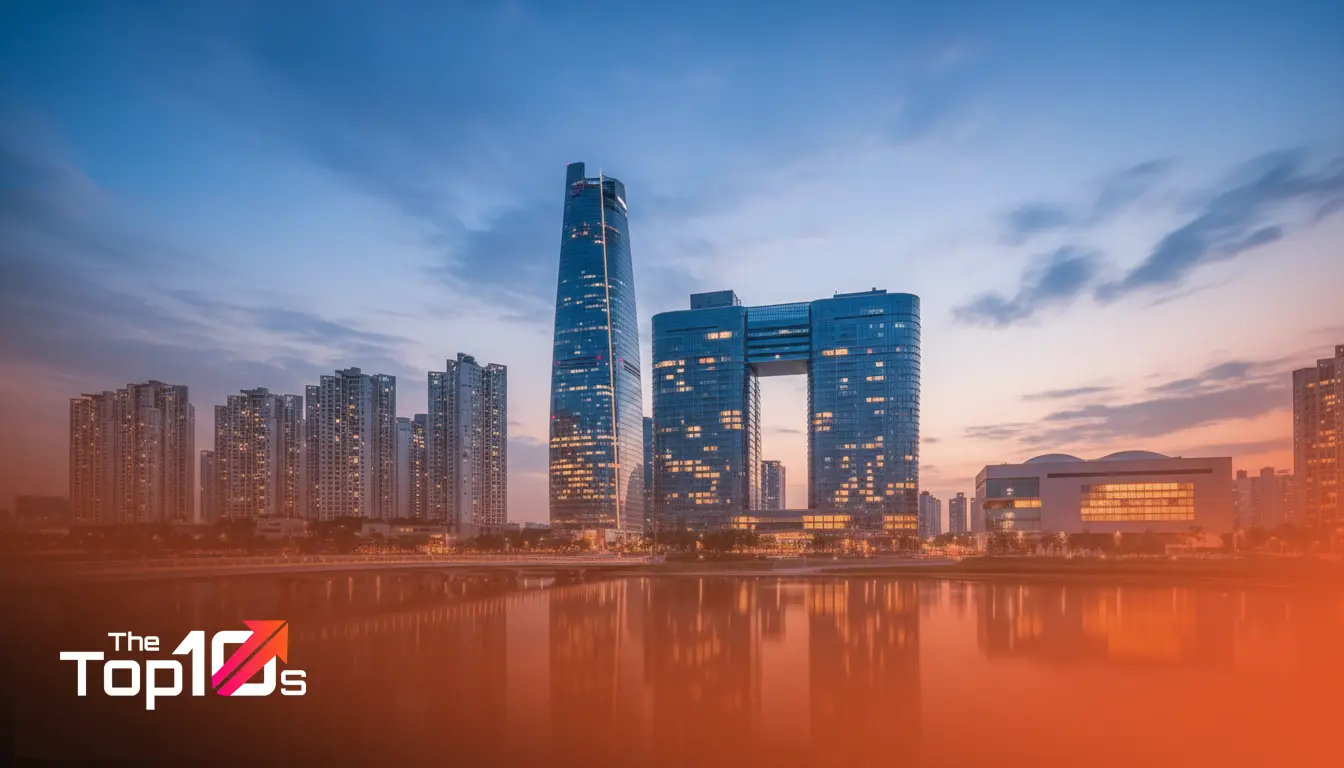
Stand in the middle of Songdo Central Park, and you might feel like you’ve stepped onto a movie set from the future. Look towards the older, vibrant streets of Bupyeong, and you see a completely different story—one of history, density, and resilience. Incheon isn’t just a gateway to Seoul; it is a canvas where ambitious urban planning meets the rugged reality of a coastal port city.
If you are planning a residential build, a commercial complex, or a renovation in this diverse metropolitan area, who you hire matters. The difference between a project that gets stuck in permitting hell and one that wins design awards often comes down to the person holding the pen. Finding the best architects in Incheon involves more than just looking at pretty portfolio pictures. It requires finding a partner who understands local zoning laws, the unique climate of the West Sea, and your specific vision.
Quick Takeaways: Hiring in Incheon
- Local Code Mastery: Incheon has specific regulations regarding “Smart City” zones (like Songdo and Cheongna) that differ from older districts.
- Coastal Considerations: Materials matter. Professional architects here know how to design for humidity and saline air.
- Scope Definitions: Be clear if you need full project management (PM) or just design services; many firms here offer integrated CM (Construction Management).
- Credentials: Always verify registration with the Korea Institute of Registered Architects (KIRA).
We are going to walk through ten of the most capable architectural leaders and firms operating in the region. Whether you are looking for high-tech sustainability or boutique residential warmth, this list provides a solid starting point for your research.
How We Identified Leading Architects
Selecting a design partner is inherently subjective, but assessing their capability shouldn’t be. To compile this overview of experienced architectural professionals in Incheon and the surrounding metro area, we looked at specific signals of reliability and design excellence.
We focused heavily on firms and principals who demonstrate a deep understanding of the Incheon Master Plan. This includes professionals with a track record of navigating the unique soil conditions of reclaimed land areas. We also analyzed client feedback regarding communication—specifically, how well these architects translate complex technical jargon into plain language for their clients. Public reputation, longevity in the industry, and a portfolio showing diverse building typologies played a major role in these selections.
List of 10 Best Architects in Incheon
| Name | Best For |
|---|---|
| Heerim Architects & Planners | Developers and corporations looking for large-scale execution where error is not an option. |
| Haeahn Architecture | Commercial clients who want landmark status for their corporate headquarters or retail centers. |
| Gansam Architects & Partners | Clients in the hospitality sector or those planning cultural institutions where visitor experience is the priority. |
| Posco A&C | Projects requiring rapid turnaround times and high-tech structural specifications. |
| Kunwon Architects Planners Engineers | Residential developers focused on creating community-centric apartment environments. |
| The System Lab | Private clients or brands who want a building that doubles as a piece of art. |
| iArc Architects | Institutional clients looking for iconic, light-filled gathering spaces. |
| GDS Architects | Visionary developers planning tourism landmarks or major observation decks. |
| Junglim Architecture | Institutional projects like hospitals or universities where functionality and code compliance are paramount. |
| Mass Studies | Clients who want high-concept design that challenges the status quo. |
Top 10 Architects in Incheon
Here are ten notable architectural practices and professionals known for shaping the skyline and neighborhoods of Incheon.
1. Heerim Architects & Planners
Professional Background
You cannot talk about architecture in Incheon without mentioning Heerim. While they operate globally, their footprint in Incheon is massive. They have been instrumental in designing major infrastructure and high-rise projects that define the city’s modern identity. They operate as a comprehensive design firm, handling everything from initial concepts to construction management.
Area of Specialization
They excel in large-scale mixed-use developments, high-rise residential towers, and transport infrastructure. If you see a gleaming tower in Songdo, there is a good chance Heerim played a role.
Notable Strengths
Their technical capacity is nearly unmatched. They utilize advanced BIM (Building Information Modeling) technology to predict construction issues before ground is even broken.
Best Suited For
Developers and corporations looking for large-scale execution where error is not an option.
2. Haeahn Architecture
Professional Background
Haeahn has established itself as a powerhouse in Korean architecture since 1990. They are particularly known for blending public utility with aesthetic beauty. Their work often focuses on how people move through spaces, making them a favorite for public projects and large commercial centers in the Incheon Free Economic Zone (IFEZ).
Area of Specialization
Urban planning, commercial headquarters, and complex multi-family housing complexes.
Notable Strengths
They have a reputation for “place-making.” They don’t just design a building; they design the environment around it, ensuring the structure connects logically to the street and surrounding nature.
Best Suited For
Commercial clients who want landmark status for their corporate headquarters or retail centers.
3. Gansam Architects & Partners
Professional Background
Gansam brings a philosophy that architecture should be a vessel for human life. They have a softer, more hospitable approach to design compared to the strictly industrial firms. Their portfolio covers a wide range of projects across the Seoul and Incheon metropolitan areas.
Area of Specialization
Hospitality (hotels/resorts), healthcare facilities, and cultural centers.
Notable Strengths
Creativity in constraint. Gansam is known for taking difficult plots of land—common in crowded Incheon—and creating spacious, light-filled interiors.
Best Suited For
Clients in the hospitality sector or those planning cultural institutions where visitor experience is the priority.
4. Posco A&C
Professional Background
As a subsidiary of the steel giant POSCO, this firm has deep roots in Incheon’s industrial and residential growth. They are pioneers in modular construction and high-tech engineering. Their approach is pragmatic, efficient, and heavily focused on the structural integrity of the build.
Area of Specialization
Smart housing, industrial plants, and high-tech office buildings.
Notable Strengths
Efficiency and speed. Their expertise in modular architecture allows for faster construction timelines without sacrificing durability, a significant advantage in fast-moving development zones.
Best Suited For
Projects requiring rapid turnaround times and high-tech structural specifications.
5. Kunwon Architects Planners Engineers
Professional Background
Kunwon is often credited with shaping the residential landscape of modern Korea. In Incheon, where apartment living is the norm, Kunwon has designed numerous complexes that focus on community living rather than just housing units.
Area of Specialization
Large-scale residential complexes and urban regeneration projects.
Notable Strengths
They understand the sociology of housing. Their designs frequently include thoughtful communal spaces, focusing on how residents interact with one another.
Best Suited For
Residential developers focused on creating community-centric apartment environments.
6. The System Lab
Professional Background
For those looking for something less corporate and more avant-garde, The System Lab is a fascinating choice. Led by Kim Chan-joong, this firm challenges traditional shapes and materials. While based in Seoul, their influence and projects extend into the satellite cities including Incheon.
Area of Specialization
Boutique commercial buildings, unique corporate offices, and experimental residential projects.
Notable Strengths
Material innovation. They often use concrete and plastics in ways that create fluid, organic shapes rarely seen in typical Korean architecture.
Best Suited For
Private clients or brands who want a building that doubles as a piece of art.
7. iArc Architects
Professional Background
iArc is known for a design ethos that emphasizes openness and democracy in space. Their buildings often feature large atriums and transparent facades. They have significant experience with public buildings and religious architecture, bringing a sense of reverence and light to their work.
Area of Specialization
Public libraries, churches, and community centers.
Notable Strengths
Light manipulation. They are experts at bringing natural light deep into a building, which is vital for energy efficiency and occupant well-being.
Best Suited For
Institutional clients looking for iconic, light-filled gathering spaces.
8. GDS Architects
Professional Background
GDS gained global fame for the “Tower Infinity” concept near Incheon Airport. They are a firm that thinks big—very big. They specialize in landmark architecture that pushes the boundaries of visibility and technology.
Area of Specialization
Skyscrapers, observation towers, and major tourist attractions.
Notable Strengths
Invisibility and blend. Paradoxically, they are famous for designing structures that blend seamlessly into the skyline or use technology to appear transparent.
Best Suited For
Visionary developers planning tourism landmarks or major observation decks.
9. Junglim Architecture
Professional Background
With a history stretching back decades, Junglim is one of the “old guards” of Korean architecture, representing stability and trust. They have weathered every economic storm and trend change, providing steady, reliable design services for major hospitals and cultural facilities in the region.
Area of Specialization
Healthcare, renovation, and educational facilities.
Notable Strengths
Regulatory navigation. Their long history means they have deep institutional knowledge of Korean building codes and permitting processes.
Best Suited For
Institutional projects like hospitals or universities where functionality and code compliance are paramount.
10. Mass Studies
Professional Background
Led by Minsuk Cho, Mass Studies explores the relationship between mass production and individual dwelling. Their work is intellectually rigorous and visually striking. While they take on fewer projects than the giant firms, each one is a carefully crafted study in modern living.
Area of Specialization
Cultural pavilions, unique residential housing, and boutique offices.
Notable Strengths
Contextual adaptation. They are brilliant at fitting unique, modern structures into awkward or tight urban lots without disrupting the neighborhood flow.
Best Suited For
Clients who want high-concept design that challenges the status quo.
What Defines a Great Architect in Incheon?
Incheon presents a specific set of challenges that don’t exist in landlocked cities. A great architect here needs to be part engineer, part artist, and part diplomat.
Climate Resilience
Incheon is coastal. The air has higher salinity, and the wind loads during typhoon season can be significant. Top architects in Incheon prioritize materials that resist corrosion. Similar to the design challenges faced by the top 10 architects in Busan, professionals here must contend with coastal elements that can degrade standard building materials rapidly.
The Old vs. New Dynamic
The city is split between the ultra-modern IFEZ zones (Songdo, Cheongna, Yeongjong) and the historic city center. A skilled architect understands context. Designing a glass curtain wall building in a historic low-rise brick neighborhood often clashes, whereas it fits perfectly in Songdo. The best professionals know how to bridge this gap.
Space Optimization
Unlike sprawling rural areas, Incheon is dense. Great design here is about “micro-urbanism”—finding ways to create gardens, parking, and living space on small, irregular lots. It requires a mastery of verticality and underground space utilization.
How to Choose the Right Architect for Your Needs
Hiring the right talent is about asking the right questions before you sign a contract. Here is a framework to guide your decision.
Check Their Portfolio for “Built” Projects
Renderings are easy; buildings are hard. Look for trusted architects near Incheon who have a high ratio of completed projects to concept art. This shows they know how to get things built, not just drawn.
Assess Communication Style
If you are an international client or an expat, language barriers can be costly. Many top firms have English-speaking staff, but you must verify this upfront. During the initial consultation, do they listen more than they talk? A partner who dictates the design to you is rarely a good fit for a custom project.
Understanding the “Gu” Regulations
Incheon is divided into different “Gu” (districts), such as Yeonsu-gu or Bupyeong-gu. Each has slightly different interpretations of zoning laws. Ask your potential architect: “What is your experience permitting specifically in [Your District]?” Their answer will reveal their level of local expertise.
Frequently Asked Questions
How much do architects charge in Incheon?
Fees vary wildly based on scope. For standard design, fees might range from 5% to 15% of total construction costs. High-end firms or complex renovations may charge closer to 15-20%. Always clarify if the fee includes engineering and permitting, or if those are separate line items.
Do I need a local Incheon architect, or can I hire one from Seoul?
Because Seoul and Incheon are connected by the metro system, many Seoul-based firms operate seamlessly in Incheon. However, a locally based firm may have better relationships with the local district office (Gu-cheong), which can speed up permit approvals.
What is the difference between “Design” and “PM”?
Design covers the drawings and plans. PM (Project Management) or CM (Construction Management) involves the architect overseeing the builders to ensure they follow the plans. In Korea, it is highly recommended to hire your architect for supervision (Gam-ri) to ensure quality control.
Are green building certifications mandatory?
For buildings over a certain size, meeting specific energy standards is mandatory in Korea. Incheon, specifically in the Free Economic Zones, emphasizes green standards like LEED or the local G-SEED rating. Your architect should be well-versed in these requirements.
How long does the design process take?
For a single-family home or small commercial building, expect 3 to 6 months for design and permitting. Large-scale developments can take years. Rushing the design phase often leads to expensive changes during construction.
Next Steps for Your Project
Building in Incheon offers an opportunity to contribute to one of Northeast Asia’s most dynamic skylines. Whether you are looking to build a family legacy home or a commercial hub, the quality of your architect determines the quality of your asset.
Don’t just go with the first name you find. Create a shortlist from the firms mentioned above. Schedule consultations. Visit their completed buildings if possible. The right architect doesn’t just design a structure; they protect your investment and bring your vision into reality with precision and care.