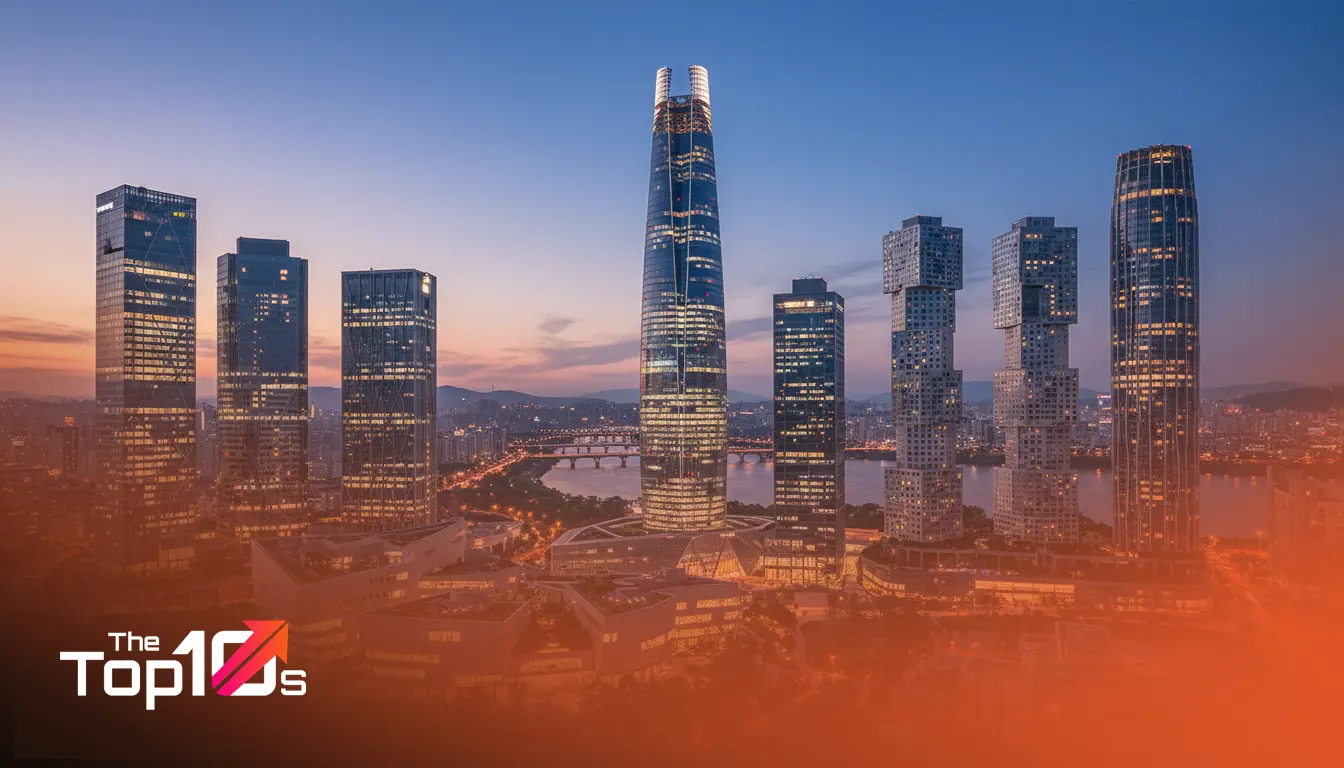
Walking through the streets of Seoul offers a sensory overload in the best possible way. You have centuries-old Gyeongbokgung Palace sitting stoically against a backdrop of glass skyscrapers that seem to have sprouted overnight. It is a city of intense contrast, rapid density, and distinct geography. If you are planning to build here—whether it’s a modern residential sanctuary in Pyeongchang-dong or a commercial flagship in Gangnam—the architect you choose determines whether your project thrives in this complex ecosystem or gets lost in the noise.
Building in South Korea’s capital isn’t just about aesthetics. It is about navigating strict sunlight rights (rights to light), tight floor-area ratios, and the unique topography of a city carved out of mountains. You need a partner who understands the poetry of design but also possesses the grit to handle the bureaucracy of the Seoul Metropolitan Government.
Quick Takeaways: Finding Your Seoul Architect
- Local Code Mastery: Seoul’s zoning laws are notoriously strict; your architect must be an expert in maximizing small footprints.
- Portfolio Diversity: Look for professionals who have handled both “new build” concrete structures and sensitive renovations.
- Communication Style: If you don’t speak fluent Korean, ensure the firm has bilingual capabilities or a proven track record with international clients.
- Style Match: Distinguish between firms that prioritize avant-garde geometric shapes (like Moon Hoon) versus those focused on nature integration (like BCHO).
How We Identified Leading Architects
Selecting the names for this list wasn’t about looking at who has the flashiest Instagram feed. We analyzed the substance behind the structures. Our methodology focuses on identifying professionals who demonstrate a deep understanding of Seoul’s unique urban fabric. We looked for consistency in delivering projects that stand the test of time, rather than just following fleeting design trends.
We prioritized firms that hold standing with organizations like the Korean Institute of Architects (KIA) and have a history of navigating complex local permitting processes. Feedback regarding project management was also a significant factor. Great design means nothing if the project goes 50% over budget or stalls during construction. The professionals listed below represent a mix of high-concept design studios and pragmatic, client-focused practices.
List of 10 Best Architects in Seoul
| Name | Best For |
|---|---|
| Minsuk Cho (Mass Studies) | Commercial developers or cultural institutions looking for a landmark building. |
| Moon Hoon (Moon Hoon Land) | Homeowners who want to make a bold personal statement and aren’t afraid of standing out in the neighborhood. |
| Byoung Soo Cho (BCHO Partners) | Luxury residential projects or boutique hospitality ventures where atmosphere is everything. |
| Chanjoong Kim (The System Lab) | Commercial remodeling and adaptive reuse projects, especially those requiring a futuristic and textured appearance. |
| Seung H-Sang (IROJE Architects & Planners) | Cultural elites and purists who value philosophy and history, and are looking for a spiritual center. |
| Hyunjoon Yoo (Hyunjoon Yoo Architects) | Residential clients, educational facilities, and corporate headquarters where company culture needs to be reinforced by the physical environment. |
| HAEAHN Architecture | Corporate developers or foreign investors who need a firm with the infrastructure to handle rigorous compliance, BIM requirements, and tight corporate deadlines. |
| Jang Yoon Gyoo (Unsangdong Architects) | Clients in the fashion, art, or tech sectors who want their physical space to reflect forward-thinking branding. |
| SoA (Society of Architecture) | “Missing middle” housing projects, small multi-family units, or commercial renovations in gentrifying neighborhoods. |
| Eun Young Yi (Yi Architects) | Institutional projects or high-end private villas where dignity and permanence are required. |
Top 10 Architects in Seoul
These ten individuals and firms represent the vanguard of Korean architecture today. They range from winners of the Golden Lion at the Venice Biennale to boutique designers transforming narrow alleyway lots.
1. Minsuk Cho (Mass Studies)
You cannot talk about contemporary Korean architecture without mentioning Minsuk Cho. Before founding Mass Studies, he cut his teeth working with OMA in Rotterdam, and that bold, structural thinking shows in his work. Mass Studies is celebrated for tackling the density of Seoul head-on. They don’t shy away from large-scale urban interventions.
His work often explores how people interact within crowded spaces, making him a top pick for commercial developers or cultural institutions looking for a landmark building. Whether it is the frantic energy of a Gangnam office tower or a serene pavilion, Cho brings a layer of intellectual rigor that is hard to match. He is best suited for clients who want their building to be a topic of conversation.
2. Moon Hoon (Moon Hoon Land)
If you want a safe, beige box, look elsewhere. Moon Hoon is often called the “provocateur” of Korean architecture. His designs are playful, sometimes bizarre, and always memorable. He treats architecture as a form of storytelling, frequently incorporating bright colors, unexpected angles, and whimsical concepts like the famous “Lollipop House.”
Despite the wild aesthetics, Moon Hoon is technically astute. He excels at taking difficult, oddly shaped plots of land—common in Seoul’s older neighborhoods—and turning them into functional art. He is the ideal match for a homeowner who wants to make a bold personal statement and isn’t afraid of standing out in the neighborhood.
3. Byoung Soo Cho (BCHO Partners)
Byoung Soo Cho represents the earthier side of Korean modernism. His philosophy centers on “imperfection” and the raw nature of materials. He frequently utilizes concrete, recycled timber, and the natural terrain to create buildings that feel like they grew out of the ground rather than being placed upon it.
BCHO Partners is a strong candidate for luxury residential projects or boutique hospitality ventures where atmosphere is everything. His ability to manipulate light and shadow to create serene, contemplative spaces makes him a favorite for those seeking a retreat from the city’s chaos without actually leaving the city.
4. Chanjoong Kim (The System Lab)
Technology meets craftsmanship in the work of Chanjoong Kim. The System Lab is known for pushing the boundaries of manufacturing and fabrication. They often develop custom façade systems that give their buildings a futuristic, textured appearance, distinct from the flat glass walls seen elsewhere.
Kim is particularly skilled at commercial remodeling and adaptive reuse. If you have an aging concrete structure that needs a completely new identity to attract high-end tenants, The System Lab has a proven track record of radical transformations. His approach is highly logical yet visually stunning.
5. Seung H-Sang (IROJE Architects & Planners)
A legend in the field, Seung H-Sang is a leading voice in “poverty of architecture”—a philosophy that values emptiness and silence over ornamentation. He has shaped much of the discourse around modern Korean identity in architecture. His residential works are deeply influenced by traditional Hanok spatial arrangements but executed with stark, modern lines.
IROJE is the go-to firm for cultural elites and purists who value philosophy and history. His designs prioritize the “madang” (courtyard) and the connection between family members. This is architecture for those who view their home as a spiritual center.
6. Hyunjoon Yoo (Hyunjoon Yoo Architects)
Hyunjoon Yoo is a familiar face to the Korean public, often appearing in media to explain urbanism to the masses. But beyond the fame, he is a pragmatic and thoughtful architect. His firm focuses on the relationship between space and social connection. He argues that good architecture can cure social isolation.
For residential clients, this translates to homes designed to foster family interaction. He is also excellent at educational facilities and corporate headquarters where company culture needs to be reinforced by the physical environment. His style is approachable, modern, and highly functional.
7. HAEAHN Architecture
Sometimes your project is simply too big for a boutique studio. HAEAHN is one of the heavyweights in Seoul, capable of handling massive mixed-use developments, government complexes, and smart city planning. With hundreds of employees, they have specialists for every niche, from sustainability to landscape design.
While they are a large corporation, their recent work has shown impressive agility and design flair. They are the safest bet for corporate developers or foreign investors who need a firm with the infrastructure to handle rigorous compliance, BIM (Building Information Modeling) requirements, and tight corporate deadlines.
8. Jang Yoon Gyoo (Unsangdong Architects)
Unsangdong Architects is known for experimental conceptual architecture. Jang Yoon Gyoo views architecture as a “cultural body” that evolves. His buildings often feature fluid lines and organic shapes that seem to defy gravity. The firm gained international attention for the “Kring” Kumho Culture Complex, which looks like a sculptural masterpiece.
This firm is best for clients in the fashion, art, or tech sectors who want their physical space to reflect forward-thinking branding. They excel at creating “Instagrammable” moments that draw foot traffic, making them a smart choice for retail or exhibition spaces.
9. SoA (Society of Architecture)
Representing the younger generation, SoA (founded by Lee Chihoon and Kang Yerin) approaches architecture through the lens of social context and materials. They garnered attention with their winning entry for the Young Architects Program at MMCA Seoul. Their work is often clever, efficient, and deeply aware of the economic constraints facing younger property owners.
SoA is a fantastic choice for “missing middle” housing—small multi-family units or commercial renovations in gentrifying neighborhoods like Seongsu-dong or Hannam-dong. They bring a fresh perspective that often finds value where older architects might see limitations.
10. Eun Young Yi (Yi Architects)
Though he spends time between Germany and Korea, Eun Young Yi’s impact on Seoul is undeniable. He is best known for the Stuttgart City Library, but his work in Korea carries that same rigorous geometric clarity and monumental presence. He focuses on the “essence” of the building form.
Yi is suited for institutional projects or high-end private villas where dignity and permanence are required. His work avoids gimmicks completely. If you want a building that will look as relevant in 50 years as it does today, his disciplined approach is worth the investment.
What Defines a Great Architect in Seoul?
Architecture in Seoul is distinct from other global metropolises. The density here forces a level of creativity that you don’t see in cities with endless sprawl. A great architect in this city masters the art of verticality. They know how to pull natural light into a basement level and how to design a rooftop terrace that feels private despite being surrounded by high-rises.
While Seoul has its distinct rhythm, looking at regional neighbors can offer perspective. For instance, the meticulous craftsmanship found here often mirrors the dedication seen among the top 10 architects in Nagoya, showcasing a shared East Asian commitment to spatial efficiency.
Furthermore, sustainability is moving from a buzzword to a regulatory requirement. The best local professionals are now integrating passive design principles—insulation, airflow, and solar orientation—to combat Seoul’s freezing winters and humid summers. They understand that a glass box looks pretty in a rendering but can be a nightmare to heat in January without the right engineering.
How to Choose the Right Architect for Your Needs
Hiring a design professional is a recruitment process. You are trusting someone with a significant portion of your net worth. Start by defining your project scope. Are you renovating a 1980s brick multi-family unit, or are you building a flagship store? Some firms listed above will not take on renovations under a certain budget, while others thrive on them.
Key Evaluation Questions:
- The “Pyeong” Factor: Ask them how they maximize perceptible space within the legal Floor Area Ratio (FAR).
- The Network: Do they work with specific construction companies? In Korea, the relationship between architect and builder is vital for quality control.
- The Timeline: Seoul moves fast, but permitting can be slow. Ask for a realistic timeline that accounts for district office (Gu-office) reviews.
Look at their past three projects, not just their award winners. Go visit one if possible. How is the weathering? Seoul’s pollution and rain can age a building quickly. A good architect chooses materials that age gracefully.
Frequently Asked Questions
How much do architects in Seoul charge?
Fees vary wildly based on reputation and scope. Generally, for full service (design through supervision), expect fees between 8% to 15% of the total construction cost. High-profile firms may charge a fixed design fee that sits significantly higher than the standard percentage.
Can I build a Hanok (traditional house) with a modern architect?
Yes, but it requires a specialist. The government offers subsidies for Hanok construction in certain districts, but the building codes are specific. You need an architect who understands traditional joinery but can integrate modern insulation and plumbing.
How long does the design and permitting process take in Seoul?
For a standard single-family home or small commercial building, design usually takes 3 to 6 months. Licensing and permitting can add another 2 to 3 months depending on the district (Gu). Always buffer your schedule for bureaucratic delays.
Do I need a local architect if I have a foreign design?
Legally, yes. Even if you hire a famous architect from New York or London, a licensed Korean architect must sign off on the plans and submit them to the authorities. This is often done through a “local architect of record” partnership.
What is the biggest challenge building in Seoul?
Sunlight rights (Right to Light). You cannot block your neighbor’s sunlight beyond a certain angle. This often dictates the stepped “wedding cake” shape of many buildings in the city. A skilled architect uses this constraint to create interesting terraces rather than letting it ruin the design.
Final Thoughts
Seoul is a city that rewards boldness but demands precision. The architects listed here have proven they can balance the artistic desires of their clients with the rigid realities of Korean construction law. Whether you are looking for the raw materiality of Byoung Soo Cho or the urban density experiments of Minsuk Cho, the talent pool in this city is world-class.
Don’t rush the selection process. Meet with multiple firms, look at their sketches, and see who listens more than they talk. Your building will be part of Seoul’s skyline for decades; choose the partner who treats that responsibility with the weight it deserves.