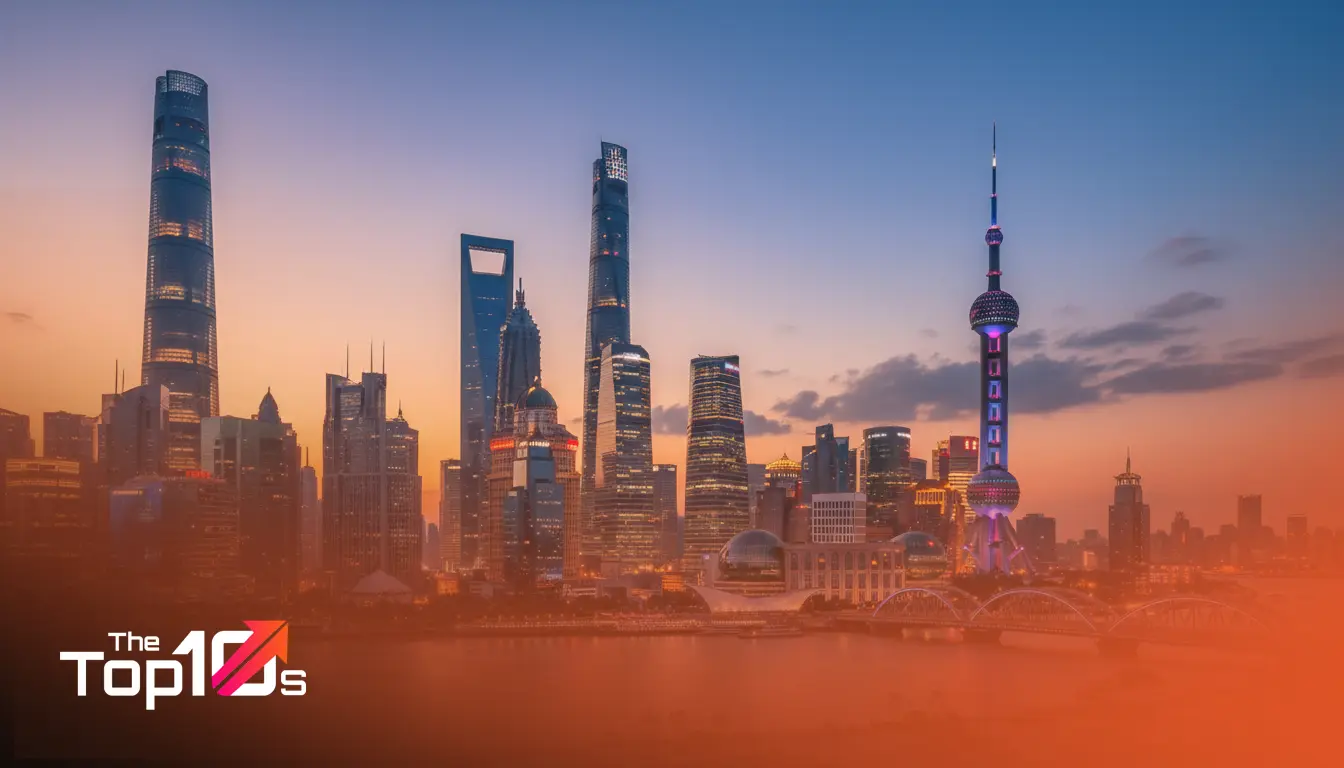
Shanghai isn’t just a city; it’s a collision of eras. Stand on the Bund, and you see 1920s neoclassical heritage on one side and a futuristic skyline on the other that looks like it was pulled straight from a sci-fi novel. For anyone looking to build or renovate in this metropolis, that contrast represents a massive opportunity—and a significant challenge.
Selecting the right design partner here means finding someone who understands this unique friction between the old “Haipai” culture and hyper-modern vertical living. It’s not enough to simply draw a pretty facade. The best architects in Shanghai navigate complex zoning laws, maximize limited space, and create structures that can withstand the humid climate while standing out in a dense urban forest.
Whether you are planning a commercial headquarters in Lujiazui, restoring a lane house in the French Concession, or developing a residential complex in Pudong, the person leading your design team dictates the success of your investment. You need a partner who balances technical precision with artistic vision.
Quick Takeaways: Shanghai Architecture
- Context is King: The top professionals excel at blending new designs with Shanghai’s historical preservation requirements.
- Scale Variance: Many firms specialize; ensure your choice has experience with your specific project size, be it a boutique interior or a high-rise.
- Regulatory Savvy: Navigating local construction codes and approval processes is just as vital as design talent.
- Sustainability Focus: Green building certifications (LEED, WELL) are becoming standard requirements for premium developments.
How We Identified Leading Architects
Pinpointing the most capable design professionals in a city as vast as Shanghai requires looking beyond glossy magazine spreads. We analyzed the market based on a specific set of criteria designed to highlight reliability, creativity, and execution capability. Our approach focuses on substance over style.
First, we looked at portfolio diversity and execution. It is one thing to produce stunning renderings; it is another to get a complex structure built on time and to spec. We prioritized architects with a track record of completed projects that have aged well in the Shanghai environment.
Second, we considered local integration. While many international “starchitects” lend their names to Shanghai towers, we focused on professionals and practice leaders who are deeply embedded in the local fabric—those who understand the nuances of the city’s urban planning bureaus and cultural expectations.
Finally, we reviewed client satisfaction signals and peer recognition. We looked for professionals respected not just by property developers, but by the construction teams that have to build their designs. This list reflects a mix of large-scale visionaries and detail-oriented boutique designers.
List of 10 Best Architects in Shanghai
| Name | Best for |
|---|---|
| Lydnon Neri & Rossana Hu (Neri&Hu) | Clients who possess a heritage property or an older commercial space and want to transform it into a high-end, culturally significant destination. |
| Ma Yansong (MAD Architects) | Developers or institutions looking for a “statement” building that will garner international media attention. |
| Liu Yichun (Atelier Deshaus) | Cultural institutions or private collectors planning gallery spaces or public pavilions. |
| Li Xiang (X+Living) | Retail brands and mall operators needing to revitalize physical locations to compete with e-commerce. |
| Yung Ho Chang (Atelier FCJZ) | Educational institutions or corporate campuses requiring a thoughtful, disciplined design approach. |
| Zhang Bin (Atelier Z+) | Government bodies or community organizations focused on functional, durable, and accessible architecture. |
| Alex Mok & Briar Hickling (Linehouse) | Tech companies or lifestyle brands looking for a headquarters that reflects a modern, creative culture. |
| Xing Ruan (Guangyu Design / Academic Practice) | Residential developers looking to create communities that foster social connection and long-term livability. |
| Schmidt Hammer Lassen (SHL Shanghai Team) | Large corporations or municipalities prioritizing green building credentials and open, collaborative workspaces. |
| Thomas Heatherwick (Heatherwick Studio – Shanghai Projects) | Visionary developers with significant capital who want to create a destination that defies categorization. |
Top 10 Architects In Shanghai
The following professionals and their associated studios represent the vanguard of design in Shanghai today. They range from adaptive reuse experts to avant-garde futurists.
1. Lyndon Neri & Rossana Hu (Neri&Hu)
You cannot discuss modern Shanghai architecture without mentioning Neri&Hu. Founded by Lyndon Neri and Rossana Hu, this interdisciplinary practice has become synonymous with the revitalization of the city. They are arguably the most influential voices in adaptive reuse, taking dilapidated structures and giving them a second, often more beautiful, life.
Area of Specialization: Adaptive Reuse, Boutique Hospitality, Cultural Centers
Approximate Experience: 20+ Years
Notable Strengths: Their ability to blur the lines between architecture and interior design is unmatched. They treat light and material as tangible building blocks.
Best For: Clients who possess a heritage property or an older commercial space and want to transform it into a high-end, culturally significant destination.
2. Ma Yansong (MAD Architects)
While MAD Architects operates globally, Ma Yansong’s impact on Chinese urbanism is profound. Known for his “Shanshui City” concept, he attempts to integrate nature and organic lines into high-density environments. His work often rejects the boxy, industrial aesthetic in favor of fluid, futuristic curves that mimic mountains and water.
Area of Specialization: Cultural Landmarks, High-Rise Residential, Public Arts
Approximate Experience: 20+ Years
Notable Strengths: Creating iconic, photogenic structures that become instant landmarks. He challenges the traditional definition of what a building should look like.
Best For: Developers or institutions looking for a “statement” building that will garner international media attention.
3. Liu Yichun (Atelier Deshaus)
Liu Yichun represents the intellectual and artistic soul of Shanghai’s architectural community. His firm, Atelier Deshaus, is celebrated for the Long Museum West Bund, a project that preserved an industrial coal tipple and integrated it into a raw, concrete minimalist masterpiece. His work is quiet, powerful, and deeply respectful of the site’s memory.
Area of Specialization: Museums, Art Galleries, Public Infrastructure
Approximate Experience: 25+ Years
Notable Strengths: Mastery of concrete and industrial materials. He creates spaces that feel spiritual and grounded.
Best For: Cultural institutions or private collectors planning gallery spaces or public pavilions.
4. Li Xiang (X+Living)
If you have seen photos of Chinese bookstores that look like M.C. Escher paintings or cathedrals of books, you are likely looking at Li Xiang’s work. She brings a fantastical, almost theatrical approach to architecture and interiors. Her work is heavily focused on the user experience, turning retail and commercial environments into immersive worlds.
Area of Specialization: Commercial Retail, Experiential Design, Family Entertainment
Approximate Experience: 15+ Years
Notable Strengths: Visual storytelling. She understands the “Instagram-ability” of space better than almost anyone, driving foot traffic through design alone.
Best For: Retail brands and mall operators needing to revitalize physical locations to compete with e-commerce.
5. Yung Ho Chang (Atelier FCJZ)
Often cited as the father of contemporary Chinese architecture, Yung Ho Chang established the first independent private architectural firm in China. His approach is academic yet pragmatic, often experimenting with basic materials like brick, wood, and glass to create sophisticated, modern structures that feel distinctly Chinese without resorting to nostalgic clichés.
Area of Specialization: Institutional, Educational, Urban Design
Approximate Experience: 30+ Years
Notable Strengths: immense theoretical knowledge backed by decades of practical application. His designs are timeless rather than trendy.
Best For: Educational institutions or corporate campuses requiring a thoughtful, disciplined design approach.
6. Zhang Bin (Atelier Z+)
Zhang Bin focuses on the relationship between the building and the rapidly changing urban environment of Shanghai. His work frequently addresses community needs and public spaces. Atelier Z+ is known for taking on projects that require solving difficult spatial puzzles within tight city grids.
Area of Specialization: Community Centers, Urban Regeneration, Public Schools
Approximate Experience: 20+ Years
Notable Strengths: A rigorous approach to structure and geometry. He excels at creating high-quality spaces on modest budgets.
Best For: Government bodies or community organizations focused on functional, durable, and accessible architecture.
7. Alex Mok & Briar Hickling (Linehouse)
This duo creates spaces that feel fresh, whimsical, and highly detailed. Linehouse operates at the intersection of architecture and interior design, often working on projects that require a strong narrative. They are particularly adept at using materials in unexpected ways, such as weaving rope or stacking tiles to create structural screens.
Area of Specialization: Retail, Modern Offices, Hospitality
Approximate Experience: 15+ Years
Notable Strengths: Material innovation and craftsmanship. They turn simple elements into complex, visually stunning focal points.
Best For: Tech companies or lifestyle brands looking for a headquarters that reflects a modern, creative culture.
8. Xing Ruan (Guangyu Design / Academic Practice)
As Dean of the School of Design at Shanghai Jiao Tong University, Xing Ruan combines deep historical knowledge with active practice. His work emphasizes the human condition—how people actually live and move within a space. He advocates for architecture that promotes social interaction rather than isolation.
Area of Specialization: Residential Communities, Urban Planning Strategy
Approximate Experience: 25+ Years
Notable Strengths: A human-centric philosophy. He designs from the inside out, prioritizing the occupant’s comfort and social needs.
Best For: Residential developers looking to create communities that foster social connection and long-term livability.
9. Schmidt Hammer Lassen (SHL Shanghai Team)
Though Danish in origin, SHL has established a massive, autonomous presence in Shanghai. The local leadership here has successfully translated Scandinavian principles of light, transparency, and democracy into the Chinese context. Their library and office projects in Shanghai are celebrated for their openness and sustainability.
Area of Specialization: Large-scale Libraries, Corporate HQs, Sustainable Office Parks
Approximate Experience: Firm established 30+ years; Shanghai presence ~15 years
Notable Strengths: Bringing Nordic sustainability and democratic design principles to high-density Asian cities.
Best For: Large corporations or municipalities prioritizing green building credentials and open, collaborative workspaces.
10. Thomas Heatherwick (Heatherwick Studio – Shanghai Projects)
While based in London, Heatherwick’s studio has reshaped Shanghai’s district of Putuo with the “1000 Trees” project. The studio’s local team manages some of the most complex engineering feats in the city. They are included here because their recent work has fundamentally altered the conversation about what mixed-use developments can look like in Shanghai.
Area of Specialization: Mega-developments, Mixed-use Retail/Residential
Approximate Experience: 25+ Years
Notable Strengths: Radical innovation. They do not just design buildings; they invent new typologies for urban living.
Best For: Visionary developers with significant capital who want to create a destination that defies categorization.
What Defines a Great Architect in Shanghai?
Shanghai is unforgiving to poor design. The humidity creates mold, the density creates noise, and the regulatory environment creates headaches. A great architect here is more than a designer; they are a problem solver who understands the “Haipai” spirit—the unique East-meets-West culture of the city.
Mastery of Density
Space in Shanghai is a premium commodity. Exceptional architects know how to carve out privacy and tranquility even in the most crowded districts. They use verticality and subterranean spaces effectively, ensuring that every square meter serves a purpose.
Heritage Sensitivity
Shanghai protects its history fiercely. Whether it’s the Art Deco buildings on the Bund or the Shikumen lanes in Jing’an, an architect must know how to restore and integrate these elements. If you are comparing talent across the region, looking at architectural talent in Beijing offers a different perspective, where the focus often leans more heavily towards traditional courtyard preservation and monumentalism.
Technical Agility
The speed of construction in China is legendary. Architects must be agile, able to make decisions quickly on-site without sacrificing quality. They need to leverage Building Information Modeling (BIM) to coordinate complex mechanical systems that keep these modern giants breathing.
How to Choose the Right Architect for Your Needs
Finding the name is the easy part; ensuring they are the right fit for your specific vision is where the work begins. Here is a framework to guide your decision.
Match the Portfolio to the Project Type
Do not hire a specialist in high-rise glass towers to renovate a 1930s lane house. The technical skills required for heritage preservation are vastly different from those needed for commercial steel construction. Ask to see three specific examples of projects similar to yours in scale and function.
Assess Their Communication Style
In Shanghai, projects often involve complex negotiations with neighbors and district planning bureaus. You need an architect who is articulate and persuasive. During your initial consultation, observe how they listen. Do they dictate their vision, or do they ask about your operational needs? The latter is a sign of a partner.
Understand the Fee Structure
Architectural fees can vary wildly in Shanghai. Some charge a percentage of construction costs, while others work on a fixed fee or hourly basis. Be wary of fees that seem too low; this often means the senior partners will hand off your project to junior staff immediately after signing. Clarify who will be your day-to-day point of contact.
Frequently Asked Questions
How much do architects in Shanghai charge?
Fees typically range from 3% to 10% of the total construction cost, depending on the complexity and prestige of the firm. For smaller, high-end interior projects, design fees might be calculated on a per-square-meter basis, often ranging from 300 to 1,500 RMB per square meter.
Do I need a local design institute (LDI) if I hire a foreign architect?
Yes. By law, foreign architectural firms must partner with a Local Design Institute (LDI) to sign off on construction drawings and ensure compliance with Chinese building codes. Your foreign architect typically handles the concept and schematic design, while the LDI handles the construction documentation.
How long does the design and approval process take in Shanghai?
For a standard renovation, expect 2–4 months for design and permitting. For new construction, the timeline can extend from 6 months to over a year, depending on the district and the scale of the project. A good architect can expedite this by anticipating regulatory hurdles early.
Can architects help with finding contractors?
Absolutely. Experienced architects have a network of trusted general contractors and artisans. Using their recommendations can lower the risk of poor workmanship, as these contractors are motivated to maintain their relationship with the design firm.
Is sustainability mandatory for new buildings in Shanghai?
While not every building requires LEED certification, Shanghai has strict energy efficiency codes. New public and commercial buildings must meet specific green building standards regarding insulation, water usage, and energy consumption. Your architect must be well-versed in these national and local codes.
Next Steps for Your Project
Your project in Shanghai will likely be one of the most significant investments you make. The architect you choose acts as the conductor of a very large, expensive orchestra. If the conductor is off, the music falls apart.
Start by shortlisting three firms from the list above that align with your aesthetic. Schedule face-to-face consultations—preferably at their offices—to see their working environment and meet the team. Ask hard questions about timelines and their experience with local bureaus. For more insights on global architectural standards, resources like the Royal Institute of British Architects (RIBA) or ArchDaily provide excellent benchmarks for what you should expect in terms of professional service.
Building in Shanghai is an adventure. With the right guide, it results in a legacy you can be proud of.