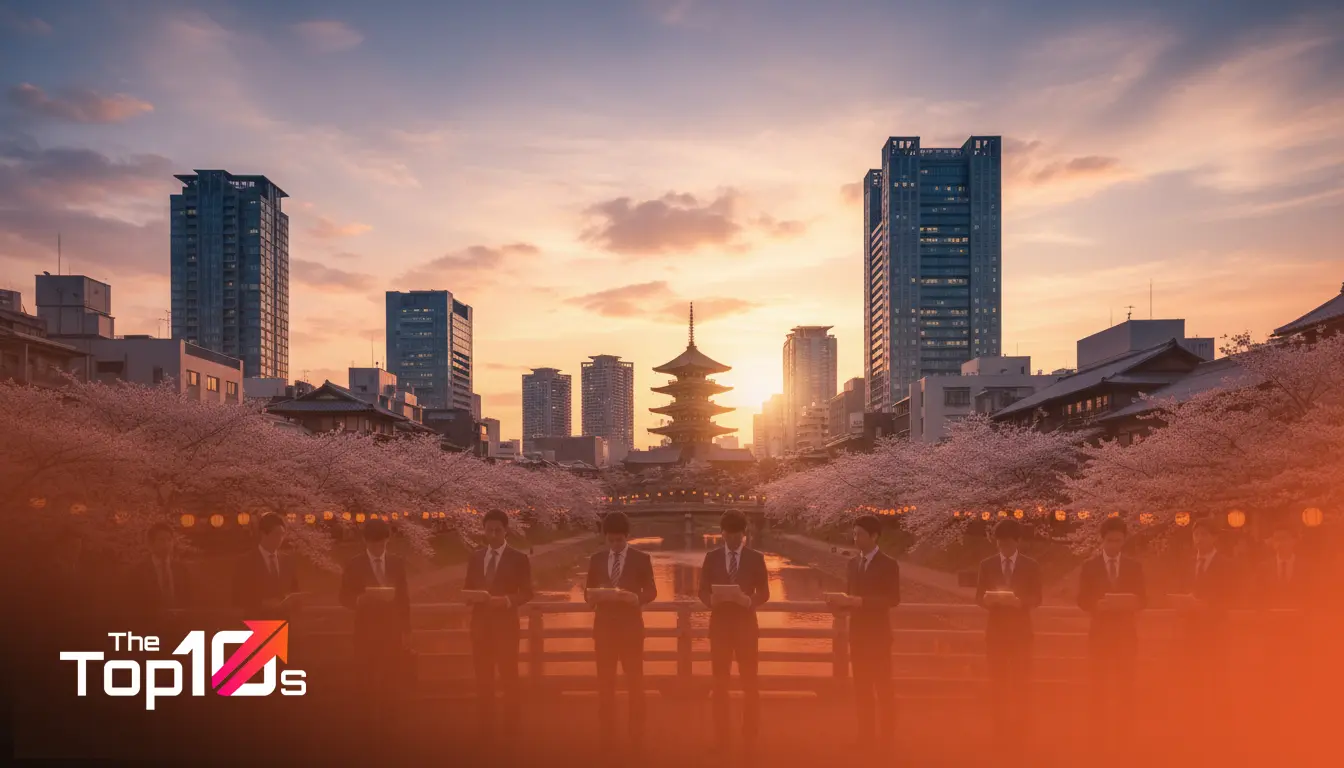
Kyoto is a paradox in the business world. On one hand, it is the custodian of centuries-old traditions, home to companies that have operated for hundreds of years. On the other, it is a powerhouse of technological innovation, housing global giants in electronics and ceramics. Navigating this unique environment—where hyper-modern efficiency meets deep-seated cultural protocol—can be incredibly challenging for any executive or founder.
You might be wondering why your current strategies aren’t gaining traction, or perhaps you are looking to expand operations into the Kansai region and hit a wall of unwritten rules. This is where the right external guidance becomes essential. It’s not just about finding someone who knows spreadsheets; it’s about finding a partner who understands the local ecosystem.
Quick Takeaways
- Local nuance matters: Kyoto’s business culture prioritizes long-term relationships over quick wins.
- Specialization is key: Some advisors focus on manufacturing efficiency, while others specialize in market entry for foreign entities.
- Credentials vary: Look for a mix of practical experience and certifications like the Small and Medium Enterprise Management Consultant license.
- Integration is vital: The best results come when a consultant works alongside your team, not just delivering a report and leaving.
Whether you need operational restructuring, financial planning, or a complete digital overhaul, the following list examines the top business consultants in Kyoto who have demonstrated the ability to drive real change. We will look at large firms with deep local roots as well as boutique specialists to help you find the right match for your organizational goals.
How We Identified Leading Business Consultants
Selecting the best business consultants in Kyoto requires moving past flashy websites and marketing jargon. We focused on the tangible impact these advisors have on the local economy. Our methodology prioritized firms and individuals who demonstrate a clear understanding of the Kyoto market’s specific demands.
We evaluated candidates based on their track record of solving complex problems. Did they help a traditional manufacturer modernize without losing its identity? Have they successfully guided startups through their initial funding rounds? We also looked at the breadth of their services. A great consultant often needs to wear multiple hats, shifting between high-level strategy and ground-level implementation.
Furthermore, reputation within the Kansai business community played a significant role. Trust is the currency of business in this region. We looked for advisors who are frequently recommended by local chambers of commerce, banking institutions, and industry associations. This list reflects a blend of strategic insight, operational expertise, and local credibility.
List of 10 Best Business Consultants in Kyoto
| SNO | Name | Best for |
|---|---|---|
| 1 | Deloitte Tohmatsu Consulting (Kyoto Office) | Large enterprise operational overhaul or merger and acquisition strategy |
| 2 | Funai Soken (Funai Consulting) | Mid-sized business owners seeking revenue growth |
| 3 | Tanabe Consulting Group | Long-term corporate branding, human resource development, and business succession |
| 4 | Kyoto Chuo Shinkin Bank (Consulting Division) | Small to medium enterprises requiring financial health advice and local networking |
| 5 | PwC Japan (Kyoto Office) | Tax strategy and global compliance for businesses operating across borders |
| 6 | Phoenix Consulting | Corporate training and cross-cultural communication in a globalized workplace |
| 7 | KPMG Japan (Kyoto Presence) | Deal advisory, audit, and risk management for supply chain optimization |
| 8 | Nomura Research Institute (NRI) | IT solutions, policy consulting, and economic policy analysis for strategic decision-making |
| 9 | Kyoto Research Park (KRP) Support Teams | Commercializing technology, innovation, and startup incubation |
| 10 | Yamada & Partners | Tax accounting, asset management, and organizational restructuring |
Top 10 Business Consultants In Kyoto
Here are the firms and advisory groups that stand out for their ability to deliver results in Kyoto’s competitive and culturally rich market.
1. Deloitte Tohmatsu Consulting (Kyoto Office)
Specialization: Corporate Strategy & Digital Transformation
Deloitte needs little introduction on the global stage, but their Kyoto branch operates with a distinct local flavor. They are particularly adept at helping large-scale Kyoto-based manufacturers and pharmaceutical companies navigate global expansion while maintaining operational efficiency at home. Their team is massive, meaning they can pull in experts for niche problems—from supply chain resilience to AI implementation—at a moment’s notice.
If you represent a large enterprise looking for a comprehensive overhaul or a merger and acquisition strategy, this is likely your safest bet. They combine international best practices with a respectful understanding of Japanese corporate governance.
2. Funai Soken (Funai Consulting)
Specialization: SME Growth & Marketing Strategy
Funai Soken is a heavyweight in the Japanese consulting world, known for a very specific, hands-on style. Unlike firms that focus purely on cost-cutting, Funai is famous for being “offensive” in their strategy—focusing heavily on increasing sales, marketing, and customer acquisition. They have a massive presence in the Kansai region.
Their consultants often organize into industry-specific study groups. This means if you run a construction firm or a dental clinic, you aren’t just getting a generalist; you are getting someone who knows the exact KPIs for your specific trade. They are ideal for mid-sized business owners hungry for revenue growth.
3. Tanabe Consulting Group
Specialization: “First Call” Company Strategy & Succession Planning
Founded in Kyoto (though now headquartered in Osaka), Tanabe Consulting has a philosophy deeply rooted in the Kansai spirit. They brand themselves as the partner for creating “First Call Companies”—the businesses that customers think of first. Their strength lies in long-term corporate branding and human resource development.
One area where they excel is business succession. In a city like Kyoto, where generational transfer of leadership is a critical issue for century-old firms, Tanabe provides the sensitivity and structural expertise to handle these delicate transitions.
4. Kyoto Chuo Shinkin Bank (Consulting Division)
Specialization: Financial Health & Local Networking
While technically a financial institution, the consulting arm of Kyoto Chuo Shinkin Bank is one of the most influential advisors for small to medium enterprises in the city. In Japan, your main bank is often your main consultant. They possess an unrivaled amount of data on the local economy.
They are excellent for businesses that need debt restructuring, cash flow management advice, or introductions to local business partners. Their advice is grounded in financial reality, making them a pragmatic choice for stability-focused owners.
5. PwC Japan (Kyoto Office)
Specialization: Tax Strategy & Global Compliance
For businesses operating across borders, tax efficiency and compliance are not just administrative tasks; they are strategic necessities. PwC’s Kyoto team provides high-level guidance on how to structure operations to minimize risk and optimize tax positions.
They are particularly strong in supporting the technology and life sciences sectors, which are prominent in Kyoto’s research parks. If your business deals with complex intellectual property rights or international trade regulations, their regulatory expertise is invaluable.
6. Phoenix Consulting
Specialization: Corporate Training & Cross-Cultural Communication
Business isn’t just about numbers; it’s about people. Phoenix Consulting focuses heavily on the human element, particularly in corporate training and communication strategies. As Kyoto companies increasingly employ foreign talent or work with international partners, the culture gap can become a friction point.
Phoenix offers solutions that bridge these gaps, helping management teams align diverse workforces. They are a strong choice for companies facing internal communication breakdowns or those preparing teams for overseas assignments.
7. KPMG Japan (Kyoto Presence)
Specialization: Audit, Deal Advisory & Risk Management
KPMG brings a rigorous, analytical approach to business consulting. Their Kyoto operations are deeply integrated with the region’s manufacturing base. They excel at “Deal Advisory”—helping companies buy, sell, or merge with other entities.
Beyond transactions, they are leaders in risk management. With supply chains becoming more volatile, KPMG helps Kyoto businesses identify vulnerabilities in their procurement and distribution networks before they become crises.
8. Nomura Research Institute (NRI)
Specialization: IT Solutions & Policy Consulting
NRI is where consulting meets hardcore engineering. They are often the architects behind the systems that keep major Japanese corporations running. In the Kyoto context, they are often involved in projects that require heavy IT infrastructure or systems integration.
Their research division also produces high-level economic policy analysis. For executives who need to understand macro-trends affecting the Japanese economy and how technology will shift the playing field over the next decade, NRI offers unmatched foresight.
9. Kyoto Research Park (KRP) Support Teams
Specialization: Innovation & Startup Incubation
Kyoto Research Park isn’t just a landlord; it’s an ecosystem. The business support teams operating within KRP act as consultants for the hundreds of startups and R&D divisions located there. They specialize in commercializing technology.
If you are a tech founder or a university spin-off looking to take a prototype to mass production, the advisors here can connect you with venture capital, patent attorneys, and manufacturing partners. It is a highly collaborative form of consulting suited for the innovation sector.
10. Yamada & Partners
Specialization: Tax Accounting & Asset Management
Yamada & Partners is a massive tax accounting firm with a strong consulting pedigree. In Kyoto, they are frequently called upon for asset management and inheritance consulting for wealthy business owners. However, their business consulting wing also handles M&A and organizational restructuring.
They are known for being incredibly detail-oriented. If your business problems stem from complex ownership structures or murky financials, their forensic approach to consulting will bring the clarity you need.
What Defines an Effective Business Consultant in Kyoto?
Understanding the “Top 10” is helpful, but knowing why they are effective is better. The business environment in Kyoto is distinct from Tokyo or other international hubs. The concept of Sanpo Yoshi (good for the seller, good for the buyer, good for society) is still very much alive here. An effective consultant respects this.
A truly capable advisor in this region demonstrates patience. They understand that consensus-building (Nemawashi) is critical before any major strategy can be implemented. If a consultant comes in with a “break things fast” Silicon Valley mentality, they often face rejection from the staff, regardless of how good their ideas are.
Effective consultants here also bridge the geographic gap. Many businesses in Kyoto have supply chains or partnerships that extend throughout the Kansai region. If you are exploring how these regional dynamics play out, you might find it useful to compare the advisory landscape here with the top business consultants in Osaka, as many firms operate seamlessly between these two economic hubs.
Finally, data literacy combined with emotional intelligence is the gold standard. The best advisors use data to diagnose the problem but use emotional intelligence to sell the solution to the stakeholders.
How to Choose the Right Business Consultant for Your Needs
Hiring a consultant is an investment, not an expense—but only if you choose correctly. Before signing a contract, you need to clarify your own objectives.
Define the Scope Clearly
Are you looking for a diagnosis or a cure? Some consultants are excellent at analyzing data and telling you what is wrong, but they don’t stick around to fix it. Others are implementation specialists who will get their hands dirty. Be honest about your internal team’s capacity to execute recommendations.
Check for Cultural Fit
In Kyoto, chemistry matters. During your initial consultation, pay attention to how they listen. Do they interrupt with pre-packaged solutions, or do they ask probing questions about your company’s history and values? A consultant who ignores your corporate culture will likely provide a strategy that your team refuses to adopt.
Ask About the Team Structure
Often, a senior partner sells the engagement, but a team of juniors does the work. This isn’t necessarily bad—juniors work hard—but you should know who your day-to-day contact will be. Ask specifically: “Who will be in our office on Monday morning?”
Verify Local vs. Global Expertise
If your problem is local HR retention, a global firm might use a generic framework that doesn’t apply to the Kyoto labor market. Conversely, if your goal is exporting to the EU, a small local firm might lack the regulatory knowledge you need. Match the consultant’s footprint to your specific problem.
Frequently Asked Questions
How much do business consultants in Kyoto typically charge?
Fees vary wildly based on the firm size and project scope. Independent local consultants might charge by the hour (ranging from 15,000 to 50,000 JPY), while major firms like Deloitte or PwC typically work on a project retainer basis, which can run into the millions of yen per month depending on the complexity.
Do I need a consultant who speaks Japanese fluent?
For internal operations, HR, or strategy involving local staff, native-level Japanese is usually non-negotiable to ensure nuance isn’t lost. However, for market entry or specific technical projects, many firms offer bilingual support or teams led by English-speaking partners.
What is the difference between a tax accountant and a business consultant?
In Japan, the lines often blur. A tax accountant (Zeirishi) focuses on compliance and filing. However, many offer management advice. A dedicated management consultant focuses on future growth, operations, and strategy, rather than just historical financial reporting.
How long does a typical consulting project last?
Diagnostic projects might last 4 to 8 weeks. Implementation projects, such as a digital transformation or organizational restructuring, often run for 6 to 12 months. Some firms operate on an ongoing advisory retainer with no fixed end date.
Can consultants help with government grants in Kyoto?
Yes, specifically consultants with the “SME Management Consultant” (Chusho Kigyo Shindan-shi) certification. They are trained to help businesses apply for government subsidies regarding IT implementation, business continuity, and restructuring.
Next Steps for Your Strategic Growth
Choosing a business consultant in Kyoto is a decision that shapes the trajectory of your organization. The right partner acts as a catalyst, accelerating growth and clarifying confusion. The wrong one can lead to expensive distractions.
Start by auditing your current challenges. Write down the three biggest bottlenecks holding your company back. Then, reach out to two or three of the firms listed above that specialize in those specific areas. Request an initial discovery meeting—most reputable firms offer this at no cost to see if there is a fit.
Don’t wait for a crisis to seek advice. The most successful leaders use consultants proactively to seize opportunities, not just to fix broken systems. Your next level of growth is waiting; you just need the right map to get there.