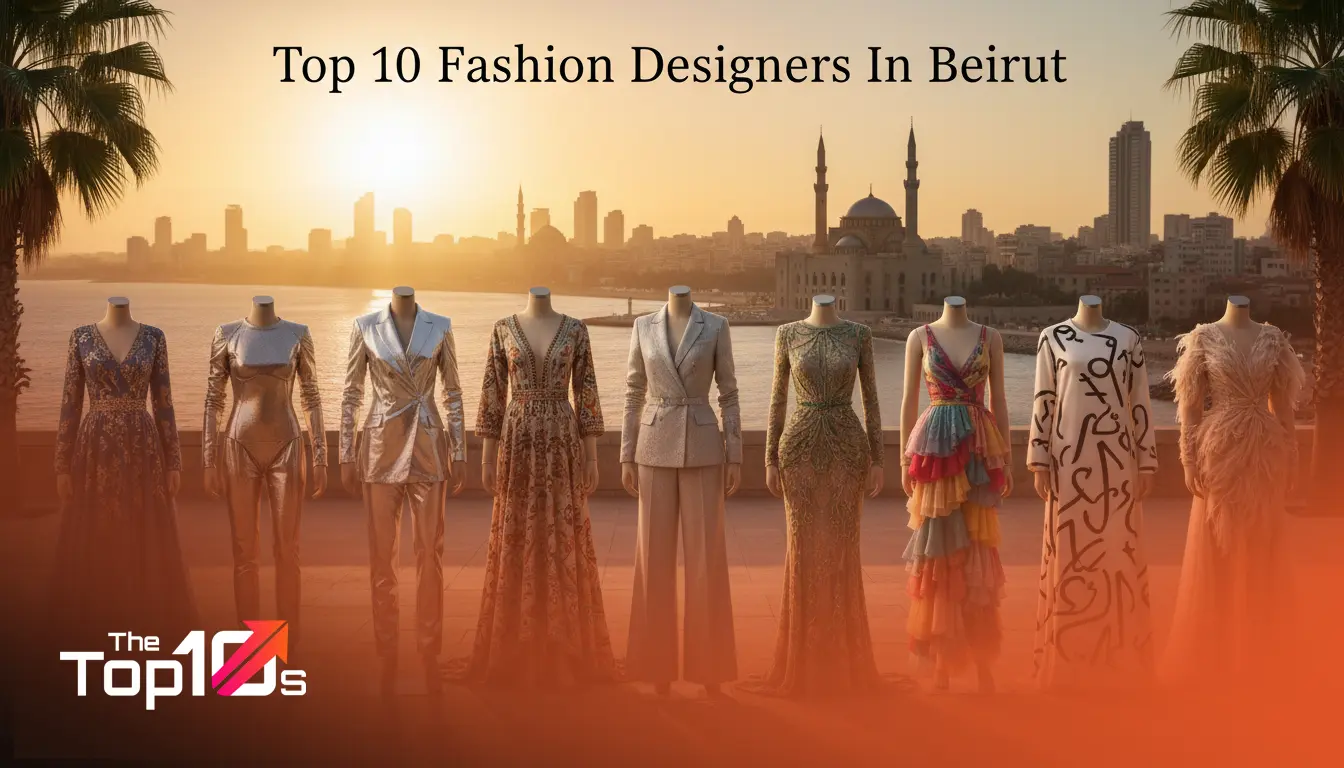
Beirut isn’t just a city; it is a living, breathing runway. If you walk through the streets of Gemmayzeh or Downtown, you notice something distinct about the way people present themselves here. There is an innate appreciation for aesthetics that feels almost genetic. For decades, this capital has served as the creative heartbeat of the Middle East, producing names that don’t just dominate local weddings but headline Paris Fashion Week.
Finding the right creative partner in this bustling metropolis can feel overwhelming. You have legacy houses that defined the “Couture” look for the last thirty years, and you have a rising generation of creatives deconstructing those very traditions. Whether you are looking for a bridal gown that stops traffic, starting a private label, or simply want to understand who shapes the visual culture here, knowing who to watch matters.
The talent pool here is deep. We aren’t just talking about sewing clothes; we are talking about architects of fabric who understand structure, embellishment, and the delicate balance between Eastern opulence and Western minimalism. Below, we break down the most influential figures in the scene right now and what makes their work stand out.
Quick Takeaways
- Global Reach: Beirut designers often show in Paris and dress Hollywood royalty; expect international standards.
- Style Variety: The scene has shifted. It’s not just heavy beading anymore; look for modern minimalism and avant-garde cuts alongside traditional couture.
- Lead Times: For custom couture from top-tier designers, start the process 4 to 6 months in advance.
- Budgeting: “Made in Beirut” implies high craftsmanship. Prices reflect the handwork, especially with embroidery-heavy pieces.
How We Identified Leading Fashion Designers
Selecting the top talent in a city known for its sartorial excellence isn’t something we took lightly. We didn’t just look at Instagram follower counts, as social media metrics can often be misleading. Instead, we analyzed the substance behind the brand.
Our focus centered on consistency and evolution. We looked for designers who have maintained a high level of craftsmanship over years, not just one successful season. We evaluated the quality of materials used—from the sourcing of French lace to the precision of Swarovski crystal application. We also considered their ability to translate a sketch into a wearable garment that fits impeccably.
Public reputation played a role, too. We listened to what real brides, red-carpet stylists, and industry insiders say about the client experience. A beautiful dress means little if the fitting process is chaotic. The names on this list represent a mix of established legends and forceful creative minds who are redefining what Lebanese fashion looks like today.
List of 10 Best Fashion Designers in Beirut
| SNO | Name | Best for |
|---|---|---|
| 1 | Elie Saab | Timeless, undeniable luxury |
| 2 | Zuhair Murad | Dramatic, sensual aesthetic |
| 3 | Reem Acra | Ethereal and romantic, sophisticated opulence |
| 4 | Georges Hobeika | Lighter, more whimsical side of Lebanese couture |
| 5 | Rabih Kayrouz | Intellectual, modern, architectural shapes |
| 6 | Tony Ward | Technical innovation, strong, energetic personality |
| 7 | Krikor Jabotian | Bold, sculptural quality, wearable art |
| 8 | Sandra Mansour | Romantic, painterly quality, effortless, slightly bohemian |
| 9 | Rami Kadi | Younger, trend-conscious demographic, vibrant statement |
| 10 | Georges Chakra | Confident woman, bold colors, interesting back details |
Top 10 Fashion Designers in Beirut
Here are the creatives shaping the industry, ranging from global icons to masters of specific aesthetics.
1. Elie Saab
You cannot discuss Beirut’s fashion heritage without starting here. Elie Saab is arguably the figure who put Lebanon on the global luxury map. His self-taught background gives his work a unique sensibility that resonates universally. He specializes in high glamour, known for intricate embroidery and fairy-tale silhouettes that emphasize the waist.
His strength lies in consistency. When you visit his atelier or see a collection, you know you are getting royalty-level elegance. He is the go-to for grand entrances, whether that’s a royal wedding or the Oscars. He is best suited for clients who want timeless, undeniable luxury that never feels dated.
2. Zuhair Murad
If Elie Saab is the king of classic elegance, Zuhair Murad is the master of high-octane glamour. His work often features bolder cuts, sheer paneling, and a slightly more provocative edge while maintaining absolute sophistication. He draws heavy inspiration from history and nature, often translating fireworks or constellations into beading patterns.
Murad excels at “The Naked Dress” concept executed with class—using illusion tulle and strategic placement of crystals. He creates ready-to-wear, bridal, and couture lines. This designer is ideal for the woman who wants to be the center of attention and appreciates a dramatic, sensual aesthetic.
3. Reem Acra
Reem Acra brings a different flavor to the table. While she is famous for her bridal wear, her ready-to-wear collections often showcase a unique fusion of cultural references. Known for her signature embroidery and ethos of “global glamour,” she often incorporates velvet, satin, and rich textures that differ from the typical tulle-heavy Lebanese style.
Her experience is vast, having launched her brand in 1997. She is particularly strong in creating garments that feel regal yet comfortable. Clients often praise the fit of her corsetry. Reem Acra is a perfect match for brides seeking something ethereal and romantic, or red-carpet attendees who want a sophisticated, slightly more understated opulence.
4. Georges Hobeika
Georges Hobeika represents the lighter, more whimsical side of Lebanese couture. His designs often feel like a breath of fresh air, utilizing soft pastels, floral motifs, and fluid fabrics. There is a youthfulness to his work that appeals to a modern clientele while respecting traditional couture techniques.
He creates garments that move beautifully. His atelier is renowned for hand-finished details that mimic nature—petals, leaves, and waves. He is an excellent choice for younger clients or those attending summer galas and outdoor weddings where the heavy, encrusted look might feel out of place.
5. Rabih Kayrouz
Rabih Kayrouz offers a stark, refreshing contrast to his peers. If you prefer architectural shapes over sequins, this is your designer. Founder of Maison Rabih Kayrouz, he focuses on construction, clean lines, and how the fabric interacts with the body’s movement. He often skips the embellishment entirely to let the cut speak for itself.
His approach is intellectual and modern. He views clothing as a shelter for the body. This makes him the ideal choice for the intellectual fashionista, the art gallery owner, or the woman who values sharp tailoring and modernism over traditional glitz.
6. Tony Ward
Often referred to as the “Architect of Detail,” Tony Ward grew up in the industry (his father was a tailor) and honed his skills at Dior and Lanvin. This technical background shows. His designs are structural masterpieces, often using innovative materials and laser-cutting techniques alongside traditional embroidery.
Ward strikes a balance between the old world and the new. He isn’t afraid to experiment with geometric patterns and 3D textures. He is best suited for clients who appreciate technical innovation and want a gown that looks as impressive up close as it does from a distance.
7. Krikor Jabotian
Krikor Jabotian started in the creative department of Elie Saab but quickly carved out a very distinct niche. His work is instantly recognizable by its sculptural quality. He often uses rigid fabrics to create volume and shape that defies gravity, frequently referencing historical silhouettes like the ruff or the bustle but updating them for today.
His embroidery is often textured and dense, looking almost like jewelry applied to cloth. Jabotian is for the bold client who views fashion as wearable art. If you want a piece that dominates the room through structure rather than just sparkle, he is the designer to visit.
8. Sandra Mansour
Sandra Mansour brings a dreamy, painterly quality to the Beirut fashion scene. She is the first Lebanese designer to collaborate with H&M, which speaks to her global appeal. Her aesthetic is romantic but with a modern, sometimes slightly edgy twist. She often uses custom prints and delicate lace.
Her studio focuses on storytelling. Each collection usually has a strong narrative thread. She is particularly strong in bridal wear that feels intimate and personal rather than grandiose. This is the designer for the “cool girl” bride or the client who wants luxury that feels effortless and slightly bohemian.
9. Rami Kadi
Rami Kadi is the tech-innovator of the group. He was one of the first to introduce glow-in-the-dark gowns and use holograms in his runway shows. He understands the digital age and designs clothes that pop on camera while maintaining couture standards. He pushes the boundaries of materials, using everything from recycled plastics to laser-cut acrylics.
Despite the tech focus, his clothes remain incredibly feminine and flattering. He appeals to a younger, trend-conscious demographic that wants to experiment with color and texture. He is a great fit for engagement parties or events where you want to make a fun, vibrant statement.
10. Georges Chakra
Georges Chakra is a veteran who knows how to dress a woman’s body. His designs are often characterized by bold colors, interesting back details, and geometric cuts. He has a knack for making “statement” dresses that are still very wearable. You will often see his work on Hollywood red carpets because it photographs exceptionally well.
He is a master of asymmetry and drapery. His collections often feature risks—like a neon color or a sharp cutout—that pay off beautifully. He is best suited for the confident woman who isn’t afraid of color and wants a gown with a strong, energetic personality.
What Defines a Great Fashion Designer in Beirut?
The label “Made in Beirut” carries weight for a reason. Understanding what separates the good from the great here requires looking at the nuances of the trade.
The Marriage of East and West
The most successful designers here have mastered a cultural hybridity. They take the opulence associated with Middle Eastern traditions—the gold, the heavy embroidery, the modesty considerations—and blend them with European tailoring standards. A great designer knows when to restrain the embellishment to let the silhouette breathe.
Technical Mastery of Embellishment
Beirut is arguably the world capital of beadwork. However, a top-tier designer uses embroidery to enhance the body, not to hide bad construction. You should look for beadwork that flows with the seams of the dress. The inside of the garment should look almost as clean as the outside. This level of finish is what justifies the price point.
Resilience and Adaptability
The fashion industry here faces unique logistical challenges, from electricity shortages to shipping delays. A truly professional designer in Beirut is a master of logistics. They have backup generators for their ateliers and contingency plans for fabric sourcing. Their ability to deliver a couture gown on time, despite external chaos, is a testament to their professionalism.
While Beirut is a powerhouse, creative talent spans the entire region. If you are exploring regional talent beyond Lebanon, you might find interesting parallels in other growing markets, such as the top 10 fashion designers in Irbid, where local craftsmanship takes on a different flavor.
How to Choose the Right Fashion Designer for Your Needs
Selecting a designer is a personal choice that goes beyond just liking a picture on a website. Here is how to navigate the decision.
Assess Your Timeline Honestly
Couture takes time. If you need a dress in three weeks, you are looking for ready-to-wear, not custom couture. Be clear about your event date immediately. Top houses like Zuhair Murad or Elie Saab run on strict production schedules often aligned with Paris Fashion Week.
Define Your Style DNA
Don’t go to Rabih Kayrouz asking for a princess ballgown covered in crystals—that isn’t his language. Don’t go to Krikor Jabotian asking for a simple slip dress. Review their last three collections. If you don’t see the general vibe you want, they likely aren’t the right fit, no matter how famous they are.
The Consultation Chemistry
When you meet with a designer or their head of atelier, pay attention to how they listen. Do they try to force their latest trend on you, or do they look at your body type and suggest what works for you? The best designers are collaborators. They will push back gently if an idea won’t translate well to fabric, but they will always respect your vision.
Frequently Asked Questions
Is it more expensive to buy from a Beirut designer compared to European brands?
Generally, you get more value for your money in Beirut regarding handwork. A heavily embroidered gown from a top Beirut designer might cost the same as a simpler gown from a French house. However, top names like Elie Saab command global luxury prices comparable to Dior or Chanel.
Do these designers offer ready-to-wear lines?
Yes, most of the designers listed, including Zuhair Murad, Tony Ward, and Elie Saab, produce seasonal ready-to-wear (RTW) collections. These are more accessible in terms of price and timeline than their haute couture lines.
Can I work with these designers remotely?
Many Beirut fashion houses are accustomed to international clientele. They often conduct consultations via video call and ship fabric swatches. However, for custom couture, at least one or two in-person fittings in Beirut (or Paris, if they are showing there) are highly recommended for the perfect fit.
What is the difference between “Couture” and “Made to Measure”?
Haute Couture involves creating a unique design from scratch, often with exclusive fabrics and hand-sewn details, requiring multiple fittings. Made-to-measure usually means taking an existing design from a collection and tailoring it to your specific measurements.
Are there sustainable fashion designers in Beirut?
Yes, the conversation is shifting. Designers like Maison Rabih Kayrouz focus on timelessness and low-waste cutting. Others, like Rami Kadi, have experimented explicitly with recycled materials. Always ask the atelier about their sustainability practices if this is a priority for you.
Moving Forward With Your Decision
Choosing a fashion designer in Beirut is an investment in art. Whether you lean towards the architectural precision of Tony Ward or the dreamscapes of Sandra Mansour, you are tapping into a lineage of craftsmanship that runs deep in this city’s history.
Take your time to research. Look at the movement of the fabrics in videos, not just static photos. Schedule consultations with your top three choices. The right designer will make you feel like the best version of yourself, not just a person wearing a beautiful dress. Trust the expertise these professionals offer; they have earned their reputation on the global stage for a reason.