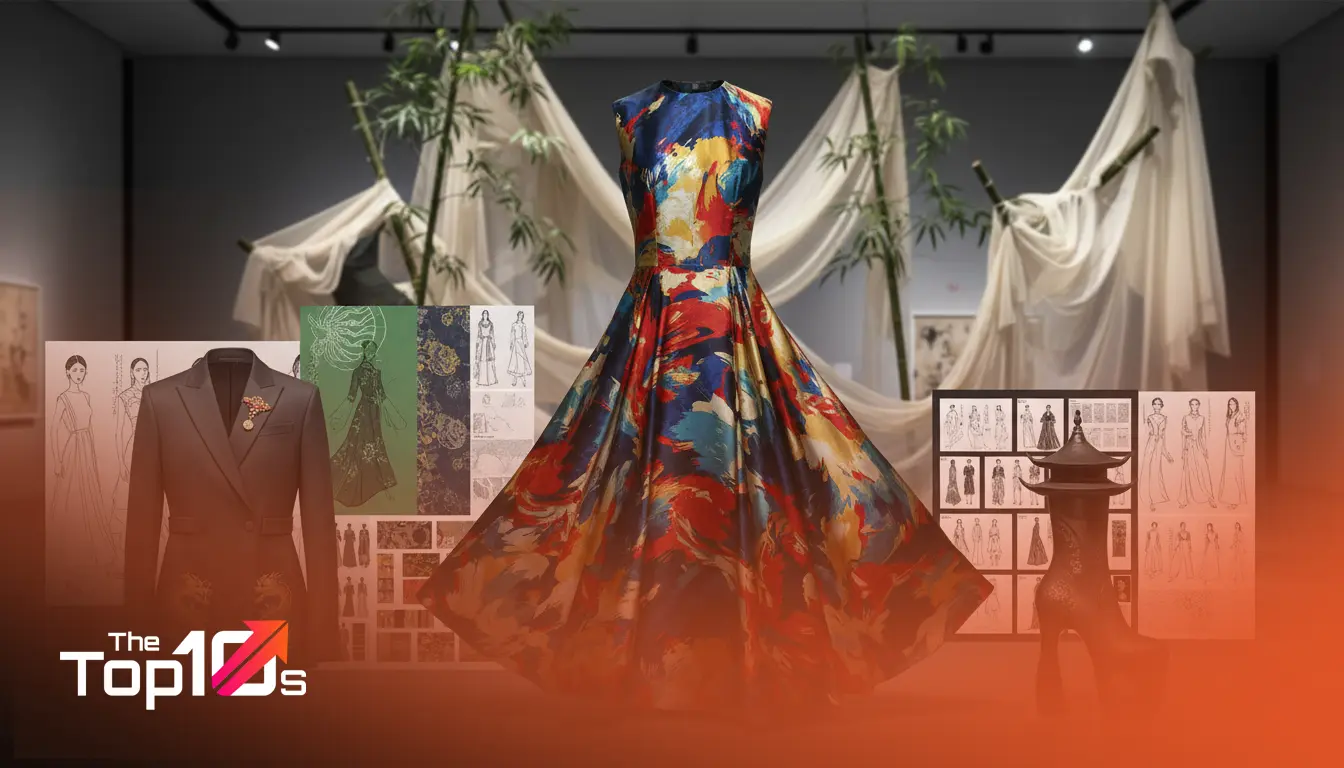
For decades, the tag inside your collar likely read “Made in China.” But recently, that narrative flipped completely. We aren’t just looking at the world’s factory floor anymore; we are witnessing the rise of a global creative powerhouse. If you have been following the runways in Paris, London, or Shanghai, you already know that the best fashion designers in China are no longer just participating in the conversation—they are leading it.
You might be wondering why this shift happened so fast. It comes down to a unique blend of access to ancient heritage craftsmanship and a fearless adoption of futuristic technology. These creatives aren’t constrained by Western traditions. Instead, they mash up Qing Dynasty embroidery with 3D printing, or rigorous British tailoring with relaxed Eastern draping. For buyers, stylists, and fashion enthusiasts, ignoring this market means missing out on some of the most innovative silhouettes currently in existence.
Finding the right talent in such a massive industry can feel overwhelming. Are you looking for high-concept avant-garde pieces, strictly sustainable production, or modern luxury ready-to-wear? This guide cuts through the noise to highlight the professionals who are truly shaping the aesthetic future of the region.
Quick Takeaways: Chinese Design at a Glance
- Heritage Meets High-Tech: The top designers successfully blend traditional craftsmanship (like Su embroidery) with modern digital fabrication.
- Global Education: Most leading names hold degrees from Central Saint Martins or Parsons, bridging the gap between Eastern philosophy and Western construction.
- Beyond the Qipao: While references to traditional dress exist, modern Chinese design is defined by deconstruction, oversized silhouettes, and experimental textiles.
- Shanghai is the Hub: Shanghai Fashion Week has arguably become the most exciting “fifth capital” of the fashion world.
How We Identified Leading Fashion Designers
Selecting the top names from a country with over a billion people requires more than just looking at Instagram follower counts. We approached this list by analyzing consistency, influence, and technical ability. A designer creates a buzz for a season; a true industry leader influences how people dress for years.
Our criteria focused heavily on original textile development. In China, access to fabric mills is unparalleled, so we looked for designers who treat fabric creation as part of the design process, not just an afterthought. We also evaluated their international retail presence. Are these collections stocked in Dover Street Market, SSENSE, or Net-a-Porter? Commercial viability signals that a designer understands the balance between art and wearability.
Finally, we considered critical reception. We looked for professionals recognized by industry bodies like the BoF 500 or the LVMH Prize, as these accolades often indicate a level of operational maturity and creative stamina that separates the pros from the hobbyists.
List of 10 Best Fashion Designers in China
| SNO | Name | Best for |
|---|---|---|
| 1 | Guo Pei | Clients seeking museum-quality couture, bridal wear, and red-carpet statements that demand attention. |
| 2 | Uma Wang | Lovers of artisan textiles, relaxed tailoring, and understated elegance. |
| 3 | Huishan Zhang | Occasion wear, bridal alternatives, and polished professional attire. |
| 4 | Feng Chen Wang | High-end streetwear, deconstructed menswear, and statement outerwear. |
| 5 | Angel Chen | Gen Z consumers, pop-culture enthusiasts, and anyone wanting bold, colorful streetwear. |
| 6 | Shushu/Tong | Contemporary womenswear, cocktail dresses, and statement accessories. |
| 7 | Xander Zhou | Avant-garde menswear enthusiasts and editorial stylists. |
| 8 | Susan Fang | Artistic statement pieces, sustainable fashion supporters, and innovative accessories. |
| 9 | Samuel Gui Yang | Power dressing with a cultural twist and art-focused professionals. |
| 10 | Caroline Hu | Red carpet appearances and collectors of artisanal womenswear. |
Top 10 Fashion Designers in China
Here are the creatives redefining luxury and streetwear, ranging from established couture veterans to the new wave of experimental talent.
1. Guo Pei
If you remember Rihanna’s massive yellow cape at the 2015 Met Gala, you already know Guo Pei. She stands as the uncontested matriarch of Chinese haute couture. Her work isn’t just clothing; it is wearable architecture deeply rooted in imperial history.
Why she matters: Guo Pei revitalized “Guangzhou embroidery,” a dying art form, by training hundreds of craftspeople to execute her vision. Her studio produces pieces that take thousands of hours to construct. She is the first Chinese member of the Chambre Syndicale de la Haute Couture, bringing legitimate French-level authority to Beijing.
Best for: Clients seeking museum-quality couture, bridal wear, and red-carpet statements that demand attention.
2. Uma Wang
Uma Wang creates for the intellectual creative. She avoids the glitz often associated with luxury in favor of texture, decay, and romance. Before launching her own label, she worked as an in-house designer for Chinese knitting mills, giving her a technical mastery over knitwear that few can match.
Why she matters: Her aesthetic is distinctively “anti-fashion.” She often uses tea-stained fabrics, raw edges, and oversized, draping silhouettes that feel timeless rather than trendy. It is sophisticated, quiet luxury for those who don’t need logos to prove their status.
Best for: Lovers of artisan textiles, relaxed tailoring, and understated elegance.
3. Huishan Zhang
Based between London and his atelier in Qingdao, Huishan Zhang is often described as the modern bridge between East and West. He spent time in the haute couture atelier at Dior, and that rigorous training shows in every seam of his ready-to-wear collections.
Why he matters: Zhang has a knack for making femininity feel modern, not archaic. He takes traditional Chinese elements—like the cheongsam collar—and applies them to lace dresses or sequined separates that feel right at home at a London cocktail party. He creates clothes that are romantic but pragmatic.
Best for: Occasion wear, bridal alternatives, and polished professional attire.
4. Feng Chen Wang
In the world of menswear, Feng Chen Wang is a force of deconstruction. She takes the familiar—a denim jacket, a trench coat, a Converse sneaker—and breaks it apart to put it back together in a completely new way. Her conceptual layering has made her a favorite among street style stars and global buyers.
Why she matters: She represents the new energy of Chinese youth culture. Her work explores personal concepts, often referencing her family and hometown in Fujian province, yet the execution is aggressively modern. Her ongoing collaboration with Converse proves she can translate high-concept design for a mass audience.
Best for: High-end streetwear, deconstructed menswear, and statement outerwear.
5. Angel Chen
If you want color, energy, and fusion, you look to Angel Chen. A Central Saint Martins graduate, she describes her brand as “Eastern aesthetics meeting Western punk.” Her collections are often riots of neon, embroidery, and bold graphics.
Why she matters: Chen was one of the first young Chinese designers to collaborate with major international brands like H&M and Adidas on a global scale. She gained wider fame on Netflix’s Next in Fashion, showcasing her ability to work fast and think big. She mixes windbreaker fabrics with brocades, creating a “kung fu punk” look.
Best for: Gen Z consumers, pop-culture enthusiasts, and anyone wanting bold, colorful streetwear.
6. Shushu/Tong
Design duo Liushu Lei and Yutong Jiang have cornered the market on the “modern girl” aesthetic. Their brand, Shushu/Tong, is instantly recognizable for its unabashed girlishness—think bows, ruffles, and bubble hems—but there is always a subversive, sharp edge to it. It’s sweet, but it bites.
Why they matter: They have tapped into a massive cultural shift in China where young women are embracing hyper-femininity as a form of power, not weakness. Their tailoring is impeccable, ensuring the ruffles look sculptural rather than messy.
Best for: Contemporary womenswear, cocktail dresses, and statement accessories.
7. Xander Zhou
Xander Zhou creates fashion for a future that hasn’t happened yet. He was the first menswear designer from China to show at London Fashion Week Men’s. His work often leans into “techno-orientalism,” exploring themes of AI, cyborgs, and extraterrestrial life through clothing.
Why he matters: Zhou challenges the silhouette of the modern man. He isn’t afraid to put men in cropped tops, cummerbunds, or prosthetic-enhanced garments. His runway shows are performance art, often leaving the audience questioning the boundary between human and machine.
Best for: Avant-garde menswear enthusiasts and editorial stylists.
8. Susan Fang
Susan Fang is an innovator in the truest sense. She developed a technique called “air-weaving,” which allows fabric to float off the body, creating geometric, bubble-like structures. Her work is ethereal, dreamy, and mathematically complex.
Why she matters: Sustainability is core to her process, not just a buzzword. Her air-weave technique produces zero waste because the fabric is woven simultaneously with the garment construction. She represents the intersection of engineering and fairy tales.
Best for: Artistic statement pieces, sustainable fashion supporters, and innovative accessories.
9. Samuel Gui Yang
Samuel Gui Yang operates out of a London-Shanghai axis, focusing on the Codes of Chinese dress. He looks at how the Mao suit or the Qipao can be adapted for a woman living in a modern metropolis. His garments are sculptural, featuring rubberized silks and hourglass shapes.
Why he matters: While many designers run away from “traditional” Chinese looks to avoid clichés, Yang runs toward them with a scalpel. He modernizes the geometry of these garments, making them feel authoritative and strong rather than costume-like.
Best for: Power dressing with a cultural twist and art-focused professionals.
10. Caroline Hu
A rising star who captured the industry’s attention by winning the BoF China Prize, Caroline Hu is a painter who uses fabric as her medium. Her dresses are often composed of layers upon layers of gathered tulle and silk, creating a chaotic, romantic texture reminiscent of a Matisse painting.
Why she matters: In an era of minimalism and streetwear, Hu offers maximalist romance. Her technical skill in smocking and pleating creates garments that feel alive. She proves there is still a massive appetite for beauty and complexity in fashion.
Best for: Red carpet appearances and collectors of artisanal womenswear.
What Defines a Great Fashion Designer in China?
Understanding the fashion ecosystem in China requires looking past the surface. A great designer here isn’t just someone who sketches well; they are a master of supply chain navigation. The best talent leverages the country’s manufacturing dominance to experiment with fabrics that Western designers might find too costly or difficult to source.
Furthermore, cultural fluency is non-negotiable. The top creatives understand that the domestic consumer is sophisticated and digitally native. They design for a client who shops on WeChat and spots trends on Xiaohongshu (Little Red Book) faster than Vogue can print them. There is also a strong emphasis on “East meets West” without it feeling forced. The most successful designers integrate their heritage subtly—through a collar shape, a button knot, or a specific silk weave—rather than printing dragons on a t-shirt.
Interestingly, while China focuses on high-end luxury and technical innovation, other parts of Asia are capturing different segments of the market. For instance, if you look at the top 10 fashion designers in Bangladesh, you see a similar renaissance occurring, but with a heavier focus on sustainable denim and ready-to-wear exports. Understanding these regional strengths helps buyers navigate the broader Asian market effectively.
How to Choose the Right Designer for Your Needs
Whether you are a retailer looking to stock a new brand or an individual looking for a wedding dress, making the right choice involves a few strategic steps.
Assess the “Wearability” Scale
Chinese design spans the spectrum from Xander Zhou’s sci-fi costumes to Huishan Zhang’s polished lace dresses. Be honest about the end use. If you need functionality for daily wear, look for designers with a background in mass-market production before they went independent. If you want art, look for the Central Saint Martins graduates.
Check the Production Origin
Just because a designer is Chinese doesn’t mean the clothes are made there, though most are. However, the region matters. Woolens produced near Shanghai have a different quality than silks from Hangzhou. Ask about the materials. The top designers are usually transparent about their sourcing because they are proud of the local quality.
Look for Longevity
The speed of the Chinese market can burn out young talent quickly. When investing in a piece, look for designers who have survived more than five seasons. This proves they have a supply chain that works and a quality control process that creates consistent sizing—a frequent pain point with newer, experimental brands.
Frequently Asked Questions
Are Chinese fashion designers cheaper than European ones?
Generally, no. The designers listed above operate in the luxury and contemporary space. A gown by Guo Pei or a coat by Uma Wang commands prices similar to, or sometimes higher than, their Parisian or Italian counterparts due to the labor-intensive craftsmanship involved.
Where can I buy these designers internationally?
Most of the top names have established distribution deals with major luxury e-tailers like Farfetch, SSENSE, Net-a-Porter, and Dover Street Market. For bespoke pieces (like Guo Pei), you typically need to contact their atelier directly for a consultation.
Is Shanghai Fashion Week open to the public?
Shanghai Fashion Week is primarily a trade event for buyers and media. However, the city transforms during the week, with countless pop-up shops, showroom events, and public exhibitions that allow consumers to engage with the new collections directly.
Do these designers offer sustainable options?
Yes, sustainability is a massive focus for the new generation. Designers like Susan Fang and Shushu/Tong are increasingly exploring zero-waste pattern making and deadstock fabrics, driven by a young consumer base that values environmental responsibility.
Final Thoughts on Navigating Chinese Design
The days of viewing China solely as a manufacturing hub are over. The designers emerging from Beijing, Shanghai, and Guangzhou are creating some of the most exciting, technically complex, and emotionally resonant clothing in the world today. They offer a perspective that honors tradition without being trapped by it.
For you, the reader, this means an opportunity to diversify your wardrobe or your retail floor with voices that feel fresh. Don’t just stick to the safe European heritage brands. Take a closer look at a Samuel Gui Yang coat or an Angel Chen hoodie. The quality will surprise you, and the design will likely start a conversation.