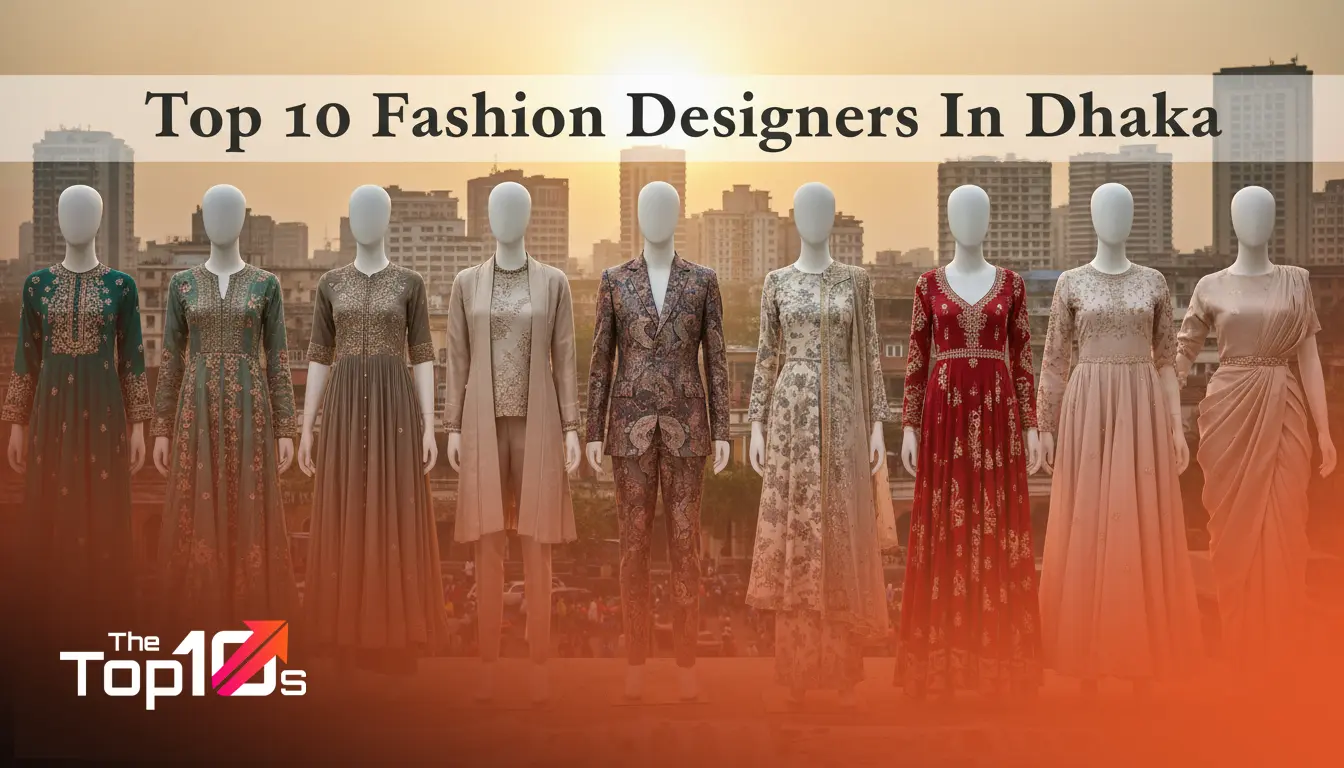
Walk through the bustling streets of Banani or step into a high-end studio in Gulshan, and you quickly realize that Dhaka is not just a manufacturing hub—it is a thriving epicenter of style. The conversation around fashion here has shifted. It is no longer just about utility or copying global trends; it is about reclaiming heritage, experimenting with indigenous weaves like Jamdani and Muslin, and creating silhouettes that tell a story.
Finding the right creative partner to define your wardrobe is a significant lifestyle decision. Whether you need a bespoke bridal ensemble that honors tradition or a sharp, contemporary suit for a corporate gala, the talent pool in Bangladesh’s capital is deep and diverse. However, navigating this landscape can be overwhelming. With so many boutiques and labels popping up, distinguishing between a skilled tailor and a visionary designer makes all the difference in the final product.
Quick Takeaways: Dhaka’s Fashion Scene
- Heritage is Key: The top names often blend traditional weaves (Khadi, Jamdani) with modern cuts.
- Specialization Matters: Some designers excel in bridal opulence, while others focus on sustainable, ready-to-wear casuals.
- Consultation is Crucial: The best results come from designers who offer personalized sessions to understand your body type and preferences.
- Lead Times: For couture or bridal wear, expect a timeline of 3 to 6 months.
How We Identified Leading Fashion Designers
Compiling a list of the best fashion designers in Dhaka is not a task we take lightly. It requires looking beyond Instagram follower counts and glossy magazine covers. We analyzed the local industry based on several qualitative markers that indicate genuine craftsmanship and professional reliability.
First, we looked at consistency and longevity. Fashion is a fickle industry, and staying relevant for over a decade demonstrates an ability to adapt while maintaining a strong brand identity. We also evaluated fabric expertise. A designer’s ability to source and manipulate textiles—understanding how silk drapes versus how cotton breathes—is what separates amateurs from professionals.
Furthermore, we considered client sentiment. Public reputation, word-of-mouth recommendations within Dhaka’s social circles, and the ability to deliver on time were critical factors. Finally, we looked for a distinct design philosophy. The names on this list don’t just assemble clothes; they offer a unique perspective on Bengali culture and modern aesthetics.
List of 10 Best Fashion Designers in Dhaka
| SNO | Name | Best for |
|---|---|---|
| 1 | Bibi Russell | Individuals looking for culturally significant, sustainable, and bohemian-chic aesthetics. |
| 2 | Maheen Khan (Mayasir) | Women who appreciate sophisticated, handcrafted ethnic wear that works for both office and formal gatherings. |
| 3 | Humaira Khan (Anokhi) | The fashion-forward shopper looking for trendy, fusion ensembles for parties and social events. |
| 4 | Rina Latif | High-end bridal clients and those attending black-tie events requiring sophisticated grandeur. |
| 5 | Mehruz Munir (Zurhem) | Men who want world-class suits and women seeking power dressing or edgy evening wear. |
| 6 | Sarah Karim | Brides and wedding guests looking for classic elegance that photographs beautifully. |
| 7 | Emdad Hoque | Cultural enthusiasts and those who prefer the breathability of natural fibers over synthetic glitz. |
| 8 | Kuhu Plamondon | Art lovers and women who want a statement piece that stands out in a sea of embroidery. |
| 9 | Shahrukh Amin (Almira) | Daily luxury wear and semi-formal occasions. |
| 10 | Tenzing Chakma | Anyone looking to explore indigenous aesthetics and support diverse cultural representation in fashion. |
Top 10 Fashion Designers In Dhaka
Here are the creative minds shaping the sartorial landscape of Bangladesh, ranging from legendary icons to contemporary innovators.
1. Bibi Russell
You cannot discuss fashion in Bangladesh without starting here. Bibi Russell is not merely a designer; she is a cultural movement. After a successful international modeling career, she returned to Bangladesh with a singular vision: “Fashion for Development.” Her work revitalized the local handloom industry, bringing the humble Gamcha (local towel fabric) to international runways.
Notable Strengths: Her genius lies in transforming rural textures into high-fashion statements. She creates wearable art that supports thousands of weavers. If you want a piece that carries the soul of Bangladesh, this is where you go.
Best Suited For: Individuals looking for culturally significant, sustainable, and bohemian-chic aesthetics.
2. Maheen Khan (Mayasir)
As the founding president of the Fashion Design Council of Bangladesh (FDCB), Maheen Khan has spent decades advocating for local heritage. Through her brand, Mayasir, she champions the use of indigenous materials like Khadi, silk, and cotton. Her designs are known for their understated elegance and intellectual appeal.
Notable Strengths: Maheen excels at surface ornamentation and textile development. Her cuts are generally conservative yet modern, focusing on comfort and grace rather than overt flashiness.
Best Suited For: Women who appreciate sophisticated, handcrafted ethnic wear that works for both office and formal gatherings.
3. Humaira Khan (Anokhi)
Humaira Khan operates at the intersection of global trends and local tradition. Her label, Anokhi, has garnered a loyal following for its fusion wear. She understands the modern Dhaka woman—someone who might want to wear a saree one day and a structured cape the next.
Notable Strengths: Her strength is versatility. From intricate sequin work to bold prints, she isn’t afraid to experiment. Her collections often feature distinct cuts that flatter diverse body types.
Best Suited For: The fashion-forward shopper looking for trendy, fusion ensembles for parties and social events.
4. Rina Latif
If you are searching for pure opulence, Rina Latif is the name whispered in elite circles. Her studio is known for creating garments that exude luxury without being loud. She lets the fabric and the intricate embroidery speak for themselves. Her approach to design is almost architectural, focusing on how the garment moves with the wearer.
Notable Strengths: Exceptional craftsmanship in evening wear and bridal couture. Her use of rich fabrics like muslin and velvet, combined with subtle, antique-style embroidery, sets her apart.
Best Suited For: High-end bridal clients and those attending black-tie events requiring sophisticated grandeur.
5. Mehruz Munir (Zurhem)
While the Dhaka fashion scene is often dominated by womenswear, Mehruz Munir broke the mold with Zurhem. He brought a sharp, bespoke tailoring aesthetic to the city that rivals Savile Row. His designs are edgy, structural, and unapologetically international.
Notable Strengths: Precision tailoring. Whether it is a tuxedo with a unique lapel or an avant-garde jacket, his fit is impeccable. He pushes boundaries with gender-neutral concepts and bold textures.
Best Suited For: Men who want world-class suits and women seeking power dressing or edgy evening wear.
6. Sarah Karim
Carrying forward a legacy of craftsmanship, Sarah Karim has become a go-to name for brides who want heritage with a polished finish. Her work heavily features traditional zardozi and karchupi work, but applied to lighter, more manageable fabrics suitable for modern weddings.
Notable Strengths: She has mastered the art of “fusion bridal.” Her lehengas and gowns often feature classic motifs but are constructed with contemporary draping techniques.
Best Suited For: Brides and wedding guests looking for classic elegance that photographs beautifully.
7. Emdad Hoque
A veteran in the industry, Emdad Hoque is deeply connected to the roots of Bengal. He is known for his purist approach, often working with white, beige, and earthy tones. His designs are a tribute to the natural simplicity of Bengali life, elevated to designer status through impeccable finishing.
Notable Strengths: His ability to make simple cotton look regal is unmatched. He frequently uses block prints and screen prints to tell stories on fabric.
Best Suited For: Cultural enthusiasts and those who prefer the breathability of natural fibers over synthetic glitz.
8. Kuhu Plamondon
Kuhu is an artist first, designer second. Her garments are essentially canvases. She is famous for hand-painting her fabrics, creating one-of-a-kind pieces that cannot be replicated. Her style is bohemian, fluid, and incredibly personal.
Notable Strengths: Color theory and artistic expression. Wearing a Kuhu creation feels like wearing a painting. Her silhouettes are usually relaxed and flowing.
Best Suited For: Art lovers and women who want a statement piece that stands out in a sea of embroidery.
9. Shahrukh Amin (Almira)
Shahrukh Amin has carved a niche for clean lines and wearable fashion through the brand Almira. He focuses on the practical needs of the urban population while injecting a dose of glamour. His work strikes a balance between traditional shalwar kameez and modern tunics.
Notable Strengths: Commercial viability and trend awareness. He knows what colors are in season and adapts them quickly to local tastes.
Best Suited For: Daily luxury wear and semi-formal occasions.
10. Tenzing Chakma
Representing the rich heritage of the indigenous communities, Tenzing Chakma brings a completely different flavor to the list. His designs incorporate the vibrant patterns and weaving techniques of the Hill Tracts, introduced to the mainstream fashion conversation with modern twists.
Notable Strengths: Unconventional patterns and vibrant color blocking. He bridges the gap between tribal tradition and modern runway fashion.
Best Suited For: Anyone looking to explore indigenous aesthetics and support diverse cultural representation in fashion.
What Defines a Great Fashion Designer in Dhaka?
Identifying experienced fashion design professionals in Dhaka goes beyond finding someone who can sketch. The climate and culture of Bangladesh dictate specific requirements for a designer to be truly great.
Mastery of Climate-Appropriate Fabrics: Dhaka is hot and humid for much of the year. A top-tier designer knows how to create formal wear that looks heavy and luxurious but breathes. They prioritize pure silks, breathable cottons, and linings that don’t irritate the skin.
The Balance of Tradition and Innovation: The local clientele has a deep respect for tradition. A skilled designer knows how to introduce a modern cut—like a belt on a saree or a jacket over a kameez—without disrespecting the cultural essence of the garment.
Production Quality Control: The difference often lies in the lining, the stitching of the hem, and the quality of the zippers or buttons. Leading designers oversee their “karigars” (artisans) strictly to ensure that a bead doesn’t fall off the moment you step onto the dance floor.
How to Choose the Right Fashion Designer for Your Needs
Selecting a designer is a collaboration. To get the best results, you need to align your vision with their expertise. Just as you might research the top 10 fashion designers in Kochi to understand regional coastal aesthetics, investigating Dhaka’s talent requires understanding the specific strengths of each studio.
Here is a framework for making your decision:
- Define the Occasion: Are you the bride, a corporate leader, or a party guest? Don’t go to a minimalist designer for a baroque bridal lehenga.
- Check the “Real” Portfolio: Ask to see photos of real clients, not just models. Models are tall and sample sizes are standard. Seeing how a designer dresses different body shapes is the true test of their skill.
- Discuss Timelines Early: Dhaka’s wedding season creates massive bottlenecks. If you need an outfit for December, you should be speaking to trusted fashion designers near Dhaka by August.
- Understand the Revision Policy: Custom clothing rarely fits perfectly on the first try. Ask about their alteration process. Do they charge extra for fittings? How many trials are included?
Frequently Asked Questions
How much does a designer outfit cost in Dhaka?
Prices vary wildly based on the label and complexity. A semi-formal tunic from a designer might start at BDT 5,000, while bridal couture from top names like Rina Latif or Sarah Karim can range from BDT 100,000 to over BDT 500,000 depending on the embroidery.
Do these designers offer online consultations?
Yes, post-pandemic, many designers have adapted. Brands like Zurhem and Anokhi often facilitate video consultations for international clients or those unable to visit the studio, though final fittings are best done in person.
Can I customize an outfit from their existing collection?
Most designers are happy to customize colors or sleeve lengths on existing designs. However, requesting a complete overhaul of the pattern might be treated as a bespoke commission, which costs more and takes longer.
What is the lead time for a bridal outfit?
For heavy bridal wear, the standard lead time is 3 to 6 months. This accounts for the sourcing of fabric, the hand-embroidery process (which is labor-intensive), and multiple rounds of fittings.
Are these designers sustainable?
Many on this list, particularly Bibi Russell and Maheen Khan, are pioneers of sustainable fashion. They prioritize handloom fabrics and ethical treatment of weavers. Always ask the studio about their production practices if sustainability is a priority for you.
Next Steps for Your Style Journey
The fashion landscape in Dhaka is vibrant, evolving, and deeply rooted in a rich history of textiles. Whether you are looking for the structural brilliance of Zurhem or the timeless heritage of Mayasir, the city offers something for every aesthetic.
Don’t rush the process. Visit the studios, feel the fabrics, and have a conversation with the design teams. Your clothing is an extension of your personality, and the right designer will help you express that with confidence and grace. Start by following these labels on social media to get a feel for their current collections, then book an appointment with the one that resonates most with your personal style story.