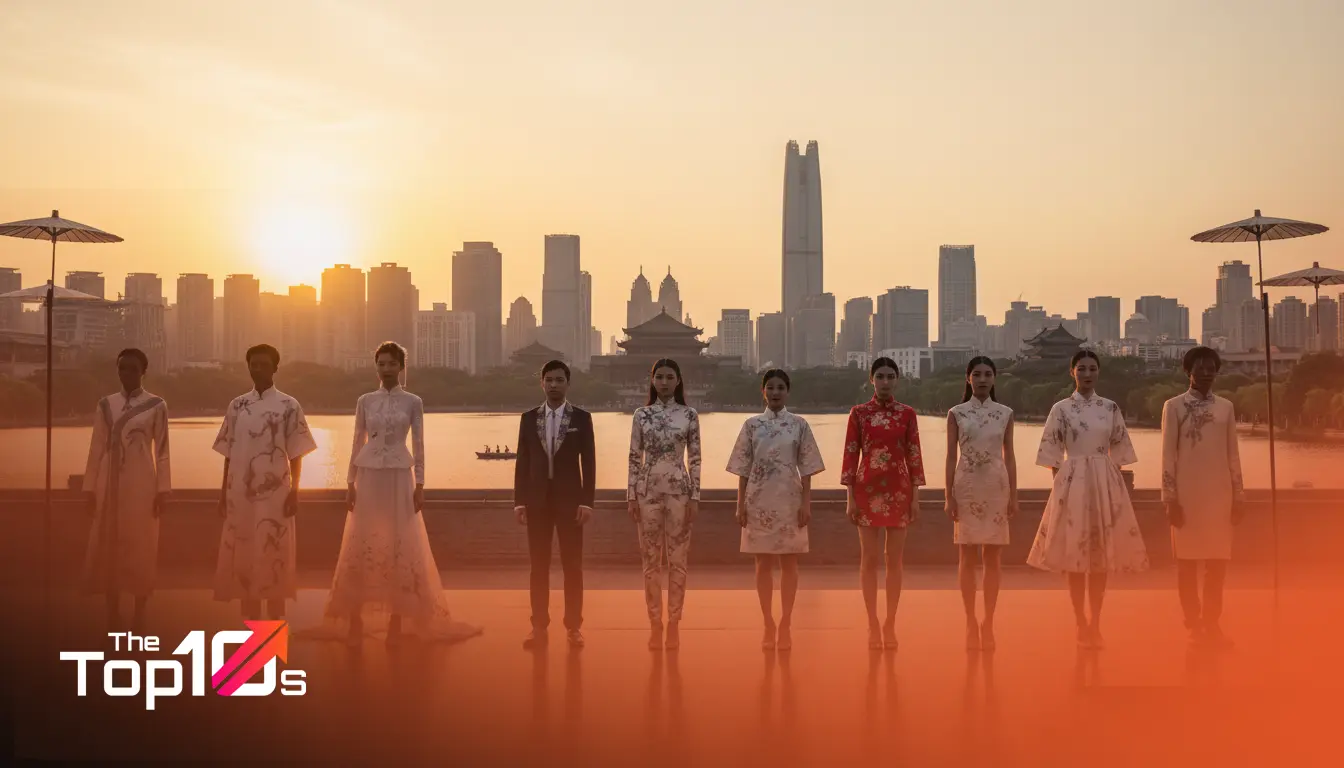
Hangzhou isn’t just about West Lake or Dragon Well tea anymore. While the city has held the title of China’s “House of Silk” for centuries, something interesting is happening on the streets and in the studios of this Zhejiang capital. It has quietly morphed into a powerhouse of modern aesthetics, blending deep-rooted textile traditions with a digital-first speed that rivals anywhere else in the world.
Finding the right creative partner here can feel overwhelming. You have thousands of brands emerging from the local e-commerce ecosystem, alongside high-end ateliers formed by graduates of the prestigious China Academy of Art. The sheer volume of talent is staggering.
You might be wondering: how do you sift through the noise to find someone who actually understands your vision? Whether you are a buyer looking for the next breakout label, a brand owner seeking collaboration, or a fashion enthusiast wanting a custom piece, understanding the local talent pool is critical. The designers here don’t just make clothes; they engineer identities using some of the finest raw materials available in Asia.
Quick Takeaways: Hangzhou Fashion Scene
- Heritage Meets Tech: Expect a fusion of ancient silk techniques with 3D pattern making and modern synthetic blends.
- The “Alibaba Effect”: Many designers here are exceptionally savvy about commercial viability and rapid production cycles.
- Textile Mastery: Proximity to major fabric markets (like Keqiao) means designers here have unrivaled access to materials.
- Conceptual Depth: The China Academy of Art influences a local style that is often more artistic and structural than commercial mass-market trends.
How We Identified Leading Fashion Designers
Ranking creativity is subjective, but identifying professional excellence requires a structured approach. We didn’t just look for who has the most Instagram followers or the flashiest runway show. Instead, we analyzed the substance behind the portfolio.
Our selection methodology focused on consistency and reputation. We looked for professionals who have sustained their practice over several seasons, demonstrating an ability to evolve while keeping a distinct signature. Educational background played a role—specifically alumni from the China Academy of Art who have established local studios—but self-taught talents with strong market performance were also considered.
We also evaluated their command of materials. In a city famous for fabrics, a top-tier designer must show an exceptional understanding of how textiles behave. Finally, we looked at community standing. These are the names that pop up when industry insiders discuss innovation, quality control, and brand storytelling in the Zhejiang region.
List of 10 Best Fashion Designers in Hangzhou
| SNO | Name | Best for |
|---|---|---|
| 1 | Li Lin (JNBY) | Consumers and buyers looking for mature, sophisticated daily wear that prioritizes comfort over fleeting trends. |
| 2 | Kate Han (Mukzin) | Bold personalities and retailers looking for statement pieces that photograph exceptionally well. |
| 3 | Chen Peng | High-fashion collectors and boutiques wanting sculptural outerwear that serves as a centerpiece. |
| 4 | Wanbing Huang | Red carpet events, editorial stylists, and clients who appreciate delicate, museum-quality craftsmanship. |
| 5 | Min Wu | Urban professionals who want a sharp, modern edge to their wardrobe. |
| 6 | Ban Xiaoxue | Artistic individuals who view clothing as a form of personal expression and prefer natural fibers. |
| 7 | Zhang Na (Reclothing Bank) | Eco-conscious consumers and brands looking to integrate circularity into their identity. |
| 8 | Hei Yong | Men who appreciate understated luxury and garments with a backstory. |
| 9 | Renli Su | The “Slow Fashion” advocate who wants to invest in heirloom-quality pieces. |
| 10 | Lu Min (Ms Min) | Business leaders and women who want a wardrobe that commands respect. |
Top 10 Fashion Designers in Hangzhou
This list represents a diverse cross-section of talent, ranging from avant-garde conceptualists to commercial heavyweights who have reshaped how China dresses.
1. Li Lin (JNBY)
You cannot talk about Hangzhou fashion without mentioning the force behind JNBY (Just Naturally Be Yourself). Li Lin has built an empire that anchors the city’s design reputation. While now a massive corporation, her design philosophy remains deeply rooted in the artist’s touch, focusing on natural materials and relaxed, architectural silhouettes.
Specialization: Contemporary ready-to-wear, lifestyle apparel, and sustainable fabrics.
Why they stand out: Li Lin created a design language that is instantly recognizable without being loud. The focus is on texture, draping, and a muted, earthy color palette that feels intellectual yet comfortable. Her headquarters, OōEli, is a testament to her commitment to design culture.
Best suited for: Consumers and buyers looking for mature, sophisticated daily wear that prioritizes comfort over fleeting trends.
2. Kate Han (Mukzin)
If you scroll through social media, you’ve likely seen Kate Han’s work. Co-founding Mukzin with George Feng, she ignited the “Neo-Chinese” trend. Han takes traditional motifs—old medicine packaging, mythological creatures, ancient opera costumes—and remixes them with a punk, pop-art energy.
Specialization: Neo-Chinese fusion, print design, and streetwear.
Why they stand out: Han isn’t afraid of color or chaos. She revitalizes traditional culture for a Gen Z audience, proving that heritage doesn’t have to look dusty. Her pattern work is complex, often involving digital printing techniques that push the boundaries of visual density.
Best suited for: Bold personalities and retailers looking for statement pieces that photograph exceptionally well.
3. Chen Peng
A graduate of the China Academy of Art (and later London’s MA program), Chen Peng is a global star who maintains strong ties to the region’s manufacturing capabilities. He is famous for his “One-Sized” fashion ideology, challenging standard body norms with voluminous, sculptural puffer jackets.
Specialization: Outerwear, avant-garde silhouettes, and body inclusivity.
Why they stand out: He transforms the humble down jacket into high art. His work is architectural, often using bright colors and exaggerated proportions that somehow flatter a wide range of body types. He represents the conceptual ambition of Hangzhou’s design schools.
Best suited for: High-fashion collectors and boutiques wanting sculptural outerwear that serves as a centerpiece.
4. Wanbing Huang
Wanbing Huang brings a softer, more emotional approach to the local scene. Another alum of the local art education system (before heading to Central Saint Martins), she treats fabric like sculpture. Her work often explores themes of femininity, nature, and light, utilizing innovative textiles to create ethereal effects.
Specialization: Womenswear, textile innovation, and structural elegance.
Why they stand out: It is the fabrication that grabs you. She frequently collaborates with textile engineers to develop unique materials, such as 3D-printed lace or heat-bonded fabrics that hold shape without heavy internal structure.
Best suited for: Red carpet events, editorial stylists, and clients who appreciate delicate, museum-quality craftsmanship.
5. Min Wu
Min Wu focuses on the intersection of technology and fashion. Her approach is modern and slightly futuristic, often playing with light, transparency, and digital aesthetics. She represents a wave of designers in Hangzhou who are utilizing the city’s tech-forward status to influence their creative output.
Specialization: Tech-influenced streetwear, knitwear, and modern minimalism.
Why they stand out: Her designs often feature clean lines disrupted by unexpected textures or digital prints. She has a knack for making “future fashion” feel wearable right now, rather than looking like a costume from a sci-fi movie.
Best suited for: Urban professionals who want a sharp, modern edge to their wardrobe.
6. Ban Xiaoxue
Winner of the prestigious International Woolmark Prize, Ban Xiaoxue is a name synonymous with poetic design. His philosophy revolves around “Natureism,” where he attempts to capture the silence and beauty of the natural world in his clothing. His studio produces garments that feel like they have a soul.
Specialization: Wool manipulation, layering, and deconstructed tailoring.
Why they stand out: The intricate detailing is remarkable. You will find raw edges, complex embroidery that looks like moss or roots, and multi-layered garments that move beautifully. He rejects rigid trends in favor of timeless artistic expression.
Best suited for: Artistic individuals who view clothing as a form of personal expression and prefer natural fibers.
7. Zhang Na (Reclothing Bank)
While she operates across the Shanghai-Hangzhou corridor, Zhang Na’s impact on the region’s sustainability conversation is immense. Her project, Reclothing Bank, takes old textiles and upcycles them into new, high-fashion garments. She leverages the massive textile waste issues in the region to create something beautiful.
Specialization: Sustainable fashion, upcycling, and circular design.
Why they stand out: She proves that “eco-friendly” doesn’t have to look homespun. Her designs are chic, modern, and carry a history. She sources materials directly from local communities, giving her clothes a narrative that mass production lacks.
Best suited for: Eco-conscious consumers and brands looking to integrate circularity into their identity.
8. Hei Yong
A professor at the China Academy of Art and a practicing designer, Hei Yong bridges the gap between academic theory and wearable reality. His work often involves deep research into Chinese workwear and uniform history, reinterpreting these functional garments for contemporary life.
Specialization: Menswear, academic research-led design, and functional aesthetics.
Why they stand out: The intellectual rigor behind his collections sets him apart. Every pocket, seam, and button placement usually has a historical or functional reason for existing. It is thoughtful, sturdy design.
Best suited for: Men who appreciate understated luxury and garments with a backstory.
9. Renli Su
Focusing on the quiet dedication of craftsmanship, Renli Su creates garments that celebrate the history of making clothes. Her designs often feature hand-weaving and organic shapes. While her brand has international reach, the production and sourcing remain deeply tied to the artisanal capabilities of the Zhejiang province.
Specialization: Artisanal womenswear, organic fabrics, and hand-finishing.
Why they stand out: In a world of fast fashion, she hits the brakes. Her garments are meant to be kept for decades. The style is often loose, romantic, and incredibly tactile, encouraging the wearer to touch the fabric.
Best suited for: The “Slow Fashion” advocate who wants to invest in heirloom-quality pieces.
10. Lu Min (Ms Min)
Although Ms Min is widely associated with Xiamen, her influence and production nexus rely heavily on the Hangzhou silk and tailoring ecosystem. Her aesthetic blends classic Chinoiserie with sharp Western tailoring, creating a look that is powerful and polished. The brand resonates deeply with the Hangzhou luxury consumer.
Specialization: Luxury ready-to-wear, modern Chinoiserie, and power dressing.
Why they stand out: The fit is impeccable. She understands how to make a woman look commanding yet feminine. Her use of silk and wool blends creates structured garments that don’t feel stiff.
Best suited for: Business leaders and women who want a wardrobe that commands respect.
What Defines a Great Fashion Designer in Hangzhou?
Understanding the local talent requires looking beyond the sketchpad. The best fashion designers in Hangzhou master the balance between the region’s historical weight and its digital future. They don’t just design; they curate supply chains.
Fabric Intelligence
Hangzhou is close to Keqiao, the largest textile distribution center in Asia. A great designer here doesn’t just pick fabrics from a swatch book; they often work directly with mills to develop custom weaves. If a designer here doesn’t talk passionately about thread count or fiber blends, be skeptical.
The “Taobao” Agility
Even high-end designers here are influenced by the speed of Chinese e-commerce. This doesn’t mean they make fast fashion, but rather that they are incredibly responsive to client feedback. They understand fit issues and market shifts faster than their European counterparts because the feedback loop in Hangzhou is almost instantaneous.
Cultural Nuance
The top tier understands “Neo-Chinese” aesthetics without resorting to costume design. They know how to incorporate a mandarin collar or a silk frog button in a way that looks appropriate in a boardroom in New York or a gallery in London.
If you are exploring fashion across China, you might notice that while Hangzhou focuses on silk and e-commerce, the Top 10 Fashion Designers in Chengdu often lean heavily into street culture and relaxed vibes. Understanding these regional differences helps you find the exact aesthetic you need.
How to Choose the Right Fashion Designer for Your Needs
Selecting a creative partner is a business decision as much as an aesthetic one. Here is how to navigate the process effectively.
Assess Their Production Capabilities
Are you looking for a one-off gown or a partner to manufacture 500 units? Some designers listed above, like Chen Peng or JNBY, have massive infrastructure. Others operate small ateliers. Be clear about your volume needs upfront. A brilliant couture designer might fail miserably at managing a wholesale order.
Look at Their “Pattern” DNA
Every designer has a default approach to cutting fabric. Some favor loose, draped, oversized fits (common in Hangzhou due to the traditional influence), while others prefer structured tailoring. Look at their past three collections. Do the silhouettes match the body types you are dressing? Don’t ask a minimalist sculptor to make a frilly prom dress.
Communication and Sourcing
Ask specifically about where they source their materials. A designer who is transparent about their silk suppliers or their sustainable wool sources is usually more reliable. In Hangzhou, access to material is a competitive advantage; you want a designer who utilizes it.
Frequently Asked Questions
Is Hangzhou fashion different from Shanghai fashion?
Yes, though the lines are blurring. Shanghai is often seen as more international, corporate, and trend-focused. Hangzhou tends to be more artistic, relaxed, and deeply connected to natural materials like silk and linen, largely due to the influence of the China Academy of Art and the city’s scenic environment.
Can I hire these designers for custom work?
Designers like Wang Feng, Wanbing Huang, and independent ateliers often accept private client commissions or bespoke bridal work. Larger commercial brands like JNBY or Mukzin generally do not offer individual custom services, though they may collaborate with other brands.
Why is silk so prominent in Hangzhou designers’ collections?
Hangzhou has been the center of Chinese silk production for over a thousand years. The local designers have access to the highest grade mulberry silk and heritage weavers that simply aren’t available elsewhere. It is part of the city’s DNA.
Are Hangzhou designers expensive?
The range is vast. You have luxury ateliers where a dress costs thousands of dollars due to hand-embroidery and premium silk. However, because production is local, you often get better value for money regarding fabric quality compared to European brands at similar price points.
What is the “Neo-Chinese” style mentioned frequently?
Neo-Chinese is a design movement that takes traditional Chinese elements—like the qipao silhouette, knot buttons, or auspicious patterns—and updates them with modern cuts, denim, leather, or digital prints. It makes heritage clothing wearable for daily life.
Next Steps for Your Fashion Search
The fashion talent in Hangzhou offers a unique proposition: the soul of an artist with the efficiency of a manufacturer. Whether you are sourcing for a boutique or refining your personal style, the key is to look past the label and examine the construction.
Start by following the independent studios on social platforms to see their day-to-day creative process. If you are a buyer, plan a visit during the local fashion weeks or trade shows. The magic of Hangzhou fashion isn’t just in the final image; it’s in the touch of the fabric and the thought process behind the seam. Take your time to find the designer whose voice resonates with yours.