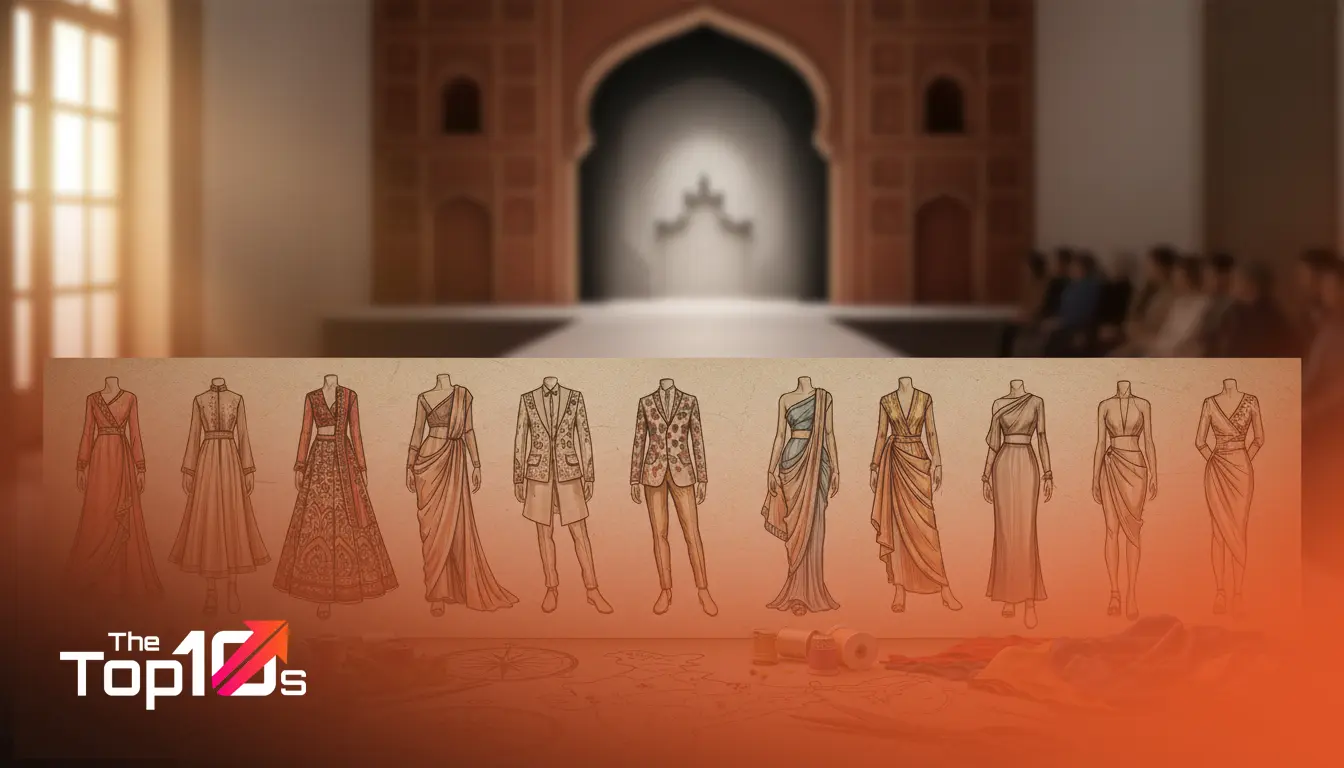
You can’t walk down a high street in Mumbai or scroll through an Indian wedding feed without seeing the sheer artistry of the country’s fashion industry. It isn’t just about clothes anymore; it is about storytelling through fabric. India has transformed from a manufacturing hub into a global design powerhouse, blending centuries-old textile heritage with sharp, modern aesthetics.
Finding the right creative mind to dress you isn’t merely a shopping trip. It’s an investment in craftsmanship. Whether you are hunting for the perfect bridal lehenga, a sharp bespoke suit, or contemporary pret-a-porter that breathes sustainability, the talent pool here is deep and incredibly diverse.
You might be overwhelmed by the choices. That’s normal. With so many labels launching every season, distinguishing between fleeting hype and genuine legacy requires a keen eye. We are looking at the visionaries who understand the weight of a Banarasi weave just as well as the cut of a western silhouette.
Quick Takeaways
- Heritage is King: The top names almost always integrate traditional handlooms like Khadi, Chikankari, or Zardosi into modern cuts.
- Bridal Dominance: The Indian couture market is heavily driven by wedding wear, but ready-to-wear lines are rapidly expanding.
- Global Footprint: Many designers listed here now have flagships in New York, Dubai, and London.
- Sustainability Matters: Look for the “Grassroot” movement where designers support local artisans directly.
How We Identified Leading Fashion Designers
Selecting the top tier of design talent isn’t about looking at Instagram follower counts. We analyzed the industry based on tangible contributions to the fabric of Indian fashion. Our methodology focused on longevity and consistency. A great designer doesn’t just produce one hit collection; they define an era.
We looked at craftsmanship quality. The difference between a good outfit and a great one often lies in the lining, the finishing of the hem, and the durability of the embroidery. We also considered the diversity of their portfolios. The most skilled professionals can switch between heavy bridal couture and lighter, wearable luxury without losing their signature identity.
Reputation among clients and peers played a massive role. We paid attention to how these labels handle distinct customization requests and their standing within global fashion weeks. The following list represents creators who have mastered the balance between commercial viability and artistic integrity.
List of 10 Best Fashion Designers in India
| SNO | Name | Best for |
|---|---|---|
| 1 | Sabyasachi Mukherjee | Opulent bridal lehengas and heritage jewelry. |
| 2 | Manish Malhotra | Cocktail sarees, reception gowns, and sequined lehengas. |
| 3 | Tarun Tahiliani | Concept sarees and structured bridal couture. |
| 4 | Ritu Kumar | Classic textile-focused suits and bohemian casual wear. |
| 5 | Rohit Bal | High-end menswear and velvet jackets. |
| 6 | Anita Dongre | Lightweight lehengas and sustainable luxury. |
| 7 | Abu Jani Sandeep Khosla | Heavy Chikankari and mirror-work ensembles. |
| 8 | Masaba Gupta | Fusion wear and quirky, bold prints. |
| 9 | Gaurav Gupta | Sculptural gowns and cocktail sarees. |
| 10 | Anamika Khanna | Deconstructed Indian wear and cape sets. |
Top 10 Fashion Designers in India
These ten individuals define the current aesthetic of the subcontinent. They range from minimalists to maximalists, catering to a wide spectrum of tastes.
1. Sabyasachi Mukherjee
If there is one name that has become synonymous with the “Great Indian Wedding,” it is Sabyasachi. Hailing from Kolkata, he treats fashion like a museum curator. His work is heavily influenced by India’s colonial past, featuring rich velvets, deep reds, and antique-style embroidery.
What sets him apart is his refusal to follow Western trends blindly. He digs deep into Indian roots, reviving dying textile arts. Whether it’s the signature tiger logo on the waistbands or the heavy, intricate jewelry he pairs with his garments, a Sabyasachi look is instantly recognizable.
- Best For: Opulent bridal lehengas and heritage jewelry.
- Experience: Established label in 1999.
- Signature Style: Old-world Kolkata charm mixed with bohemian luxury.
2. Manish Malhotra
While Sabyasachi looks to the past, Manish Malhotra looks at the silver screen. He is the undisputed favorite of Bollywood. His designs are all about glamour, glitz, and high-octane drama. If you want to shine under the spotlight, this is where you go.
Malhotra revolutionized costume design in Indian cinema and brought that same cinematic flair to his consumer collections. His use of sequins, Swarovski crystals, and sensual cuts makes his outfits perfect for cocktail nights and reception parties.
- Best For: Cocktail sarees, reception gowns, and sequined lehengas.
- Experience: 30+ years in costume and fashion design.
- Signature Style: Modern, glamorous, and unapologetically shiny.
3. Tarun Tahiliani
Often called the master of drape, Tarun Tahiliani blends Italian pattern cutting with Indian craftsmanship. He understands the body’s architecture better than almost anyone else. His structured drapes make heavy bridal wear feel lighter and easier to move in, which is a massive technical achievement.
He was one of the first to open a multi-designer boutique in India (Ensemble), effectively launching the country’s modern retail fashion industry. His work appeals to the sophisticated buyer who values structure and fit over pure embellishment.
- Best For: Concept sarees and structured bridal couture.
- Experience: Founded his studio in 1990.
- Signature Style: European construction meets Indian embellishment.
4. Ritu Kumar
Ritu Kumar is often regarded as the matriarch of Indian fashion. She began her journey in the late 1960s with a mission to revive traditional block printing and weaving techniques in Bengal. Her work feels less like “fashion” and more like “textile art.”
Her brand has successfully bridged the gap between high-end couture (Ri) and accessible ready-to-wear (Label Ritu Kumar). She is the go-to designer for women who want garments that feel organic, earthy, and deeply rooted in history without the excessive bling.
- Best For: Classic textile-focused suits and bohemian casual wear.
- Experience: 50+ years; a pioneer of the boutique culture.
- Signature Style: Ancient embroidery techniques on comfortable, natural fabrics.
5. Rohit Bal
Known affectionately as “Gudda,” Rohit Bal creates poetry in cloth. His fascination with the lotus and peacock motifs is legendary. Bal’s designs are theatrical, often utilizing vast quantities of fabric to create volume and movement that mimics the grandeur of the Mughal era.
He is a master of texture, often using velvet and brocade to create regal looks for both men and women. His menswear, in particular, stands out for its ability to make traditional sherwanis look incredibly masculine yet ornate.
- Best For: High-end menswear and velvet jackets.
- Experience: Launched in 1990.
- Signature Style: Grandiose, Kashmiri-influenced motifs and rich textiles.
6. Anita Dongre
Anita Dongre brings a refreshing sense of practicality to luxury. She understands that the modern woman needs to move, work, and dance. Her designs are light, breezy, and often feature pockets—a small detail that has won her thousands of loyal fans.
Beyond the aesthetics, she is a powerhouse for sustainability. Her distinct use of Gota Patti work from Rajasthan is iconic. She has managed to create a luxury empire that remains accessible and ethical, appealing heavily to the eco-conscious bride.
- Best For: Lightweight lehengas and sustainable luxury.
- Experience: Founded in 1995.
- Signature Style: Jaipur-inspired prints and Gota Patti work.
7. Abu Jani Sandeep Khosla
The “Boys” of Indian fashion are known for their maximalism. If you believe “more is more,” then Abu Jani and Sandeep Khosla are your designers. They are famous for reviving Chikankari (white-on-white embroidery) and transforming it into high-fashion evening wear.
Their client list includes the Bachchans and international royalty. They don’t do subtle. Their mirror work and heavy embellishments are designed to make a statement, ensuring the wearer is the center of attention in any room.
- Best For: Heavy Chikankari and mirror-work ensembles.
- Experience: Partnership formed in 1986.
- Signature Style: Classical extravagance and intricate white embroidery.
8. Masaba Gupta
Masaba represents the new guard. She ditched the heavy embroidery for bold, quirky prints. Her motifs are unconventional—think cameras, cows, and lipstick prints on sarees. She speaks to the youth who want to wear Indian silhouettes without feeling weighed down by tradition.
Her approach is fusion-heavy. You will find denim sarees, corset tops, and dhoti pants that can be worn to a brunch or a beach wedding. It is fun, vibrant, and incredibly photogenic.
- Best For: Fusion wear and quirky, bold prints.
- Experience: Debuted in 2009.
- Signature Style: Pop-art meets traditional Indian drapes.
9. Gaurav Gupta
Gaurav Gupta creates sculptures, not just clothes. He is the architect of the future of Indian fashion. Using boning and sculpting techniques, he creates sarees and gowns that defy gravity. His aesthetic is sci-fi meets fantasy.
He has gained massive international traction recently, dressing global icons like Cardi B and Megan Thee Stallion for red carpet events. For a bride looking for a reception gown that looks avant-garde, Gupta is the singular choice.
- Best For: Sculptural gowns and cocktail sarees.
- Experience: Founded in 2004.
- Signature Style: Futuristic, structured ruffles and metallic hues.
10. Anamika Khanna
Anamika Khanna is the designer for the rebel. She famously deconstructed the saree, introducing the “dhoti saree” and cape sets that require no draping. She values comfort but refuses to compromise on the intricacy of the design.
She doesn’t participate in fashion weeks often, letting her work speak for itself. Her layering techniques are exquisite, often mixing heavy jackets with lighter inner layers to create a look that is bohemian yet regal.
- Best For: Deconstructed Indian wear and cape sets.
- Experience: Launched in 1998.
- Signature Style: Layered, non-conformist luxury.
What Defines a Great Fashion Designer in India?
India presents a unique challenge for designers: the tension between ancient tradition and rapid modernization. A truly great designer here doesn’t just copy Western trends. They understand the “karigari” (craftsmanship). They know that the value of a garment lies in the hours of hand-embroidery put into it by artisans in rural clusters.
There is also the matter of regional diversity. The aesthetics of the North, with its heavy silks and velvets, differ wildly from the South, which favors Kanjeevaram and gold borders. The best professionals navigate these waters fluently. Interestingly, this appreciation for regional craft and intricate embroidery shares many similarities with neighboring industries; for a broader regional perspective, you might explore the top 10 fashion designers in Pakistan, who also champion the legacy of South Asian craftsmanship.
Communication is the final piece of the puzzle. The relationship between a client and a designer in India is personal. Since so much wear is bespoke (made-to-order), the designer must be able to interpret a client’s vague wish—”I want to look royal but not heavy”—and translate it into a physical garment that fits perfectly.
How to Choose the Right Fashion Designer for Your Needs
Picking a name from a list is easy, but picking the right partner for your wardrobe requires strategy. Here is how you should approach it.
Define the Occasion clearly. If you are attending a daytime beach wedding, a velvet Sabyasachi might be too heavy and hot. In that case, a breezy Anita Dongre or a Masaba print would serve you better. Match the fabric weight to the environment.
Be realistic about timelines. True couture takes time. A complex bridal lehenga can take 3 to 6 months to produce. If you need something in two weeks, you should look for designers with strong Pret (ready-to-wear) lines like Ritu Kumar or Satya Paul, rather than waiting for a bespoke consultation.
Understand the Price-to-Value ratio. High prices should correlate with handwork. Flip the garment inside out. Is it lined with high-quality cotton or silk? Are the seams invisible? You are paying for the finish as much as the label. Don’t be afraid to ask the store assistants about the maintenance of the garment—some of these pieces cannot even be dry-cleaned and require air-ing only.
Frequently Asked Questions
Who is the most expensive fashion designer in India?
While prices vary by collection, Sabyasachi Mukherjee and Manish Malhotra generally command the highest prices for bridal couture, often reaching several lakhs (hundreds of thousands of rupees) for a single lehenga due to the intricate hand embroidery involved.
Which designer is best for modern, non-traditional Indian wear?
Masaba Gupta and Gaurav Gupta are excellent choices for modern silhouettes. Masaba offers fun prints and fusion wear, while Gaurav Gupta provides structured, avant-garde gowns that steer away from traditional embroidery.
Do these designers offer international shipping?
Yes, most top-tier Indian designers now have robust e-commerce platforms and ship globally. Many also stock at multi-brand international retailers like Aza Fashions or Ogaan to cater to the diaspora.
Can I get a custom outfit made if I don’t live in India?
Many designers offer virtual consultations via WhatsApp or Zoom. You can send your measurements (they will guide you on how to take them), discuss fabrics, and have the final piece shipped to you, though fittings are always best done in person if possible.
Are there sustainable high-fashion options in India?
Absolutely. Anita Dongre (Grassroot), Ritu Kumar, and Rahul Mishra are known for their commitment to sustainable practices, supporting local artisans, and using eco-friendly textiles.
Conclusion
India’s fashion scene is vibrant, chaotic, and incredibly sophisticated. The designers listed here aren’t just selling clothes; they are selling a piece of cultural heritage wrapped in modern luxury. Whether you gravitate towards the cinematic sparkle of Manish Malhotra or the structured genius of Gaurav Gupta, the key is to find the aesthetic that makes you feel like the best version of yourself.
Take your time exploring their collections. Visit the boutiques if you can—touch the fabrics, see how the light catches the embroidery, and talk to the staff. Your wardrobe is an extension of your personality, so choose a creator who speaks your language.