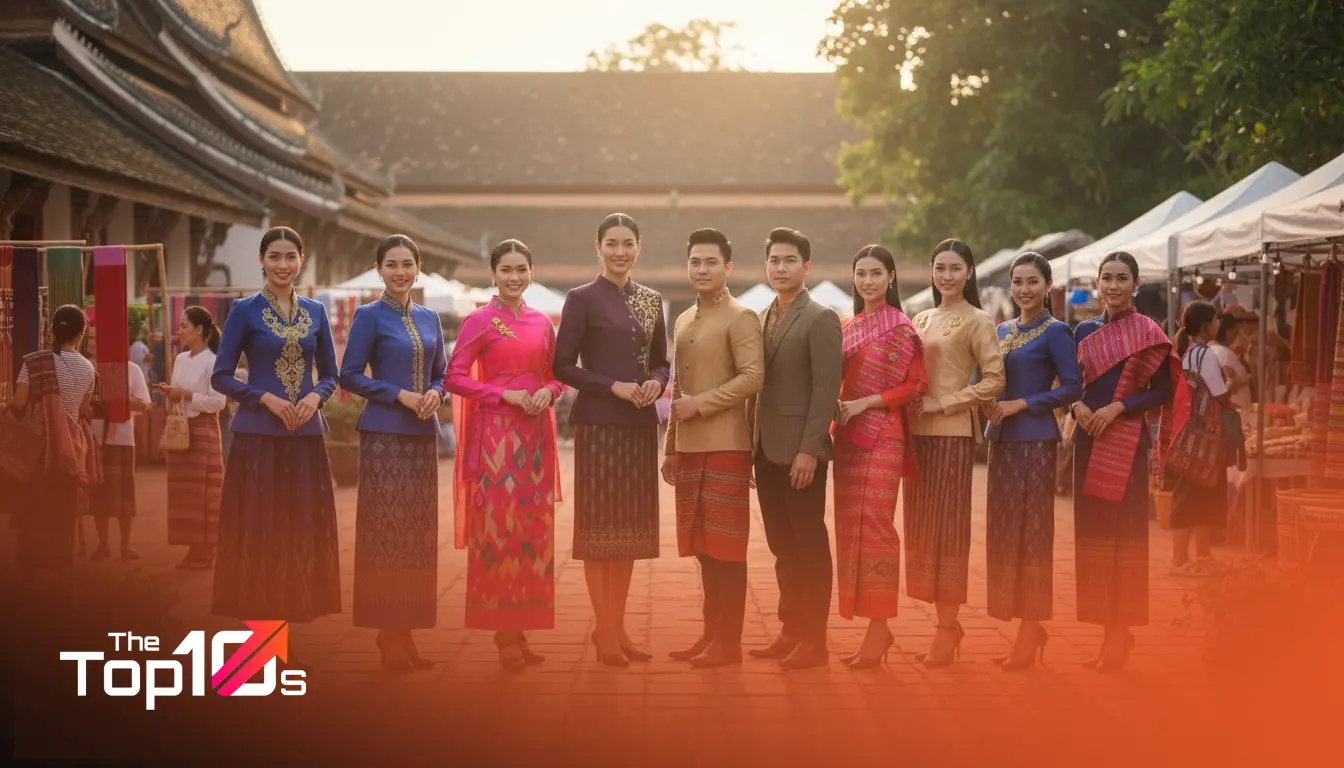
Walk through the streets of Vientiane or Luang Prabang, and you notice something distinct about the way people dress. It isn’t just about following global trends; it’s about a deep, intrinsic respect for textiles. In Laos, fashion isn’t merely what you wear—it’s a continuing dialogue between centuries-old weaving traditions and modern silhouettes.
For anyone looking to commission a bespoke outfit or explore Southeast Asian couture, finding the right creative partner is essential. The fashion scene here is intimate but incredibly skilled. You have master weavers who have transitioned into high fashion, and young creatives returning from studies abroad to reinterpret the traditional ‘Sinh’ (Lao skirt) for a contemporary audience. Whether you need an intricately embroidered wedding ensemble or a sharp, hand-woven business suit, the talent pool here is surprisingly deep.
You might be searching for the best fashion designers in Laos to collaborate on a collection, or perhaps you are simply a traveler wanting a piece of wearable art. This guide cuts through the noise to highlight the visionaries shaping the local aesthetic right now. We look beyond just the famous names to find the professionals who truly understand fabric, fit, and cultural storytelling.
Quick Takeaways: The Lao Fashion Scene
- Textile First: Most top designers in Laos are also experts in weaving and natural dyes. The fabric often dictates the design.
- The “Sinh” Evolution: A major marker of talent is how a designer reinvents the traditional Lao skirt for modern wear without losing its cultural identity.
- Sustainability is Default: “Slow fashion” isn’t a marketing buzzword here; it’s the standard. Hand-woven silk and organic cotton are the norms.
- Vientiane is the Hub: While Luang Prabang holds the heritage, Vientiane is where the runways and experimental studios are located.
How We Identified Leading Fashion Designers
Selecting the top talent in a country where “designer” and “weaver” often overlap requires a specific lens. We didn’t just look for who has the most Instagram followers. Instead, we focused on the craftsmanship and the professional consistency of the studios.
Our criteria centered on three main pillars. First, technical mastery. Does the designer understand the complex structure of Lao silk? Can they manipulate it without destroying the pattern? Second, we looked at originality. We sought out creatives who are pushing the envelope rather than simply replicating standard tourist shop patterns. Finally, we considered client satisfaction. The designers listed below are known for delivering on time, managing fittings professionally, and translating a client’s vague ideas into wearable reality.
List of 10 Best Fashion Designers in Laos
| SNO | Name | Best For |
|---|---|---|
| 1 | Viengkham Nanthavongdouangsy (Phaeng Mai) | Buyers looking for investment-quality silk garments and couture-level traditional wear that tells a historical story. |
| 2 | Tot Lina (Khang) | Women who want wearable, breathable luxury that works as well in Paris or New York as it does in Vientiane. |
| 3 | Bandith Lasavong (Men Folder) | Men seeking bespoke suits, shirts, or jackets that have a unique Southeast Asian edge without being loud. |
| 4 | Tocky (Tocky’s Dress Maker) | Anyone needing a show-stopping evening gown, pageant wear, or a red-carpet look. |
| 5 | Olay (Olay’s Room) | Professionals needing chic office wear or cocktail dresses that nod to tradition but feel thoroughly modern. |
| 6 | Nithakhong Somsanith | Collectors and cultural enthusiasts willing to wait for a masterpiece that utilizes genuine gold embroidery. |
| 7 | Billy Siamphan | The fashion-forward crowd looking for editorial pieces or streetwear with a distinct Lao soul. |
| 8 | Aunnissa (Aunnissa Brand) | Brides and wedding guests looking for romantic, feminine designs that photograph beautifully. |
| 9 | Anita (Ministry of Silk) | Expats and travelers who want to incorporate Lao textiles into a western wardrobe seamlessly. |
| 10 | Khen (Khen’s Lao Silk) | Those who prioritize comfort, natural fibers, and a rustic, authentic aesthetic. |
Top 10 Fashion Designers in Laos
The following individuals and creative directors represent the vanguard of Lao fashion. From avant-garde innovators to guardians of royal embroidery techniques, these are the names you need to know.
1. Viengkham Nanthavongdouangsy (Phaeng Mai)
If you want to understand Lao fashion, you start with Viengkham. As the force behind Phaeng Mai Gallery, she is less of a fleeting trendsetter and more of a cultural institution. Her work is grounded in the absolute mastery of complex weaving techniques, specifically the intricate patterns that require months to complete.
Notable Strengths: Viengkham excels at integrating traditional motifs into formal evening wear. She doesn’t just cut fabric; she designs the textile itself on the loom to fit the final garment. Her pieces are often seen at high-level diplomatic functions and international expos representing the nation.
Who this is for: Buyers looking for investment-quality silk garments and couture-level traditional wear that tells a historical story.
2. Tot Lina (Khang)
Tot Lina brings a distinct artistic flair to the Vientiane scene. Founder of the brand Khang, she is famous for blending indigenous wisdom with a painterly aesthetic. Unlike the rigid geometric patterns found in some traditional textiles, Lina’s work often feels fluid and organic.
Notable Strengths: Her signature involves hand-painting on silk and using natural dyes to create softer, earthy palettes that appeal to international tastes. She successfully bridges the gap between a traditional Lao identity and a bohemian, worldly aesthetic.
Who this is for: Women who want wearable, breathable luxury that works as well in Paris or New York as it does in Vientiane.
3. Bandith Lasavong (Men Folder)
For a long time, the spotlight in Vientiane was almost exclusively on womenswear. Bandith Lasavong changed that conversation. As the founder of Men Folder, he introduced a sharp, masculine aesthetic that incorporates Lao textiles into modern tailoring.
Notable Strengths: Bandith is brilliant at subtleness. He might line a western-style blazer with Lao silk or use traditional patterns on a slim-fit shirt. He proves that ethnic textiles don’t have to look like costumes; they can be incredibly dapper and office-appropriate.
Who this is for: Men seeking bespoke suits, shirts, or jackets that have a unique Southeast Asian edge without being loud.
4. Tocky (Tocky’s Dress Maker)
When you talk about glamour in Laos, Tocky is the name that invariably comes up. He is the go-to designer for the country’s celebrities, beauty queens, and socialites. His style is unapologetically bold, often utilizing sequins, feathers, and dramatic cuts alongside traditional fabrics.
Notable Strengths: Tocky understands stage presence. His construction is impeccable, ensuring that elaborate gowns stay structured and comfortable. He isn’t afraid to deconstruct the traditional Sinh to create something entirely new and architectural.
Who this is for: Anyone needing a show-stopping evening gown, pageant wear, or a red-carpet look.
5. Olay (Olay’s Room)
Olay represents the polished, elegant side of modern Lao design. Her studio is known for precision and a “less is more” approach that is somewhat rare in a culture that loves intricate patterns. She focuses heavily on the silhouette, ensuring the fit flatters the body perfectly.
Notable Strengths: Her ready-to-wear collections are highly accessible, yet she maintains a strong bespoke service. Olay has a talent for color blocking—mixing solid silk colors with patterned borders in a way that feels fresh and youthful.
Who this is for: Professionals needing chic office wear or cocktail dresses that nod to tradition but feel thoroughly modern.
6. Nithakhong Somsanith
To call Nithakhong Somsanith a “fashion designer” is an understatement; he is an artist and a preserver of royal heritage. Descended from the Vice-King of Vientiane, he specializes in the dying art of gold and silver thread embroidery. His work is museum-quality.
Notable Strengths: He focuses on “Sabai” (shawls) and ceremonial garments using real metallic threads. His creative process is slow, meditative, and strictly adheres to ancient court techniques. You don’t just buy clothes from him; you commission a piece of history.
Who this is for: Collectors and cultural enthusiasts willing to wait for a masterpiece that utilizes genuine gold embroidery.
7. Billy Siamphan
A younger voice in the industry, Billy has been making waves with designs that challenge gender norms and traditional expectations. Often showcased at Lao Fashion Week, his work is edgy, sometimes dark, and always thought-provoking.
Notable Strengths: Billy excels at deconstruction. He might take the heavy, stiff silk usually reserved for skirts and drape it into an avant-garde jacket. His strength lies in recontextualizing materials that young people might consider “old fashioned” into something punk or high-fashion.
Who this is for: The fashion-forward crowd looking for editorial pieces or streetwear with a distinct Lao soul.
8. Aunnissa (Aunnissa Brand)
Aunnissa has carved out a niche for accessible luxury. She has a fantastic eye for what the modern Lao woman wants to wear to a wedding or a party. Her designs are feminine, often featuring floral motifs and softer pastel palettes that depart from the traditional dark indigos and deep reds.
Notable Strengths: She is particularly skilled at “cutting” the pattern. In Lao silk, the pattern is woven into the fabric, so cutting it wrong ruins the motif. Aunnissa aligns seams perfectly so the visual flow of the garment remains uninterrupted.
Who this is for: Brides and wedding guests looking for romantic, feminine designs that photograph beautifully.
9. Anita (Ministry of Silk)
Anita, the creative force often associated with the Ministry of Silk brand, focuses on the global potential of Lao textiles. Her approach is about versatility. She designs clothes that a woman could wear in a boardroom in London just as easily as a dinner in Vientiane.
Notable Strengths: Her fusion jackets and trench coats made from Lao silk are standouts. She understands international sizing and fits better than many local tailors, making her a favorite among the expat community and international buyers.
Who this is for: Expats and travelers who want to incorporate Lao textiles into a western wardrobe seamlessly.
10. Khen (Khen’s Lao Silk)
Rounding out our list is Khen, a designer who stays close to the roots. While others look to the West for inspiration, Khen digs deeper into the ethnic diversity of Laos. His designs often incorporate motifs from various ethnic groups, not just the lowland Lao.
Notable Strengths: Texture is king here. Khen mixes hemp, raw silk, and cotton to create garments that have a tactile richness. His menswear tunics and loose-fitting linen-silk blends are perfect for the tropical climate.
Who this is for: Those who prioritize comfort, natural fibers, and a rustic, authentic aesthetic.
What Defines a Great Fashion Designer in Laos?
The criteria for greatness here differ slightly from Europe or North America. In high-production markets, design is often about the sketch. In Laos, the design begins at the loom. A truly great designer here must understand the physics of hand-woven fabric.
Respect for the Weaver
The best designers view weavers as co-creators, not just laborers. Since the pattern is often created during the weaving process (ikat or mut-mee), the designer must collaborate with the weaver weeks before a single scissor touches the cloth. If a designer cannot communicate effectively with a master weaver, their final product will lack authenticity.
Cultural Sensitivity
Lao clothing carries symbolism. Certain patterns are reserved for specific ceremonies, and skirt hems (the “tin sinh”) have specific cultural placements. A skilled designer knows how to innovate without crossing the line into cultural appropriation or disrespect. They know which motifs can be cut and which must remain whole.
Modernizing the Silhouette
While the fabric is traditional, the cut shouldn’t be archaic. Top-tier designers in Vientiane are now using lining techniques, interfacing, and darting that rival international standards. They are solving the old problems of Lao silk—stiffness and weight—to create garments that move beautifully.
Interestingly, the appreciation for Southeast Asian textile heritage is growing across the region. If you are exploring regional styles, you might also be interested in the top 10 fashion designers in Myanmar, who share a similar dedication to elevating traditional weaving arts.
How to Choose the Right Fashion Designer for Your Needs
Finding the right person to execute your vision requires a little homework. Here is a practical framework to help you decide.
Assess Your Timeline
True Lao fashion is slow. If you want a custom silk pattern woven from scratch, you need to budget 2-3 months. If you are selecting fabric already in stock, a custom suit or dress can take 3-10 days. Be honest about your departure date. High-end designers like Viengkham or Tocky are busy; don’t expect a 24-hour turnaround.
Review the “Inside” Work
When you visit a studio, flip a garment inside out. Look at the lining. Lao silk is delicate and can fray if not finished correctly. The best designers will have impeccable internal finishing (French seams or full lining) to protect the investment piece. If the inside looks messy, walk away.
Understand the Pricing Model
In Laos, you often pay separately for the silk and the tailoring (labor). A designer might quote you $50 for the labor, but the silk could range from $50 to $500 depending on the complexity of the weave. Always ask for the “all-in” price to avoid surprises.
Frequently Asked Questions
Is Lao silk difficult to care for?
It depends on the weave. Raw silk is quite durable, but intricate brocades with gold threads or natural dyes require dry cleaning or very gentle hand washing with pH-neutral soap. Most designers will give you specific care instructions based on the dye used.
Can I communicate with these designers in English?
Yes, the majority of the top-tier designers listed above speak English or have staff who do. The fashion community in Vientiane is very international, catering to diplomats and expats regularly.
Do these designers sell ready-to-wear clothing?
Most have a boutique with off-the-rack options (standard sizing). However, because Lao bodies are typically petite, Western visitors often find they need minor adjustments, which most studios can do in 1-2 days.
What is the difference between synthetic and real Lao silk?
Real Lao silk has a distinct smell (like burnt hair when tested) and slight imperfections (slubs) in the texture. It warms up to your body temperature. Synthetic knock-offs feel unnaturally smooth and cold. Reputable designers will never pass off synthetic as real silk.
How much should I expect to pay for a custom dress?
For a custom silk dress from a top designer, expect to pay between $150 USD to $400 USD, depending on the silk quality. Elaborate wedding ensembles or gold-thread pieces can go into the thousands.
Final Thoughts on Lao Fashion
Choosing a fashion designer in Laos is an invitation to slow down. It is an opportunity to engage with a supply chain that is human, artistic, and deeply personal. The designers listed here are not just making clothes; they are keeping a vital part of Lao culture alive while propelling it into the future.
Whether you choose the edgy cuts of Billy Siamphan or the royal elegance of Nithakhong Somsanith, you are investing in artistry that has a soul. Take the time to visit their studios, touch the fabrics, and listen to the stories behind the patterns. You will walk away with more than just a garment; you will have a piece of the country’s heritage draped over your shoulders.