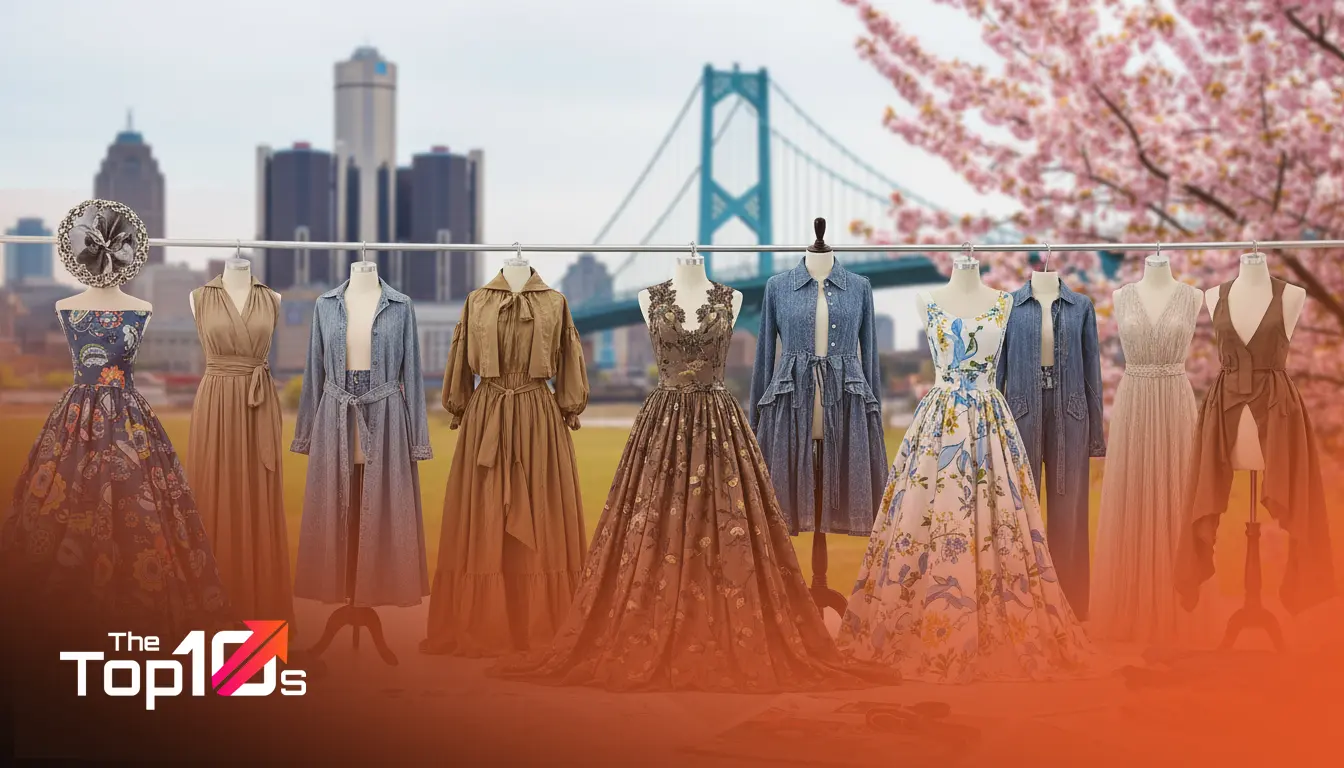
When most people think of Michigan, their minds drift immediately to automotive manufacturing or the Great Lakes. But if you look closer, past the assembly lines and cherry orchards, you’ll find a textile revolution happening right under our noses. The state—and Detroit specifically—has quietly become a powerhouse for apparel innovation, blending a gritty industrial work ethic with high-concept artistry.
You might be searching for a bespoke gown for a gala in Grand Rapids, looking for sustainable streetwear in Detroit, or simply curious about who is shaping the Midwest’s aesthetic identity. Finding the right creative partner isn’t just about browsing portfolios; it’s about understanding who can translate a vision into wearable reality.
The best fashion designers in Michigan aren’t just making clothes; they are engineers of fabric. They understand that a garment must survive the harsh winters while turning heads during the humid summers. From established names who have dressed First Ladies to underground streetwear architects, the talent pool here is deep, diverse, and surprisingly accessible.
Quick Takeaways: Michigan Fashion Scene
- Manufacturing Roots: Many local designers leverage the state’s industrial sewing infrastructure (ISAIC) for high-quality, domestic production.
- Sustainability Focus: There is a massive shift toward “slow fashion” and ethical sourcing among top Michigan creatives.
- Diverse Aesthetics: The scene is split heavily between high-end bridal/evening wear and avant-garde streetwear.
- Accessibility: Unlike Paris or Milan, many of Michigan’s top designers offer direct-to-consumer consultations.
How We Identified Leading Fashion Designers
Ranking creativity is subjective, but identifying professional excellence requires a structured approach. To curate this list of experienced fashion design professionals in Michigan, we looked beyond Instagram follower counts. We analyzed the tangible impact these individuals have on the local economy and the broader fashion industry.
Our research methodology focused on longevity and craftsmanship. We looked for designers who have consistently produced collections over several years, demonstrating resilience in a tough market. Technical skill was another non-negotiable factor; the ability to draft patterns, understand textile science, and execute complex construction sets a true designer apart from a stylist.
We also considered community reputation. In the close-knit Michigan apparel scene, word travels fast. We paid attention to client feedback regarding professionalism, ability to meet deadlines, and the quality of the finished product. Finally, we looked for a distinct point of view—creatives who aren’t just chasing trends, but establishing their own visual language.
List of 10 Best Fashion Designers in Michigan
| SNO | Name | Best for |
|---|---|---|
| 1 | Tracy Reese (Hope for Flowers) | Vibrant, feminine prints and relaxed silhouettes that exude effortless elegance. |
| 2 | Katerina Bocci | Drama, structural complexity, and European flair for luxury bridal and evening wear. |
| 3 | Maurice Malone | High-quality denim and streetwear with a focus on American manufacturing. |
| 4 | Matthew Richmond (The Paper Dress Code) | Avant-garde creativity and wearable sculptures using non-traditional materials. |
| 5 | Nelson T. Sanders Jr. (D.O.S – Dictators of Style) | Menswear with a focus on classic tailoring and urban sensibilities. |
| 6 | Fotoula Lambros | Custom design and expert alterations for a perfect fit. |
| 7 | Akili Jackson | Urban culture-inspired clothing with a focus on authenticity and comfort. |
| 8 | Bonnie Foley (Christian Michael) | Upscale menswear with a focus on bespoke suiting and shirts. |
| 9 | Aki Choklat | Sophisticated, minimalist footwear and accessories with a global standard. |
| 10 | Dr. Clement Brown (Fashions by Clement) | Classic style and custom apparel for women with a focus on modesty, elegance, and perfect fit. |
Top 10 Fashion Designers In Michigan
The following individuals represent the spectrum of style in the Great Lakes State. They vary in specialization, from couture to commercial ready-to-wear, but they share a commitment to quality that defines the region.
1. Tracy Reese (Hope for Flowers)
You cannot discuss Michigan fashion without starting with Tracy Reese. After establishing herself as a global force in New York City and dressing figures like Michelle Obama, Reese made the deliberate choice to return to her roots in Detroit. Her label, Hope for Flowers, represents more than just apparel; it indicates a shift toward responsible manufacturing.
Reese specializes in vibrant, feminine prints and relaxed silhouettes that exude effortless elegance. What sets her apart is her commitment to sustainability. She utilizes organic linens, cottons, and Tencel, focusing on minimizing the ecological footprint of her supply chain. For the conscious consumer looking for high-end ready-to-wear that supports the local Detroit ecosystem, Reese is the gold standard.
2. Katerina Bocci
If you are looking for drama, structural complexity, and European flair, Katerina Bocci is the name to know. Born in Albania and based in Michigan, Bocci has carved out a niche in the luxury bridal and evening wear market. Her designs are frequently spotted on red carpets and have garnered national attention for their intricate detailing.
Her strength lies in her construction techniques. We are talking about corsetry that fits like a second skin and hand-sewn embellishments that take hundreds of hours to complete. Bocci serves a clientele that requires absolute perfection for once-in-a-lifetime events. Her aesthetic is bold, often utilizing voluminous tulles and rich laces, making her the go-to for brides who want to make a statement rather than blend in.
3. Maurice Malone
Often referred to as the “Steve Jobs of Denim,” Maurice Malone is a legend in the streetwear and denim industries. Starting in Detroit in the hip-hop golden era, he built a reputation for innovation that rivals major global denim houses. While he has operated out of New York, his roots and ongoing influence remain deeply tied to Michigan’s manufacturing ethos.
Malone is a technician at heart. He understands the weave, the warp, and the weft of denim better than almost anyone. His work with Williamsburg Garment Company and his own eponymous lines showcases a dedication to American manufacturing. For denim purists who care about wash, weight, and architectural fit, Malone’s designs offer a level of authenticity that mass-market brands simply cannot replicate.
4. Matthew Richmond (The Paper Dress Code)
Fashion sits at the intersection of commerce and art, and Matthew Richmond resides firmly on the artistic side. Known for his “Paper Dress Code,” Richmond creates wearable sculptures using non-traditional materials—often paper, recycled goods, and industrial scraps. While he creates wearable fabric garments as well, his reputation is built on avant-garde creativity.
Richmond is the ideal designer for editorial shoots, stage performances, or clients who view clothing as performance art. His work challenges the viewer to question the durability and value of fashion. He brings a theatrical element to the Michigan design scene, proving that the Midwest can be just as experimental as London or Tokyo.
5. Nelson T. Sanders Jr. (D.O.S – Dictators of Style)
Menswear often gets overlooked in favor of women’s couture, but Nelson T. Sanders Jr. demands attention. As the creative force behind D.O.S (Dictators of Style), Sanders focuses on the modern gentleman who isn’t afraid of color or pattern. His background involves a deep appreciation for classic tailoring mixed with urban sensibilities.
Sanders excels in the details: a perfectly peaked lapel, a contrasting buttonhole stitch, or a lining that tells a secret story. He serves a client base that has graduated from off-the-rack suits and needs garments that command respect in a boardroom while showing personality at a dinner party. His approach demonstrates that “professional” doesn’t have to mean “boring.”
6. Fotoula Lambros
Fotoula Lambros represents the backbone of the local fashion economy: the expert couturier who can do it all. With a studio focused on custom design and expert alterations, she bridges the gap between buying a garment and owning a look. Her expertise ranges from reviving vintage heirlooms to creating custom evening wear from scratch.
Her strength is versatility and an unerring eye for fit. Many people underestimate the geometry involved in altering a garment to flatter a specific body type; Lambros has mastered this geometry. She is particularly well-suited for clients who have a specific vision but cannot find it in stores, or for those who possess high-end garments that need expert tailoring to reach their full potential.
7. Akili Jackson
Embedded in the cultural fabric of Detroit, Akili Jackson is a designer who speaks the language of the street. His work often reflects the socio-political climate and the raw energy of the city. Jackson’s designs are not just clothes; they are commentary.
He works well with knits, jerseys, and heavy cottons, creating pieces that are comfortable yet visually striking. His aesthetic appeals to a younger demographic or anyone connected to urban culture who values authenticity over luxury branding. Jackson proves that fashion is a medium for storytelling, using graphics and cuts to represent the Detroit state of mind.
8. Bonnie Foley (Christian Michael)
The Christian Michael brand has become synonymous with upscale menswear in Michigan, and Bonnie Foley is a driving force in keeping that aesthetic sharp. Focusing on bespoke suiting and shirts, this design house caters to athletes, executives, and grooms who struggle with standard sizing.
Foley and her team excel at fabric selection. They source wools and cashmeres that drape impeccably, ensuring longevity. The experience here is consultative; it’s about building a wardrobe rather than buying a single item. For the man who wants to understand the difference between a fused and a canvassed suit, this is the educational and sartorial destination.
9. Aki Choklat
While often associated with academia as a Chair at the College for Creative Studies (CCS), Aki Choklat is a formidable designer in his own right, particularly in footwear and accessories. His international experience—having worked with top European houses—brings a rigorous, global standard to Michigan fashion education and design.
Choklat’s personal work is sophisticated, often minimalist but executed with premium materials. He is the designer for the intellectual consumer—someone who appreciates the history of a heel shape or the tanning process of a leather bag. His influence is creating a new generation of trusted fashion designers near Michigan who understand the business side of the craft.
10. Dr. Clement Brown (Fashions by Clement)
Dr. Clement Brown is a veteran of the industry. His atelier, Fashions by Clement, is a testament to the endurance of classic style. Brown creates custom apparel for women who value modesty, elegance, and perfect fit. He has been a staple in the Detroit fashion community for decades.
His mastery lies in the “Sunday Best” aesthetic—suits, hats, and dresses that command authority. He understands textile manipulation in a way that only comes with decades of experience. Brown is the ideal choice for mature clients who feel alienated by fast fashion trends and want garments that honor their dignity and style.
What Defines a Great Fashion Designer in Michigan?
The Michigan fashion identity is distinct. It is not the fast-paced, disposable culture of Los Angeles, nor is it the strictly black-tie vibe of Upper East Side New York. Here, utility meets artistry. A great designer in this region understands that clothing is equipment for living.
Resilience in Material Choice
Given the dramatic seasonal shifts, local designers are experts in layering and fabric transition. You will see a heavy emphasis on wool, denim, and heavy cottons—materials that can take a beating and look better with age. The “Detroit Hustle” isn’t just a slogan; it’s a lifestyle, and the clothes have to keep up.
The Industrial Edge
There is a lack of pretension in Michigan design. Even the high-end couture often features structural elements that nod to the state’s engineering heritage. You might find exposed zippers, architectural pleating, or mixed-media textiles that feel constructed rather than just sewn.
Client-Centric Collaboration
Unlike major fashion capitals where the designer is a distant deity, Michigan designers are approachable. The culture here values a handshake and a conversation. The best creatives are those who listen to their clients’ needs regarding comfort and functionality, rather than dictating a trend that doesn’t work for real life.
Myths vs. Facts: hiring a Local Designer
Myth: You have to go to New York or Paris for true luxury.
Fact: Michigan has access to the same global fabric mills (Zegna, Loro Piana, etc.) as the big houses. The difference is that here, you aren’t paying for a Madison Avenue rent markup.
Myth: Custom clothing is only for the ultra-wealthy.
Fact: While bespoke is an investment, many local designers offer made-to-measure or semi-custom options that are comparable in price to mid-range luxury department store brands, but with a far better fit.
Myth: Michigan fashion is only Carhartt and workwear.
Fact: While workwear is a proud heritage, the state has a thriving bridal, evening wear, and avant-garde scene fueled by graduates from top design schools like CCS and MSU.
How to Choose the Right Fashion Designer for Your Needs
Selecting a designer is a personal process. You are trusting someone with your image and, often, a significant amount of money. Here is a framework to make the right decision.
1. Define Your Scope
Are you looking for a single event piece, a wardrobe overhaul, or manufacturing for your own brand? Designers like Katerina Bocci are perfect for the former, while someone like Maurice Malone is better for understanding production. Be clear about your end goal before the first meeting.
2. Review the “Hand” of the Work
Photos can lie. If possible, visit the studio. Touch the fabrics. Look at the inside of the garment. Are the seams finished cleanly? Is the lining high quality? The interior of a garment tells you more about a designer’s integrity than the exterior.
3. Discuss Timelines Early
Custom work is not Amazon Prime. A bespoke suit or gown can take 8 to 12 weeks, involving multiple fittings. Ensure your schedule aligns with the designer’s production capacity. If you have a hard deadline (like a wedding), add a two-week buffer.
4. Check Regional Specialties
Sometimes the aesthetic you want is specific to a certain region’s culture. For example, if you are looking for a preppier, East Coast nautical aesthetic, you might not find as many specialists in Detroit as you would elsewhere. It can be helpful to compare regional styles; for instance, reviewing the Top 10 Fashion Designers in Massachusetts can give you a baseline for how Midwest practicality differs from New England tradition.
Frequently Asked Questions
How much does a custom dress or suit cost in Michigan?
Prices vary wildly based on fabric and labor. Generally, a custom suit starts around $1,200 and can go up to $5,000+. Custom evening wear usually starts at $1,500, with intricate bridal gowns ranging from $3,000 to over $10,000 depending on embellishments.
Do these designers offer alterations on outside clothes?
Some do, but not all. Designers like Fotoula Lambros often have specific services for alterations. However, a brand like Hope for Flowers is strictly ready-to-wear. Always ask before bringing outside garments to a design studio.
Can I visit these designers’ studios without an appointment?
Rarely. Most independent fashion designers operate by appointment only to ensure they can give clients their full attention. It is best to contact them via their website or Instagram to schedule a consultation.
Is Detroit the only place to find fashion designers in Michigan?
While Detroit is the hub, Grand Rapids, Ann Arbor, and Birmingham have thriving scenes. Grand Rapids, in particular, has a growing community of creatives focused on sustainable and artistic fashion.
What is the difference between “Made-to-Measure” and “Bespoke”?
Made-to-measure involves taking a standard pattern and modifying it to fit your measurements. Bespoke involves creating a brand new pattern from scratch specifically for your body. Bespoke is more expensive and time-consuming but offers a superior fit.
Conclusion
The narrative that high fashion only exists on the coasts is outdated. Michigan offers a vibrant, resilient, and incredibly talented community of designers who are reshaping how we think about apparel. Whether you need a power suit that fits perfectly or a wedding gown that defies convention, the talent is right here.
Don’t just settle for off-the-rack clothing that almost fits. Take the time to explore these local creatives. engaging with a local designer supports the Michigan economy and grants you access to a level of personalization that mass manufacturing simply cannot provide. Your wardrobe is an extension of your identity—it’s worth investing in the experts who know how to build it right.