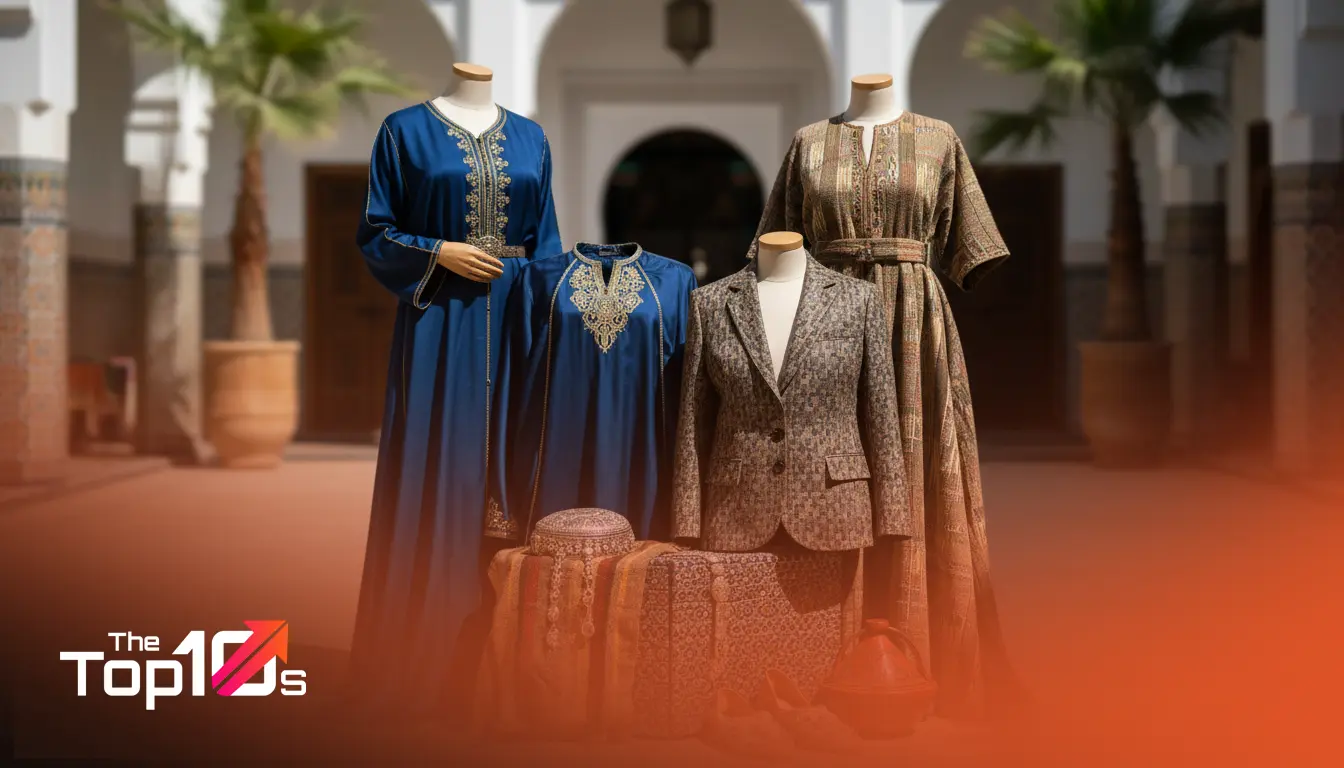
Morocco has always been a sensory overload in the best possible way. Between the ochre walls of Marrakech and the blue hues of Chefchaouen, there is a texture to life here that naturally translates into clothing. But the fashion scene in Morocco has shifted. It is no longer just about the traditional Caftan or the Djellaba, though those remain vital cultural pillars. A new wave of creatives is blending ancient Berber craftsmanship with streetwear, avant-garde silhouettes, and sustainable practices.
You might be looking for a couturier to design a bridal ensemble, or perhaps you are a retailer searching for the next breakout brand to stock. Finding the right creative partner involves understanding the nuance between “trend” and “heritage.” The designers leading the charge right now aren’t just making clothes; they are preserving the skilled work of the Maalems (master artisans) while pushing boundaries that command attention on global runways.
This isn’t just a list of names. It is a look at the minds shaping North African aesthetics today. Whether you need high-end luxury or accessible ready-to-wear, knowing who drives the needle forward helps you make smarter choices.
Quick Takeaways: Moroccan Fashion Scene
- Heritage meets Modernity: The top designers successfully merge traditional embroidery (tarz) with contemporary cuts.
- Slow Fashion Focus: Many leading studios prioritize made-to-order models to reduce waste and ensure exclusivity.
- Regional Diversity: Styles vary significantly between the chaotic energy of Casablanca and the artisanal focus of Marrakech.
- Sourcing Matters: The best designers have direct relationships with local weavers and tanners, ensuring material authenticity.
How We Identified Leading Fashion Designers
Selecting the most influential figures in a vibrant industry requires looking beyond Instagram follower counts. Our approach focused on the tangible impact these creatives have on the industry and their clients. We analyzed the longevity of their careers and their ability to maintain relevance in a fast-moving market.
We looked for consistency in collection quality. A great designer does not just have one good season; they build a narrative over years. We also considered their technical education and training, whether self-taught through years of atelier work or formally educated in design schools. Public reception played a major role as well. We looked for designers who receive positive feedback regarding fit, fabric durability, and client service. Finally, we examined their contribution to the local ecosystem—specifically, how they support local artisans and preserve traditional Moroccan techniques.
List of 10 Best Fashion Designers in Morocco
| SNO | Name | Best For |
|---|---|---|
| 1 | Artsi Ifrach (Maison ARTC) | One-of-a-kind, wearable art |
| 2 | Fadila El Gadi | Quiet luxury, impeccable finishing |
| 3 | Amine Bendriouich | Streetwear with a high-fashion edge |
| 4 | Karim Adduchi | Haute couture with emotional resonance |
| 5 | Said Mahrouf | Contemporary evening wear |
| 6 | Zineb Joundy | Modernized Caftan, regal yet wearable |
| 7 | Ali Drissi | Professional wardrobe, tailored blazers, and smart separates |
| 8 | Yassine Morabito | Dark, glam-rock, and street-infused fashion |
| 9 | Meryem Boussikouk | Delicate, traditional wedding attire |
| 10 | Salima El Boussouni | Pure, unfiltered glamour rooted in history |
Top 10 Fashion Designers in Morocco
These individuals represent a spectrum of style, from the guardians of tradition to the rebels redefining what Moroccan fashion looks like.
1. Artsi Ifrach (Maison ARTC)
Based in Marrakech, Artsi Ifrach is less of a conventional designer and more of a fashion artist. His label, Maison ARTC, is renowned for creating one-of-a-kind pieces that refuse to adhere to seasonal trends. He creates exclusively from vintage fabrics, antique textiles, and found materials, piecing them together to form sculptural, emotive garments.
His work is deeply personal. It often explores themes of memory and culture. Because he does not produce mass-market collections, his studio appeals to collectors and those who view clothing as wearable art. His strength lies in his ability to make the past feel shockingly modern. If you want a piece that no one else in the world owns, Artsi is the creative force to seek out.
2. Fadila El Gadi
Fadila El Gadi is a pillar of Moroccan elegance. She has spent decades refining the art of embroidery, bringing it to contemporary silhouettes like coats, tunics, and trousers. Her designs are understated yet powerful, often favoring a neutral palette that allows the intricate needlework to speak for itself.
What sets her apart is her commitment to the craft. She founded a school in Salé specifically to train underprivileged youth in traditional embroidery techniques, ensuring the skill survives. Her clothes are perfect for clients who value quiet luxury and impeccable finishing. You won’t find loud logos here, just masterful construction that commands respect.
3. Amine Bendriouich
If you are looking for the punk rock spirit of Casablanca, you look for Amine Bendriouich. He was one of the first to truly disrupt the local scene with his brand, “Amine Bendriouich Couture & Bullshit.” His approach is androgynous, bold, and heavily influenced by urban culture and music.
Amine does not cater to the traditionalist. His cuts are geometric, his prints are often graphic, and his attitude is unapologetic. He is the ideal designer for those interested in streetwear with a high-fashion edge. His work demonstrates that Moroccan fashion is not limited to silk and velvet; it can also be denim, leather, and attitude.
4. Karim Adduchi
Although he creates much of his work between Amsterdam and Morocco, Karim Adduchi’s soul is firmly rooted in his Berber heritage. He is a storyteller who uses fabric as his medium. His collections often pay homage to the women of his childhood, utilizing traditional weaving techniques in sophisticated, architectural ways.
Adduchi is known for his ability to translate rural, tribal aesthetics into haute couture that fits on a Paris runway. His strength is emotional resonance; his clothes feel important. This makes him a strong choice for gala wear or statement pieces where the backstory of the garment matters as much as the look.
5. Said Mahrouf
Said Mahrouf brings a performance art background to fashion design. He focuses on the interaction between the fabric and the body in motion. His aesthetic is defined by draping and fluid lines. You rarely see rigid structures in his work; instead, he favors materials that hang, flow, and move effortlessly.
He specializes in contemporary evening wear that feels ethereal. His designs are particularly suited for women who want to look elegant without feeling constricted. Mahrouf’s mastery of the “greque” drape and monochromatic color schemes makes his pieces timeless rather than trendy.
6. Zineb Joundy
Zineb Joundy represents the bridge between the royal heritage of the Caftan and the practicality of modern dressing. Coming from a family with deep roots in Moroccan fashion, she respects the rules but isn’t afraid to bend them. Her designs often feature rock-chic elements, mixing traditional cuts with unexpected hardware or leather details.
Her work is distinct because it feels regal yet wearable. She understands that the modern Moroccan woman works, travels, and socializes, and needs clothes that transition across these roles. Joundy is an excellent option for those seeking a modernized Caftan that doesn’t feel like a costume.
7. Ali Drissi
Ali Drissi is the creative mind behind “Bureau de Mode.” His background in management and industry gives his designs a sharp, structured appeal. He designs for the working woman who needs functionality without sacrificing style. His collections often feature tailored blazers, structured pants, and smart separates.
While he understands the local market, his aesthetic is decidedly international. He uses color fearlessly but always within clean lines. If you are building a professional wardrobe that needs to stand out in a boardroom in Casablanca or London, Drissi’s tailoring is reliable and sharp.
8. Yassine Morabito
Yassine Morabito is the wild child of the list. He captured attention early on by customizing sneakers and jackets, eventually launching a full ready-to-wear line. His aesthetic is dark, glam-rock, and street-infused. He often collaborates with international brands, bringing a Moroccan touch to global streetwear conversations.
His strength is in graphics and distressed textiles. He speaks the language of Gen Z and millennials who view fashion as an act of rebellion. Morabito is the go-to designer for limited-edition drops and casual wear that carries a heavy stylistic punch.
9. Meryem Boussikouk
For those who appreciate the intricacy of the Caftan but want a lighter touch, Meryem Boussikouk is a name to know. She is celebrated for her “bzoizo” technique—a specific, tiny embroidery stitch that requires immense patience and skill. Her work softens the often heavy traditional wedding attire into something more delicate.
She excels at color combinations, often mixing pastels with vibrant jewel tones in ways that shouldn’t work but do. Her atelier is best suited for clients preparing for traditional ceremonies who want to avoid the “heavy curtain” look that some traditional garments can have.
10. Salima El Boussouni
Founder of the brand Caftan.me, Salima El Boussouni focuses on the grandeur of Moroccan tradition. She understands that for many, the Caftan is a symbol of celebration. Her designs are opulent, using rich velvets (mobra) and heavy gold thread (sqalli).
Despite the opulence, she maintains a strict standard of cut and fit. The garment does not overwhelm the wearer. She is particularly strong in the bridal sector, providing the majestic aesthetic required for Moroccan weddings. If the goal is pure, unfiltered glamour rooted in history, Salima delivers consistently.
What Defines a Great Fashion Designer in Morocco?
Understanding the local fashion landscape requires realizing that Morocco is a country of duality. A great designer here must navigate the tension between the sacred traditions of the past and the digital speed of the future. The most respected professionals understand that “modernizing” doesn’t mean erasing culture; it means translating it.
Texture plays a massive role. In a country known for its tanneries and weaving co-ops, a designer who uses cheap, synthetic imports rarely lasts long. The tactical feel of the garment—the weight of the silk, the stiffness of the linen—is a primary indicator of quality. Furthermore, the relationship with artisans is crucial. Designers who treat their embroiderers and weavers as partners rather than just labor tend to produce work with more soul and durability.
When exploring regional creativity, it is often helpful to look at the wider North African context. For instance, comparing Moroccan techniques with the Top 10 Fashion Designers in Egypt can reveal distinct regional aesthetics, showing how history shapes the output of neighboring fashion capitals.
How to Choose the Right Fashion Designer for Your Needs
Committing to a designer, especially for custom work, is an investment of trust and money. Here is how to ensure you make the right match.
Assess Your Timeline
Moroccan couture is slow fashion. A fully embroidered, hand-beaded piece cannot be rushed. If you are looking for a complex Caftan or a bespoke suit, you should approach a designer at least three to four months in advance. Ready-to-wear designers like Amine Bendriouich or Ali Drissi can cater to shorter timelines, but the “Maalem” work takes time.
Check the “Signature”
Every designer has a signature. Do not go to Maison ARTC asking for a simple, plain black business suit. Do not go to Ali Drissi asking for a traditional bridal Takchita. Review their previous three collections. If their style aligns with your vision, the collaboration will be smooth. If you are asking them to copy a photo you found on Pinterest that looks nothing like their work, you will likely be disappointed.
Communication Style
Many ateliers in Morocco are small, family-run operations. Clarify how fittings will work. Will you need to be in Casablanca or Marrakech for multiple sessions? Does the designer communicate via WhatsApp or formal email? Establishing these logistical expectations early prevents frustration during the production process.
Frequently Asked Questions
How much does a custom Moroccan Caftan cost?
Prices vary wildly based on fabric and embroidery. A simple designer piece might start around $500, while intricate haute couture pieces suitable for weddings can easily range from $3,000 to over $10,000 depending on the complexity of the handwork.
Do these designers ship internationally?
Most of the established names like Fadila El Gadi and Maison ARTC have experience with international clients and shipping. However, for custom fits, they often prefer at least one in-person consultation to ensure the measurements are precise.
Is Moroccan fashion sustainable?
Generally, yes. The high-end Moroccan market is built on a “made-to-order” model, which naturally minimizes waste. Furthermore, the reliance on local artisans creates a sustainable economic loop within the community, keeping traditional skills alive.
Can I visit their ateliers?
Many designers in Marrakech and Casablanca have showrooms open to the public, while others operate by appointment only. It is always best to contact the brand via their official website or social media channels to schedule a visit.
What is the difference between a Caftan and a Djellaba?
A Djellaba typically has a hood and is worn as an outer garment for both casual and semi-formal occasions. A Caftan usually does not have a hood and is often more ornate, worn primarily by women for celebrations, parties, and weddings.
Conclusion
The fashion landscape in Morocco is one of the most exciting in the world right now because it refuses to be just one thing. It is ancient history, and it is futuristic streetwear. It is serious craftsmanship, and it is playful experimentation. Whether you are drawn to the architectural drapes of Said Mahrouf or the rebellious graphics of Yassine Morabito, the talent pool here is deep.
When you choose a designer from this region, you aren’t just buying a piece of clothing. You are buying into a lineage of craft that has survived centuries. Take the time to research their portfolios, understand their specific aesthetic, and choose the one that resonates with your personal style narrative. The right garment, made by the right hands, is something you will keep forever.