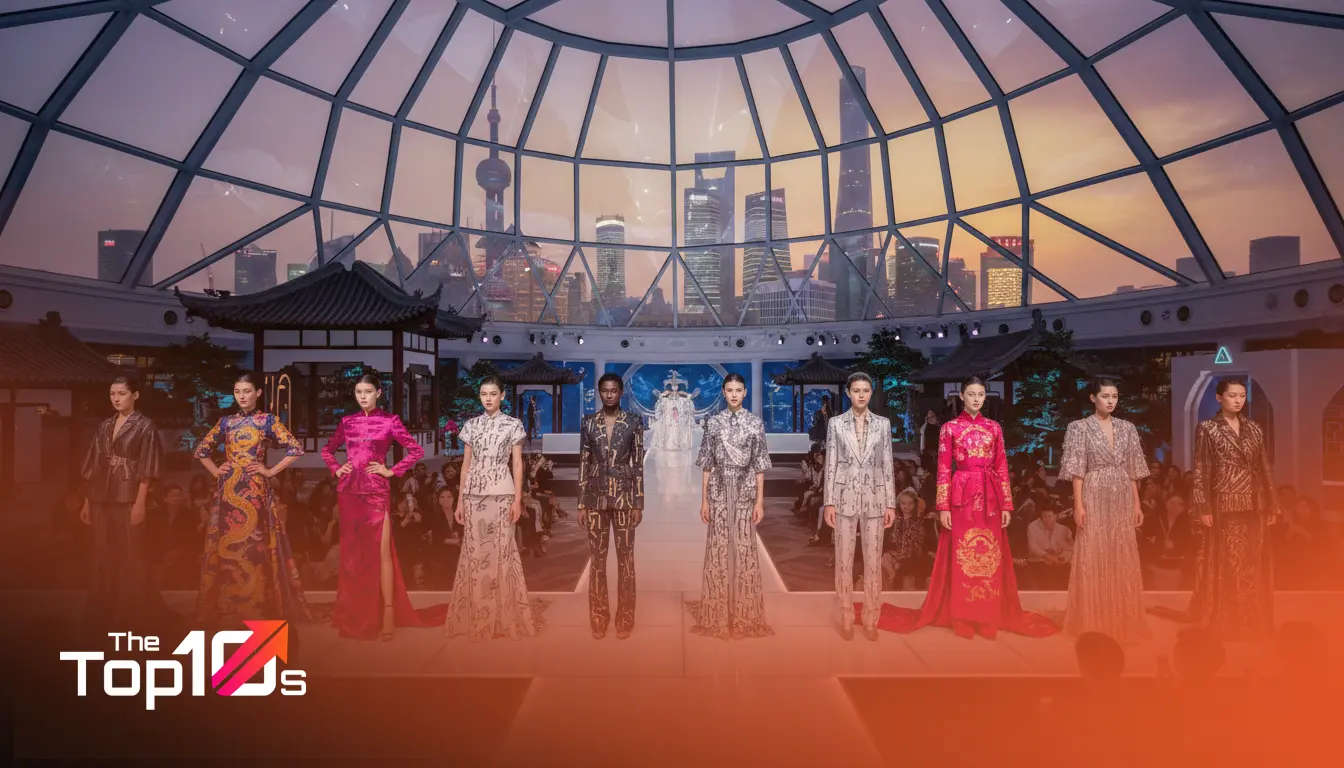
Shanghai doesn’t just follow trends; it dismantles them and rebuilds something entirely new. If you walk through the streets of the French Concession or observe the crowds near Xintiandi, you quickly realize that this city operates on a different frequency. The energy here is frantic, creative, and deeply rooted in a history of textile mastery.
For retailers, fashion enthusiasts, and brand consultants, understanding the best fashion designers in Shanghai isn’t just about knowing names. It is about understanding a shift in the global apparel narrative. We are moving away from the era where China was solely the world’s factory. Today, Shanghai represents the brain, the heart, and the hands of high-concept luxury and avant-garde streetwear.
Finding the right creative talent in this sprawling metropolis can feel overwhelming. The sheer volume of emerging labels is staggering. Yet, specific names rise to the top—not just because of hype, but due to their command over fabric, silhouette, and storytelling. Whether you are looking for deconstructed tailoring or ethereal, tech-infused gowns, Shanghai’s design talent delivers a level of craftsmanship that rivals Milan or Paris.
Quick Takeaways
- Fabric is King: The top designers here often develop their own textiles rather than sourcing off-the-shelf materials.
- East Meets Future: Expect a blend of traditional Chinese aesthetics (like intricate knotting) with hyper-modern, sci-fi elements.
- Global Reach: Most listed designers show regularly in Paris, London, or Milan, validating their international appeal.
- Gender Fluidity: Many Shanghai creatives are blurring the lines between menswear and womenswear, opting for unisex structures.
How We Identified Leading Fashion Designers
Selecting the most influential figures in Shanghai’s fashion scene requires looking beyond Instagram follower counts. Influence in this industry is measured by longevity, innovation, and respect among peers. Our selection process prioritized professionals who have demonstrated consistent growth over multiple seasons.
We analyzed public reception following major events like Shanghai Fashion Week. We also looked at stockist lists—identifying which designers are carried by prestigious retailers like Dover Street Market, Labelhood, or Net-a-Porter. A designer’s ability to maintain commercial viability while pushing artistic boundaries was a key indicator. Furthermore, we considered the technical complexity of their garments. The top fashion designers in Shanghai are rarely minimalists; they are architects of cloth who understand structural engineering as much as aesthetics.
List of 10 Best Fashion Designers in Shanghai
| SNO | Name | Best for |
|---|---|---|
| 1 | Uma Wang | Artisanal Luxury & Textural Knitwear |
| 2 | Angel Chen | Colorful Fusion Streetwear |
| 3 | Shushu/Tong | Modern Femininity & Tailoring |
| 4 | Ziggy Chen | Deconstructed Menswear & Avant-Garde |
| 5 | Susan Fang | Tech-Infused Ethereal Wear |
| 6 | Chen Peng | “One-Size” Outerwear & Inclusivity |
| 7 | Ming Ma | Sculptural Elegance |
| 8 | Windowsen (Sensen Lii) | Cyber-Couture & Performance Art |
| 9 | Xu Zhi | Textile Innovation & Braiding |
| 10 | Peng Tai | Herbal Dyeing & Structural Romanticism |
Top 10 Fashion Designers in Shanghai
The following individuals and duos represent the vanguard of Chinese fashion. Each brings a distinct perspective, ranging from dark, artisanal romanticism to bubbly, pop-culture-infused rebellion.
1. Uma Wang
Specialization: Artisanal Luxury & Textural Knitwear
Uma Wang is arguably the most globally recognized name coming out of the Shanghai scene today. Since launching her eponymous label in 2009, she has mastered the art of “imperfect perfection.” Her work is rarely about sharp, restrictive tailoring. Instead, she focuses on how fabric moves against the body.
Wang is obsessed with textiles. She often mixes knits with velvet to create garments that look heirloom-quality, as if they have been lived in and loved for decades. Her color palette usually gravitates towards earthy tones—rust, moss, ochre, and charcoal. For buyers or enthusiasts looking for clothing that prioritizes sensory experience and comfort without sacrificing elegance, Uma Wang is the standard-bearer.
2. Angel Chen
Specialization: Colorful Fusion Streetwear
If Uma Wang is the quiet poet, Angel Chen is the rockstar. Her aesthetic is loud, vibrant, and unapologetically youthful. Chen famously fuses Eastern iconography with Western street culture. You might see a bomber jacket embroidered with traditional tigers, but styled in a way that feels at home in a London rave.
Her approach to color is fearless. She utilizes high-saturation reds, yellows, and blues, often clashing them intentionally to create visual friction. Chen has also proven her commercial savvy through high-profile collaborations with brands like Adidas and Canada Goose. She represents the new energy of Shanghai—bold, fast, and globally connected.
3. Shushu/Tong
Specialization: Modern Femininity & Tailoring
Founded by Liushu Lei and Yutong Jiang, this brand has captured the hearts of the “Gen Z” luxury consumer. Their design language is distinctive: it explores the concept of the “girl with a secret.” On the surface, the clothes appear sweet, utilizing bows, ruffles, and pastel shades.
However, look closer, and you see the edge. The cuts are sharp, the silhouettes are exaggerated, and there is a subversive undertone to the sweetness. They excel at tailoring, particularly in their structured blazers and mini-dresses. Shushu/Tong appeals to those who want to express femininity with a sense of power and attitude rather than passivity.
4. Ziggy Chen
Specialization: Deconstructed Menswear & Avant-Garde
Ziggy Chen operates in the shadows, letting his intricate garments speak for themselves. His work is often compared to the Antwerp Six, yet it retains a specifically Chinese sensibility regarding history and memory. Chen’s philosophy revolves around the collision of the 17th century and the 20th century.
He creates experienced fashion design professionals admire for his construction techniques. A jacket might be reversible, with the interior finishing being just as complex as the exterior. He uses fabrics that feel ancient, utilizing special washing and dyeing techniques to achieve a matte, dusty patina. This is clothing for the intellectual dresser—someone who appreciates the quiet details that go unnoticed by the masses.
5. Susan Fang
Specialization: Tech-Infused Ethereal Wear
Susan Fang is an inventor as much as a designer. She is famous for developing a technique called “air-weaving,” which allows fabric to float off the body, creating a lattice-like structure that adjusts to the wearer’s movement. Her designs are dreamy, often utilizing transparent materials, glass beads, and feathers.
Despite the delicate appearance, there is rigorous mathematics behind her patterns. Fang focuses heavily on sustainability, minimizing waste through her unique weaving methods. Her accessories, particularly her beaded bags and bubble-inspired jewelry, have become instant cult classics in Shanghai.
6. Chen Peng
Specialization: “One-Size” Outerwear & Inclusivity
Chen Peng challenged the industry’s standard sizing with his concept of “one-size” fashion. He is best known for his sculptural puffer jackets. While many designers treat down jackets as purely functional, Peng treats them as soft sculptures. He exaggerates proportions, creating rounded, bulbous shapes that accentuate different parts of the body in unexpected ways.
His work is playful but technically demanding. Creating these massive volumes without making the wearer look shapeless requires precise pattern cutting. Chen Peng is a go-to for statement outerwear that works on a variety of body types, pushing the conversation about inclusivity in the luxury sector.
7. Ming Ma
Specialization: Sculptural Elegance
Ming Ma brings a sense of couture grandeur to ready-to-wear. He often references the silhouettes of the 1950s—cinched waists and voluminous skirts—but updates them with modern fabrics and bold, solid colors. There is a theatricality to his work that feels refreshing.
He is known for his use of jacquard and tulip-shaped cuts. The clothes command space. Ma proves that elegance doesn’t have to be quiet. His designs are perfect for the client who attends gallery openings or galas and wants to stand out without resorting to sequins or excessive embellishment.
8. Windowsen (Sensen Lii)
Specialization: Cyber-Couture & Performance Art
Sensen Lii, the mind behind Windowsen, designs for a galaxy far, far away. His aesthetic is aggressive, alien, and deeply rooted in drag and club culture. If you are looking for traditional wearability, this might not be the stop. But if you want boundary-pushing art, Windowsen is the pinnacle.
He mixes sportswear fabrics with couture techniques, creating platform boots that add six inches of height and bodysuits that reshape the human form. His shows are often the most talked-about events in Shanghai due to their sheer spectacle. This is fashion as armor and identity creation.
9. Xu Zhi
Specialization: Textile Innovation & Braiding
Xu Zhi is synonymous with a specific braiding technique where yarn is stitched onto the fabric to create a fringed, textured surface. This gives his pieces a incredible sense of movement and depth. His aesthetic is romantic and poetic, often exploring themes of intimacy and connection.
While the texture is his signature, his tailoring is equally competent. He makes suits and dresses that feel soft and fluid. Xu Zhi creates for the sophisticated woman who appreciates the touch and feel of a garment as much as the look. It is luxury defined by the hours of handwork visible in every piece.
10. Peng Tai
Specialization: Herbal Dyeing & Structural Romanticism
Peng Tai is distinctive for his approach to color and wellness. He utilizes traditional Chinese herbal medicine in his dyeing process, believing that clothes should interact with the body in a healing way. This results in soft, muted colors that are chemically safe and environmentally friendly.
His construction often involves exposed seams and loose threads, embracing the philosophy of wabi-sabi. The clothes have a structured yet decomposing look, often resembling Victorian garments found in an attic. It is a niche aesthetic, but one that has garnered a fiercely loyal following among those who value artisanal integrity.
What Defines a Great Fashion Designer in Shanghai?
Identifying greatness in this market goes beyond spotting a nice dress. The trusted fashion designers near Shanghai and within the city limits share a few common traits that separate them from mere clothing manufacturers.
First, there is the mastery of hybridity. Shanghai has always been a gateway city. The best designers understand how to respect Chinese heritage without creating costumes. They might take the high collar of a Qipao but execute it in denim or leather. While the capital has its own distinct, regal style—seen when you look at the top 10 fashion designers in Beijing—Shanghai is often viewed as the experimental playground where rules are broken more frequently.
Second, commercial agility is crucial. The Chinese consumer is incredibly savvy and moves fast. A great designer here listens to the market. They adapt their supply chains to be responsive. They understand that in the age of social commerce, a garment must photograph well, but to build a returning client base, it must also be constructed to last.
How to Choose the Right Fashion Designer for Your Needs
Whether you are a buyer stocking a boutique or an individual looking for a custom piece, narrowing down your options requires a strategic approach. Here is how to navigate the selection.
Assess Your Aesthetic Goals
Are you looking for daily wear or art? If you need functional, stylish office wear, designers like Ming Ma or Xu Zhi offer wearability. If you are looking for stage wear or editorial pieces, Windowsen or Angel Chen will provide the necessary drama. Be honest about the end-use of the garment.
Understand the Production Capabilities
Some independent studios in Shanghai produce in very small batches. If you are a retailer looking to order 500 units, a smaller artisanal label like Peng Tai might struggle to meet that demand without a long lead time. Conversely, brands like Angel Chen have more robust production infrastructure suited for wholesale.
Check the Materials
Shanghai designers are famous for proprietary fabrics. Ask about care instructions and durability. A garment made of air-woven tech fabric requires different maintenance than a heavy boiled wool coat. Understanding the material composition is vital for long-term satisfaction.
Frequently Asked Questions
Are Shanghai fashion designers expensive?
Generally, yes. These are luxury and semi-luxury labels. You are paying for original design, often proprietary fabrics, and limited production runs. Prices are comparable to independent designer labels in London or New York.
Do these designers offer made-to-measure services?
Many of the smaller, artisanal studios like Ziggy Chen or Peng Tai may offer custom sizing or adjustments for private clients, but this is usually arranged by appointment. Ready-to-wear brands like Angel Chen typically stick to standard sizing.
Where can I buy these brands internationally?
Most of the designers listed have international stockists. Ssense, Farfetch, Dover Street Market, and Net-a-Porter are common platforms carrying Shanghai talent. Locally, the boutique “Labelhood” is the premier destination.
Is sustainable fashion prominent in Shanghai?
It is a growing focus. Designers like Susan Fang and Peng Tai have built their entire brand ethos around sustainability, utilizing zero-waste cutting techniques and natural dyes. However, the degree of sustainability varies from brand to brand.
How does Shanghai style differ from Western fashion?
Shanghai style is often more adventurous with silhouette and volume. There is less fear of looking “overdressed.” Layering is also more complex, often mixing skirts over pants or multiple textures in a single outfit.
Conclusion
The landscape of fashion in Shanghai is dense, rapid, and incredibly exciting. The top fashion designers in Shanghai are no longer just mimicking Western trends; they are setting them. From the tactile poetry of Uma Wang to the futuristic armor of Windowsen, the city offers a spectrum of creativity that caters to every possible taste.
Engaging with these designers is an investment in the future of fashion. They represent a new global standard where heritage meets technology. We encourage you to dig deeper into these collections. Look at the fabrics close up, understand the construction, and appreciate the narrative behind the seams. Whether you are buying for a store or your own closet, the talent in Shanghai is ready to deliver something truly exceptional.