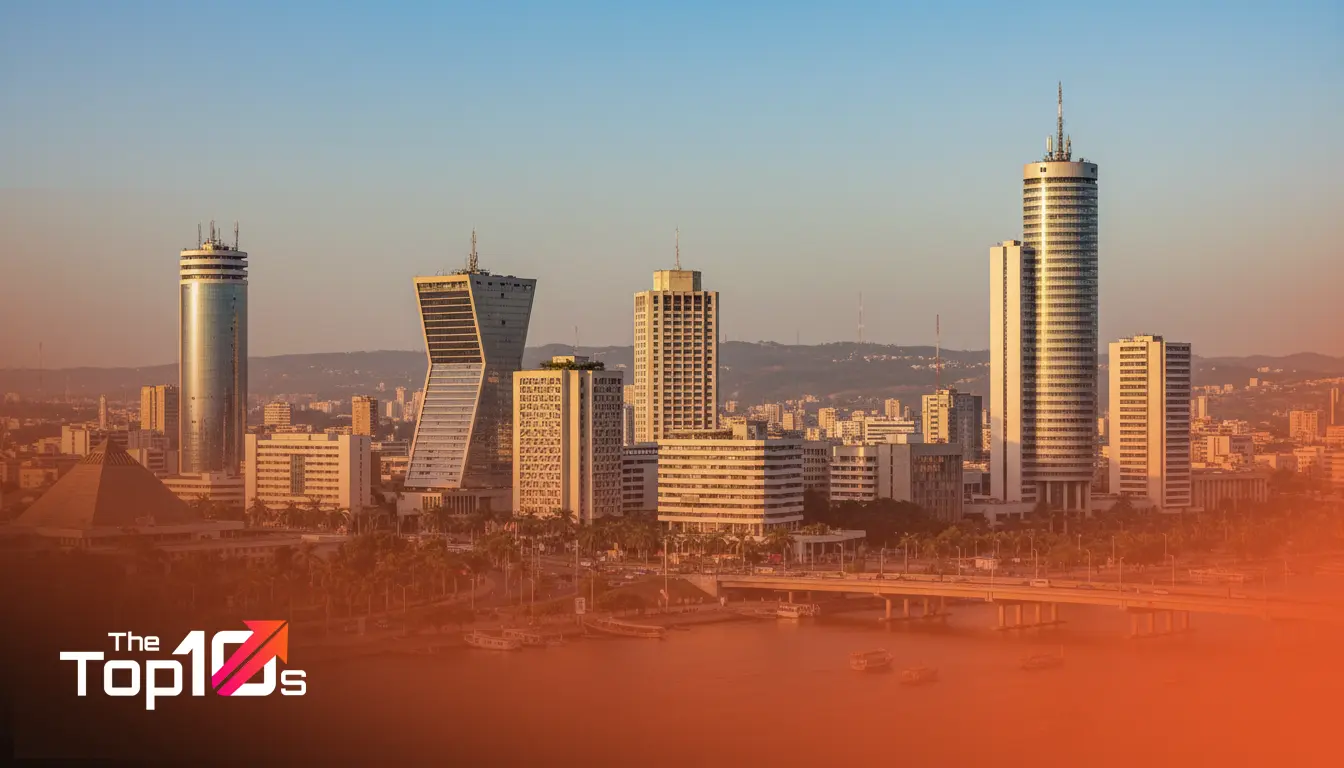
Walking through the streets of Le Plateau or the leafy avenues of Cocody, you quickly realize that Abidjan isn’t just another bustling metropolis. It is a canvas of contrasts. You have the stark, commanding lines of 1970s tropical modernism sitting comfortably next to glass-wrapped contemporary towers that wouldn’t look out of place in Singapore or Dubai. But for anyone looking to build a home, a commercial headquarters, or a retail space here, the visual appeal is only half the story.
The real challenge lies in finding the person who can translate a vision into concrete reality while navigating the specific humid climate and regulatory environment of Côte d’Ivoire. It’s not just about drawing pretty lines; it’s about understanding cross-ventilation, navigating local zoning laws, and managing construction teams that can deliver on time.
If you are planning a project in this economic capital, selecting a partner to guide your design process is the single most significant financial and aesthetic decision you will make. The difference between a stressful, delayed project and a masterpiece often comes down to the lead architect. We’ve analyzed the local market to help you navigate this choice.
Quick Takeaways
- Local Expertise Matters: Abidjan’s tropical climate requires specific bioclimatic design strategies to reduce cooling costs.
- The Scope Varies: Some firms specialize in turnkey delivery (design + build), while others focus purely on design and documentation.
- Regulatory Compliance: Always ensure your architect is registered with the Ordre des Architectes de Côte d’Ivoire (CNOA).
- Communication is Key: The best projects stem from a clear dialogue between client expectations and architectural feasibility.
How We Identified Leading Architects
Determining who qualifies as a “top” professional in a field as subjective as architecture requires looking beyond flashy Instagram renders. Our approach focuses on substance, longevity, and operational reliability. We examined the landscape of Abidjan’s built environment to highlight professionals who consistently demonstrate high standards.
Our selection methodology considers several distinct signals. First, we looked at portfolio depth. Does the firm have a track record of completed projects, or just conceptual drawings? Completed works are the only true metric of an architect’s ability to execute. We also considered design versatility—the ability to adapt style to the client’s needs rather than forcing a signature look onto every site.
Reputation within the construction industry plays a massive role. We looked for firms that are known for producing technically accurate blueprints that engineers and contractors can actually follow. Finally, we prioritized standing with professional bodies. Adherence to the ethical and technical standards set by the Ordre des Architectes de Côte d’Ivoire is a non-negotiable baseline for credibility.
List of 10 Best Architects in Abidjan
| Name | Best For |
|---|---|
| Koffi & Diabaté Architectes | Clients looking for a landmark project, whether a luxury residence or a corporate HQ, who prioritize sustainability and world-class design pedigree. |
| Cabinet 2A (Architecture et Application) | Corporate developers and businesses needing functional, impressive office spaces or retail complexes where timeline and budget adherence are critical. |
| Andrée Diop-Antonnelli (Ark-Architects) | Homeowners seeking a bespoke, personalized residence that feels intimate and tailored to their specific family dynamics. |
| Francis Sossah (CUBAT) | Institutional clients or developers working on community-centric projects that require cultural sensitivity and experience. |
| Cabinet d’Architecture et d’Urbanisme (CAU) | Government entities, educational institutions, or private investors developing multi-unit housing complexes. |
| Stephane M’Bengue (SMB Architectes) | Retail brands, hospitality groups, or residential clients who want a “statement piece” property. |
| AB Communication & Architecture | Mid-sized commercial businesses and residential clients who appreciate minimalism and budget efficiency. |
| Concept Etude Réalisation (CER) | Developers with challenging plots of land or complex structural requirements. |
| Design & Architecture Studio (DAS) | Eco-conscious homeowners and boutique hotels looking to create a sanctuary atmosphere. |
| Cabinet ARCHI-CONCEPT | Investors buying older properties for renovation and resale, or businesses updating their existing premises. |
Top 10 Architects in Abidjan
The following professionals and firms represent a cross-section of the best architectural talent currently operating in Abidjan. They range from established industry veterans to dynamic studios redefining Ivorian living spaces.
1. Koffi & Diabaté Architectes
It is almost impossible to discuss Ivorian architecture without mentioning the partnership of Guillaume Koffi and Issa Diabaté. Founded in 2001, this firm has essentially set the standard for contemporary architecture in West Africa. They are widely recognized for their “New African” aesthetic, which isn’t just about style but about a philosophy of living.
Notable Strengths: Their approach heavily favors sustainability and integration with nature. They are masters of the “tropical modern” style, utilizing local materials and passive cooling techniques that render air conditioning optional in many spaces. Their work on the Assinie-Mafia church and various high-end residential complexes in Cocody speaks volumes.
Who They Are Best For: Clients looking for a landmark project, whether a luxury residence or a corporate HQ, who prioritize sustainability and world-class design pedigree.
2. Cabinet 2A (Architecture et Application)
Cabinet 2A has carved out a reputation for reliability and technical precision. In a market where project delays are common, this firm is often praised for its rigorous project management and structural pragmatism. They handle a diverse range of projects but shine particularly bright in the commercial and institutional sectors.
Notable Strengths: The firm excels in maximizing space in dense urban environments like Plateau and Marcory. They have a strong grasp of urban planning regulations, ensuring that complex commercial projects move through the approval pipeline smoothly without compromising the design intent.
Who They Are Best For: Corporate developers and businesses needing functional, impressive office spaces or retail complexes where timeline and budget adherence are critical.
3. Andrée Diop-Antonnelli (Ark-Architects)
As one of the prominent female voices in West African architecture, Andrée Diop-Antonnelli brings a distinct sensitivity to her projects. Her firm, Ark-Architects, focuses heavily on the human experience within a space. It’s not just about how the building looks from the street, but how the light hits the living room floor in the morning.
Notable Strengths: Residential renovations and new builds are a sweet spot here. There is a strong emphasis on interior flow and the relationship between indoor and outdoor spaces—a crucial element for the Abidjan lifestyle.
Who They Are Best For: Homeowners seeking a bespoke, personalized residence that feels intimate and tailored to their specific family dynamics.
4. Francis Sossah (CUBAT)
With decades of experience, Francis Sossah is a veteran in the Ivorian architectural scene. CUBAT is known for bridging the gap between traditional Ivorian aesthetics and modern construction requirements. Sossah’s work often reflects a deep respect for local culture while utilizing modern engineering.
Notable Strengths: Versatility is a key asset here. CUBAT has successfully delivered projects ranging from religious buildings to large-scale housing developments. They are particularly adept at handling large-volume projects that require significant coordination.
Who They Are Best For: Institutional clients or developers working on community-centric projects that require cultural sensitivity and experience.
5. Cabinet d’Architecture et d’Urbanisme (CAU)
CAU represents the intersection of urban planning and architectural design. They don’t just look at the building; they look at the neighborhood. This macro-to-micro perspective makes them invaluable for projects that need to fit into a developing urban fabric.
Notable Strengths: Their portfolio includes significant public works and educational facilities. They are strong in functionality—designing buildings that handle high foot traffic and heavy usage without deteriorating. Durability is a core component of their design language.
Who They Are Best For: Government entities, educational institutions, or private investors developing multi-unit housing complexes.
6. Stephane M’Bengue (SMB Architectes)
SMB Architectes brings a fresh, energetic approach to the Abidjan skyline. Stephane M’Bengue is known for pushing boundaries with geometric forms and innovative façade treatments. If you see a building in Zone 4 that makes you stop and stare because of its unique angles, it might be an SMB project.
Notable Strengths: Visual impact and branding. For commercial clients, M’Bengue designs buildings that serve as marketing tools themselves. They are also highly proficient in 3D modeling, helping clients visualize the end product vividly before ground is broken.
Who They Are Best For: Retail brands, hospitality groups, or residential clients who want a “statement piece” property.
7. AB Communication & Architecture
This firm understands that architecture is a form of communication. Their designs are clean, modern, and highly legible. They have a knack for stripping away the unnecessary and focusing on essential forms, which often results in cost-effective yet elegant solutions.
Notable Strengths: Minimalist design that works within a budget. They are skilled at achieving a high-end look without necessarily using the most expensive imported materials, relying instead on proportion and light.
Who They Are Best For: Mid-sized commercial businesses and residential clients who appreciate minimalism and budget efficiency.
8. Concept Etude Réalisation (CER)
CER is a powerhouse when it comes to the technical side of building. While they produce beautiful designs, their core reputation is built on engineering soundness and feasibility. They are the firm you go to when you have a difficult site—steep slopes in Cocody or marshy ground in other districts.
Notable Strengths: Site adaptation and technical problem solving. They are excellent at structural integration, ensuring that daring designs stand the test of time and weather.
Who They Are Best For: Developers with challenging plots of land or complex structural requirements.
9. Design & Architecture Studio (DAS)
DAS focuses heavily on the interior-exterior connection. Their architecture often feels like landscaping and building merged into one. This approach is perfect for the lush environment of Côte d’Ivoire, where green space is a premium luxury.
Notable Strengths: Landscape integration. Their designs frequently feature courtyards, green walls, and rooftop gardens. They prioritize air quality and natural light, creating healthy environments for occupants.
Who They Are Best For: Eco-conscious homeowners and boutique hotels looking to create a sanctuary atmosphere.
10. Cabinet ARCHI-CONCEPT
Rounding out our list is a firm known for consistency and client service. ARCHI-CONCEPT has a broad portfolio, but they have gained specific traction in the renovation market—taking older colonial or 80s era buildings and retrofitting them for modern use.
Notable Strengths: Adaptive reuse. They are skilled at seeing potential in existing structures, saving clients the cost of demolition and new foundations while delivering a product that feels brand new.
Who They Are Best For: Investors buying older properties for renovation and resale, or businesses updating their existing premises.
What Defines a Great Architect in Abidjan?
Architecture in West Africa requires a different toolkit than in Europe or North America. A truly great architect in Abidjan possesses a deep understanding of bioclimatic principles. The heat and humidity here are relentless. A poorly designed glass box will become a greenhouse, resulting in astronomical energy bills. Top-tier professionals design for the sun’s path, utilizing overhangs, brise-soleil, and orientation to keep interiors cool naturally.
Furthermore, excellence here is defined by material knowledge. The salty air near the lagoon and the ocean can corrode standard fittings rapidly. An experienced local architect knows which materials age gracefully in the tropics—preferring treated hardwoods, concrete, and aluminum over materials that might rust or rot. You can see similar adaptation strategies when you look at leading designers across the continent; for example, if you were to compare these methods with the top 10 architects in Windhoek, you would see a stark difference in how they handle arid climates versus Abidjan’s humidity.
Finally, a great architect acts as a diplomat. The bureaucracy involved in obtaining building permits (Permis de Construire) in Abidjan can be complex. The best architects have established relationships with the Ministry of Construction and Urban Planning and understand exactly how to prepare dossiers to avoid months of administrative limbo.
How to Choose the Right Architect for Your Needs
Selecting the right partner is less about finding the “best” architect in the abstract and more about finding the best fit for your specific project. Here is a framework to guide your decision:
Check the Portfolio for Relevance
If you are building a private villa in Riviera Golf, a firm that has only done industrial warehouses in Yopougon might not be the right fit, regardless of their technical skill. Look for projects in their past that mirror the scale and complexity of what you want to achieve.
Assess Their Communication Style
Architecture is a long game—often lasting two to three years from sketch to ribbon-cutting. You need to actually like the person you are hiring. During the initial consultation, do they listen more than they talk? Do they ask about how you live or work, or do they immediately start sketching what they want to build?
Verify Registration
Never skip this step. Ensure the architect is a current member of the CNOA. This offers you legal protection and ensures they carry the necessary professional liability insurance. You can verify this through local industry directories or resources like ArchDaily which often features accredited professionals.
Discuss Budget and Fees Upfront
Be wary of architects who give you a fee structure based on a handshake. Professional firms will provide a clear contract outlining their fees (usually a percentage of construction costs or a fixed lump sum) and, crucially, what is not included. Ask specifically about site supervision visits—this is where many disputes arise later.
Frequently Asked Questions
How much do architects in Abidjan charge?
Architectural fees in Côte d’Ivoire typically range between 5% and 12% of the total construction cost. This percentage often depends on the complexity of the project and the reputation of the firm. Some smaller renovation projects may be billed as a flat fee.
Do I need an architect for a small renovation?
While you might not need a full architectural commission for a bathroom remodel, any renovation that involves structural changes (moving walls, adding floors) legally requires a permit, which usually necessitates an architect’s stamp. Beyond legality, an architect maximizes space in ways a contractor generally cannot.
How long does the design process take?
For a standard single-family home, the design phase—from initial concept to final blueprints ready for permitting—usually takes between 3 to 5 months. Commercial projects can take significantly longer depending on the necessary impact studies.
Can architects in Abidjan handle the construction too?
Some firms offer “clef en main” (turnkey) services where they manage the construction, but traditionally, the architect acts as the client’s representative to oversee an independent general contractor. This separation of powers is often better for quality control.
What is the biggest mistake clients make when hiring an architect?
The most common error is hiring based solely on the lowest fee. A cheap design often leads to expensive problems during construction due to vague plans or unresolved details. The cost of the architect is a fraction of the build cost; investing in quality plans saves money in the long run.
Building Your Vision
Abidjan is a city in the midst of a transformation, and your project contributes to that evolving skyline. Whether you are looking to build a sanctuary for your family or a commercial hub for your business, the architects listed above represent the capability and creativity available in this market.
Don’t rush the selection process. Meet with three or four different firms. Walk through one of their completed buildings if possible. The right architect will not just design a structure; they will advocate for your vision, protect your budget, and ensure that the final result stands strong against the elements and the test of time.