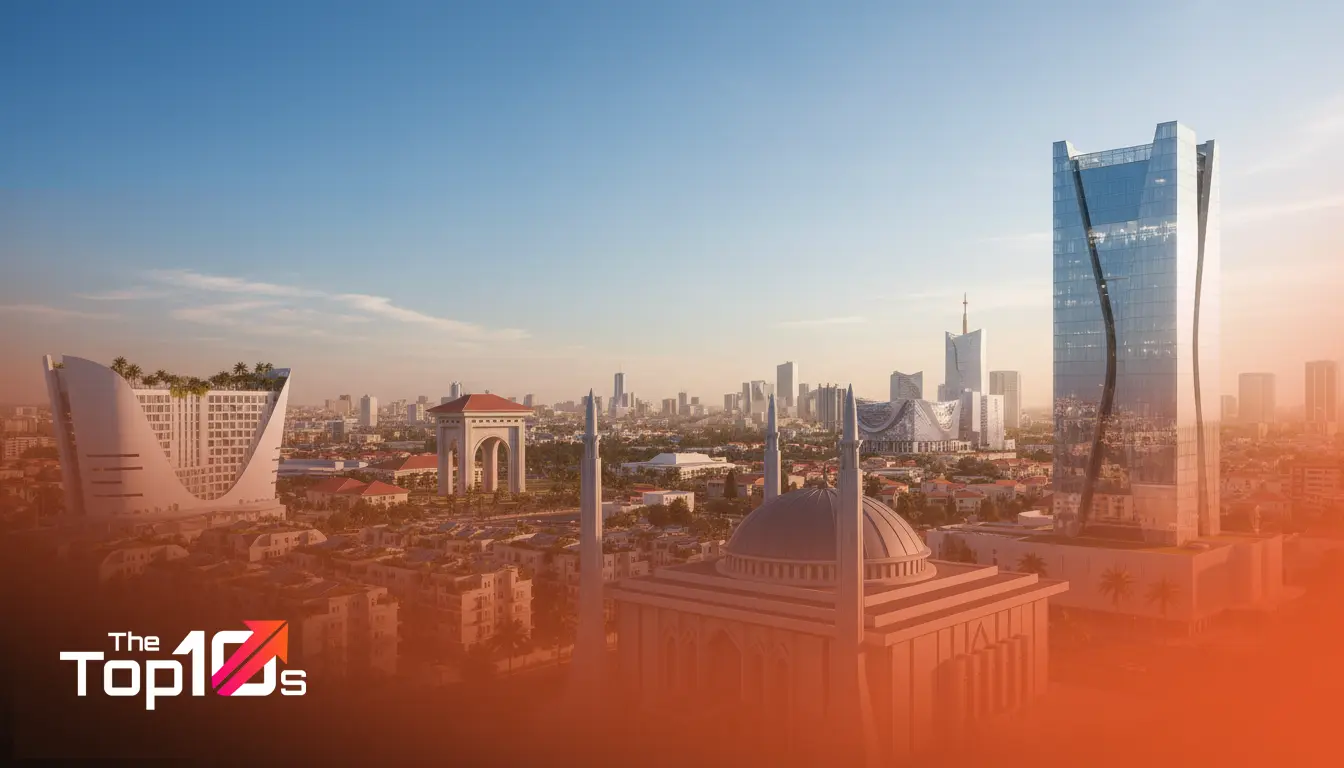
Have you ever stood in the heat of a heavy Accra afternoon, looked up at a building, and wondered, “How does that structure stay cool without running the AC at full blast?”That is the difference between a building that merely exists and architecture that works.Accra is a city in rapid transition. From the leafy, established avenues of Cantonments to the bustling commercial rise of Airport City, the skyline is shifting. But finding the right person to shape that skyline—or just your dream home—is tricky. You aren’t just looking for someone who can draw pretty pictures; you need a professional who understands the unique microclimate of the Gulf of Guinea, navigates the complexities of the Accra Metropolitan Assembly (AMA) permitting process, and knows exactly where to source quality materials when the supply chain gets tight.If you are planning a project in Ghana’s capital, the stakes are high. A great architect saves you money by designing for efficiency and durability. A poor choice can lead to endless retrofits and a home that fights the climate rather than embracing it.
Quick Takeaways: Assessing Accra’s Design Talent
- Climate is King: The best local architects prioritize “tropical modernism”—designs that use cross-ventilation and shading to reduce heat naturally.
- Regulation Matters: Verify that your professional is registered with the Ghana Institute of Architects (GIA) and the Architects Registration Council (ARC).
- Scope of Work: Some firms offer “design-build” services (handling construction too), while others focus purely on design and supervision. Know which model fits your stress tolerance.
- Contextual Design: Look for portfolios that feature local materials like laterite stone or timber, which age better in Accra’s humidity than imported synthetics.
How We Identified Leading Architects
Pinpointing the top architectural talent in a city as dynamic as Accra requires more than a quick Google search. We looked at the substance behind the renderings. Our selection process focused on firms and individuals who have demonstrated consistency over time.We analyzed their portfolio diversity—do they only do luxury villas, or can they handle complex commercial retrofits? We looked for signs of sustainable thinking. In a city where electricity costs are rising, architects who ignore energy efficiency aren’t serving their clients well. We also considered their standing within the professional community. Reputation among peers often reveals who actually delivers on technical drawings and who simply creates concept art.Finally, we looked for local context. The professionals listed below aren’t just dropping European designs into West Africa; they are adapting global best practices to fit the Ghanaian reality.
List of 10 Best Architects in Accra
| Name | Best For |
|---|---|
| Adjaye Associates (Accra Office) | Clients looking for landmark status |
| Orthner Orthner & Associates (OOA) | Homeowners and organizations who care about long-term energy costs and environmental impact |
| Spektra Global | Business owners and developers who need a turnkey solution and want to avoid the friction often found between architects and contractors |
| Sutherland & Sutherland Architects | Clients who value prestige, reliability, and classic contemporary aesthetics over avant-garde experiments |
| S. Tetteh + Associates | NGOs, developers, or individuals interested in “smart” construction that respects the local economic and social context |
| Mobius Architecture | The modern homeowner who wants a property that looks like it belongs in a design magazine |
| Archi-Datum | Developers and families needing efficient, livable designs that maximize land value |
| Tekton Consult | Institutional clients planning large-capacity buildings where safety and crowd flow are paramount |
| Multi-CAD | Investors who want a smooth process from concept to permit approval |
| Create One | Individuals building their “forever home” who want a resort-like feel |
Top 10 Architects In Accra
Here are ten architectural practices and professionals shaping the built environment in Accra today.
1. Adjaye Associates (Accra Office)
You cannot discuss architecture in Ghana without acknowledging Sir David Adjaye’s firm. While they are a global entity, their Accra office is deeply entrenched in redefining the African architectural narrative. They are known for projects that carry heavy cultural significance, blending history with ultra-modern forms.Specialization: Major civic projects, high-end cultural centers, and luxury residential estates.Experience: 20+ years (Global), with significant recent focus on Ghana.Notable Strengths: Their work often utilizes light and density in unique ways, referencing traditional African geometries. They are masters of using concrete and earth tones to create structures that feel monumental yet grounded.Best Suited For: Clients looking for landmark status. If you want a building that stands as a piece of art and creates a conversation, this is the direction to look.
2. Orthner Orthner & Associates (OOA)
If sustainability is your primary concern, OOA should be on your radar. This firm has built a strong reputation for promoting green architecture in Ghana. They don’t just talk about eco-friendly design; they implement it through rigorous planning and material selection.Specialization: Sustainable residential, educational facilities, and commercial offices.Experience: Over 15 years in the Ghanaian market.Notable Strengths: They excel at “Tropical Modernism.” Their designs frequently feature large overhangs, brise-soleil (sun breakers), and orientation strategies that minimize solar heat gain. They prove that you don’t need a glass box to look modern.Best Suited For: Homeowners and organizations who care about long-term energy costs and environmental impact.
3. Spektra Global
Spektra Global positions itself as a design-and-build firm, which appeals to clients who want a single point of accountability. Managing contractors in Accra can be a headache; Spektra aims to alleviate that by bridging the gap between the drawing board and the construction site.Specialization: Corporate interiors, commercial buildings, and residential developments.Experience: Established presence with a robust portfolio of completed builds.Notable Strengths: Project management. Their ability to oversee the transition from design to physical structure is a major asset. Their aesthetic is clean, sharp, and corporate-friendly.Best Suited For: Business owners and developers who need a turnkey solution and want to avoid the friction often found between architects and contractors.
4. Sutherland & Sutherland Architects
This is a legacy firm with a reputation for elegance and technical precision. Sutherland & Sutherland has been a staple in the Ghanaian architectural scene for decades. Their work often carries a sense of timelessness, avoiding fleeting trends in favor of solid design principles.Specialization: High-end residential, hospitality, and institutional projects.Experience: Decades of practice with deep roots in the local industry.Notable Strengths: Detail-oriented interiors and landscape integration. They understand how a building sits on the land. Their designs often feel established and mature, rather than experimental.Best Suited For: Clients who value prestige, reliability, and classic contemporary aesthetics over avant-garde experiments.
5. S. Tetteh + Associates
This firm is gaining traction for its thoughtful approach to public space and affordable housing solutions, alongside private commissions. They are heavily involved in the discourse regarding sustainable urbanization in West Africa.Specialization: Public architecture, mixed-use developments, and research-based design.Experience: A dynamic firm with a growing influence on local urban planning discussions.Notable Strengths: Material innovation. They often explore how local materials can be used in contemporary ways to lower construction costs without sacrificing beauty.Best Suited For: NGOs, developers, or individuals interested in “smart” construction that respects the local economic and social context.
6. Mobius Architecture
Mobius brings a flair for the dramatic and the highly modern to Accra’s streets. Their designs often challenge the status quo, featuring bold geometries and striking facades that stand out in any neighborhood.Specialization: Luxury residential and boutique commercial spaces.Experience: A mid-sized firm known for agility and creative daring.Notable Strengths: Visual impact. A Mobius house is usually immediately recognizable. They are not afraid to use steel and glass but do so with an understanding of structural integrity.Best Suited For: The modern homeowner who wants a property that looks like it belongs in a design magazine.
7. Archi-Datum
Archi-Datum represents the reliable, technical backbone of the industry. They handle projects of varying scales with a focus on functionality and client satisfaction. They are less about “starchitect” ego and more about getting the job done right.Specialization: Commercial complexes, health facilities, and residential housing.Experience: Extensive track record with solid project delivery.Notable Strengths: Space planning. They are excellent at maximizing floor plans to ensure every square meter serves a purpose. This is crucial in Accra, where land prices in prime areas are skyrocketing.Best Suited For: Developers and families needing efficient, livable designs that maximize land value.
8. Tekton Consult
Tekton Consult leans heavily into the engineering and technical side of architecture. Their projects are often large-scale and require significant coordination between structural, electrical, and mechanical systems.Specialization: Large-scale commercial, religious auditoriums, and industrial projects.Experience: profound experience in handling complex infrastructure demands.Notable Strengths: Structural logic. Their buildings are designed to last. They prioritize the “bones” of the building, ensuring safety and longevity above all else.Best Suited For: Institutional clients planning large-capacity buildings where safety and crowd flow are paramount.
9. Multi-CAD
Don’t let the name fool you; this isn’t just a drafting service. Multi-CAD has evolved into a full-service architectural consultancy known for navigating the practicalities of the Ghanaian construction environment.Specialization: Residential estates and mid-sized commercial blocks.Experience: Long-standing presence with a deep understanding of local zoning laws.Notable Strengths: Regulatory compliance. They know the ins and outs of obtaining permits and dealing with local authorities, which can speed up the pre-construction phase significantly.Best Suited For: Investors who want a smooth process from concept to permit approval.
10. Create One
Create One focuses on the lifestyle aspect of architecture. Their designs often blur the lines between indoor and outdoor living, which is perfect for the Ghanaian climate (when the mosquitoes are managed!).Specialization: Contemporary residential and hospitality design.Experience: Known for fresh, lifestyle-oriented concepts.Notable Strengths: Atmosphere. They design spaces that feel like retreats. Their use of lighting and texture creates varied moods within a home.Best Suited For: Individuals building their “forever home” who want a resort-like feel.
What Defines a Great Architect in Accra?
Architecture in Accra is distinct from architecture in London, New York, or even Nairobi. Just as developers look for the Top 10 Architects in Mombasa to handle distinct coastal humidity, Accra requires designers who understand the Gulf of Guinea’s unique microclimate.Mastery of AirflowThe heat in Accra is humid, not dry. A great architect knows that simply shading a window isn’t enough; you need to encourage air movement. You will see top professionals orienting buildings to catch the sea breeze from the south while blocking the harsh afternoon sun from the west.Material IntelligenceSalt air corrodes metal quickly in neighborhoods near the coast like Osu or Labadi. A skilled architect specifies materials that resist corrosion and mold. They know that while floor-to-ceiling glass looks beautiful, it turns a house into a greenhouse unless treated with high-performance glazing.Cultural SensitivityGhanaian families often have specific spatial needs—large kitchens for communal cooking, outdoor spaces for gathering, and security considerations that don’t make the house look like a prison. The best architects integrate these cultural requirements seamlessly into the design aesthetic.
How to Choose the Right Architect for Your Needs
Selecting someone from a list is just the first step. Here is how to narrow down your options to the perfect partner.1. Check the RegistrationAlways verify that your architect is in good standing with the Ghana Institute of Architects (GIA). This ensures they have the necessary professional liability and educational background. It offers you a layer of protection if things go wrong.2. Visit a Finished SiteRenderings are digital dreams; buildings are concrete reality. Ask to visit a project the architect completed three to five years ago. How is the paint holding up? are there cracks? Did the design actually prevent flooding during the rainy season? The way a building ages tells you everything about the architect’s technical competence.3. Discuss the “Ghana Factor”Be honest about timelines. Materials can get stuck at Tema Port. Labor can be inconsistent. Ask the architect how they handle these local delays. A good answer isn’t “We never have delays.” A good answer is, “Here is our contingency plan for when delays happen.”4. The Personality MatchDesigning a building takes months, sometimes years. You will be talking to this person constantly. If you don’t like their communication style in the first meeting, you won’t like it six months in when stressful budget decisions need to be made.
Frequently Asked Questions
How much do architects in Accra charge?
Fees vary widely based on reputation and project scope. Generally, architects charge a percentage of the total construction cost, usually between 5% and 15%. Some may offer a lump sum fee for smaller, well-defined projects. Always clarify if this fee includes site supervision or just the design drawings.
Do I need an architect for a simple renovation?
For structural changes (knocking down walls, adding floors), absolutely. You also need an architect to help secure the necessary permits from the AMA or local municipal assembly. Unpermitted work can be demolished by authorities, costing you far more than an architect’s fee.
What is the difference between an Architect and a Draftsman?
A draftsman draws what you tell them to draw. An architect is trained to solve problems you didn’t know you had. An architect considers light, ventilation, structural integrity, and legal compliance. For any significant investment, an architect is essential for risk management.
How long does the design process take in Ghana?
For a standard residential home, the design phase—from concept to final construction drawings—typically takes 3 to 6 months. This timeline can extend if the permitting process with the local assembly faces delays.
Can these architects work outside of Accra?
Yes, most top firms in Accra accept commissions throughout Ghana, including Kumasi, Takoradi, and Tamale. However, you should budget for additional travel and logistical costs for site visits.
Next Steps for Your Project
Your vision for a property in Accra deserves a solid foundation. The architects listed above represent the upper echelon of design thinking in Ghana, but the final choice rests on your specific goals.Start by creating a clear “design brief”—a document outlining your budget, your must-haves, and your lifestyle needs. Then, reach out to three firms from this list. Set up consultations. Pay attention to who listens more than they talk.Building in Accra is an adventure. With the right professional by your side, it’s one that ends with a structure you will be proud to own for generations.