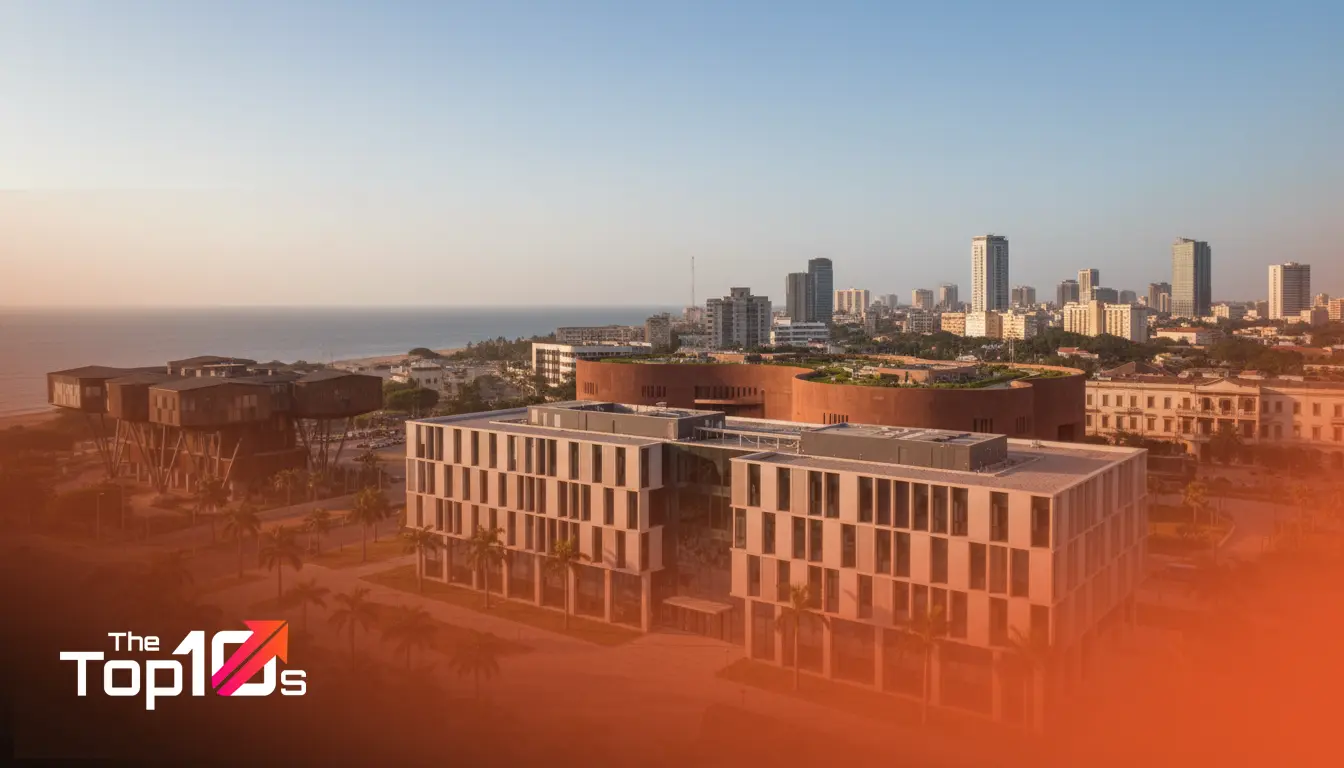
Have you ever walked through the bustling streets of Luanda or driven past the expanding suburbs of Talatona and wondered who is actually responsible for the changing skyline? It’s a question that strikes many property owners and developers. The difference between a building that merely functions and one that inspires often comes down to a single decision: the architectural partner you choose.
Angola presents a unique set of challenges and opportunities for design professionals. You have the intense tropical climate, a unique blend of Portuguese colonial history meeting modern aspirations, and the practical realities of sourcing materials. Finding the best architects in Angola isn’t just about picking someone who can draw pretty pictures. It is about finding a strategist who understands local zoning laws, passive cooling, and the distinct cultural rhythm of the country.
Whether you are planning a high-end residential villa in Miramar or a commercial complex in the city center, the stakes are high. This guide cuts through the noise to highlight professionals who are shaping the built environment right now.
Quick Takeaways: hiring Architectural Talent
- Climate is King: Top professionals prioritize ventilation and shading strategies suitable for Angola’s heat.
- Local Presence Matters: Knowledge of Luanda’s specific permitting processes can save you months of delays.
- Versatility is Standard: Many leading architects here handle both interior design and structural planning.
- Communication: Ensure your architect speaks your language—literally and creatively.
How We Identified Leading Architects
Compiling a list of this nature requires more than a quick internet search. We approached this by looking at the tangible footprint these professionals have left on the region. Our selection criteria focused heavily on portfolio consistency and the ability to execute complex projects within the Angolan context.
We looked for design studios and independent practitioners who demonstrate a deep understanding of the local vernacular. It wasn’t enough to just have a degree; we looked for evidence of built work that has withstood the test of time and climate. We also considered peer recognition within the African architectural community and the diversity of their project types, ranging from urban planning to intimate residential renovations.
Reputation among past clients played a significant role. In an industry driven by word-of-mouth, the professionals listed here are often those recommended by construction managers and developers who value detailed blueprints and realistic project management.
List of 10 Best Architects in Angola
| Name | Best for |
|---|---|
| Costa Lopes | Large-scale commercial developers and government institutions looking for landmark designs. |
| Paula Nascimento (Beyond Entropy Africa) | Cultural institutions, art foundations, and clients wanting avant-garde, thought-provoking concepts. |
| Vasco Vieira Arquitectos | Private clients looking to build statement luxury homes in exclusive neighborhoods. |
| Perkins & Will (Luanda Projects) | Corporate headquarters, healthcare facilities, and multinational office fit-outs. |
| SOAPRO | Industrial projects, mass housing developments, and infrastructure-heavy builds. |
| OODA | Developers looking for a unique selling point or “iconic” architecture to market off-plan. |
| 1LEAP (One Leap) | Homeowners doing renovations and businesses needing high-quality interior architecture. |
| DAR Group (Dar Al-Handasah) | Government contracts, city master planning, and major urban redevelopment zones. |
| Promontorio | Mixed-use high-rises and dense urban residential complexes. |
| Joy Arquitectos | Mid-to-high-end residential housing and boutique commercial spaces. |
Top 10 Architects in Angola
The following list represents a mix of established veterans and innovative studios driving the nation’s architectural conversation forward. Each brings a distinct flavor to the design table.
1. Costa Lopes
If you have spent any time observing the modernization of Luanda, you have likely seen work by Costa Lopes. This firm represents a significant force in the region, known for handling large-scale institutional and public projects. Their approach often marries brutalist geometry with the functional requirements of the tropics.
Why they stand out: Their work on the Universidade Agostinho Neto is frequently cited as a benchmark for educational infrastructure in Africa. They don’t just build structures; they design ecosystems that manage light and airflow naturally.
Best suited for: Large-scale commercial developers and government institutions looking for landmark designs.
2. Paula Nascimento (Beyond Entropy Africa)
Paula Nascimento is a name that resonates well beyond the borders of Angola. As a co-curator of the Angolan Pavilion at the Venice Biennale, which won the Golden Lion, she brings an artistic and research-heavy perspective to architecture. Her work often explores the intersection of social issues, urbanism, and design.
Why she stands out: She views architecture through a cultural lens. Her projects aren’t just buildings; they are commentaries on how people live and interact in urban spaces. This intellectual depth adds a layer of sophistication to her design consulting.
Best suited for: Cultural institutions, art foundations, and clients wanting avant-garde, thought-provoking concepts.
3. Vasco Vieira Arquitectos
While originally based in Portugal, Vasco Vieira has established a formidable reputation in Angola, particularly in the luxury residential sector. His style is instantly recognizable: clean lines, massive cantilevered volumes, and an abundance of glass that blurs the line between indoor and outdoor living.
Why they stand out: This studio masters the “wow factor.” They understand the lifestyle of the ultra-high-net-worth individual, creating villas that feel like private resorts. The technical precision required to execute these gravity-defying designs is immense.
Best suited for: Private clients looking to build statement luxury homes in exclusive neighborhoods.
4. Perkins & Will (Luanda Projects)
As a global heavyweight, Perkins & Will brings international standards and sustainability certifications to the local market. Their involvement in major office towers and mixed-use developments in Angola has introduced rigorous BIM (Building Information Modeling) standards to local construction.
Why they stand out: They offer a level of corporate reliability that attracts multinational companies. Their designs prioritize LEED certification and energy efficiency, which is crucial for reducing long-term operational costs in Luanda’s hot climate.
Best suited for: Corporate headquarters, healthcare facilities, and multinational office fit-outs.
5. SOAPRO
SOAPRO is a staple in the Angolan engineering and architectural landscape. They are less of a boutique design studio and more of a full-service powerhouse. Their portfolio is vast, covering everything from urban planning to complex engineering feats.
Why they stand out: Capability. When a project is technically difficult or involves massive infrastructure components, SOAPRO is often the go-to firm. They have the manpower to handle the bureaucratic and technical heavy lifting that smaller firms might struggle with.
Best suited for: Industrial projects, mass housing developments, and infrastructure-heavy builds.
6. OODA
OODA is a collective that has been making waves with progressive, sometimes experimental designs. They maintain a strong connection between Porto and Luanda, bringing a fresh, younger energy to the market. Their proposals often challenge traditional typologies, looking for new ways to interpret housing and office spaces.
Why they stand out: Their renderings and concepts are often breathtakingly modern. They utilize advanced digital modeling to create organic shapes and facades that stand out in a rigid urban grid.
Best suited for: Developers looking for a unique selling point or “iconic” architecture to market off-plan.
7. 1LEAP (One Leap)
Specializing in a more boutique approach, 1LEAP focuses heavily on the details. They operate with a philosophy that good design is about solving problems elegantly. Their work often spans residential refurbishments and bespoke commercial interiors.
Why they stand out: They are known for being highly collaborative. Clients often report that 1LEAP listens better than most, translating vague desires into concrete, buildable plans without imposing a rigid “signature style” on the owner.
Best suited for: Homeowners doing renovations and businesses needing high-quality interior architecture.
8. DAR Group (Dar Al-Handasah)
You cannot discuss the Angolan built environment without acknowledging the influence of the DAR Group. Responsible for master planning and significant civic structures, they operate at a macro level. Their architects work alongside planners and economists to shape entire districts.
Why they stand out: The sheer scale of their operations. If you are looking at pan-African development or comparing regional aesthetics, you might find similarities in how professionals operate across borders, similar to the top 10 architects in Togo, but DAR operates with a massive global infrastructure behind them.
Best suited for: Government contracts, city master planning, and major urban redevelopment zones.
9. Promontorio
Another firm with deep Lusophone roots, Promontorio has executed several high-profile towers and residential complexes in Luanda. Their architecture is robust and material-focused, often using stone, concrete, and wood in ways that feel permanent and grounded.
Why they stand out: They are excellent at managing density. In a crowded city like Luanda, maximizing floor space while maintaining quality of life is an art form, and Promontorio excels at this balance.
Best suited for: Mixed-use high-rises and dense urban residential complexes.
10. Joy Arquitectos
Focusing on the contemporary Angolan context, Joy Arquitectos has built a reputation for agility and modern aesthetics. They tackle a variety of scales but shine in the medium-scale residential and commercial sectors. Their designs often feature clean white volumes accented with local materials.
Why they stand out: They offer a great balance between international modernism and local pragmatism. Their designs look fresh but are generally cost-effective to build compared to the ultra-luxury firms.
Best suited for: Mid-to-high-end residential housing and boutique commercial spaces.
What Defines a Great Architect in Angola?
Architecture in this region is not merely about aesthetics; it is about survival and resilience. A talented architect here serves as a bridge between your vision and the harsh realities of construction logistics.
First, consider climatic intelligence. The humidity in coastal Angola can be relentless. Great architects do not just rely on air conditioning; they design buildings that breathe. They position windows to catch the sea breeze and use deep overhangs to protect walls from the midday sun. If an architect shows you a glass box without shading devices, they likely don’t understand the local environment.
Second is resourcefulness. Supply chains can be unpredictable. The best professionals know which materials are available locally and which must be imported. They design with the supply chain in mind, ensuring that construction doesn’t halt because a specific type of Italian marble is stuck in customs for six months.
Finally, there is the matter of regulatory navigation. The bureaucratic landscape for building permits in Angola is complex. Experienced architects act as advocates, ensuring that drawings meet municipal codes to avoid costly legal stoppages later.
How to Choose the Right Architect for Your Needs
Selecting the right partner is a hiring process, not just a design contest. Here is a framework to help you make the decision.
Review the “Buildability” of Their Portfolio
Don’t just look at 3D renderings. Ask to see photos of completed projects five years after construction. How has the façade aged? Did the materials hold up to the humidity? A pretty picture is easy to generate; a durable building takes skill.
Ask About Their Team Structure
Is the lead architect accessible, or will you be handed off to a junior draftsperson immediately? For complex projects, you need to know who is actually coordinating with the structural engineers and contractors. For more insights on professional standards, you can refer to organizations like the International Union of Architects (UIA) for global best practices.
Discuss Budget and Fees Upfront
Architectural fees can vary wildly. Some charge a percentage of construction costs (usually 5% to 15%), while others charge a fixed fee. Be clear about what this fee covers. Does it include site visits? Does it include revisions? Clarity here prevents arguments later.
Frequently Asked Questions
How much do architects charge in Angola?
Fees typically range between 5% and 12% of the total construction cost, depending on the complexity of the project and the reputation of the firm. Some architects may offer fixed-fee packages for smaller residential renovations.
Do I need a local architect for a project in Luanda?
While you can hire an international designer, you legally need a locally licensed professional to sign off on plans for municipal approval. Most international firms partner with a local “architect of record” to handle this compliance.
How long does the design process take?
For a standard single-family home, expect the design and permitting phase to take anywhere from 4 to 8 months. Commercial projects can take significantly longer, often over a year, due to more rigorous environmental and safety impact studies.
Can architects in Angola help with finding contractors?
Yes, this is often part of their service. Experienced architects have a shortlist of trusted contractors they have worked with previously. This recommendation alone can be worth their fee, as it protects you from unreliable builders.
Conclusion
Building in Angola is an investment in the future. The landscape is evolving rapidly, and the difference between a project that adds value and one that drains resources usually lies in the planning phase. The architects listed above represent the top tier of talent available to help you navigate this journey.
Don’t rush the selection process. Meet with two or three firms. Look at their past work, not just on a screen, but in person if possible. See how you get along with them personally. You will be working closely with this person for a year or more, so trust and communication are just as important as design flair. By choosing a professional who understands both the art of design and the science of local construction, you ensure your project stands strong for decades to come.