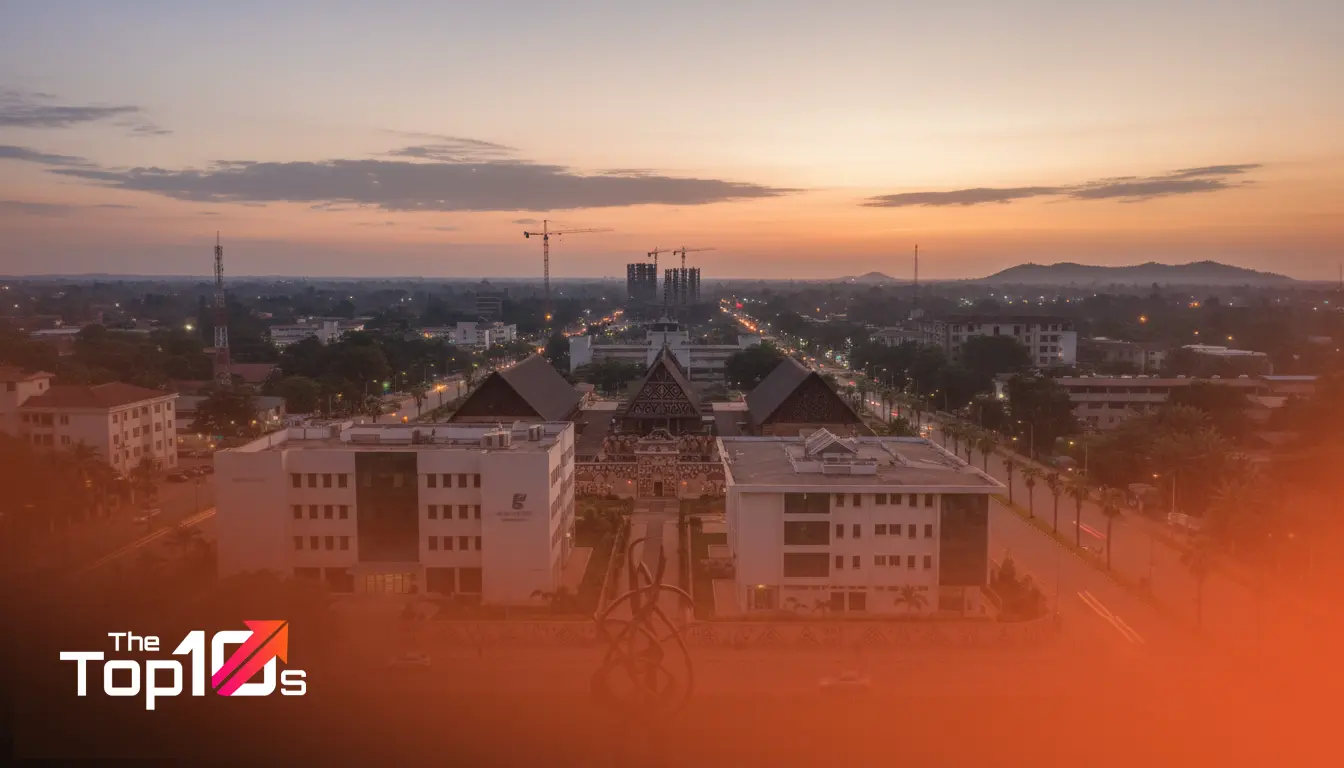
Building in the “Garden City” isn’t just about erecting four walls and a roof; it’s about navigating the unique terrain of the Ashanti Region while respecting its rich cultural history. Whether you are looking to construct a family compound in Ahodwo, a commercial hub in Adum, or a modern apartment complex near KNUST, the difference between a stressful money-pit and a legacy project often comes down to one person: your architect.
Here is the reality many first-time developers miss: Kumasi has a distinct climate and a specific set of zoning laws managed by the KMA (Kumasi Metropolitan Assembly). A generic plan downloaded from the internet won’t account for the heavy rains in June or the specific ventilation needed for the humid months. You need a professional who understands how to blend tropical modernism with local functionality.
If you are planning a project in 2025 or looking ahead to 2026, you need a partner who can manage the design, the budget, and the contractors. This guide highlights the professionals setting the standard for architectural excellence in Ghana’s second-largest city.
Quick Takeaways: Hiring in Kumasi
- Verify Registration: Always check if your architect is registered with the Ghana Institute of Architects (GIA) and the Architects Registration Council (ARC).
- Local Knowledge Matters: The topography in Kumasi is hilly. Experience with sloped sites is often non-negotiable.
- Scope of Work: Clarify early if you need just the drawings or full project supervision (highly recommended to prevent contractor errors).
- Future-Proofing: Top architects are now integrating solar-ready designs and rainwater harvesting systems as standard for 2026 builds.
How We Identified Leading Architects
Selecting the best design professionals requires looking past flashy 3D renders. Anyone can produce a pretty picture, but not everyone can get that building approved and standing upright for fifty years. Our selection process for this list focused on tangible indicators of reliability and skill.
We analyzed the market presence of various firms and professionals operating within the Ashanti Region. Key factors included their standing with professional bodies like the GIA and their portfolio of completed works—specifically looking for projects that have aged well. We also considered client feedback regarding communication styles and project management capabilities. Finally, we looked for firms that demonstrate a strong grasp of sustainable building practices, a necessity given the rising energy costs in Ghana.
List of 10 Best Architects in Kumasi
| Name | Best for |
|---|---|
| Multi-Cad Consulting | Clients who prioritize technical accuracy and have large-scale development plans. |
| Arc-Aura Architects | The modern homeowner who wants a “magazine-worthy” aesthetic. |
| Avangarde Design Services | Families building their “forever home” on a medium-sized plot. |
| Architectural & Engineering Services Limited (AESL) – Kumasi Branch | Institutional developers and government-partnership projects. |
| Deon Arkitects | Homeowners looking for renovations or custom-tailored new builds. |
| Spektra Global | Busy professionals who want a turnkey solution without managing multiple vendors. |
| Tekton Consult | Churches, schools, and community organizations. |
| Clean Lines | Developers and homeowners working with a fixed, non-negotiable budget. |
| Predios | Real estate investors and commercial developers. |
| Global Sterling | Clients with plots in hilly areas like Kwadaso or Nhyiaeso. |
Top 10 Architects In Kumasi
The following list represents a mix of established veterans and innovative modernists. These professionals have demonstrated the ability to deliver quality work across residential, commercial, and institutional sectors.
1. Multi-Cad Consulting
You cannot talk about architecture in Kumasi without mentioning Multi-Cad. They have established themselves as a pillar in the local construction industry. Their approach is deeply rooted in technical precision and functionality. They don’t just design for aesthetics; they design for longevity.
Specialization: Institutional and large-scale residential projects.
Why they stand out: Multi-Cad is known for navigating the bureaucratic side of construction with ease. If you have a complex site that requires rigorous structural planning and detailed documentation for permit approval, their experience is invaluable.
Best for: Clients who prioritize technical accuracy and have large-scale development plans.
2. Arc-Aura Architects
If you drive around some of the newer, upscale neighborhoods in Kumasi, you have likely seen Arc-Aura’s influence. They represent the new wave of Ghanaian architecture—sleek, modern, and minimalist. They move away from the heavy, concrete-laden designs of the past toward structures that feel lighter and more open.
Specialization: Contemporary residential villas and boutique commercial spaces.
Why they stand out: Their use of glass and steel, balanced with local stone, creates a distinct look. They are particularly skilled at maximizing natural light, which reduces electricity dependence—a smart move for any homeowner.
Best for: The modern homeowner who wants a “magazine-worthy” aesthetic.
3. Avangarde Design Services
Avangarde has built a reputation for merging creativity with practicality. They understand the Ghanaian family structure and design homes that accommodate extended families without sacrificing privacy. Their work often features clever spatial planning that makes smaller plots feel expansive.
Specialization: Residential housing and interior architecture.
Why they stand out: Many clients appreciate their holistic approach. They don’t stop at the exterior shell; they consider how the interior flow works for daily living. This attention to detail prevents those awkward dead spaces often found in poorly planned homes.
Best for: Families building their “forever home” on a medium-sized plot.
4. Architectural & Engineering Services Limited (AESL) – Kumasi Branch
AESL is the heavyweight of the public sector. While they are a state-owned entity, their Kumasi regional office handles a massive volume of work and employs some of the most experienced professionals in the region. They have seen it all, from government hospitals to university lecture halls.
Specialization: Public infrastructure, healthcare, and educational facilities.
Why they stand out: Sheer capacity. If you are handling a project that involves public funding or requires strict adherence to government standards, AESL provides the necessary institutional backing and oversight.
Best for: Institutional developers and government-partnership projects.
5. Deon Arkitects
Deon Arkitects brings a personalized touch to the design process. They are frequently praised for their willingness to listen to client needs rather than imposing a signature style. This flexibility makes them a favorite among private developers who have a specific vision but need technical guidance to realize it.
Specialization: Custom private residences and renovations.
Why they stand out: Renovation is tricky business, often harder than building from scratch. Deon has a knack for transforming dated properties in older Kumasi neighborhoods into modern assets while preserving the building’s structural integrity.
Best for: Homeowners looking for renovations or custom-tailored new builds.
6. Spektra Global
While headquartered in Accra, Spektra Global maintains a significant footprint in Kumasi. They are heavy hitters in the “Design & Build” space. This means they can handle both the architectural drawing and the physical construction, providing a single point of accountability for the client.
Specialization: Corporate offices, commercial retail, and luxury residential.
Why they stand out: Project management. The disconnect between the architect and the contractor is the number one cause of budget overruns. Spektra closes that gap, ensuring what is drawn is exactly what gets built.
Best for: Busy professionals who want a turnkey solution without managing multiple vendors.
7. Tekton Consult
Tekton Consult is synonymous with reliability. They have a strong portfolio involving religious buildings and educational complexes. In Kumasi, where church and community buildings are central to social life, Tekton’s ability to design large-span auditoriums with excellent acoustics and sightlines is highly prized.
Specialization: Religious architecture, auditoriums, and educational blocks.
Why they stand out: Their structural understanding of large, open spaces is impressive. Designing a hall that holds 2,000 people without obstructing columns requires high-level engineering and architectural integration.
Best for: Churches, schools, and community organizations.
8. Clean Lines
True to their name, this firm focuses on clarity and simplicity. In a city where designs can sometimes become cluttered with unnecessary ornamentation, Clean Lines advocates for geometry and purity. Their designs are cost-effective because they avoid convoluted structural elements that drive up construction prices.
Specialization: Affordable luxury and efficient commercial layouts.
Why they stand out: They are excellent at working within strict budgets. They use standard materials in creative ways to achieve a high-end look without the premium price tag.
Best for: Developers and homeowners working with a fixed, non-negotiable budget.
9. Predios
Predios takes a broader view of architecture, often incorporating urban design principles into their projects. They consider how a building sits within the neighborhood context, traffic flow, and future development. This makes them ideal for commercial complexes where parking and access are just as important as the building facade.
Specialization: Mixed-use developments and urban planning.
Why they stand out: Their feasibility studies are top-notch. Before a brick is laid, they help clients understand the economic potential of the site, which is crucial for commercial investors.
Best for: Real estate investors and commercial developers.
10. Global Sterling
Global Sterling operates at the intersection of engineering and architecture. Their projects feel substantial and grounded. They are particularly adept at handling the challenging topography of Kumasi, designing split-level homes that work with the slope rather than fighting against it.
Specialization: Hillside residences and engineering-led design.
Why they stand out: Site adaptation. Instead of expensive excavation to flatten a plot, they design foundations that step down the hill, often resulting in unique, multi-level views.
Best for: Clients with plots in hilly areas like Kwadaso or Nhyiaeso.
What Defines a Great Architect in Kumasi?
Architecture in the Ashanti Region is evolving. It is no longer just about concrete blocks. The best professionals are currently addressing specific local challenges.
Mastering Tropical Modernism
Kumasi is humid. A great architect prioritizes cross-ventilation, high ceilings, and deep overhangs to shade windows from direct sunlight. If your architect is designing a glass box without solar shading, your electricity bill for air conditioning will be astronomical. The top pros use passive cooling techniques to keep the home comfortable naturally.
Understanding Cultural Context
The Ashanti culture places a high value on hospitality and privacy. Excellent designs often feature a clear separation between public hosting areas (halls) and private family quarters. Furthermore, the inclusion of outdoor living spaces—terraces and porches—is essential for the local lifestyle.
Navigating the Land Tenure System
While an architect doesn’t buy the land for you, the best ones understand the risks of land litigation. They know the importance of getting a site plan approved by the Lands Commission and the KMA before breaking ground. Their drawings comply with local zoning to prevent demolition orders later on.
How to Choose the Right Architect for Your Needs
Hiring a professional is a recruitment process. You are the CEO of your project, and they are your key executive. Just as you might look for experts in other regions, like researching the top 10 architects in Kisumu for a project in Kenya, you must apply the same diligence here in Ghana.
1. Ask for a Site Visit Early
Never hire an architect who is willing to design your house without seeing the land. They need to see the slope, the soil type, and the position of the sun. If they say “send me the survey map and I’ll start,” consider that a red flag.
2. Distinguish Between Draftsmen and Architects
There is a common misconception here. A draftsman can draw lines using software, but a registered architect understands structure, law, and aesthetics. For a simple storage shed, a draftsman is fine. For a multi-story building where safety is paramount, you need a registered architect.
3. Review the “Boring” Documents
Ask to see a set of their “working drawings” or “construction documentation.” These are the detailed blueprints contractors use. If they are sparse or unclear, your builder will have to guess, and guesses cost money.
Frequently Asked Questions
How much do architects charge in Kumasi?
Fees vary widely based on the project’s complexity. generally, architects charge a percentage of the total construction cost, usually between 3% and 7%. Some may charge a lump sum for smaller residential projects. Always agree on the fee structure in writing before work begins.
Can an architect in Accra manage a project in Kumasi?
Yes, but it comes with travel costs. Many top Accra firms work in Kumasi regularly. However, you should ensure they budget for weekly or bi-weekly site supervision visits, as remote supervision is rarely effective.
How long does it take to get a building permit in Kumasi?
The timeline can be unpredictable. Technically, it should take a few months, but it often takes longer due to bureaucratic hurdles. A good architect will handle the submission and follow-ups with the KMA on your behalf to speed up the process.
Do I need an architect for a renovation?
If you are moving walls, changing the roofline, or adding an extension, yes. These changes affect the structural integrity of the building. For simple cosmetic changes like tiling or painting, an interior designer or contractor is sufficient.
What is the trend for architecture in 2026?
We are seeing a massive shift toward “Green Building.” This includes using compressed earth blocks (which are cooler and cheaper than cement blocks) and integrating smart home security systems directly into the design phase.
Conclusion
Your choice of architect will dictate the quality of your life for years to come. The professionals listed above represent the best of Kumasi’s design talent, blending technical rigor with aesthetic flair. Don’t rush this decision.
Take your time to interview at least three firms. Visit their completed sites—not just the ones under construction, but the ones built five years ago to see how they have weathered. Whether you choose a large firm like AESL or a boutique studio like Arc-Aura, ensure their vision aligns with your budget and lifestyle. The right partnership will turn the chaotic process of construction into a rewarding journey toward your dream property.