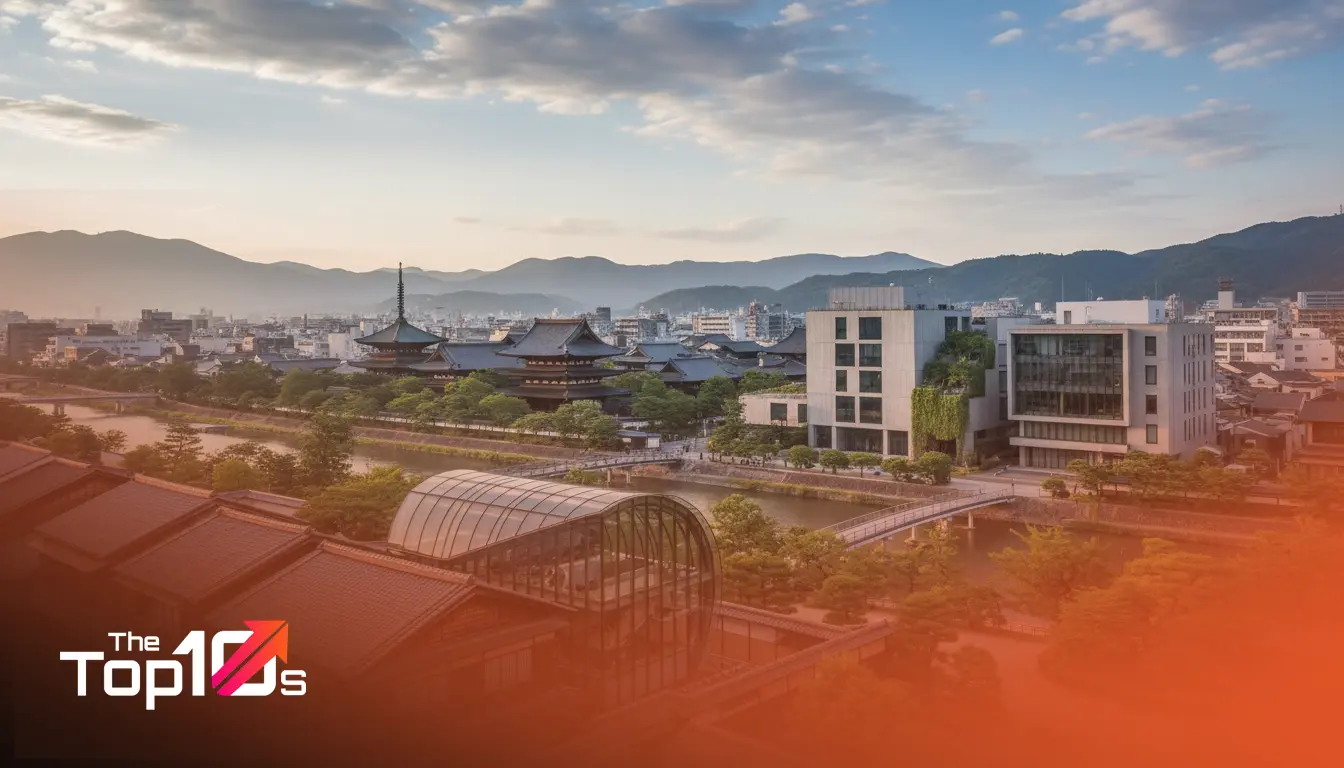
Kyoto presents a unique challenge for anyone looking to build or renovate. You aren’t just dealing with standard construction logistics; you are navigating a city where history is literally zoned into the land. The aesthetic codes are strict, the plots can be notoriously narrow—often referred to as unagi no nedoko (eel’s beds)—and the balance between ancient tradition and modern comfort is delicate.
Finding the right partner for this undertaking isn’t about browsing pretty pictures. It is about finding a professional who understands the local Keikan (landscape) regulations while delivering a space that functions for contemporary life. Whether you are looking to restore a century-old Machiya or construct a minimalist concrete residence, the architect you choose determines how smoothly your vision translates into reality.
- Regulatory Mastery is Non-Negotiable: Kyoto has some of the strictest height and aesthetic building codes in Japan.
- Renovation vs. New Build: Some firms specialize exclusively in Machiya restoration, while others focus on avant-garde modernism. Know your project type.
- Seismic Safety: With older structures, retrofitting expertise is just as vital as design flair.
- Communication Style: Ensure your architect can bridge the gap between complex technical requirements and your personal vision.
This guide highlights professionals who have demonstrated the ability to merge technical precision with artistic integrity. These are the experienced architectural professionals in Kyoto who are shaping the city’s future while respecting its past.
How We Identified Leading Architects
Selecting a design partner is a high-stakes decision. To compile this list, we looked beyond glossy magazine features. We analyzed firms based on their tangible track record within the Kyoto prefecture. Our research focused on consistency in delivery and the ability to handle the specific constraints of the Kansai region.
We evaluated public portfolios to gauge design versatility—checking if a firm repeats the same solution or adapts to the specific site. We also considered their standing within the professional community, looking for affiliations with organizations like the Japan Institute of Architects (JIA). We looked for designers who demonstrate a clear understanding of sustainable practices and seismic engineering, which are critical in this geographic area. The goal was to find trusted architects near Kyoto who offer transparency and proven technical capability.
List of 10 Best Architects in Kyoto
| Name | Best for |
|---|---|
| Eastern Design Office | Avant-garde residential & commercial, bold designs |
| ALPHAVILLE Architects | Geometric modernism, small lot solutions, narrow plots |
| 07BEACH | Playful residential, family-centric design, unique features |
| FORM / Kouichi Kimura Architects | Minimalist, spiritual spaces, meditation or quiet contemplation |
| Uoya Designs | Machiya renovation, heritage preservation, traditional townhouses |
| Takashi Yamaguchi & Associates | High-end commercial, luxury residential, corporate headquarters |
| GENETO | Furniture integration, artistic interiors, retail spaces |
| Shimpei Oda Architect Office | Contextual renovation, community spaces, subtle designs |
| Wararo (Waraku) | Traditional Japanese aesthetics, gardens, natural materials |
| Atelier Boronski | International fusion, urban design, expatriate or globally-minded clients |
Top 10 Architects In Kyoto
1. Eastern Design Office
Specialization: Avant-garde Residential & Commercial
Est. Experience: 20+ Years
If you have seen a building in Kyoto that looks like a concrete sculpture carved by light, it was likely designed by Eastern Design Office. Led by Anna Nakamura and Taiyo Jinno, this firm has garnered international attention for refusing to play it safe. They treat concrete not just as a structural necessity, but as a fluid medium.
Their work often features bold slits, curves, and heavy massing that creates intense privacy—a valuable asset in Kyoto’s dense neighborhoods—while manipulating natural light in unexpected ways. They are best suited for clients who want their property to be a piece of art and are willing to embrace bold, unconventional living spaces.
2. ALPHAVILLE Architects
Specialization: Geometric Modernism & Small Lot Solutions
Est. Experience: 25+ Years
Kentaro Takeguchi and Asako Yamamoto run a practice that excels at solving the puzzle of the “impossible” site. Kyoto is full of odd-shaped, narrow, or angled plots that scare off lesser designers. ALPHAVILLE thrives here. They use distinct geometric forms to slice through these constraints, creating interiors that feel surprisingly spacious.
Their approach often involves manipulating floor levels and sightlines to connect different areas of the house without using traditional walls. This results in a sense of openness even in tight urban squeezes. This firm is a strong match for developers or homeowners dealing with difficult plots who don’t want to compromise on light or aesthetic impact.
3. 07BEACH
Specialization: Playful Residential & Family-Centric Design
Est. Experience: 15+ Years
Joe Chikamori, the mind behind 07BEACH, brings a refreshing sense of humor and humanity to architecture. While many architects focus on severe lines, Chikamori focuses on how a family actually interacts with the space. He is famous for integrating unique features, such as an indoor tree for cats to climb or a bathroom that feels like an open-air onsen.
The design philosophy here is “simple but complex.” The visuals are clean and modern, but the thought process behind the flow of movement is intricate. If you are building a family home and want a space that encourages interaction and fun rather than just looking like a museum, 07BEACH is a compelling option.
4. FORM / Kouichi Kimura Architects
Specialization: Minimalist & Spiritual Spaces
Est. Experience: 30+ Years
Kouichi Kimura’s work is often described as poetic. Based in Shiga but heavily active in the Kyoto area, his firm produces architecture that feels silent and grounding. He utilizes a heavy mix of concrete, mortar, and timber to create spaces that feel separated from the chaotic outside world.
Kimura creates “scenery” within the house. Since many Kyoto homes lack a great view, he designs interiors where light and shadow become the view. This is architectural mindfulness. This practice is ideal for clients seeking a sanctuary—a home that functions as a retreat for meditation or quiet contemplation.
5. Uoya Designs
Specialization: Machiya Renovation & Heritage Preservation
Est. Experience: 15+ Years
When the goal is to save a piece of history rather than build over it, Uoya Designs is a name that comes up frequently. Shigenori Uoya is not just an architect; he is a curator of structural heritage. His work focuses on the sensitive rehabilitation of Kyoto’s traditional townhouses.
He understands the traditional joinery, the clay walls, and the specific ventilation needs of these timber structures. However, he doesn’t just freeze them in time; he updates them for modern thermal comfort and usability. If you have purchased an old property and want to modernize it without destroying its soul, Uoya possesses the specific technical knowledge required.
6. Takashi Yamaguchi & Associates
Specialization: High-End Commercial & Luxury Residential
Est. Experience: 25+ Years
Takashi Yamaguchi brings a philosophical, almost academic rigor to his projects. His designs often feel sleek, metallic, and precise. There is a distinct “coolness” to his work, often utilizing glass and steel to create sharp contrasts with the natural environment.
His firm is well-equipped to handle larger-scale commissions, including corporate headquarters and luxury villas. The attention to detail regarding material transitions is obsessive. This is the firm for clients who want a statement building that reflects corporate prestige or high-end luxury living.
7. GENETO
Specialization: Furniture Integration & Artistic Interiors
Est. Experience: 20+ Years
GENETO operates differently than most standard firms because they also run a furniture production division (pivoto). This means their architectural design and the interior fittings are developed simultaneously. The line between where the building ends and the furniture begins is often blurred.
Their style is expressive, often using plywood and geometric carvings to create texture and depth. It’s a very hands-on, craft-oriented approach that fits well with Kyoto’s tradition of artisanship, but interpreted through a digital, modern lens. They are a great fit for retail spaces or homes where interior detailing is as important as the exterior shell.
8. Shimpei Oda Architect Office
Specialization: Contextual Renovation & Community Spaces
Est. Experience: 10+ Years
Shimpei Oda represents a younger generation of architects who are deeply concerned with how a building fits into the existing streetscape. His work is subtle. He often takes nondescript older buildings and transforms them into bright, welcoming spaces without erasing the original character.
His portfolio includes charming conversions of studios and mixed-use spaces. Oda uses materials that age well, acknowledging that a building changes over time. If you are looking at the broader Kansai region, you might also want to review the top 10 architects in Osaka to compare regional styles, but for specifically Kyoto-centric contextual renovation, Oda is a standout choice.
9. Wararo (Waraku)
Specialization: Traditional Japanese Aesthetics & Gardens
Est. Experience: Varied Collective Experience
Wararo focuses heavily on the concept of Wa (harmony). This firm is dedicated to the seamless integration of the garden and the home. In Kyoto architecture, the garden isn’t an afterthought; it is often the focal point of the entire floor plan.
They utilize natural materials—cedar, stone, paper—to create environments that breathe. Their designs often feature deep eaves and expansive openings that allow the seasons to enter the home. This is the right choice for clients who want the quintessential Japanese living experience, prioritizing natural airflow and connection to nature over hermetically sealed climate control.
10. Atelier Boronski
Specialization: International Fusion & Urban Design
Est. Experience: 20+ Years
Led by Peter Boronski, this firm brings an international perspective to the Kyoto scene. Boronski’s work often challenges the status quo, introducing bold structural moves and a distinct cosmopolitan vibe. While respectful of the context, he isn’t afraid to introduce foreign elements or aggressive geometries.
His work stands out for its structural ingenuity and dynamic forms. It appeals to expatriates or globally-minded Japanese clients who love Kyoto but want a home that feels connected to global design trends rather than just local tradition.
What Defines a Great Architect in Kyoto?
Designing in this ancient capital requires a specific set of skills that goes beyond drafting blueprints. The most successful architects here are essentially translators. They translate the strict municipal codes—designed to protect the city’s visual harmony—into modern, livable structures.
A top-tier Kyoto architect understands the climate. The city is known for its stifling, humid summers and chilling winters (the “bottom cooling” effect). Great design here isn’t just about how a building looks; it’s about thermal performance. We are seeing a shift toward high-performance insulation and double-glazing hidden behind traditional facades. According to recent industry directions for 2025 and 2026, energy efficiency standards in Japan are tightening, and a competent architect will already be designing to these future benchmarks.
Furthermore, they must master the concept of “borrowed scenery” (shakkei). Even in a crowded downtown plot, a skilled designer knows how to frame a view of a neighbor’s tree or a distant hill to make a tiny room feel expansive.
How to Choose the Right Architect for Your Needs
Hiring an architect is a relationship that will last anywhere from 18 months to three years. You need to ensure the chemistry is right before signing a contract. Here is a practical framework for making your decision.
Check Their Regulatory Knowledge
Ask specifically about their experience with Kyoto’s Landscape Policy (Keikan-ho). If you are buying land in a historical preservation district, ask them to explain the restrictions on roof pitch and exterior materials. Their ability to explain this clearly to you is a good litmus test for their competence.
Match the Portfolio to Your Reality
Do not just look at their “best of” photos. Ask to see projects with similar constraints to yours. If you have a dark, narrow north-facing plot, ask to see how they handled light in a similar situation. If you are renovating, ask for “before and after” examples to see how they handle structural reinforcement.
Understand the Fee Structure
Architectural fees in Japan generally range from 10% to 15% of the total construction cost. However, this can vary based on the complexity of the design. Be clear about what this fee covers. Does it include the structural engineering calculations? Does it cover the application fees for building permits? Surprise costs can derail a project quickly.
Frequently Asked Questions
How long does the architectural design process take in Kyoto?
Typically, the design phase lasts 6 to 10 months before construction begins. In Kyoto, this can be longer due to the rigorous permit applications required by landscape regulations, especially in historical districts. You should plan for a total timeline of 12 to 18 months from first meeting to move-in.
Can modern architects renovate traditional Machiya?
Yes, but it requires specialized knowledge. A standard architect may not understand traditional timber joinery or how to properly insulate a clay-walled structure without causing moisture damage. Look for firms that specifically list “Kominka” or “Machiya” renovation in their services.
Do I need a local architect if I build in Kyoto?
While you can hire an architect from Tokyo or Osaka, a local Kyoto architect offers a distinct advantage regarding zoning laws and relationships with local construction companies. They will navigate the bureaucratic landscape much faster than an outsider.
What is the average construction cost per tsubo in Kyoto?
Construction costs have risen significantly. As of recent market trends, custom wooden residential builds often start around 800,000 to 1,000,000 JPY per tsubo (approx. 3.3 sqm), with reinforced concrete (RC) structures costing significantly more. High-end custom designs can easily exceed 1.5 million JPY per tsubo.
Are there English-speaking architects in Kyoto?
Yes, several firms in Kyoto are led by international architects or Japanese architects who have studied abroad. Firms like Atelier Boronski or Eastern Design Office are accustomed to working with international clients and can bridge the language gap effectively.
Moving Forward With Your Project
Building in Kyoto is an investment in both lifestyle and legacy. The architects listed above represent a cross-section of the best talent available, ranging from heritage guardians to futuristic innovators. Your next step should be to create a shortlist of three firms that resonate with your aesthetic sensibilities.
Reach out to them for an initial consultation. Pay attention to how they listen. The best architect for you is not necessarily the most famous one, but the one who hears your needs and possesses the technical fortitude to execute them within Kyoto’s unique environment. Take your time, research thoroughly, and build a team you trust.