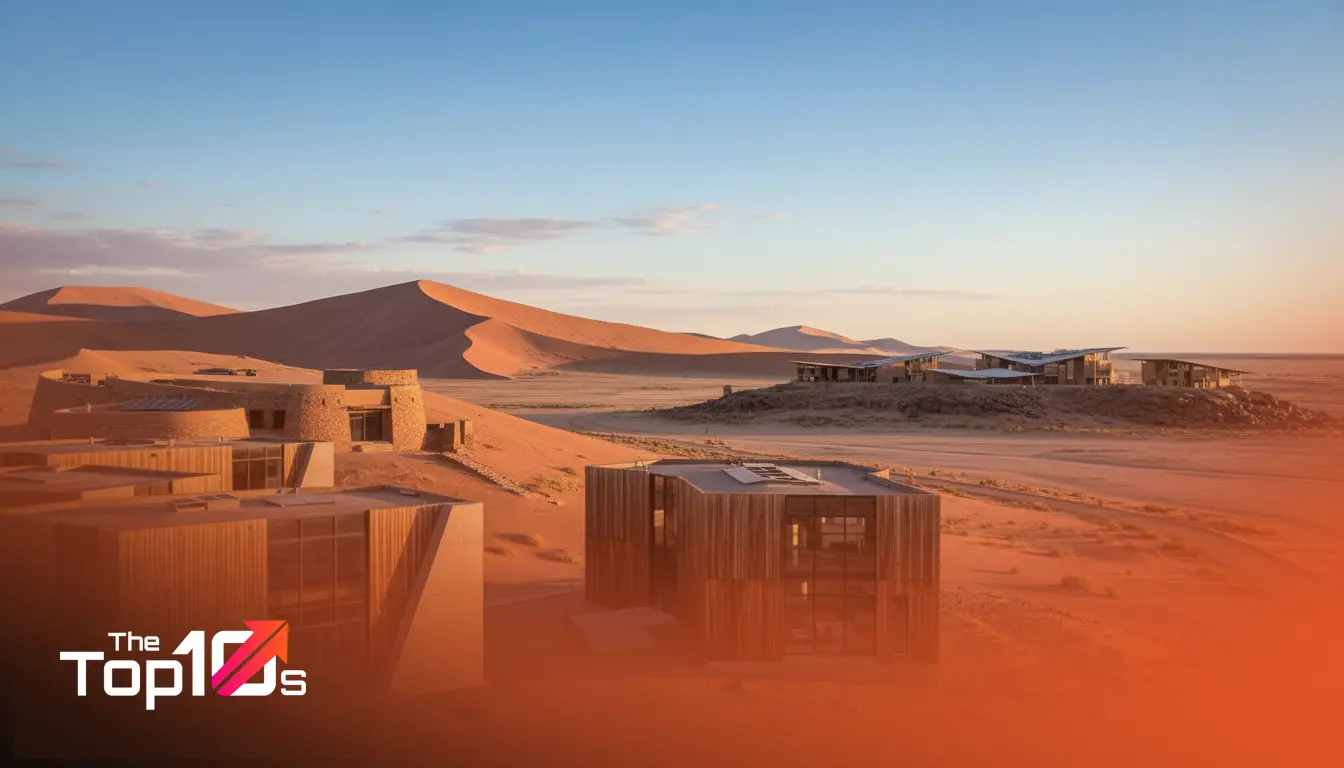
Building a property in Namibia isn’t just about erecting four walls; it’s about negotiating with the sun, the wind, and a landscape that is as harsh as it is beautiful. Whether you are planning a modern eco-lodge near Sossusvlei, a commercial hub in Windhoek’s CBD, or a family home in Swakopmund, the person holding the pen (or mouse) matters more than the materials you buy.
Quick Takeaways: Hiring in Namibia
- Climate is King: The best designs in Namibia prioritize passive cooling and airflow to handle the arid heat without relying solely on air conditioning.
- Verify Registration: Ensure your professional is registered with the Namibian Council for Architects and Quantity Surveyors (NCAQS).
- Portfolios Tell Truths: Look for completed projects that have aged well, not just digital renderings.
- Local Knowledge: Building regulations differ significantly between the coast (rust/corrosion concerns) and the interior.
You might be wondering why some buildings in Windhoek stay cool naturally while others feel like ovens by noon. That difference usually comes down to the architect’s understanding of thermal mass and orientation. Finding the right partner for your project can be overwhelming, especially with the mix of established firms and rising independent studios available today.
We’ve analyzed the local market to bring you a curated look at the design professionals shaping the country. This guide breaks down the top architects in Namibia, helping you distinguish between commercial giants and residential specialists.
How We Identified Leading Architects
Selecting a design partner is subjective, but evaluating professional capability shouldn’t be. Our approach to highlighting these firms relies on observable metrics rather than hearsay. We looked for consistency in delivery and a clear design philosophy.
First, we considered longevity and presence. Firms that have successfully navigated Namibia’s economic shifts over the last decade often possess a stability that benefits client projects. We also looked at portfolio diversity. Does the architect simply repeat the same house over and over, or do they adapt to the specific site constraints?
Finally, we prioritized regulatory compliance. The most talented designer is ineffective if they cannot navigate the approval processes with the City of Windhoek or coastal municipalities. We looked for professionals with a reputation for technical documentation and adherence to the Namibian Council for Architects and Quantity Surveyors standards.
List of 10 Best Architects in Namibia
| Name | Best For |
|---|---|
| Nina Maritz Architects | Sustainable design, eco-lodges, and vernacular modernism. |
| Wasserfall Munting Architects | Corporate headquarters, luxury residential developments, and institutional buildings. |
| Kerry McNamara Architects (KMA) | Large-scale developments, complex public buildings, and infrastructure projects. |
| Stauch Vorster Architects | Commercial retail spaces, office parks, and mixed-use developments. |
| Howard & Chamberlain Architects | Commercial viability and artistic expression, photogenic and memorable buildings. |
| Barnard Mutua Architects | Technical precision, aesthetic flair, and maximizing plot potential. |
| Co-Create Architects | Community-focused projects, collaborative design, and accessible buildings. |
| Rooipunt Architects | Functional office buildings, comfortable family homes, and practical living arrangements. |
| Bob Mould Architects | Luxury residential market, hospitality sector, and authentic African lodge aesthetic. |
| Seelenbinder Consulting Engineers & Architects | Industrial projects, warehouses, and structural efficiency and technical excellence. |
Top 10 Architects In Namibia
Here are ten architectural practices making a significant impact on Namibia’s built environment today.
1. Nina Maritz Architects
If you mention sustainable design in Namibia, this name almost invariably comes up first. Nina Maritz has built a formidable reputation for understanding the deep connection between structure and the environment. Her work often utilizes earth building techniques and recycled materials, making her a pioneer in what is often called “vernacular modernism.”
Why they stand out: The firm doesn’t just pay lip service to green building; they execute it. Their projects, such as the Shipwreck Lodge, demonstrate how to build in sensitive ecological zones without leaving a heavy footprint. This practice is ideal for clients who want their building to feel like it grew out of the ground rather than being dropped onto it.
2. Wasserfall Munting Architects
For those who lean towards sharp lines, contemporary aesthetics, and high-end finishes, Wasserfall Munting is a heavyweight contender. They are responsible for some of Windhoek’s most recognizable modern landmarks. Their design language is sophisticated, often employing concrete, steel, and glass in ways that control light beautifully.
Best suited for: This firm excels in corporate headquarters, luxury residential developments, and institutional buildings. If you want a property that makes a bold, modern statement and rivals international design standards, their portfolio is worth reviewing.
3. Kerry McNamara Architects (KMA)
KMA is something of an institution in the Namibian architectural scene. With a history stretching back decades, they have been involved in massive infrastructure and public sector projects. However, they haven’t remained stuck in the past. Their recent work shows a keen adaptation to modern urban needs while maintaining a strong focus on social responsibility.
What to expect: You get the benefit of massive experience. They understand the bureaucracy of building in Namibia better than almost anyone. This makes them a safe, reliable pair of hands for large-scale developments or complex public buildings.
4. Stauch Vorster Architects
As one of the larger firms operating in the region, Stauch Vorster brings significant capacity to the table. They are often associated with large commercial retail spaces, office parks, and mixed-use developments. Their strength lies in their ability to manage complex project teams and deliver large square footage on schedule.
The ideal client: Developers and corporate entities. If you are planning a shopping mall, a multi-story office block, or a hotel, their logistical capabilities and resource depth are difficult for smaller boutique firms to match.
5. Howard & Chamberlain Architects
Innovation is the keyword here. Howard & Chamberlain often pushes the boundaries of conventional Namibian architecture with geometric forms and striking facades. They are not afraid of color or unusual structural solutions, which results in buildings that have a distinct personality.
Key strengths: They bridge the gap between commercial viability and artistic expression. Their work is often photogenic and memorable, which adds value for commercial clients looking for brand visibility through their physical premises.
6. Barnard Mutua Architects
This firm has carved out a solid niche by balancing technical precision with aesthetic flair. They handle a wide variety of work, from industrial facilities to intricate residential renovations. What clients often appreciate is their pragmatic approach—designing spaces that work hard for the user.
Who should hire them: Homeowners and business owners who want a balance of form and function. They are particularly good at maximizing the potential of difficult plots or renovation projects where existing structures need a fresh lease on life.
7. Co-Create Architects
A younger, dynamic presence in the market, Co-Create focuses heavily on the collaborative aspect of design. They often engage in projects with a social impact angle or community focus. Their designs tend to be fresh, accessible, and highly responsive to the specific needs of the end-users.
Why consider them: If you are looking for a more personal, hands-on design process where your input is heavily integrated, their workshop-style approach is refreshing. They are great for community centers, educational facilities, or bespoke homes.
8. Rooipunt Architects
Rooipunt has established itself as a reliable firm for both residential and commercial sectors. Their designs are often characterized by clean functionality. They don’t over-design; instead, they focus on spatial flow and practical living or working arrangements.
Best for: Clients who want a “no-nonsense” approach to architecture. If you need a functional office building or a comfortable, modern family home without unnecessary frills that blow the budget, Rooipunt is a strong candidate.
9. Bob Mould Architects
With years of experience in the Namibian market, this practice brings a wealth of technical knowledge. They have a strong portfolio in the hospitality sector and luxury residential market. Their work often reflects a deep understanding of the Namibian lifestyle—large entertainment areas and seamless indoor-outdoor transitions.
Standout feature: They understand the “lodge” aesthetic very well. If you are building a guesthouse or a retreat that needs to feel luxurious yet authentic to the African setting, their expertise is invaluable.
10. Seelenbinder Consulting Engineers & Architects
Often operating as a multidisciplinary team, this entry highlights the engineering-led side of architecture. In a country where soil conditions and structural integrity are paramount, having a firm that tightly integrates engineering and architecture can save significant headaches.
Target audience: Industrial projects, warehouses, and clients who prioritize structural efficiency and technical excellence above purely decorative elements.
What Defines a Great Architect in Namibia?
Architecture in this part of Africa is not just about aesthetics; it is about survival and comfort in extreme conditions. A great architect here understands thermal comfort without electricity. The sun in Namibia is relentless. A poorly oriented building will become a greenhouse in summer and an icebox in winter. Top professionals use overhangs, screen walls, and orientation to manage this naturally.
Furthermore, there is a growing appreciation for regional identity. Just as we see rapidly evolving design languages elsewhere on the continent, such as the top 10 architects in Uganda, Namibia is carving out its own identity. It is moving away from purely colonial German influences toward a style that reflects modern African realities—resilient, resource-efficient, and culturally inclusive.
Material availability is another massive factor. We don’t have the same supply chains as Europe or the US. Great Namibian architects know what materials are locally available (like sand for bricks or local stone) to keep costs down and carbon footprints low.
How to Choose the Right Architect for Your Needs
Finding the name is the easy part; selecting the partner who aligns with your vision requires a bit more digging. Here is a practical framework to help you decide.
Match the Specialist to the Project
You wouldn’t hire a cardiologist to fix your knee. Similarly, don’t hire a specialist in massive shopping malls to design your intimate eco-cottage. Look at their past five projects. Do they look like what you want to build? If a firm does 90% corporate work, your small residential renovation might not get the attention it deserves.
The “Sketch on a Napkin” Test
During your initial consultation, watch how they listen. Do they immediately start talking about their style, or do they ask about your lifestyle? The best architects are problem solvers. They should be asking about your budget, how you live, and your long-term goals for the property.
Ask About the Approval Process
In towns like Windhoek and Swakopmund, municipal approval can be a bottleneck. Ask the architect specifically about their relationship with the local municipality. Do they know the zoning laws for your specific plot? A pretty design that violates height restrictions or building lines is useless to you.
Clarify the Fee Structure
Architectural fees can work on a percentage of the build cost or a fixed rate. Make sure you understand what is included. Does the fee cover site visits during construction? Does it include 3D renderings? Ambiguity here is the number one cause of disputes later on. You can verify standard fee structures through the Namibia Institute of Architects.
Frequently Asked Questions
How much do architects charge in Namibia?
Fees generally follow guidelines set by the Namibian Council for Architects and Quantity Surveyors, typically ranging between 6% and 12% of the total construction cost. This varies based on the complexity of the project and the scope of services required (e.g., just design vs. full project management).
Do I legally need an architect for a house plan in Namibia?
For most urban areas, yes. Municipalities require plans to be submitted by a registered professional (either an architect or a senior architectural technologist) to ensure the building complies with safety and zoning regulations.
How long does the design and approval process take?
The design phase can take anywhere from 2 to 6 months depending on revisions. Municipal approval is the wildcard; in Windhoek, it might take 2 to 4 months, while smaller towns can be faster or significantly slower depending on their administrative capacity.
Can these architects work outside of Windhoek?
Absolutely. Most top firms in Windhoek handle projects across the country, from lodges in Etosha to homes in Henties Bay. However, you should account for travel disbursements in your budget if your site is remote.
What is the difference between a draftsperson and an architect?
An architect has completed a university degree (usually 5+ years) and a professional internship, focusing on design theory, contract management, and complex problem-solving. A draftsperson typically focuses on the technical drawing aspect. For simple additions, a draftsperson may suffice, but for new builds, an architect brings broader value.
Turning Your Blueprint into Reality
Choosing an architect is one of the few decisions in the construction process that you cannot easily undo. The professionals listed above represent the upper echelon of design talent in Namibia, each offering a distinct flavor—from Nina Maritz’s earth-conscious structures to Wasserfall Munting’s sleek modernism.
Your next move should be to create a shortlist of three firms. Arrange a face-to-face meeting. Visit one of their completed buildings if possible. The right architect will not just save you money by avoiding costly construction errors; they will create a space that adds value to your life every single day. Take your time, do your research, and build something extraordinary.