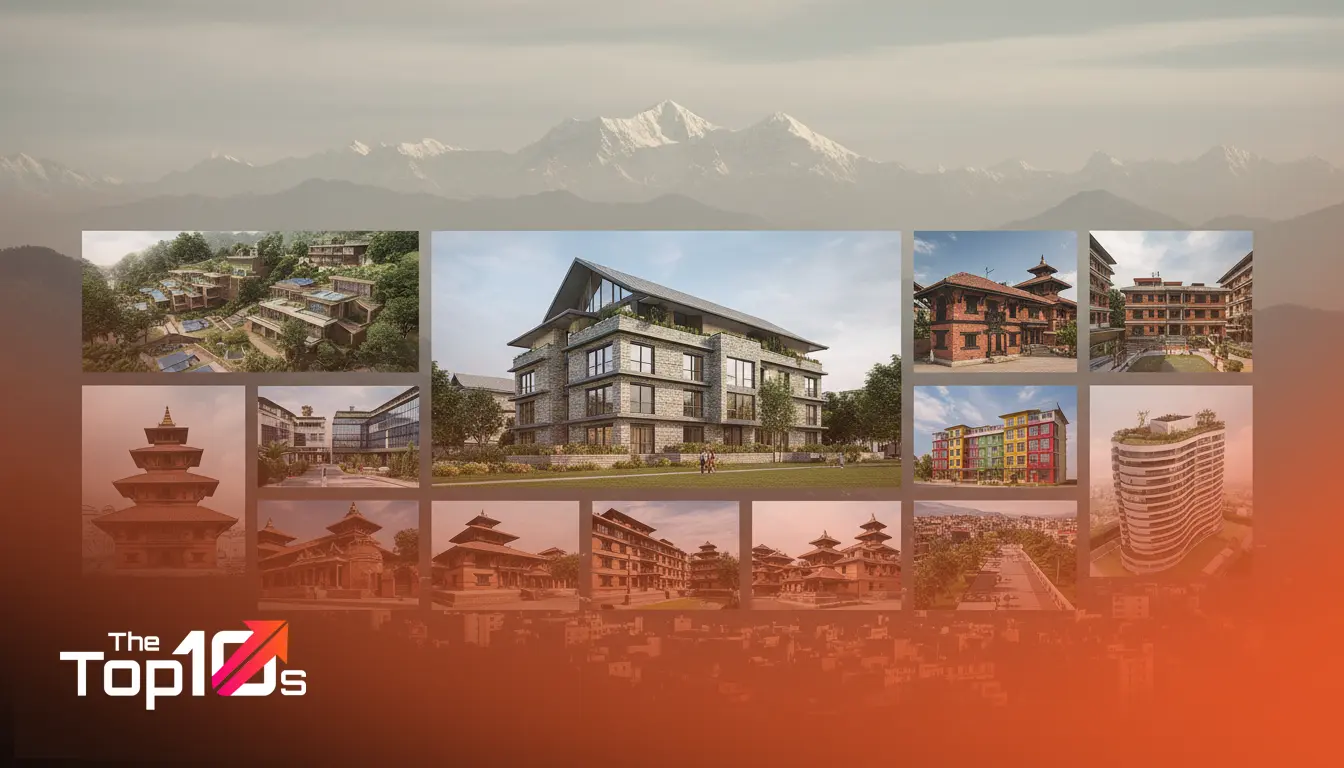
Building a home or commercial space in Kathmandu, Pokhara, or anywhere across the Himalayas isn’t just about aesthetics; it’s about navigating a complex mix of topography, heritage, and safety. You might have a vision of a modern, glass-facade residence or a traditional brick courtyard home, but turning that vision into a standing structure requires a partner who understands more than just blueprints. It requires someone who understands how the ground moves beneath us.
Nepal’s architectural sector has evolved rapidly over the last two decades. We moved from purely functional concrete boxes to designs that respect our rich cultural history while embracing modern engineering. Finding the right professional to guide this process is arguably the most critical step in your construction project. The person you choose manages your budget, ensures your safety during seismic events, and translates your lifestyle into three-dimensional space.
If you are looking for experienced architectural professionals in Nepal, you need to look beyond flashy 3D renders. You need to understand their philosophy, their experience with local regulations, and their ability to execute. This guide highlights ten of the most respected names in the field, helping you find a partner who aligns with your specific needs.
Quick Takeaways: Choosing an Architect
- Seismic Safety is Non-Negotiable: In Nepal, an architect’s understanding of structural integrity and earthquake-resistant design is more important than pure aesthetics.
- Context Matters: The best designers blend modern amenities with local materials like brick, stone, and timber to suit the climate.
- Regulatory Guidance: Municipal bylaws in places like Kathmandu and Lalitpur are complex; your architect acts as your navigator through the permit process.
- Communication Style: Choose a professional who listens to your needs rather than one who simply imposes their own artistic signature.
How We Identified Leading Architects
Selecting the top architects in Nepal is not about ranking them by revenue or the size of their office. Instead, we looked at the tangible impact of their work and their standing within the design community. Our selection process relied on qualitative metrics that matter most to clients.
We analyzed publicly available portfolios to gauge design versatility. Does the architect repeat the same structure, or do they adapt to the site? We looked at longevity in the industry, specifically seeking professionals who have successfully navigated the post-2015 reconstruction era, as this demonstrates a commitment to updated safety codes. Furthermore, we considered their approach to sustainability—an increasingly vital factor as urbanization in the Kathmandu Valley intensifies.
This list reflects professionals who demonstrate a balance of technical precision, creative vision, and professional reliability. It is not an exhaustive directory but a curated collection of distinct talents suitable for different types of projects.
Top 10 Architects In Nepal
Here are ten professionals and principal architects who have shaped the built environment in Nepal through residential, commercial, and institutional projects.
1. Prabal Thapa
Prabal Thapa is a name synonymous with sustainable and environmentally conscious design in Nepal. As the principal of Prabal Thapa Architects, his work often emphasizes energy efficiency and the use of local materials. He has been a strong advocate for green building practices long before it became a trend in the region.
His approach often involves passive solar design, which is crucial for the varying climates of Nepal—keeping homes warm in winter and cool in summer without heavy reliance on electricity. His portfolio spans residential homes, diplomatic missions, and hospitality projects.
Best Suited For: Clients who prioritize eco-friendly living, energy efficiency, and a design aesthetic that feels grounded in nature.
2. Sarosh Pradhan
If you walk through the upscale neighborhoods of Kathmandu, you might spot buildings that defy the standard “matchbox” geometry. Sarosh Pradhan, leading Sarosh Pradhan & Associates, is known for bringing a contemporary, almost sculptural quality to his work. He focuses on the experience of the space—how light enters a room and how people move through it.
His designs often challenge the status quo, utilizing exposed concrete and modern forms while maintaining functionality. He has significant experience in large-scale commercial projects and high-end residences.
Best Suited For: Homeowners and developers looking for a modern, artistic statement that breaks away from traditional Nepali residential forms.
3. Bibhuti Man Singh
With decades of experience, Bibhuti Man Singh represents the technical backbone of Nepali architecture. His firm, Technical Interface, has handled some of the most complex institutional and commercial projects in the country. His reputation is built on reliability, technical precision, and the ability to manage massive scales.
Singh’s work is less about experimental flair and more about solid, functional, and enduring architecture. He understands the rigorous demands of commercial infrastructure and the intricate details of urban planning regulations.
Best Suited For: Large-scale commercial developments, institutional buildings, and clients requiring meticulous project management and technical rigor.
4. Kai Weise
Architecture in Nepal isn’t just about building the new; it is about preserving the old. Kai Weise is a leading figure in heritage conservation and planning. His work was instrumental in the recovery and restoration efforts following the 2015 earthquake. He possesses deep knowledge of UNESCO World Heritage guidelines and traditional Newari building techniques.
While he is heavily involved in conservation, his understanding of traditional materials makes him a unique asset for projects that aim to blend seamlessly into historic neighborhoods like Patan or Bhaktapur.
Best Suited For: Restoration projects, heritage hotels, or new constructions located within historically sensitive zones.
5. Arun Rimal
Arun Rimal brings an international perspective to the local context. Having worked in the United States before returning to Nepal, he blends Western standards of space planning with Nepali cultural needs. His designs often feature clean lines, functional layouts, and a distinct lack of clutter.
His firm is known for delivering modern residential spaces that feel spacious even on the tight plots of land common in Kathmandu. He focuses heavily on the “liveability” of a house, ensuring that the design serves the family, not the other way around.
Best Suited For: Urban families wanting a modern, Western-style home layout that still respects local building limitations.
6. Nripal Adhikary (ABARI)
Nripal Adhikary, the founder of ABARI, has carved a unique niche by focusing almost exclusively on bamboo and earth as primary construction materials. He challenges the notion that concrete is the only way to build a strong house in Nepal. His work combines traditional material science with modern engineering to create structures that are lightweight, earthquake-resistant, and incredibly beautiful.
His designs have a warm, organic feel that concrete simply cannot replicate. He is a pioneer in showing how luxury and natural materials can coexist.
Best Suited For: Eco-resorts, retreat centers, and homeowners who want a truly organic, non-concrete structure.
7. Biresh Shah
Biresh Shah is as much an academic and urban planner as he is a practicing architect. His perspective is broad, considering how a building interacts with the street, the neighborhood, and the city at large. This urban design background means his projects are often extremely well-integrated into their surroundings.
He frequently works on educational institutions and public spaces, bringing a sense of order and civic responsibility to his designs. His residential work is characterized by logical flow and intelligent use of space.
Best Suited For: Institutional projects, educational campuses, and clients who care about how their building impacts the wider community.
8. Rajesh Shrestha
Leading Vastukala Parikrama, Rajesh Shrestha has made a significant mark on the hospitality and commercial sectors. His designs often feature a grandeur that appeals to luxury hotels and corporate headquarters. He understands the commercial viability of design—how a building’s look contributes to a brand’s identity.
His firm is capable of handling the entire scope from architectural shell to interior detailing, ensuring a cohesive look for high-traffic commercial spaces.
Best Suited For: Hotel owners, resort developers, and corporate businesses seeking a high-impact visual identity.
9. Swarup Gurung
Swarup Gurung is a part of the newer generation of architects making waves with fresh ideas and digital fluency. His work often explores the intersection of minimalism and local context. He focuses heavily on detailing—the small transitions between materials, the design of a staircase, or the framing of a view.
Clients appreciate his collaborative approach and willingness to experiment with new textures and forms while keeping the budget in check.
Best Suited For: Younger homeowners and creative professionals looking for a bespoke, detail-oriented home.
10. Anjan Shrestha
Anjan Shrestha creates spaces that feel calm and ordered amidst the chaos of the city. His architectural practice leans towards modern minimalism but retains a warmth through the use of wood and brick. He is particularly skilled at maximizing natural light in dense urban settings, a common challenge in Nepal’s growing cities.
His residential projects prioritize privacy and internal courtyards, creating sanctuaries for the inhabitants.
Best Suited For: Private residences in dense urban areas where privacy and natural light are the main priorities.
What Defines a Great Architect in Nepal?
Architecture in the Himalayas requires a different skillset than in other parts of the world. A great architect here does not just draw pretty pictures; they solve specific regional problems. The primary differentiator is the understanding of seismic resilience. Following the 2015 earthquake, the best architects proactively integrated shear walls, symmetrical planning, and appropriate load distribution into their standard design process, often going beyond the minimum government code.
Climate responsiveness is another hallmark of quality. Nepal has micro-climates ranging from tropical plains to frozen peaks. A skilled professional knows that a house in Chitwan needs high ceilings and cross-ventilation, while a home in Jomsom requires thermal mass and insulation. They do not copy-paste designs across different regions.
Finally, there is the element of cultural synthesis. The most celebrated designs in Nepal are those that interpret traditional Newari or Tibetan architecture through a modern lens—using exposed brick (Dachi Appa) or carved wood elements without making the building feel like a museum. It is about honoring the past while building for the future.
How to Choose the Right Architect for Your Needs
Hiring an architect is a relationship that can last anywhere from six months to three years. Compatibility is key. Before signing a contract, you should interview potential candidates with specific questions regarding their process. Ask them how they handle budget overruns and how often they visit the site during construction. A brilliant design is useless if the architect never checks to see if the contractors are following it.
Determine if you need a specialist or a generalist. If you are building a specialized eco-resort, a general commercial architect might not know the intricacies of bamboo treatment or rammed earth. Conversely, if you are building a shopping complex, you need someone who understands fire exits, parking regulations, and crowd flow, not just someone who designs beautiful cottages.
It is also wise to look at regional expertise. Designing in the mountains is vastly different from the coast or the plains. For example, if you are looking at regional designs, you might see similarities with the Top 10 Architects In Sri Lanka, particularly regarding tropical modernism, but the structural requirements in Nepal are distinct due to the tectonic activity.
Frequently Asked Questions
How much do architects in Nepal charge?
Fees vary significantly based on reputation and project scope. Typically, architects charge either a percentage of the total construction cost (ranging from 2.5% to 5%) or a lump sum fee based on the square footage. It is crucial to clarify if this fee includes structural engineering, electrical, and sanitary drawings, or if those are extra.
Do I need an architect for a small house in Nepal?
Legally, you need a signed blueprint by a licensed professional to get a building permit (Naksapass) from the municipality. Beyond the legal requirement, an architect helps you utilize small spaces efficiently, ensuring that even a small house feels spacious and functions well.
What is the difference between an architect and a civil engineer?
While there is overlap, an architect focuses on the design, functionality, aesthetics, and spatial planning of the building. A civil engineer focuses on the structural calculation, load-bearing capacity, and the physics of keeping the building standing. In Nepal, they usually work together as a team.
Can architects help with government approvals?
Yes, most established architectural firms handle the bureaucratic process of obtaining building permits. They prepare the necessary municipal drawings and submit them to the local ward office or municipality, saving you significant time and hassle.
How long does the design process take?
For a standard residential project, the design phase—from initial concept to final working drawings—usually takes between two to four months. Rushing this stage often leads to mistakes during construction, so it is better to spend time refining the design on paper.
Conclusion
Embarking on a construction project in Nepal is a journey that requires patience, resources, and the right team. The architects listed above represent the pinnacle of design thinking in the country, each offering a different strength—from heritage conservation to avant-garde modernism.
Your choice should ultimately depend on who understands your vision and who makes you feel confident about the safety and feasibility of your project. Take the time to visit their completed buildings, talk to their past clients, and review their portfolios. A well-designed building is an asset that serves you for generations; investing in the right expertise upfront is the best decision you can make for your future property.