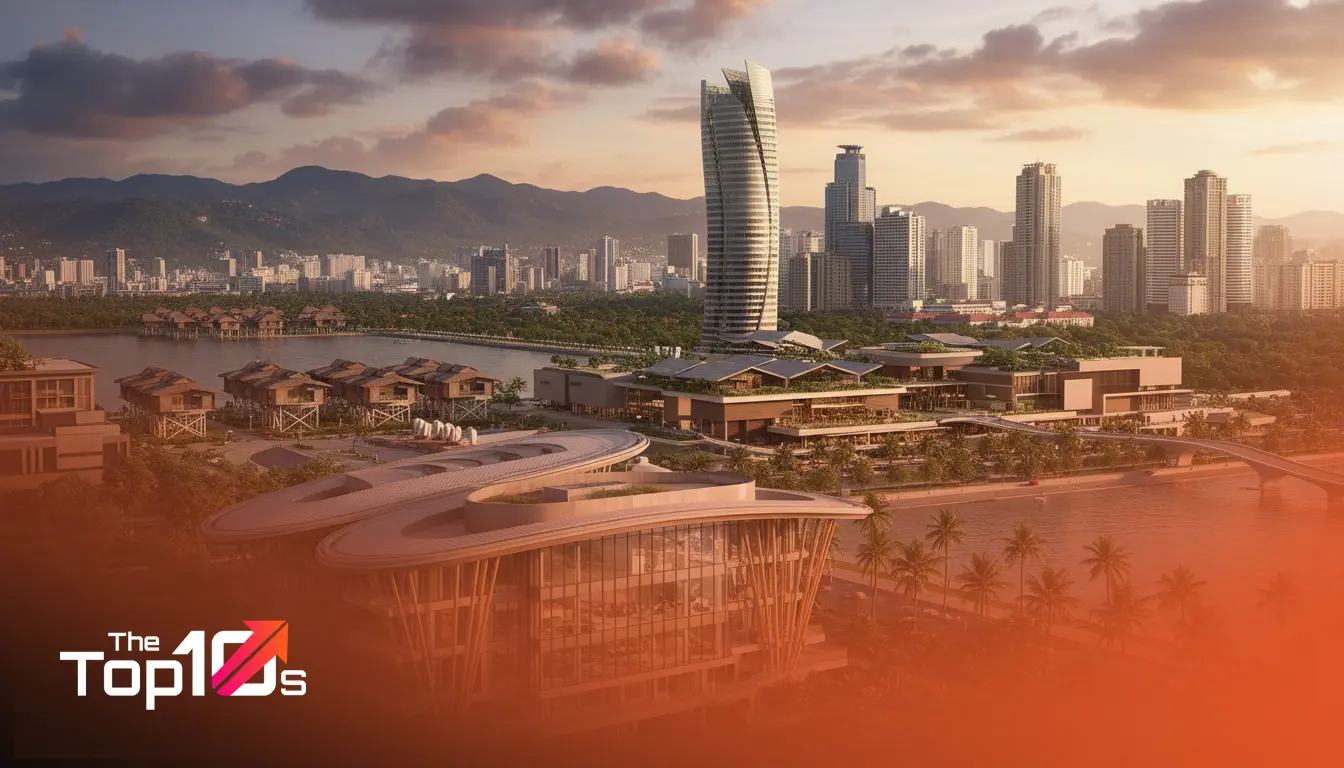
Building a home or commercial space in the Philippines isn’t just about putting four walls together. It’s about navigating the intense tropical heat, preparing for the inevitable monsoon rains, and creating a space that breathes. If you’ve ever walked into a building in Metro Manila or Cebu that felt naturally cool without the air conditioning blasting, you’ve experienced the work of a skilled design professional.
Finding the right partner to translate your vision into concrete and glass is often the most stressful part of the construction process. You need someone who understands local zoning laws, respects your budget, and possesses the creative vision to maximize your property’s potential. Whether you are looking for best architects in Philippines to design a modern city dwelling or a resilient vacation home in the provinces, the talent pool here is exceptionally deep.
The Philippines has developed a unique architectural identity—one that blends indigenous materials with cutting-edge sustainability. This guide cuts through the noise to highlight professionals who are shaping the skyline and redefining how Filipinos live.
Quick Takeaways
- Climate is King: The top professionals prioritize “tropical modernism”—designs that utilize passive cooling and natural light.
- Experience Matters: Look for firms familiar with local geography and disaster resilience (typhoons and earthquakes).
- Scope of Work: Clarify early if you need full project management or just design services.
- Budget Transparency: High-end architects typically charge a percentage of the total construction cost (often 7-12%).
- Credentials: Ensure your architect is licensed by the PRC and a member of the United Architects of the Philippines (UAP).
How We Identified Leading Architects
Selecting a design partner is subjective, but assessing professional capability relies on tangible indicators. Our selection process for this list didn’t rely on awards alone. We looked at a combination of factors that signal reliability and design excellence.
We analyzed the depth of architectural experience, specifically looking for firms with a consistent track record of completed projects rather than just conceptual renders. Public reputation plays a massive role; we looked at client feedback trends and how these professionals are viewed within the local construction community. Furthermore, we considered their adaptability—how well they blend aesthetic requirements with the strict building codes and environmental challenges specific to the archipelago.
Top 10 Architects In Philippines
The following professionals and firms represent a mix of established legends and innovative studios pushing boundaries in Philippine design.
1. Mañosa & Company
Specialization: Contemporary Filipino Architecture / Sustainable Design
You cannot talk about Philippine architecture without mentioning the Mañosa legacy. Originally led by the late National Artist Francisco “Bobby” Mañosa and now carried forward by his children, including Gelo Mañosa, this firm is the gold standard for “Neo-Vernacular” design. They masterfully reinterpret the Bahay Kubo (nipa hut) for modern living.
Their strength lies in using indigenous materials—bamboo, coconut, rattan—in ways that feel luxurious and durable. They don’t just design buildings; they craft cultural statements that are perfectly adapted to the local climate.
Best For: Clients who want a home that feels distinctly Filipino, sustainable, and deeply connected to nature.
2. Leandro V. Locsin Partners
Specialization: Large-scale Commercial, Cultural, and High-end Residential
Founded by the National Artist Leandro Locsin, this firm is responsible for some of the most iconic brutalist structures in the country, including the Cultural Center of the Philippines. Today, the firm continues to dominate the industry with designs that emphasize massive forms, floating volumes, and a strong sense of permanence.
Their residential work often reflects a gallery-like quality. If you appreciate concrete, grand scales, and architecture that feels like functional art, their portfolio is unmatched in the region.
Best For: Developers and homeowners looking for monumental, legacy-defining structures.
3. Budji+Royal Architecture+Design
Specialization: Modern Tropical Luxury
This collaboration between designer Budji Layug and architect Royal Pineda has created a distinct brand of “Modern Filipino” luxury. Their philosophy centers on organic refinement. They strip away the unnecessary to reveal the raw beauty of the materials and the location.
Royal Pineda represents a new wave of experienced architectural professionals in Philippines who advocate for “total design,” where the architecture, interior, and furniture are conceived as one cohesive unit. Their projects often blur the lines between indoors and outdoors.
Best For: Luxury clients seeking a seamless integration of interior design and architectural structure.
4. Lor Calma & Partners
Specialization: Modernism / Minimalist Residential
Led by Ed Calma, this firm is synonymous with precision. If you love clean lines, geometric purity, and an absence of clutter, Calma is likely the architect you are looking for. His houses are often described as “livable sculptures.”
The firm is known for an obsessive attention to detail. Every junction, corner, and lighting fixture is considered. Unlike the tropical lushness of Mañosa, Calma’s work is cooler, sleeker, and undeniably international in its appeal while still functioning well in the heat.
Best For: Minimalists who value privacy, precision, and modern geometric aesthetics.
5. Palafox Associates
Specialization: Urban Planning / Mixed-Use Development / Green Architecture
Felino “Jun” Palafox Jr. is perhaps the most recognized name when it comes to urban planning and large-scale development. Palafox Associates has completed thousands of projects globally. Their approach is heavily rooted in environmental planning and sustainability.
While they are famous for master-planned communities and malls, their architectural division handles high-end residential projects that prioritize green technologies and disaster resilience. They design with the next 50 years in mind.
Best For: Large estate developments and clients prioritizing environmental certification and resilient design.
6. WTA Architecture and Design Studio
Specialization: Social Architecture / Urban avant-garde
William Ti Jr. and his team at WTA represent a younger, more experimental energy. They are known for “Social Architecture”—the idea that buildings should encourage human interaction and improve the urban fabric. Their designs are often bold, utilizing friction and flow to create unique spaces.
They aren’t afraid of color or unusual shapes. Their residential projects often challenge the typical “box” format of city living, offering clever solutions for tight urban lots.
Best For: Urban dwellers and businesses wanting a fresh, conversation-starting design that breaks the mold.
7. Buensalido+Architects
Specialization: Contemporary / Progressive Filipino
Jason Buensalido is a champion of what he calls “optimistic architecture.” His firm avoids the beige and grey trap, often introducing vibrant colors and faceted forms inspired by Filipino festivity (fiestas) and weaving patterns.
His work proves that trusted architects near Philippines don’t have to stick to traditional styles to be culturally relevant. Buensalido’s homes are fun, highly functional, and designed to breathe, using fragmented geometries to catch the breeze.
Best For: Young families and creatives who want a home that feels energetic, modern, and distinct.
8. Jorge Yulo Architects & Associates
Specialization: Boutique Residential / Hospitality
Jorge Yulo is an architect’s architect. His work is characterized by intelligence and a quiet elegance. He often experiments with structural systems, making heavy materials look light. His open-air structures and use of lattice work are particularly notable.
The firm excels at maximizing ventilation and natural light without compromising privacy. There is a resort-like quality to his residential projects that makes everyday living feel like a vacation.
Best For: Clients who want sophisticated, understated luxury with innovative structural details.
9. Casas + Architects, Inc.
Specialization: High-rise Residential / Commercial / Institutional
Carmelo “Meloy” Casas brings decades of experience, having been a partner at Recio+Casas before establishing his own firm. They are giants in the skyline scene, responsible for many of the gleaming towers in Bonifacio Global City and Makati.
For private residences, they bring that same level of corporate discipline and technical prowess. Their designs are polished, maximizing floor area ratios and views, which is critical in high-value real estate markets.
Best For: Maximizing property value in prime urban locations with high-gloss, international-style architecture.
10. L.A. Poco Architects
Specialization: Tropical Modern / Zen-inspired
While perhaps smaller than the mega-firms on this list, L.A. Poco has carved out a strong reputation for residential sanctuaries. Their work often blends Japanese minimalism with Philippine tropical practicality.
They focus intensely on how the family will use the space. Their layouts are intuitive, often centered around gardens or courtyards that act as the lungs of the house. It is honest, thoughtful architecture.
Best For: Families seeking a peaceful, Zen-like sanctuary within the city.
Looking for broader design inspiration from the region? Checking out how other nations handle tropical climates, such as the top 10 architects in Vietnam, can offer unique perspectives on blending greenery with concrete.
What Defines a Great Architect in Philippines?
Designing in this archipelago requires a specific set of skills that goes beyond making things look pretty. The best professionals understand “Tropical Modernism.” This isn’t just a style; it’s a survival mechanism. It involves orienting a building to minimize direct solar heat gain while capturing the prevailing winds (Amihan and Habagat).
A great architect here also acts as a master coordinator. The construction industry in the Philippines can be fragmented. Materials might be delayed, or contractors might misinterpret plans. Top-tier architects have the leadership to enforce quality control on-site. They know the difference between a load-bearing wall and a decorative partition, and they ensure your plumbing won’t fail during the first heavy storm of the season.
Furthermore, they understand resilience. The Philippines sits on the Pacific Ring of Fire and the typhoon belt. A competent architect designs structures that can withstand seismic activity and wind loads far exceeding the average Western standard.
How to Choose the Right Architect for Your Needs
Hiring a design professional is a recruitment process. You are hiring a partner for a project that could last two years or more. Here is how to make the right call.
Check the Chemistry
You will be communicating with this person constantly. Do they listen to you? Do they explain technical terms in plain English? If you feel intimidated or ignored during the first meeting, walk away. The design process should be collaborative, not dictatorial.
Review the “Built” Portfolio
Renderings are easy to make beautiful; built projects tell the truth. Ask to see photos of projects that are 5 or 10 years old. How is the building aging? Are there water stains? Does the design hold up against the elements? This reveals the architect’s technical detailing skills.
Understand the Fee Structure
Architects in the Philippines generally charge in one of three ways:
- Percentage of Construction Cost: Usually 7% to 10% for standard projects, and higher for renowned firms.
- Lump Sum: A fixed fee agreed upon at the start (riskier if scope creep happens).
- Per Square Meter: Common for simpler, repetitive projects.
Be sure to ask what this fee covers. Does it include engineering (structural, electrical, plumbing) signatures, or are those billed separately?
Frequently Asked Questions
How much does it cost to hire an architect in the Philippines?
For comprehensive design services, expect to pay between 7% and 12% of the estimated construction cost. For a simple consultation or purely drafting services, fees may be lower, but for a custom home, the percentage model is standard.
Do I really need an architect, or can a civil engineer design my house?
While civil engineers handle structural integrity, architects are trained in space planning, aesthetics, ventilation, and human behavior. By law (RA 9266), architectural plans must be signed and sealed by a licensed architect. Hiring the right professional ensures your home functions well and maintains its market value.
How long does the design phase usually take?
For a standard 2-story residence, the design phase—from concept to final blueprints—typically takes 3 to 5 months. This depends heavily on how quickly you, the client, approve the designs and how complex the detailing is.
What is the difference between a Design-Build firm and an independent architect?
An independent architect designs the house and helps you monitor the contractor. A Design-Build firm handles both the design and the construction. Design-Build can be convenient and faster, but hiring an independent architect often provides better checks and balances since they advocate for you, not the builder.
Can these architects handle renovations?
Yes, most top firms handle major renovations. However, because renovations can be more unpredictable than building from scratch, some high-profile firms may only accept renovation projects if the scale and budget meet their minimum requirements.
Next Steps for Your Project
Your dream property is likely the biggest investment you will make. Entrusting it to a skilled professional isn’t an expense; it’s an insurance policy on your quality of life.
Start by creating a shortlist from the names above. Visit their websites, look for their recent works on social media, and set up discovery calls. Ask tough questions about timelines and budgets. The right architect will appreciate your diligence and help you build a space that stands the test of time, weather, and trends.