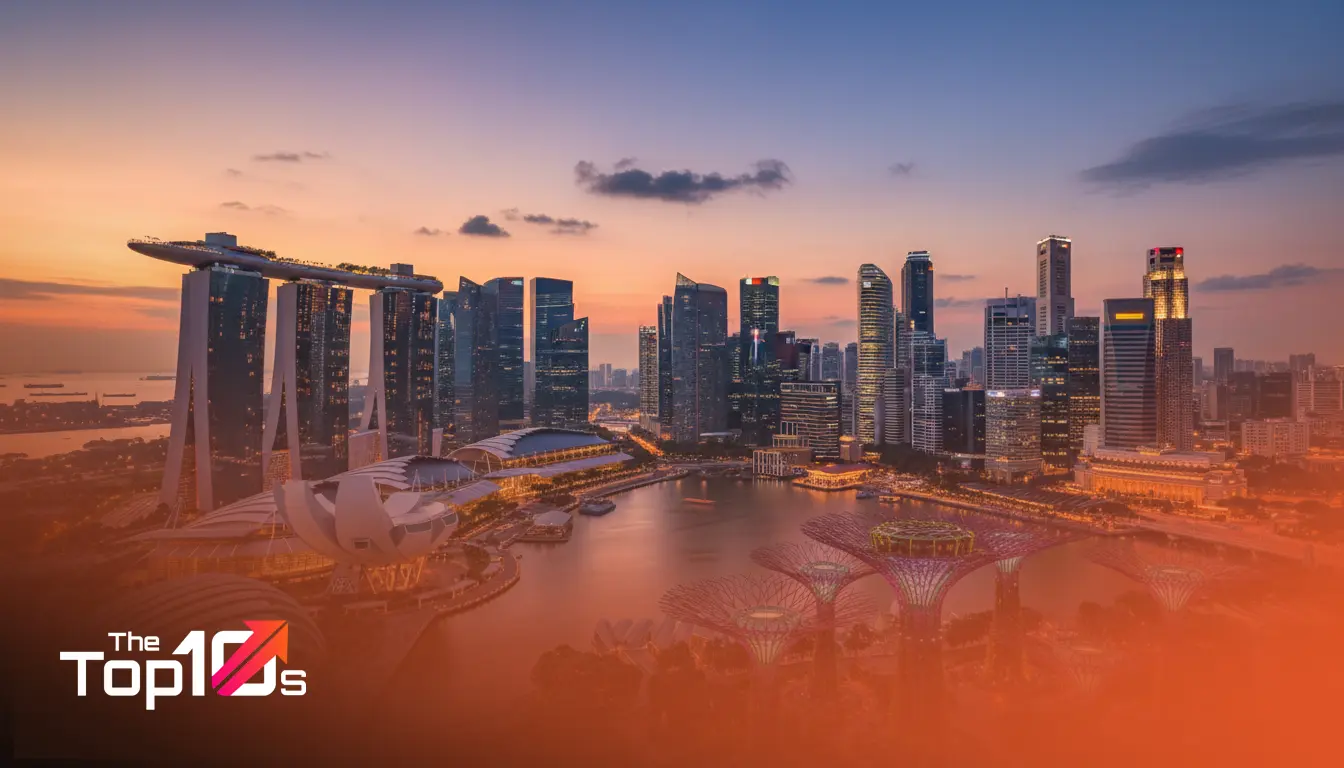
Walking through Singapore often feels like stepping into a living architectural digest. From the futuristic curves of Marina Bay to the preserved heritage shophouses in Katong, the built environment here isn’t just about shelter—it’s about identity. But if you are planning to build your own sanctuary, renovate a terrace house, or launch a commercial space, the sheer number of firms can be paralyzing.
You aren’t just looking for someone to draw blueprints. You need a navigator. Building in Singapore involves wrestling with strict Urban Redevelopment Authority (URA) guidelines, maximizing tight floor areas, and designing for a humid tropical climate without relying entirely on air conditioning. The right partner balances these technical constraints with the vision you have in your head.
Quick Takeaways
- Regulation is Key: Singapore has some of the strictest building codes globally; your architect must be a “Qualified Person” (QP) familiar with BCA and URA requirements.
- Climate Matters: Look for designers who prioritize passive cooling and airflow, not just aesthetic glass boxes.
- Specialization Variance: Some firms excel at Good Class Bungalows (GCBs), while others specialize in high-density conservation shophouses. Know your category.
- Holistic Approach: The best modern practices integrate landscaping and interiors rather than treating them as afterthoughts.
Finding that perfect match requires looking past glossy renders. It requires understanding who delivers on time, who communicates clearly when problems arise, and who respects your budget. Below, we break down ten of the most capable architectural minds and firms operating in the Lion City today.
How We Identified Leading Architects
Selecting the professionals for this list wasn’t about counting awards or looking at who has the most Instagram followers. Instead, we analyzed the practical elements that matter to a property owner. We looked for consistency in design quality across different project scales, from landed residential homes to larger commercial developments.
Our research focused on firms that demonstrate a deep understanding of Singapore’s specific challenges—such as land scarcity and tropical sustainability. We considered their reputation within the industry, their history of successful project completions, and public feedback regarding client collaboration. The goal was to highlight professionals who combine technical precision with design flair, ensuring they can handle the rigorous submission processes required by local authorities while delivering exceptional spaces.
Top 10 Architects in Singapore
1. WOHA
If you have ever admired the greenery-draped Oasia Hotel Downtown or the Parkroyal on Pickering, you have seen WOHA’s handiwork. Founded by Wong Mun Summ and Richard Hassell, this firm has become synonymous with “breathing architecture.” They don’t just build structures; they create vertical ecosystems.
Specialization: Sustainable High-Rise, Tropical Hospitality, Public Architecture
Experience: Established in 1994
Best For: Clients looking for landmark, environmentally integrated designs that challenge the distinction between nature and the built environment.
2. SCDA Architects
Soo K. Chan has built a reputation on stillness and luxury. SCDA’s work often feels like a calm exhale in a busy city. Their designs are characterized by clean lines, water features, and a seamless flow between indoor and outdoor spaces. They manage to make concrete and glass feel warm, often incorporating lush pockets of nature into strictly modern forms.
Specialization: Luxury Residential, High-End Resorts, Interior Design
Experience: Founded in 1995
Best For: Homeowners seeking a sophisticated, resort-like atmosphere within an urban setting, prioritizing privacy and tranquility.
3. Wallflower Architecture + Design
There is a distinct cleverness to Wallflower’s residential work. They are masters of the “Singapore constraints”—finding light in windowless terrace houses or creating privacy in high-density neighborhoods. Their Travertine Dream House and other residential projects show a knack for using materials that weather well in the tropics while looking timeless.
Specialization: Landed Residential, Conservation Shophouses
Experience: Founded in 1999
Best For: Families with landed property who want to maximize floor area and natural light without sacrificing modern aesthetics.
4. HYLA Architects
Led by Han Loke Kwang, HYLA focuses almost exclusively on high-end private homes. Their portfolio is a lesson in privacy and screening. You will often see timber screens, intricate brickwork, or green buffers that shield the home from the street while keeping the interior airy. They understand that in a crowded city, the ultimate luxury is being unobserved.
Specialization: Modern Private Homes, Semi-Detached, Bungalows
Experience: Founded in 1993
Best For: Private clients building their forever home who value detailed craftsmanship and intelligent spatial planning.
5. Guz Architects
Guz Wilkinson’s designs are arguably the most recognizable in the residential sector. Featuring curving rooflines that mimic waves, massive cantilevered gardens, and open courtyards, his houses look like they belong in a futuristic jungle. He pushes the boundaries of what a tropical house can look like, often planting trees on roofs to replace the green space taken up by the building footprint.
Specialization: Tropical Bungalows, Sustainable Residential Design
Experience: Established in 1995
Best For: Owners of large plots (Good Class Bungalows) who want a statement home that embraces the climate rather than fighting it.
6. DP Architects
This is one of the giants of the industry. Responsible for the Esplanade and the Singapore Sports Hub, DP Architects operates on a massive scale. However, they also maintain teams for smaller, bespoke projects. Their strength lies in their immense resources and ability to handle complex regulatory requirements that might stall smaller firms.
Specialization: Urban Planning, Large-Scale Commercial, Mixed-Use Developments
Experience: Founded in 1967
Best For: Commercial developers or businesses needing a firm with the infrastructure to handle massive, multi-year construction projects.
7. Aamer Architects
Aamer Taher views architecture as “functional sculpture.” His designs rarely follow the standard rectangular geometry found in most residential estates. He isn’t afraid of curves, unconventional angles, or bold structural expressions. Despite the artistic flair, his homes remain highly livable, often designed to capture prevailing winds.
Specialization: Bespoke Bungalows, Semi-Detached Houses
Experience: Established in 1994
Best For: Clients who view their home as a piece of art and are willing to take bold design risks.
8. FARM
FARM is not your typical architecture firm; they describe themselves as a cross-disciplinary design practice. They handle everything from architecture to branding and curatorial work. This results in spaces that feel incredibly cohesive and story-driven. Their architectural work often features community-centric designs and thoughtful adaptive reuse of older buildings.
Specialization: Adaptive Reuse, Boutique Commercial, Residential
Experience: Established in 2005
Best For: Business owners or boutique hoteliers who want a space that tells a strong brand story.
9. Ming Architects
Tan Cher Ming leads a practice that has rapidly gained attention for contemporary residential architecture. Their style is characterized by bold structural forms and a monochrome palette, often softened by strategic lighting and landscaping. They are particularly skilled at creating “wow” moments, such as dramatic staircases or double-volume living spaces.
Specialization: Contemporary Luxury Homes
Experience: Established in 2008
Best For: Younger families or investors looking for a sleek, modern aesthetic that feels current and high-impact.
10. K2LD Architects
K2LD focuses on the “sense and sensibility” of architecture. They look at how a building sits within its context—the neighborhood, the terrain, and the history. Their residential work is often understated but incredibly detailed, using materials like stone and wood to create texture. They also have a strong presence in the educational sector.
Specialization: Private Residential, Educational Institutions
Experience: Founded in 2001
Best For: Clients who appreciate subtle elegance and tactile materials over flashy, monumental forms.
What Defines a Great Architect in Singapore?
Designing in Singapore presents a specific set of challenges that separates good architects from great ones. The heat and humidity are relentless. A great architect understands passive design strategies—positioning windows to catch the northeast monsoon winds while shielding interiors from the harsh afternoon sun. If a design relies 100% on air conditioning to be habitable, it has failed the context test.
Space efficiency is another critical marker. With real estate prices among the highest in the world, wasted square footage is a sin. Top-tier professionals know how to use split levels, pocket doors, and concealed storage to make 1,500 square feet feel like 2,000. They understand the “Kampung spirit” of communal living but respect the modern need for privacy.
Furthermore, local knowledge is non-negotiable. The Building and Construction Authority (BCA) pushes hard for sustainability through the Green Mark Scheme. A proficient architect navigates these incentives to save you money on energy bills long-term, integrating solar panels or rain harvesting systems seamlessly into the design.
How to Choose the Right Architect for Your Needs
Hiring an architect is akin to a short-term marriage; you will be working closely for 12 to 24 months. Here is how to ensure compatibility.
Scrutinize the Portfolio for Variety
Does every house they build look identical? While a signature style is good, you want an architect who adapts to the site. If you have a triangular plot of land, you need someone who can solve that geometry, not someone who tries to force a square box into a round hole. Check if they have handled projects of your specific scale before.
Ask About the “Qualified Person” Role
In Singapore, submissions to authorities must be done by a QP. Ensure the lead on your project is registered with the Board of Architects (BOA). Ask them directly: “Who will be handling the URA and BCA submissions, and what is your track record with approval timelines?” Delays in paperwork often cost more than delays in construction.
Understand the Fee Structure
Architectural fees can be a flat lump sum or a percentage of the construction cost (typically ranging from 5% to 10% depending on complexity). Be wary of fees that seem too low; this often means the firm is overstretched and won’t give your project the attention it needs. Clarify what is included—does this cover interior design drawings, or just the architectural shell?
Look for Regional Perspective
Sometimes your interests might extend beyond the island. If you are a developer or homeowner with properties across the border, you might want a firm with regional experience. Understanding the contrast between Singapore’s strict urban density and the broader land availability nearby can be valuable. For instance, comparing the top 10 architects in Malaysia with local talent can give you a better sense of regional design trends and material availability that might influence your project choices.
Frequently Asked Questions
Do I need an architect for a simple renovation in Singapore?
If you are touching structural elements (removing load-bearing walls), changing the façade, or adding floor area, you legally need a Qualified Person (architect or engineer). For purely cosmetic changes like carpentry and tiling, an interior designer is usually sufficient.
How long does it take to build a landed house in Singapore?
From the first sketch to handing over the keys, expect a timeline of 18 to 24 months. The design and authority submission phase alone can take 6 months before a single brick is laid. This varies based on the complexity of the site and the speed of contractor work.
What is the difference between Design-and-Build and hiring an Architect?
In a Design-and-Build contract, the contractor handles everything, including the design. It is often faster and cheaper, but you have less control over design details. Hiring an independent architect ensures you have an advocate who polices the builder’s quality and protects your interests throughout the build.
How much does an architect cost in Singapore?
For a new erection or reconstruction of a landed house, architectural fees generally range between 6% and 10% of the construction cost. For smaller additions and alterations (A&A), fees might be higher on a percentage basis or charged as a lump sum due to the complexity relative to the budget.
Next Steps for Your Project
Embarking on a construction project in Singapore is a significant investment of time and capital. The architects listed above represent the pinnacle of design capability in the region, but the “best” choice is subjective to your personality and goals.
Start by collecting a folder of images that resonate with you—not just how they look, but how you imagine living in them. Reach out to three firms from this list for an initial consultation. Pay attention to how much they listen versus how much they talk. The right architect will be as interested in your lifestyle as they are in the aesthetics. Once you find that alignment, you are ready to turn those blueprints into reality.