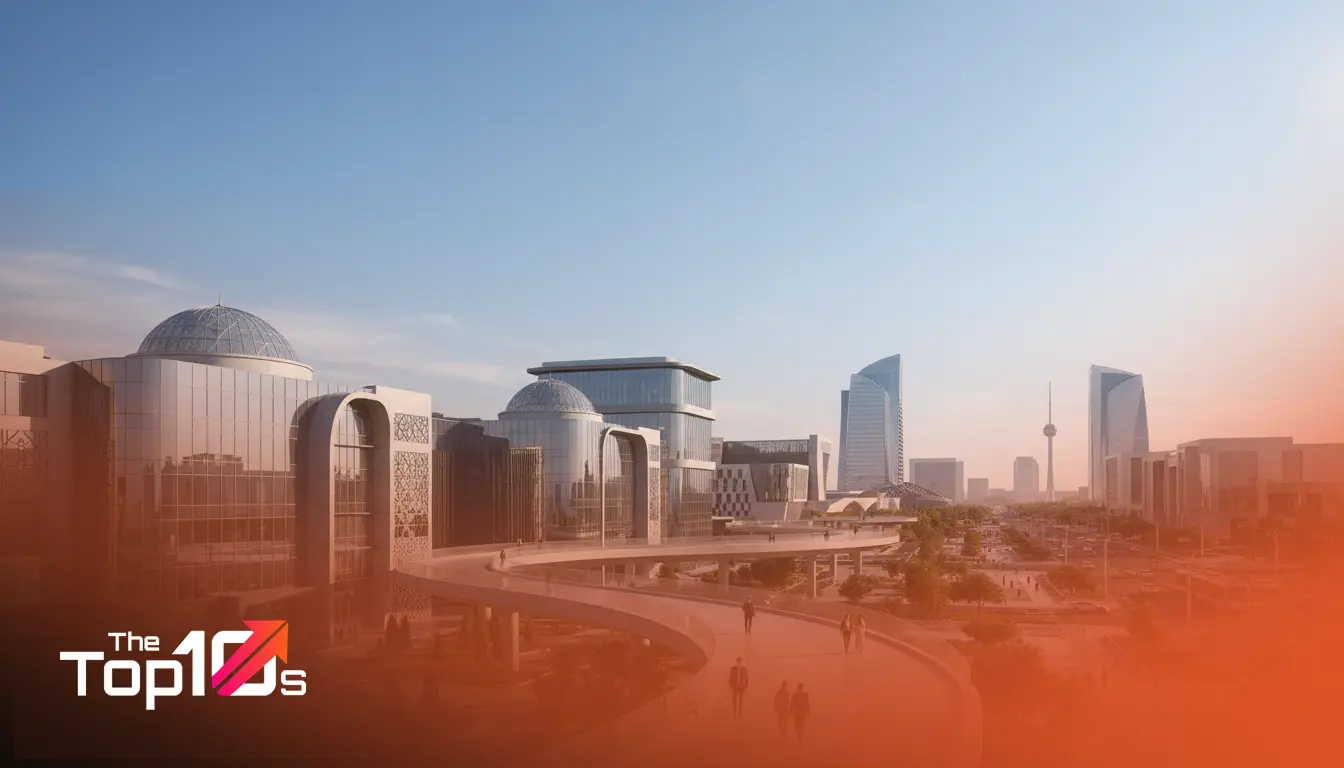
Walk through the streets of Tashkent today, and you’ll see a city in the middle of a massive identity shift. We aren’t just looking at the classic Soviet modernism or the historic blue domes of the Old City anymore. There is a surge of glass skyscrapers, eco-conscious villas, and smart urban planning that is reshaping the skyline. But behind every impressive facade is a professional who knew how to turn a vague idea into a livable reality.
If you are planning a project here—whether it’s a custom family home in the suburbs or a commercial retrofit in the city center—finding the right partner is the single biggest variable in your success formula. The construction landscape in Uzbekistan is unique; it requires navigating complex local building codes, understanding seismic activity (a non-negotiable here), and managing contractors who might interpret plans loosely if not watched closely.
You need more than just someone who can draw pretty renderings. You need a strategist who understands the local soil, the heat of July, and the bureaucracy of city planning. Below, we break down the top architects in Tashkent who are currently setting the standard for design and execution.
Quick Takeaways: Architectural Planning in Tashkent
- Seismic Safety is Priority #1: Tashkent is in an active seismic zone. Never compromise on structural engineering expertise.
- Design-Build is Common: Many firms offer “turnkey” services, handling both the architectural design and the construction to streamline accountability.
- Bureaucracy Matters: Experienced local architects know how to navigate the Hokimiyat approvals and SNiP (building norms) faster than newcomers.
- Climate Control: Top designers prioritize passive cooling techniques to handle Uzbekistan’s intense continental summers.
How We Identified Leading Architects
Selecting a design partner isn’t about looking at who has the flashiest Instagram feed. Our approach to identifying the best architects in Tashkent focuses on substantive indicators of quality and reliability. We analyzed the market based on publicly available data, reputation signals, and portfolio consistency.
We looked for firms and individuals who demonstrate a deep understanding of contemporary architectural standards while respecting the local context. Key factors included:
- Project Diversity: A track record spanning residential, commercial, or public spaces.
- Regulatory Knowledge: Evidence of successfully completed projects that comply with Uzbekistan’s strict urban planning rules.
- Longevity: Firms that have weathered the economic shifts of the region and remained operational.
- Client Feedback trends: General sentiment regarding communication, budget adherence, and problem-solving abilities.
This list represents a cross-section of the talent available in the capital, ranging from luxury residential specialists to large-scale urban planners.
List of 10 Best Architects in Tashkent
| Name | Best For |
|---|---|
| Archikultura | Cultural Projects & Modern Residential |
| Prime Tower Group (Design Division) | High-rise Commercial & Mixed-Use Complexes |
| MB Studio | Luxury Interior & Private Architecture |
| Design House | Urban Planning & Public Architecture |
| ARC Architects | Sustainable & Eco-Friendly Design |
| Mukhammad Design | Neoclassical & Traditional Residential |
| Discover Invest (Architectural Wing) | Industrial & Large Commercial |
| Kvadrat Architects | Minimalist & Hi-Tech |
| Art-Arch | Hospitality & Restaurants |
| Cube Design | Modern Apartment Renovations & Lofts |
Top 10 Architects in Tashkent
1. Archikultura
Specialization: Cultural Projects & Modern Residential
Archikultura has carved out a distinct niche in the Tashkent design scene by blending modern minimalism with traditional Uzbek motifs. They don’t just copy-paste western styles; they adapt them. Their work often features the intricate use of brick and light, nodding to local heritage while providing fully modern functionality.
They are widely recognized for their attention to detail in public spaces and private residences. If you are looking for a building that feels like it belongs in Uzbekistan rather than an anonymous glass box, this firm is a strong contender. Their strength lies in contextual design—making sure the building fits its neighborhood.
2. Prime Tower Group (Design Division)
Specialization: High-rise Commercial & Mixed-Use Complexes
When you see the large-scale developments changing the Tashkent skyline, firms like Prime Tower Group are often involved. While they are a major construction entity, their in-house architectural team handles massive projects requiring complex engineering and high-density planning.
They are best suited for developers or investors looking to build multi-story residential complexes or business centers. Their architectural approach focuses on efficiency and scale, ensuring that large square footage is optimized for profitability and structural integrity.
3. MB Studio
Specialization: Luxury Interior & Private Architecture
For homeowners who want a seamless flow between the exterior architecture and the interior layout, MB Studio provides a cohesive vision. In Tashkent, where the “mahalla” style often hides opulence behind modest walls, MB Studio excels at creating private sanctuaries.
Their portfolio suggests a preference for contemporary luxury—think open floor plans, floor-to-ceiling windows, and smart home integration. They are an excellent choice for high-net-worth individuals building custom villas who want a single team to handle the visual aesthetic from the facade to the furniture.
4. Design House
Specialization: Urban Planning & Public Architecture
Design House has established a reputation for handling projects that interface with the public. Their work often involves rigorous adherence to zoning laws and city master plans. They are known for functional, durable designs that stand up to heavy foot traffic and environmental wear.
This firm is particularly strong in adaptive reuse—taking older Soviet-era structures and revitalizing them for modern commercial use without destroying their structural core. This is a crucial skill in a city full of historical layers.
5. ARC Architects
Specialization: Sustainable & Eco-Friendly Design
As energy prices rise and environmental awareness grows in Central Asia, ARC Architects has positioned itself as a leader in green building practices. They prioritize thermal insulation, natural ventilation strategies, and sustainable material sourcing.
Clients choose ARC when they want to reduce long-term operational costs. Their designs often feature passive solar principles, which are vital for keeping buildings cool during the scorching Tashkent summers without relying solely on air conditioning.
6. Mukhammad Design
Specialization: Neoclassical & Traditional Residential
Not everyone wants a glass box. Mukhammad Design caters to a large segment of the market that prefers the grandeur of Neoclassical styles or the warmth of traditional Eastern architecture. Their projects often feature columns, arches, and detailed masonry work.
They are highly experienced in designing the “Kovyl” (mansion) style homes popular in the suburbs. Their strength is ornamental precision and creating imposing, majestic facades that make a statement of prestige.
7. Discover Invest (Architectural Wing)
Specialization: Industrial & Large Commercial
Discover Invest is a giant in the local industry. Their architectural department is less about boutique design and more about industrial capability and speed. They handle some of the most complex infrastructure and factory designs in the region.
If you are setting up a manufacturing plant, a logistics center, or a large retail park, their team understands the technical workflow requirements better than most residential architects. They design for logistics, heavy machinery loads, and workflow efficiency.
8. Kvadrat Architects
Specialization: Minimalist & Hi-Tech
Kvadrat brings a European design sensibility to Tashkent. Their work is characterized by clean lines, lack of clutter, and the use of raw concrete and steel. They appeal to a younger demographic and tech-oriented businesses.
They are excellent at working with challenging plot shapes. In a densifying city where land is becoming scarce and irregular, Kvadrat Architects are known for finding clever spatial solutions that maximize usable area without feeling cramped.
9. Art-Arch
Specialization: Hospitality & Restaurants
Tashkent has a booming dining culture, and Art-Arch is often the creative force behind the city’s trendiest spots. They understand the psychology of space—how lighting, acoustics, and flow affect a customer’s experience.
Beyond restaurants, they design boutique hotels and leisure centers. Their designs focus on atmospheric storytelling, creating immersive environments that serve as a brand extension for business owners.
10. Cube Design
Specialization: Modern Apartment Renovations & Lofts
While many firms focus on ground-up construction, Cube Design excels in the transformation of existing spaces. With so many new apartment blocks being handed over as “concrete shells,” Cube Design provides the architectural planning to turn those shells into homes.
They are experts in space optimization. If you have a compact apartment and need to fit a home office, a nursery, and a spacious living area, their floor planning expertise is highly regarded.
What Defines a Great Architect in Tashkent?
Architecture in Central Asia is distinct from Europe or East Asia. Just as we see specific regional trends when looking at the top 10 architects in Almaty, Tashkent requires a specific set of skills that goes beyond drawing lines on paper.
Seismic Literacy
The legacy of the 1966 earthquake is built into the DNA of the city. A great architect here doesn’t just treat engineering as an afterthought. They design with shear walls, flexibility, and load distribution in mind from the very first sketch. They work hand-in-glove with structural engineers to ensure compliance with the strict seismic codes of Uzbekistan.
Thermal Regulation Mastery
Tashkent has a continental climate. Winters can be biting, and summers are intensely hot. Mediocre architects rely entirely on HVAC systems. Great architects use building orientation, shading devices (like deep overhangs or brise-soleil), and thermal mass materials to naturally regulate the indoor temperature.
Cultural Sensitivity
The best designs in Tashkent respect the “Mahalla” culture—the concept of community privacy. This often translates to homes that are inward-facing, with modest exteriors that open up into lush, private courtyards. Understanding this cultural nuance is often the difference between a house and a home.
How to Choose the Right Architect for Your Needs
Hiring a design professional is a recruitment process. You are hiring a partner who will manage your money and your vision. Here is how to vet them effectively.
1. Check the “Licensiya”
Ensure the firm or individual holds a valid license from the State Committee for Architecture and Construction of Uzbekistan. This is critical for getting your project approved legally. Without a licensed stamp, your drawings are just pretty pictures.
2. Ask About “Avtorskiy Nadzor”
This translates to “Author’s Supervision.” In Uzbekistan, it is vital that the architect visits the site regularly to ensure builders are following the plans. Ask specifically if this service is included in their fee or if it costs extra. You do not want an architect who hands over the PDF and disappears.
3. Review Built Work, Not Renderings
3D rendering software is powerful today; anyone can make a fantasy building look real. Ask to see photos of completed projects. Even better, ask to visit a site. Look at the finishing details—the corners, the material transitions, and how the building has aged over a few years.
4. Discuss the Approval Process
Ask them: “How do you handle the city approval process?” A confident answer involves specific knowledge of the local district (Tuman) administration. If they seem vague about permits, proceed with caution.
Frequently Asked Questions
How much do architects charge in Tashkent?
Fees vary wildly based on reputation and scope. Some charge a percentage of the total construction cost (usually 3-7%), while others charge per square meter of design work. Be wary of quotes that seem too low; they often exclude engineering drawings (electrical, plumbing, structural), which you will have to pay for separately later.
Do I need an architect for a renovation?
If you are moving walls, yes. In apartment blocks, structural changes can compromise the whole building’s safety. You need a professional to determine which walls are load-bearing. For cosmetic updates (paint, flooring), an interior designer might be sufficient.
How long does the design phase take?
For a standard private house, expect the design phase to take 2 to 4 months. This includes the concept design, revisions, and the production of detailed technical “working drawings.” Rushing this phase is the leading cause of construction delays later on.
Can architects in Tashkent also build the house?
Yes, many operate as “Design-Build” firms. This can be convenient as it centralizes responsibility. However, hiring an independent architect to oversee a separate construction team can sometimes provide better quality control, as the architect acts as your advocate, not the builder’s partner.
What is the difference between a “Project” and a “Sketch”?
In local terminology, a “Sketch” (Eskiz) is a conceptual drawing used for initial approvals. A “Project” (Rabochiy Proekt) is the thick book of technical details (wiring, pipes, rebar) that builders actually use. Make sure your contract specifies a full working project.
Building Your Vision in Tashkent
The construction boom in Tashkent offers an exciting opportunity to build something truly remarkable, but the speed of development brings risks. The difference between a project that runs smoothly and one that gets stuck in bureaucratic limbo often comes down to the quality of your architectural planning.
Don’t rush the selection process. Meet with multiple firms from this list. Look at their past work, but more importantly, listen to how they communicate. The architectural heritage of this region is rich and complex, and your project should contribute to that legacy, not detract from it. Choose a partner who respects your budget, understands the local soil, and shares your vision for the future.