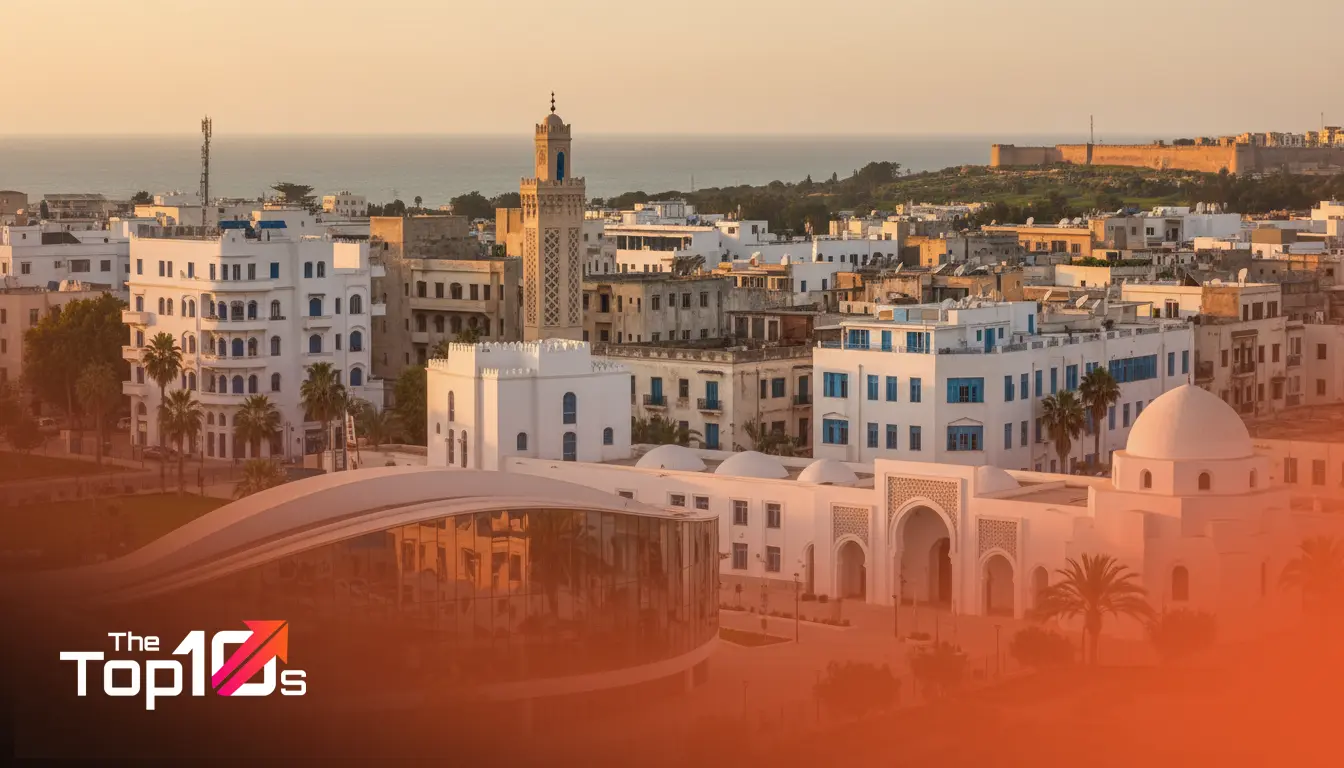
Walking through Tunis, you immediately notice a collision of eras. You have the intricate, winding alleyways of the Medina, the stark white-and-blue harmony of Sidi Bou Said, and the rapid, glass-clad expansion in Berges du Lac. For anyone looking to build or renovate in this capital, the architectural diversity is both an inspiration and a challenge. Finding a professional who understands how to balance Tunisia’s rich heritage with modern functionality isn’t just about aesthetics; it’s about navigating local zoning laws, understanding the Mediterranean climate, and managing complex construction logistics.
You might be wondering where to even start. The market is saturated with design firms, yet finding a partner who truly listens to your vision is rare. Whether you are planning a luxury villa in Carthage, a commercial hub in the city center, or a sustainable restoration project, the person you hire will determine the success of your investment.
Quick Takeaways: Hiring in Tunis
- Regulation is Key: Ensure your architect is registered with the Ordre des Architectes de Tunisie (OAT).
- Context Matters: The best designs in Tunis respect the distinct micro-climates and solar orientation specific to North Africa.
- Full Service vs. Design Only: Clarify early if you need project management (Suivi de Chantier) or just the blueprints.
- Local expertise: Familiarity with municipal approval processes in specific communes (like La Marsa vs. Ariana) can save months of delays.
This guide cuts through the noise to highlight the experienced architectural professionals in Tunis who are currently shaping the city’s skyline. We look past the glossy renders to focus on track records, build quality, and client satisfaction.
How We Identified Leading Architects
Selecting the top architects in Tunis requires more than just scrolling through Instagram feeds. Our methodology focuses on tangible indicators of professional reliability and design excellence. We analyzed firms based on their standing within the local industry and their ability to deliver completed projects rather than just conceptual drawings.
We looked for professionals who demonstrate a deep understanding of Tunisian building codes and urban planning regulations. A significant factor in our evaluation was versatility—how well an architect adapts to different constraints, whether it’s a tight urban lot or a sprawling coastal property. We also considered peer recognition and longevity in the market, which often serves as a proxy for financial stability and operational consistency. The goal was to find those rare partners who combine creative vision with the technical discipline required to get a “Permis de Bâtir” approved efficiently.
List of 10 Best Architects in Tunis
| Name | Best For |
|---|---|
| Arkadin Studio | High-end residential projects and modern office spaces. |
| Atelier 13 | Industrial facilities, bespoke private villas, and functional precision. |
| Hela Hamdaoui Architects | Boutique hospitality projects or residential renovations with a distinct local identity. |
| Gallery Architecture (Daly Laabidi) | Landmark buildings and commercial developments that require a bold, expressive structure. |
| Wassim Ben Rhouma | Luxury residential villas, especially in affluent suburbs of Tunis. |
| The Architects Collaborative (Tunis Branch) | Institutional buildings, schools, and large housing complexes. |
| Selma Feriani (Design & Spatial Planning) | Historic property renovations and adaptive reuse projects. |
| Derouiche & Partners | Reliable, long-term projects, especially for foreign investors and corporate entities. |
| NOA (Not Only Architecture) | Sustainable design and eco-friendly projects that prioritize energy efficiency. |
| Zied Melki Architects | Practical, yet beautiful, commercial spaces and home designs. |
Top 10 Architects In Tunis
The following professionals and firms represent a cross-section of the best design talent in the capital. They range from boutique studios focused on high-end residential work to large firms capable of handling complex commercial developments.
1. Arkadin Studio
Arkadin Studio has established a reputation for delivering sleek, contemporary designs that do not feel out of place in the Tunisian context. Led by Karim Ben Amor, this firm is often sought after for high-end residential projects and modern office spaces. Their work frequently features clean geometric lines and a sophisticated use of raw materials like concrete and glass.
What sets them apart is their holistic approach to interior and exterior flow. They don’t just design a shell; they consider how residents move through the space. This makes them a strong candidate for homeowners who want a modern, minimalist aesthetic without sacrificing comfort.
2. Atelier 13
If you are looking for a team that thrives on technical challenges, Atelier 13 is a name that comes up often in industry circles. They handle a diverse portfolio, ranging from industrial facilities to bespoke private villas. Their strength lies in rigorous project management and detailed technical drawings, which helps minimize errors during the construction phase.
Clients often appreciate their transparency regarding budgets and timelines. If you prioritize functional precision and need an architect who can communicate effectively with contractors, this firm offers a solid balance of creativity and pragmatism.
3. Hela Hamdaoui Architects
Hela Hamdaoui represents a generation of architects bringing a fresh perspective to Tunisian urbanism. Her studio focuses heavily on the sensory experience of architecture—how light enters a room and how materials age over time. Her projects often incorporate elements of traditional Tunisian craftsmanship but reinterpret them through a modern lens.
This approach is ideal for clients who want their property to have a distinct local identity without falling into pastiche. Her work is particularly well-suited for boutique hospitality projects or residential renovations where character is as important as square footage.
4. Gallery Architecture (Daly Laabidi)
Daly Laabidi’s practice is known for bold, expressive structures that make a statement. Gallery Architecture often experiments with volume and voids, creating dynamic facades that play with shadow and light—a crucial consideration in the bright North African sun. Their portfolio suggests a fearlessness in design that appeals to developers looking for landmark buildings.
However, this creativity is grounded in structural logic. They are an excellent choice for commercial developers or corporate headquarters where the building itself needs to serve as part of the brand identity.
5. Wassim Ben Rhouma
Specializing in luxury residential villas, Wassim Ben Rhouma has carved out a niche in the affluent suburbs of Tunis. His designs often maximize views, whether focusing on the Mediterranean Sea or a carefully landscaped garden. There is a resort-like quality to his residential work, blurring the lines between indoor living and outdoor leisure.
For expatriates or locals building their dream home in areas like Gammarth or La Soukra, Ben Rhouma offers a design sensibility that aligns with high international standards of luxury and privacy.
6. The Architects Collaborative (Tunis Branch)
While sharing a name with the historic firm, the local entities operating under similar collaborative models in Tunis bring together multidisciplinary teams for large-scale projects. These collectives are often the go-to for institutional buildings, schools, and large housing complexes. Their strength lies in their capacity to handle significant square footage and navigate complex bureaucratic requirements.
They are best suited for institutional clients or large-scale developers who need a team capable of coordinating engineering, environmental impact studies, and architecture under one umbrella.
7. Selma Feriani (Design & Spatial Planning)
Though often associated with the art world, the architectural arm linked to this aesthetic focuses on adaptive reuse and cultural spaces. The approach here is sensitive, prioritizing the preservation of existing structures while infusing them with new purpose. This is architecture as curation.
This is the right fit for clients with a historic property in the Medina or a colonial-era building in downtown Tunis that requires a delicate touch. It is less about new construction and more about transformative restoration.
8. Derouiche & Partners
With decades of presence in the market, Derouiche & Partners brings a level of institutional memory that is hard to match. They have weathered various economic cycles and regulatory changes in Tunisia. Their portfolio is vast, covering everything from healthcare facilities to multi-unit residential towers.
Reliability is the keyword here. If you are a foreign investor or a corporate entity entering the Tunisian market, their deep understanding of the administrative landscape reduces the risk of project stalls due to permitting issues.
9. NOA (Not Only Architecture)
NOA challenges the traditional boundaries of the discipline by integrating landscape design and interior architecture from the very first sketch. They are strong proponents of sustainable design, often utilizing passive cooling techniques to reduce reliance on air conditioning—a major plus for operational costs in Tunis.
Homeowners concerned with energy efficiency and environmental footprint will find NOA’s philosophy refreshing. They prove that eco-friendly design does not have to look rustic; it can be sharp, modern, and high-tech.
10. Zied Melki Architects
Zied Melki is recognized for his versatility and attention to detail. His practice seamlessly shifts between commercial retail fit-outs and private housing. There is a pragmatic elegance to his work; spaces are designed to be used, not just photographed. He emphasizes durable materials that can withstand the local humidity and urban wear.
This firm is a strong contender for business owners who need functional, attractive commercial spaces that invite customers in, as well as families looking for practical yet beautiful home designs.
What Defines a Great Architect in Tunis?
Architecture in Tunis operates within a unique set of constraints and opportunities. A talented professional here does more than draw floor plans; they act as a bridge between your vision and the realities of the local environment. One major factor is the climate. The sun in Tunis is intense. Great architects understand solar gain and wind patterns, designing overhangs, orientation, and ventilation systems that keep buildings cool naturally. If you are exploring regional North African design influences beyond Tunisia, you might find parallels in our review of the Top 10 Architects In Fes, where thermal comfort is also a primary design driver.
Furthermore, the regulatory landscape is complex. The “Cahier des Charges” (specifications) varies significantly between municipalities. What is allowed in Carthage regarding height and color is strictly forbidden in Sidi Bou Said. An excellent architect anticipates these hurdles before submitting the dossier, saving you from costly revisions. They also maintain strong relationships with the Ordre des Architectes de Tunisie, ensuring all professional standards and ethical guidelines are met.
How to Choose the Right Architect for Your Needs
Making the final decision can feel overwhelming. To simplify the process, start by defining the scope of your involvement. Do you want to approve every tile, or do you prefer to sign off on the broad strokes? Some architects view the client as a co-creator, while others prefer autonomy. Be honest about your style.
Ask these specific questions during your initial consultation:
- “Can you show me a project you completed five years ago?” (This reveals how their material choices age).
- “How do you handle the fee structure? Is it a percentage of construction costs or a flat fee?”
- “Who will be my day-to-day contact?” (In larger firms, the principal architect may pitch the project but hand it off to a junior associate).
- “What is your experience with the specific municipality where my land is located?”
Don’t just look at the portfolio photos; look at the floor plans. Do the layouts make sense for how you actually live? A beautiful facade cannot compensate for a poorly planned kitchen or a dark living room. For more insights on global architectural standards, resources like ArchDaily can provide a benchmark for what is possible in modern design.
Frequently Asked Questions
Do I legally need an architect for residential construction in Tunisia?
Yes, for most construction projects, Tunisian law requires plans to be stamped by an architect registered with the Order of Architects. This is mandatory to obtain a building permit (Permis de Bâtir) from the municipality.
How do architects in Tunis typically charge?
Fees vary, but the standard is often a percentage of the total construction cost, usually ranging between 5% and 12%, depending on the complexity and scope (design only vs. full site supervision). Some may offer a flat fee for smaller renovations.
What is the difference between “Mission Complète” and “Permis”?
A “Mission Permis” means the architect only delivers the drawings necessary to get legal approval. A “Mission Complète” means they stay involved through construction, overseeing the contractors and ensuring the build matches the design.
How long does it take to get a building permit in Tunis?
Timelines are unpredictable and depend heavily on the specific municipality and the completeness of your dossier. It can take anywhere from two months to over six months. An experienced architect can often expedite this by avoiding common compliance errors.
Can architects help with finding contractors?
Absolutely. Experienced local architects have a network of trusted contractors, engineers, and craftsmen. Utilizing their network can often save you from hiring unreliable labor.
Next Steps for Your Project
Building in Tunis is a journey that requires patience, capital, and the right team. The architects listed above represent the upper echelon of talent in the city, but the “best” one is simply the one whose communication style and aesthetic vision align with yours. Do not rush the interview process. Meet with at least three different firms. Visit one of their active construction sites if possible—nothing tells the truth quite like a work in progress.
Your next move is to gather your property documents, outline a realistic budget, and pick up the phone. A great building starts with a good conversation. Choose a partner who respects your resources and elevates your ideas into something enduring.