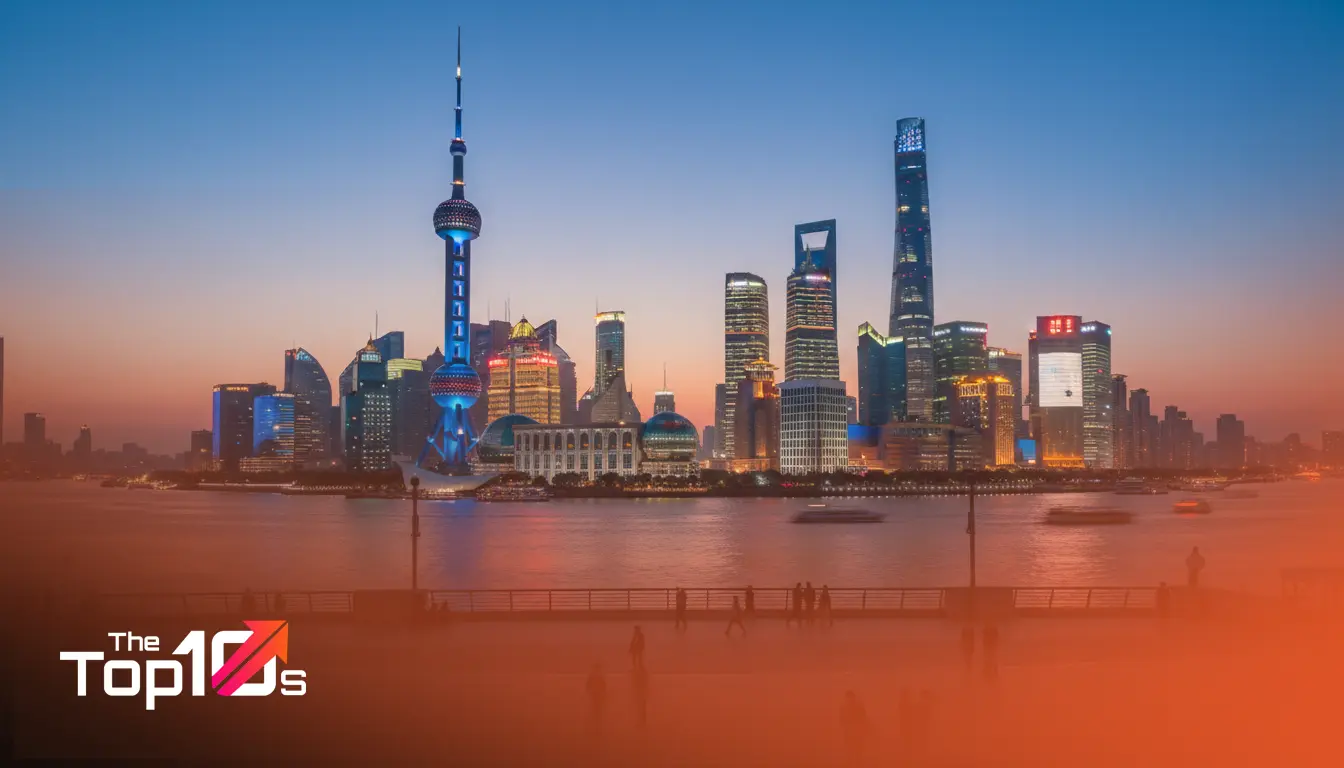
Shanghai doesn’t just move; it sprints. Walking through the financial district in Lujiazui or observing the retail trends on Nanjing Road, you realize quickly that this isn’t just a Chinese market—it’s a global economic engine with its own distinct set of rules. For business leaders, the sheer scale of opportunity here is matched only by the complexity of capturing it.
Trying to navigate local compliance, shifting consumer behaviors, and digital ecosystems like WeChat and Little Red Book without a guide is a recipe for frustration. You can have a brilliant product or service, but if you misread the local “temperature,” execution fails. That is where a seasoned business consultant steps in. They act as the bridge between your corporate vision and Shanghai’s on-the-ground reality.
But finding someone who actually understands your niche—rather than a generalist who offers generic advice—is difficult. We are looking for advisors who understand the difference between a Wholly Foreign-Owned Enterprise (WFOE) structure and a Joint Venture, who know why a marketing strategy that worked in London might flop in Jing’an District.
Quick Takeaways: Consultant Selection
- Local Presence is Non-Negotiable: Avoid “fly-in” consultants. You need someone with feet on the ground in Shanghai who understands current regulatory shifts.
- Specialization Over Generalism: The Shanghai market is too competitive for general advice. Look for experts in specific verticals like luxury retail, manufacturing compliance, or digital transformation.
- Cross-Cultural Fluency: The best advisors speak the language of international headquarters and the language of local stakeholders.
How We Identified Leading Business Consultants
Selecting the right advisor involves more than just looking at the size of their firm or their hourly rate. To compile this list of top business consultants in Shanghai, we looked at three distinct layers of value.
First, we examined longevity and track record. Shanghai has seen many consultants come and go. The ones who stay are those who consistently deliver results through varying economic cycles. We looked for professionals who have successfully navigated the market transitions of the last decade.
Second, we analyzed specialized knowledge. A consultant effective at factory optimization in the outskirts of Shanghai possesses a totally different skillset from someone advising on luxury brand positioning in the city center. We sought diversity in expertise, covering strategy, operations, finance, and marketing.
Finally, we considered thought leadership and reputation. We looked for advisors who don’t just follow trends but define them—individuals who contribute to the broader conversation about business in China through research, speaking, and published insights.
List of 10 Best Business Consultants in Shanghai
| SNO | Name | Best for |
|---|---|---|
| 1 | Dr. Edward Tse | High-level strategy, existential pivot, or complete strategic overhaul |
| 2 | Chris Devonshire-Ellis | Foreign direct investment (FDI), legal structuring, and tax compliance |
| 3 | Denis Depoux | Industrial giants and energy companies looking to align with China’s aggressive carbon neutrality goals |
| 4 | Bruno Lannes | Premium brands understanding evolving Chinese shopper behavior |
| 5 | Greg Paull | Improving marketing and media effectiveness, digital ROI, and agency remuneration |
| 6 | Joe Ngai | Large-scale mergers, aggressive growth strategies, and digital ecosystem building |
| 7 | Ker Gibbs | American companies navigating delicate geopolitical landscape and maintaining robust operations in Shanghai |
| 8 | Peter Fuhrman | Cross-border transactions, capital raising, and strategic M&A advisory |
| 9 | James McGregor | Government relations, aligning business goals with government objectives, and regulatory compliance |
| 10 | T.R. Harrington | Digital end of the spectrum, search engine marketing, and digital strategy |
Top 10 Business Consultants In Shanghai
This list highlights professionals and partners who have demonstrated significant expertise in the Shanghai market. They represent a mix of massive global consultancies and agile, specialized boutique firms.
1. Dr. Edward Tse (Gao Feng Advisory Company)
You cannot discuss business strategy in China without mentioning Dr. Edward Tse. As the founder of Gao Feng Advisory Company, he is widely regarded as one of the most experienced management consultants in the region. Before founding his own firm, he led Greater China operations for both BCG and Booz & Company.
His approach is deeply rooted in high-level strategy. He helps multinational corporations understand the “China context”—how policy, technology, and culture intersect. If your organization is facing an existential pivot or needs a complete strategic overhaul to survive in Shanghai, Dr. Tse provides the historical context and forward-looking vision required.
2. Chris Devonshire-Ellis (Dezan Shira & Associates)
For businesses specifically dealing with the nuts and bolts of foreign direct investment (FDI), legal structuring, and tax compliance, Chris Devonshire-Ellis is a definitive authority. He founded Dezan Shira & Associates, a pan-Asian practice that helps foreign investors navigate complex regulatory environments.
His expertise is less about abstract strategy and more about operational survival. He helps companies understand how to legally move money, how to structure a WFOE, and how to remain compliant with changing Chinese tax laws. He is the ideal choice for companies in the market entry phase.
3. Denis Depoux (Roland Berger)
Serving as the Global Managing Director for Roland Berger and based in Shanghai, Denis Depoux brings a heavy focus on energy, environmental service, and performance improvement. His presence in Shanghai highlights the city’s importance to global industrial strategy.
Depoux is known for his work in modernization and transformation. He is particularly well-suited for industrial giants and energy companies looking to align with China’s aggressive carbon neutrality goals and industrial upgrades. His advice bridges the gap between European industrial standards and Chinese speed.
4. Bruno Lannes (Bain & Company)
If your business touches the Chinese consumer, Bruno Lannes is a name you should know. A senior partner at Bain based in Shanghai, he has spent over a decade analyzing consumer goods and retail sectors in China. His annual reports on the luxury market are considered industry benchmarks.
Lannes excels at helping premium brands understand the evolving Chinese shopper. He advises on digitalization, omnichannel retail strategies, and brand positioning. For luxury or FMCG brands trying to capture the Shanghai wallet, his insights are invaluable.
5. Greg Paull (R3)
Marketing in Shanghai is a completely different beast compared to New York or London. Greg Paull, co-founder of R3, focuses on improving the effectiveness of marketing and media. While R3 is a global consultancy, its roots and influence in Shanghai are profound.
Paull advises major advertisers on agency remuneration, media auditing, and digital ROI. In a city where digital ad spend is massive and fraud can be an issue, having an independent consultant to audit and optimize marketing relationships is critical. He is best for CMOs who need to justify their Shanghai marketing budgets.
6. Joe Ngai (McKinsey & Company)
Leading McKinsey’s Greater China practice, Joe Ngai is a powerhouse in financial services and organizational transformation. While he oversees a massive region, his influence on the Shanghai financial sector is significant.
He is known for advising on large-scale mergers, aggressive growth strategies, and digital ecosystem building. His work often involves helping traditional companies reinvent themselves to compete with agile tech giants. This is “big picture” consulting for Fortune 500 entities.
7. Ker Gibbs (AmCham / Independent Advisor)
Formerly the President of the American Chamber of Commerce in Shanghai, Ker Gibbs offers a unique blend of public policy insight and business acumen. He understands the macro-political environment better than almost anyone in the private sector.
Gibbs is particularly effective for American companies trying to navigate the delicate geopolitical landscape while maintaining robust operations in Shanghai. His advisory style focuses on risk management, government relations, and long-term stability.
8. Peter Fuhrman (China First Capital)
For investment banking and strategic M&A advisory, Peter Fuhrman stands out. As the Chairman of China First Capital, he focuses on cross-border transactions and capital raising. He has been in China for decades and understands the intricacies of Chinese deal-making.
Fuhrman is the right consultant for technology companies and high-growth firms looking for capital or strategic partnerships. He cuts through the noise of the investment world, offering realistic valuations and connecting firms with serious Chinese institutional investors.
9. James McGregor (APCO Worldwide)
James McGregor is an author and veteran consultant specializing in government relations. In Shanghai, where the government is a key stakeholder in almost every major industry, understanding the bureaucratic mindset is essential.
He advises companies on how to align their business goals with government objectives, ensuring smoother operations and fewer regulatory surprises. His services are vital for highly regulated industries like pharmaceuticals, energy, and tech.
10. T.R. Harrington (Darwin Marketing / SOAP)
Focusing on the digital end of the spectrum, T.R. Harrington has been a pioneer in Chinese search engine marketing and digital strategy. Having founded one of the earliest independent digital agencies in Shanghai, his expertise lies in the technical implementation of growth.
He is suited for businesses that need to understand the “plumbing” of Chinese digital marketing—SEO, Baidu algorithms, and conversion optimization. While larger strategy firms talk about “digital transformation” in the abstract, Harrington’s profile represents the practical execution of digital sales.
What Defines an Effective Business Consultant in Shanghai?
Shanghai is not a market for theorists. The speed of change here renders five-year plans obsolete in six months. An effective consultant in this city needs a specific set of attributes that differ from what you might look for in Berlin or Boston.
Speed and Agility are paramount. The market feedback loop in Shanghai is incredibly fast. A consultant needs to be able to set up a pilot program, gather data, and pivot strategy within weeks, not quarters. They must be comfortable with “good enough” execution that is refined over time, rather than waiting for perfection.
The “Guanxi” Reality check. You will hear the word “Guanxi” (relationships) thrown around constantly. However, a modern, effective consultant doesn’t just rely on knowing a guy who knows a guy. They rely on structural knowledge. They know how the local specialized industrial zones work, they understand the incentives of local district officials, and they know which digital platforms actually convert for B2B versus B2C.
Digital Native Thinking. In Shanghai, business is digital. Invoices are handled digitally; communication happens on WeChat; contracts are reviewed on phones. A consultant who tries to force legacy email-based workflows onto a Shanghai team will fail. They must understand the local digital ecosystem intimately.
How to Choose the Right Business Consultant for Your Needs
Hiring the wrong advice is expensive—not just in fees, but in lost time. Here is a framework for vetting potential partners in Shanghai.
Check Their “Recent” History
Ask specifically about projects completed in the last 12 to 24 months. The Shanghai market pre-COVID and post-COVID are different worlds. If their best case studies are from 2018, their knowledge might be outdated regarding consumer sentiment and supply chain resilience.
Define the Scope: Strategy vs. License
Be clear about what you need. Do you need someone to file paperwork to get your business license approved? That is a service provider, not a management consultant. Do you need someone to tell you why your sales are dropping despite high traffic? That is a strategic consultant. Don’t pay strategy rates for administrative work, and don’t expect an administrator to solve a branding crisis.
Assess Their Network
Ask them: “If we need legal counsel for a specialized IP dispute, who do you recommend?” or “If we need to move our warehouse to a free trade zone, do you have a partner there?” A top-tier consultant acts as a hub. They shouldn’t try to do everything themselves, but they should know exactly who to call for specialized tasks.
If your business is expanding beyond Shanghai and looking North, you might also want to research the top 10 business consultants in Beijing to ensure you have strong advisory coverage across the main economic hubs.
Frequently Asked Questions
How much do business consultants in Shanghai charge?
Fees vary wildly based on the firm’s prestige and the project scope. Solo experts may charge between $200-$500 USD per hour, while top-tier strategy firms (like McKinsey or Bain) typically work on a project retainer basis that can run into the hundreds of thousands of dollars per month. Boutique firms often offer the best balance of cost and specialized local expertise.
Do I need a consultant if I have a strong local General Manager?
Often, yes. A local General Manager is busy running daily operations. They may also have biases or “blind spots” regarding the company’s performance. An external consultant brings an objective, third-party view that can validate the GM’s strategy or identify inefficiencies the internal team is too busy to see.
Is it better to hire a large multinational firm or a local boutique?
If you need to report to a Global Board of Directors in New York or London, hiring a big name (Big 4 or MBB) provides credibility and standardized reporting they will understand. However, if you need to fix a specific operational problem on the factory floor or crack a niche marketing channel, a specialized local boutique will often move faster and offer deeper practical insights.
Can a consultant help with government relations?
Yes, but be careful. Legitimate consultants help you align your business strategy with government five-year plans and regulatory requirements. They assist with compliance and communication. Avoid any “consultant” who promises to use personal connections to bypass regulations; this is a major compliance risk in today’s business environment.
Next Steps for Your Business
Shanghai rewards the bold, but it punishes the unprepared. The consultants listed above represent some of the best strategic minds in the city, but the value they provide depends entirely on the clarity of your goals.
Before reaching out to any of these experts, audit your current position. Are you struggling with growth, compliance, or efficiency? Gather your data, define your pain points clearly, and seek an advisor who doesn’t just offer advice, but offers a roadmap to execution. The right partnership can turn the complexity of Shanghai into your competitive advantage.